Taiwan Weighs Bitcoin Reserve Strategy to Cut Dollar Dependence and Geopolitical Risk
 LTB
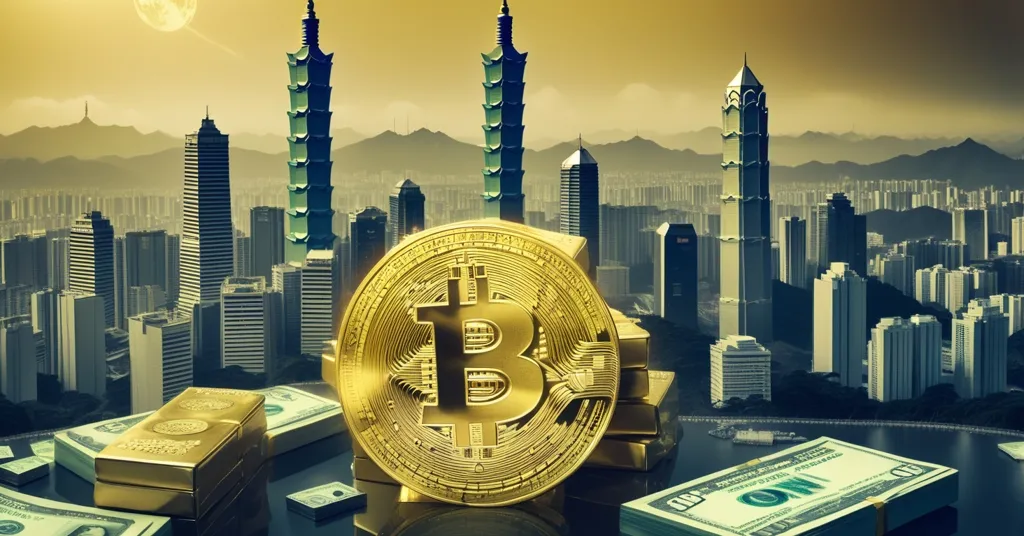
LTB Taiwan is weighing a Bitcoin reserve strategy as it looks for ways to cut dependence on U.S. dollar assets and harden its finances against geopolitical pressure. For a country sitting in a tense strategic position, that’s not fringe chatter anymore — it’s serious policy talk.
- Taiwan holds about $602 billion in foreign exchange reserves.
- Over 80% of those reserves are tied to U.S. dollar assets.
- Lawmaker Dr. Ko Ju-Chun formally proposed adding Bitcoin to national reserves.
- The proposal was delivered to Premier Cho Jung-tai and central bank Governor Yang Chin-long.
- The Bitcoin Policy Institute backed the report and requested a fresh review of stablecoins and digital asset reserves.
The pitch is straightforward: Taiwan’s reserves are heavily concentrated in one currency bloc, and that creates risk. In normal times, U.S. dollar assets are liquid, trusted, and easy to manage. In stressed times, though, that same concentration can become a weakness if sanctions, restrictions, or broader financial pressure enter the picture. That’s where Bitcoin enters the conversation as a sovereign reserve asset — meaning an asset a country holds to support its financial stability, not to chase quick gains like some degenerate weekend trader.
Dr. Ko Ju-Chun formally presented the proposal through Taiwan’s Legislative Yuan, bringing it directly to the executive branch and the central bank. Backed by the Bitcoin Policy Institute, the report frames Bitcoin not as a toy or a speculative side bet, but as a strategic reserve tool with properties that traditional assets do not have.
That framing matters. Bitcoin’s strongest case at the nation-state level is not “number go up.” It’s that it is decentralized, borderless, and difficult to confiscate or freeze if held properly. For a country like Taiwan, which faces real geopolitical risk, that’s not an abstract academic exercise. It’s a question of whether the reserve system can still function if the usual rails get blocked or politicized.
“Taiwan faces a unique convergence of geopolitical risk and reserve concentration.”
That quote gets to the heart of the issue. Taiwan’s reserve mix leans heavily toward U.S. dollar assets, which works fine until it doesn’t. Reserve concentration risk is just a fancy term for putting too many eggs in one basket. If that basket is tied to a single financial system, a single policy orbit, or a single geopolitical center of gravity, then the country is exposed.
Supporters of the Taiwan Bitcoin reserve idea argue that Bitcoin offers something different: an asset that sits outside the traditional financial grid. If held with proper self-custody or other secure methods, it does not depend on a bank’s permission, a correspondent network’s cooperation, or a foreign government’s goodwill. That is what people mean when they say Bitcoin has resistance to seizure. It does not mean “magically untouchable.” It means that, unlike a bank account or a custodial security, it is much harder to seize if the keys are controlled securely by the holder.
The central bank, however, is not rushing to open the vault and start stacking sats. And honestly, that caution is justified.
In 2025, Taiwan’s central bank had already rejected Bitcoin as a reserve asset because of volatility, liquidity risk, and custody risk. Those are not fake objections invented by people who hate fun. Volatility means the price can swing hard and fast. Liquidity means how easily an asset can be bought or sold without moving the price too much. Custody means secure storage — and with Bitcoin, that means protecting private keys, managing access, and avoiding catastrophic loss or theft.
For a central bank, those concerns are serious. Reserve managers are not supposed to act like crypto influencers shouting into the void. Their job is stability. They need assets that can be deployed cleanly, stored safely, and sold if needed without creating a mess. Bitcoin can do some of that, but not without operational discipline and a tolerance for price swings that many institutions still find uncomfortable.
Still, Taiwan is not treating the idea like a joke. The central bank has reportedly begun testing digital assets in a sandbox using seized Bitcoin. A sandbox is a controlled environment where institutions can experiment without risking the whole system. That detail is important because it shows the debate has moved beyond “absolutely not” and into “let’s at least understand the mechanics.”
That alone is a meaningful shift. When central banks start experimenting with digital assets, they are acknowledging that the question is no longer whether Bitcoin exists — it obviously does — but whether it has a role in sovereign finance.
Dr. Ko also requested a new report within one month on stablecoins and digital asset reserves, which broadens the discussion beyond Bitcoin itself. Stablecoins are crypto assets typically pegged to fiat currencies, most often the U.S. dollar, and are used for payments, transfers, and liquidity. They can be useful, but they also bring their own baggage: issuer risk, reserve transparency questions, and the possibility that regulators eventually turn them into heavily managed financial plumbing.
Still, their inclusion is telling. Taiwan is not only asking whether Bitcoin belongs on the balance sheet; it is also asking how digital assets more broadly could fit into reserve management, payments, and financial resilience. That’s a practical policy conversation, not just a philosophical one.
“Bitcoin could remain accessible even in extreme scenarios where traditional assets are restricted.”
That is the core strategic argument, and it’s a strong one. In a severe geopolitical or financial crisis, a decentralized asset that can be held outside traditional banking channels may have value precisely because it is not dependent on the same infrastructure as dollar reserves, government bonds, or bank deposits.
But let’s not get carried away and pretend Bitcoin is a perfect reserve asset just because it annoys the right people. It isn’t. A country buying Bitcoin has to answer real questions: How much should it hold? Where should it store it? Who controls the keys? How does it avoid market impact if it buys in size? What happens if liquidity dries up during a panic?
Those are not small issues. Sovereign-scale custody is a whole different beast from parking a few coins in a personal wallet. If Taiwan ever moved forward, it would need a custody setup that could survive internal mistakes, external attacks, and plain old bureaucratic incompetence — which, let’s be honest, is one of the deadliest threats of all.
There’s also the problem of sizing. Taiwan holds roughly $602 billion in foreign exchange reserves. Even a modest Bitcoin allocation would need to be carefully managed to avoid turning reserve strategy into headline-chasing theatrics. That’s where Bitcoin skeptics have a point. Central banks are supposed to preserve purchasing power and liquidity, not make ideological bets because some orange-pilled uncle on X said “this time is different.”
Yet dismissing the proposal out of hand would be lazy. Taiwan’s geopolitical position is not theoretical. The country faces real pressure, real uncertainty, and a real need to think about reserve concentration in a way many larger economies can afford to ignore. If anything, Taiwan is the kind of place where the Bitcoin reserve debate makes the most sense: not because Bitcoin is risk-free, but because the existing system is not risk-free either.
The bigger story is how the Overton window is shifting. Bitcoin is being discussed not just as a speculative asset or payment rail, but as a possible sovereign reserve asset. That’s a major change in tone. For years, the standard response from institutions was to dismiss Bitcoin as too volatile, too weird, or too politically inconvenient. Now lawmakers and central banks are being forced to examine whether that dismissal is too simplistic.
Sam Lyman summed up the significance well: “Dr. Ko’s decision… demonstrates the seriousness with which Taiwan’s lawmakers are evaluating Bitcoin as a strategic asset.” That kind of language matters because it signals that Bitcoin is being judged on statecraft terms, not just trading terms.
If Taiwan moves further in this direction, the ripple effects could be global. Other governments watching from the sidelines may start asking the same questions: How exposed are we to dollar concentration? What happens if financial access becomes a weapon? Is there a reserve asset that can sit outside the usual pressure points?
Not every country will like the answer, and not every central bank will be willing to touch Bitcoin. Some will prefer gold. Some will prefer diversified currency baskets. Some will stick with the old playbook until it breaks in their hands. That’s the nature of institutional inertia. But once a serious economy starts evaluating Bitcoin as a reserve asset in public, the conversation becomes harder to bury.
Why Taiwan’s Bitcoin reserve discussion matters
Taiwan is not merely flirting with digital asset rhetoric. It is weighing whether Bitcoin could help reduce exposure to a single reserve system and improve resilience under geopolitical stress. That’s the kind of question more governments may be forced to confront as the old monetary order gets tested.
Questions and key takeaways
What is Taiwan considering?
Taiwan is considering adding Bitcoin to its national reserves as part of a broader reserve diversification strategy.
Why does Taiwan want a Bitcoin reserve strategy?
The goal is to reduce dependence on U.S. dollar assets and hedge against geopolitical and currency risks.
Who is pushing the proposal?
Taiwanese lawmaker Dr. Ko Ju-Chun formally presented the idea, with support from the Bitcoin Policy Institute.
Why does Bitcoin appeal as a reserve asset?
Supporters say Bitcoin is decentralized, hard to seize, and can remain accessible even if traditional financial channels are restricted.
Why is the central bank cautious?
Because Bitcoin still comes with volatility, liquidity, and custody risks that matter a lot when managing national reserves.
Is Taiwan already experimenting with digital assets?
Yes. Taiwan’s central bank has reportedly been testing digital assets in a sandbox using seized Bitcoin.
Why are stablecoins part of the discussion?
Stablecoins are now part of the broader digital reserve conversation because they may play a role in payments, liquidity, and reserve management.
Could this influence other countries?
Yes. If Taiwan continues down this path, other governments may take Bitcoin reserve strategy more seriously, especially those facing geopolitical pressure or reserve concentration risk.
The next step is a review from Taiwan’s executive branch and central bank, and that’s where the real pressure point sits. Taiwan has not committed to buying Bitcoin, but it has clearly moved the conversation into official policy territory. That matters on its own. When a country like Taiwan starts asking whether Bitcoin belongs in sovereign reserves, the old “it’s just internet money” line starts looking pretty thin.