U.S. Stablecoin Yield Ban Advances in Digital Asset Market Clarity Act Draft
 LTB
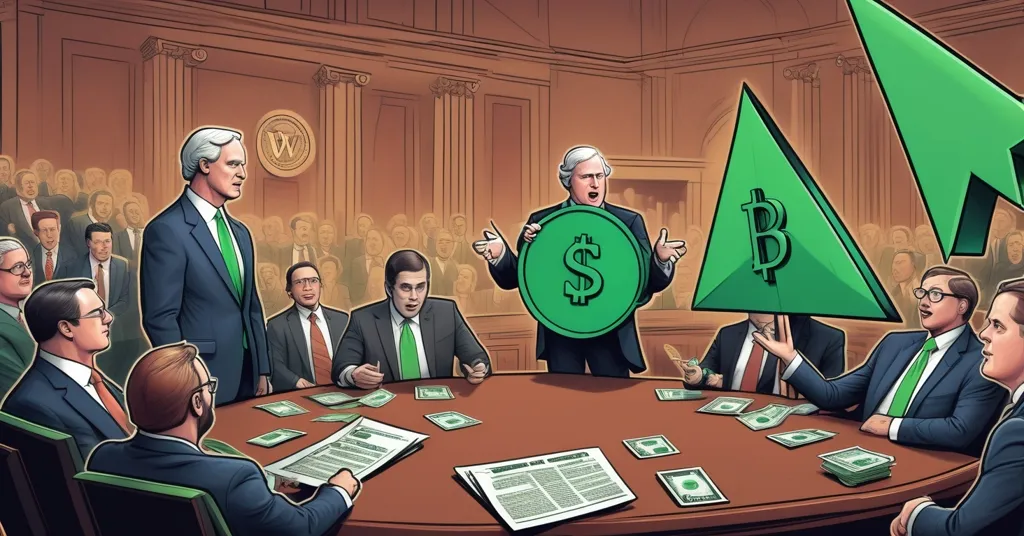
LTB A new draft of the U.S. Digital Asset Market Clarity Act takes direct aim at passive stablecoin yield, blocking issuers from paying interest-like rewards simply for holding tokens while still allowing incentives tied to real user activity.
- Stablecoin yield ban advances in the Digital Asset Market Clarity Act
- Passive rewards could be blocked; bona fide activity-based rewards may survive
- Coinbase appears to support the compromise
- U.S. Treasury and CFTC would help write the rules within one year
That’s the latest wrinkle in U.S. crypto market structure negotiations, and it lands right in the middle of a familiar Washington tug-of-war: let stablecoins keep powering payments and trading, but don’t let them quietly morph into bank deposits with a blockchain costume on.
Under the revised language, stablecoin issuers would be prohibited from paying yield or interest just for holding stablecoins, whether that compensation comes in cash, tokens, or any other form. The key phrase is simple enough: if the payout is based solely on a user’s stablecoin balance, it’s in the crosshairs. No deposit, no lending, no activity, no free lunch.
For readers not steeped in crypto product jargon, stablecoin yield usually means earning a return just by parking funds in a stablecoin like USDC or USDT, without actively staking, lending, or using the assets in a broader financial strategy. In practice, that can look a lot like a savings account promo or a money-market-style return. That’s exactly why lawmakers are getting twitchy.
The compromise was shaped through negotiations between Sen. Thom Tillis and Sen. Angela Alsobrooks, and it appears designed to strip away the most bank-like features of stablecoin products while preserving utility. The logic is straightforward: stablecoins should function as payment instruments, not as shadow bank deposits with a slick app interface and a nicer color palette.
That matters because once stablecoins start paying yield simply for being held, they stop looking like neutral payment rails and start resembling deposit products. And when that happens, the banking lobby, regulators, and lawmakers all reach for the same panic button: protect the depository institutions first, sort out the innovation later. Fun times.
The bill still allows activity-based rewards tied to real user behavior, including transactions, network participation, and other “bona fide” actions. That distinction is the heart of the compromise. The goal is to separate passive interest-like returns from incentives earned through actual use, rather than letting issuers market stablecoins as if they were yield-bearing accounts in disguise.
That may sound like a small semantic tweak, but in crypto, semantics are the battlefield. A product called “rewards” can be functionally close to “yield,” and “cashback” can be a marketing repaint on something that smells a lot like interest. Regulators know that trick. So do the lawyers. So do the exchanges. Everyone’s playing the same game, just with different fonts.
Coinbase appears to back the compromise, which is notable because the exchange has been one of the most influential crypto firms in U.S. policy circles. CEO Brian Armstrong and Chief Legal Officer Paul Grewal reportedly support the updated language. That suggests a pragmatic read of the room: if a ban on passive stablecoin yield is coming anyway, better to shape the rules than to get flattened by them.
There’s also a hard-nosed strategic angle here. Coinbase and other major U.S. firms may prefer a narrower rule that still permits activity-based rewards over a broader crackdown that leaves everyone guessing. In other words, the industry may be choosing controlled damage over chaos. Not glamorous, but often smarter than banging your head against Capitol Hill until the lights go out.
For consumers, the practical impact could be immediate. Exchange reward programs, issuer incentives, and wallet-linked stablecoin promos may all need to be reworked if the language becomes law. The era of “just hold this token and earn” could shrink in the U.S., while more complex use-based reward structures remain. That’s good news for clarity, less good news for people who liked passive returns without reading the fine print.
There’s a real counterpoint here, though. Banks and regulators argue that if stablecoin issuers pay yield for idle balances, they are effectively competing with regulated deposit accounts without taking on the same obligations. That can create regulatory arbitrage, potentially drain deposits from banks, and muddy the line between payments and savings. From that perspective, the ban looks less like anti-crypto hostility and more like a guardrail against financial products doing an end run around existing rules.
Crypto critics will say that’s exactly the point: stablecoins are supposed to be better, faster, cheaper rails, and users should be able to benefit from that efficiency. Why shouldn’t consumers earn something on balances that sit in a digital dollar system? Fair question. But if the answer is “because it starts looking like a bank product,” then the fight is really about who gets to offer digital money with returns attached, and under what regime.
The next stage shifts power to the U.S. Treasury and the Commodity Futures Trading Commission (CFTC), which would be tasked with writing detailed rules within one year of enactment. Those rules are expected to define how rewards can be calculated, including whether they can be based on account balances, how long funds are held, and what kinds of user activity qualify.
That rulemaking phase is where the real mess could begin. Definitions will matter enormously. What counts as a “bona fide” action? Is a transaction enough? Does holding funds for a week count? What about liquidity provision, merchant payments, or other forms of usage? Those aren’t minor details — they determine whether the stablecoin yield ban is a real boundary or just another compliance obstacle for firms to route around.
And route around it they will. Crypto doesn’t sit still for long when a profit center gets pinched. If passive yield gets squeezed, companies will likely repackage incentives as rebates, cashback, trading discounts, loyalty rewards, or something equally lawyer-approved and slightly annoying. That doesn’t mean the policy fails; it means the market will try to wriggle through the cracks like it always does.
The removal of this particular fight also clears a key barrier to advancing the bill in the Senate. That doesn’t mean stablecoin regulation is settled — it means one major hostage situation has been defused. The broader question of U.S. crypto regulation remains unresolved, but this compromise shows lawmakers are at least willing to draw a line between payment utility and investment-like yield products.
There’s a bigger industry lesson buried in all this: once a crypto product starts behaving like a familiar financial product, it invites familiar financial regulation. Stablecoins were always going to face that pressure because they sit right at the intersection of payments, money, and trading infrastructure. Bitcoin gets to be hard money. Stablecoins get dragged into the middle. Different jobs, different headaches.
Still, there’s a constructive angle here for decentralization and financial innovation. If the rules are clear, stablecoin issuers and crypto exchanges can build around them instead of constantly guessing which reward structure will trigger a lawsuit or a regulatory smackdown. Clarity is not freedom, but it’s better than legal fog and compliance roulette.
What is the bill trying to stop?
It aims to stop stablecoin issuers from paying passive yield or interest just because someone holds their stablecoins.
Can crypto companies still offer rewards?
Yes. The draft still allows rewards tied to real user activity such as transactions, network participation, or other “bona fide” actions.
Why are lawmakers doing this?
They want to prevent stablecoins from functioning like bank deposits and to protect depository institutions and the traditional banking system.
What is stablecoin yield, in plain English?
It’s compensation earned just for holding a stablecoin, without needing to actively use, lend, or stake it.
Who seems to support the compromise?
Coinbase appears to support it, including CEO Brian Armstrong and Chief Legal Officer Paul Grewal.
What happens next?
The U.S. Treasury and CFTC would have one year after enactment to write detailed rules on how rewards can be structured.
Why does this matter for users?
It could change how stablecoin rewards are offered, limit passive yield programs, and reshape exchange promos and wallet incentives in the U.S.
Does this kill stablecoin rewards altogether?
No, but it does push the market away from passive “sit and earn” models and toward rewards tied to real usage.
The bottom line is pretty simple: the U.S. is trying to allow stablecoins to keep doing what they do best — moving money quickly and efficiently — without letting them turn into unregulated savings accounts wearing crypto drag. Whether that ends up protecting consumers, protecting banks, or just forcing everyone to invent new marketing language is still up for grabs.