CLARITY Act Passes Senate Committee, Boosting U.S. Crypto Regulation and DeFi Debate
 LTB
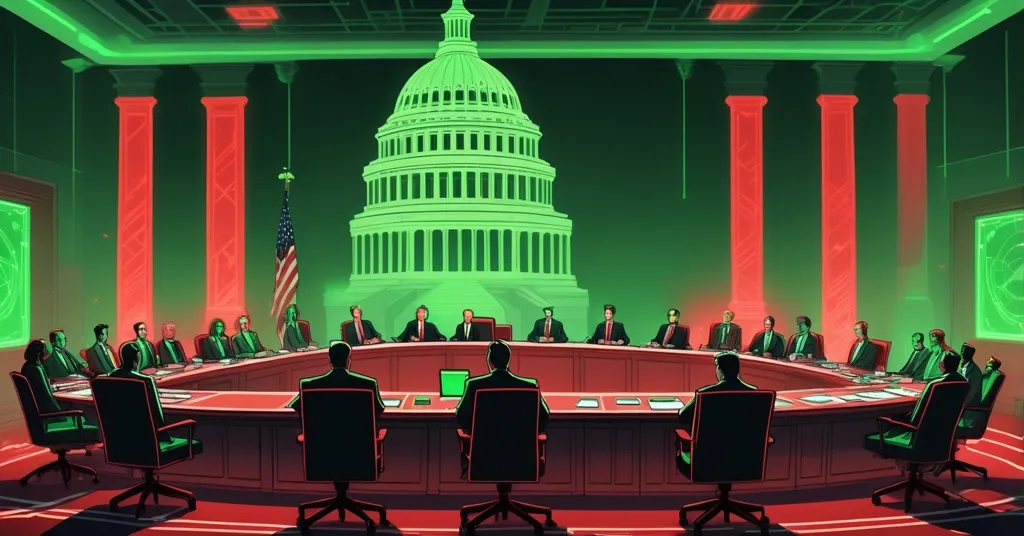
LTB The CLARITY Act just cleared a major Senate hurdle, pushing U.S. crypto regulation forward with rare bipartisan backing — while leaving DeFi advocates bracing for the usual Washington shuffle of compromises, carve-outs, and messy agency turf wars.
- 15-9 vote in the Senate Banking Committee
- Only two Democrats backed the bill
- DeFi protections remain a flashpoint
- Full Senate vote still lies ahead
The CLARITY Act advanced out of the Senate Banking Committee by a 15-9 vote, marking a meaningful step for crypto legislation in the United States. That may sound like the kind of procedural victory that only gets politicians excited, but for digital assets, it matters. A lot. The bill is meant to help define how crypto and other digital assets are regulated in the U.S., especially by sorting out which agency gets control over what. In other words: who gets to write the rules, enforce them, and make life either clearer or more miserable for builders.
The vote split mostly along party lines. Thirteen Republicans backed the bill, joined by Democratic Senators Ruben Gallego and Angela Alsobrooks. Nine Democrats voted against it. Elizabeth Warren opposed the legislation, arguing it lacked strong enough ethics guardrails. Mark Warner also declined to support moving it forward, even though he acknowledged that the bill had improved in some areas. That kind of split is no surprise in Washington, where “bipartisan” often means “we fought hard, then everyone walked out claiming victory.”
Republican Sen. Thom Tillis called the result a “strong bipartisan compromise.” Translation: after enough backroom bargaining, everyone got just enough of what they wanted to avoid torching the thing entirely. The bill reportedly needed multiple negotiated amendments to get this far, including a significant compromise tied to an amendment from Cynthia Lummis. That’s the reality of crypto policy in D.C. — nothing moves without concessions, and every concession risks turning “clarity” into a bureaucratic Rube Goldberg machine.
What the CLARITY Act is trying to do
At its core, the CLARITY Act is about U.S. crypto regulation and regulatory jurisdiction. The biggest fight in digital asset policy has long been the SEC versus the CFTC: the Securities and Exchange Commission versus the Commodity Futures Trading Commission. The SEC generally takes a harder line, especially when tokens look like securities. The CFTC is typically viewed as the more flexible regulator for commodities and derivatives markets. The bill’s appeal is simple: define the lanes before the regulators spend the next five years throwing each other under the bus.
That matters for several reasons. Crypto exchanges want to know what rules apply. Token issuers want to know whether they’re building a product or walking into a lawsuit. DeFi developers want to know whether their protocols will be treated like open-source software or as if they’re running a shadow bank with a bad haircut. And investors? They mostly want the market to stop feeling like legal quicksand.
Brian Armstrong of Coinbase described the bill as a “historic day for crypto and for the future of digital assets in America.” He also said it was a “big improvement from where we were in January on rewards, tokenization, DeFi, and CFTC authority.” Those terms are worth unpacking.
Tokenization means turning real-world assets — like stocks, bonds, funds, or even property rights — into blockchain-based tokens. DeFi, or decentralized finance, refers to financial apps that operate without a traditional bank or broker in the middle. CFTC authority means which regulator gets control over certain crypto markets and products. And rewards generally refers to mechanisms like staking or yield features that can be useful, controversial, or both depending on who is holding the mic in Washington.
Mike Novogratz also praised the move, saying:
“This is how America wins.”
That’s the bullish version of events: the U.S. finally begins building a serious framework for digital assets instead of pretending the entire sector can be regulated by vibes, enforcement actions, and press releases with a scary font.
Why DeFi advocates are nervous
Not everyone is celebrating. Some DeFi advocates are worried that removing BRCA language from the bill could weaken legal protections for decentralized finance. BRCA is a technical legal reference tied to how decentralized systems are defined and treated under the framework. The concern is straightforward: if the language protecting or clearly classifying DeFi gets stripped out, protocols could be left exposed to future regulatory chaos.
That’s the part that should make builders sit up straight. DeFi is supposed to be one of the cleanest examples of decentralization in action: code-based financial services, accessible without permission from a bank, broker, or gatekeeper. But if lawmakers leave the definitions muddy, future regulators can still decide to treat these systems like unlicensed intermediaries simply because it is politically convenient. That would be a classic D.C. move — slap a “clarity” label on a bill and then leave the hardest questions for later.
The fear is not theoretical. Badly drafted crypto laws have a habit of creating uncertainty where none needed to exist. A law can be celebrated as a breakthrough and still end up being a trapdoor if it leaves too much room for interpretation. That’s the price of compromise: sometimes you get a workable framework, and sometimes you get legal oatmeal.
The political split says a lot
Elizabeth Warren’s opposition fits her long-running skepticism toward the crypto industry, especially when it comes to ethics, consumer protection, and financial risk. Her criticism of the bill’s guardrails reflects a broader Democratic worry: that crypto legislation can become a gift to industry lobbyists if it moves too quickly or gets too friendly to innovation at the expense of oversight.
Mark Warner’s refusal to back advancement is also notable. He acknowledged improvements, which suggests the bill is not being dismissed outright by every Democrat in sight. But his hesitation underscores the larger problem: even when lawmakers agree that crypto needs rules, they often disagree on whether the rules should encourage growth or keep the industry on a short leash. Usually, Washington prefers the leash.
Thom Tillis calling it a “strong bipartisan compromise” is encouraging, but not a finish line. Bipartisanship is useful only if the resulting law actually works. A bill can win votes and still fail the builders, fail the users, and fail the market by burying innovation under layers of ambiguity. This is where the “devil’s advocate” side of the debate matters: a political win is not automatically a policy win.
Industry reaction is predictably loud
The crypto industry wasted no time in treating the vote like a milestone. The Bitcoin Policy Institute called it a “tremendous” victory for the cryptocurrency community. That’s not exactly shocking coming from a pro-crypto policy group, but it does show how much industry players want a real legislative framework after years of enforcement-first confusion.
SEC Chairman Paul Atkins also signaled optimism about the bill’s progress, saying:
“I look forward to President Trump’s signature on the legislation.”
That comment points to the next stage of the process, assuming the bill survives additional Senate debate and whatever new horse-trading gets dragged into the room. It also hints at a possible political path to enactment if the rest of the legislative machine keeps moving. In Washington, of course, “moving” can still mean “stalled for six months while everyone calls it momentum.”
Why this matters beyond trading charts and headlines
This vote is about more than Coinbase lobbying or crypto Twitter victory laps. It is about the architecture of the U.S. financial system — the plumbing, as boring bureaucrats love to call it, even though it decides whether innovation gets a fair shot or gets buried under red tape.
For exchanges, the bill could help clarify listing and compliance obligations. For tokenization platforms, it could make asset issuance on-chain more practical if the rules are coherent. For DeFi developers, the stakes are even higher. They need laws that understand the difference between code, custody, and centralized control. If lawmakers fail to recognize those distinctions, they risk regulating decentralized systems as if every protocol were run by a single company with a CEO, a boardroom, and a legal department on speed dial.
That is why the fight over DeFi protections is so important. A crypto bill that helps centralized firms while leaving decentralized systems in a fog would be a deeply flawed outcome. It would be progress for some parts of the industry and a headache for the most innovative ones. And let’s be honest: if decentralized finance gets kneecapped while the incumbents get neat little regulatory boxes, that’s not reform — that’s a protection racket wearing a suit.
What happens next
The CLARITY Act now heads to the full Senate, where the debate is likely to get louder, messier, and more politically expensive. More amendments may be proposed. More compromises may be demanded. And more lawmakers will probably discover sudden interest in the difference between securities and commodities, which is always adorable.
The big question is whether the bill keeps enough structure to be useful while avoiding the kind of vague language that leaves DeFi, tokenization, and digital asset businesses stuck in regulatory limbo. The Senate’s next round of wrangling will determine whether this becomes a real foundation for U.S. crypto regulation or just another half-finished attempt to make Washington look competent.
For now, the momentum is real. The vote shows that serious crypto legislation can still move, even in a political climate where everything gets treated like a hostage negotiation. But the hardest part is still ahead: turning bipartisan theater into actual legal clarity.
Key questions and takeaways
What is the CLARITY Act?
A U.S. crypto and digital asset bill designed to help define how crypto markets are regulated and which agency has authority over different parts of the industry.
Why does the Senate Banking Committee vote matter?
It shows the bill has enough support to advance and gives crypto regulation a rare bipartisan boost in Washington.
Who voted for the bill?
Thirteen Republicans backed it, along with Democratic Senators Ruben Gallego and Angela Alsobrooks.
Who opposed it?
Nine Democrats voted against it, including Elizabeth Warren, who criticized the bill’s ethics guardrails.
Why are DeFi advocates concerned?
They worry that removing BRCA language could weaken protections for decentralized finance and leave protocols exposed to future regulatory attacks.
What does CFTC authority mean here?
It refers to which regulator gets control over certain crypto markets and products, a major issue in the SEC versus CFTC jurisdiction battle.
Why is tokenization a big deal?
Tokenization can move assets like stocks, bonds, and property rights onto blockchain rails, making them easier to issue, trade, and settle.
What happens next?
The bill now goes to the full Senate, where more debate, amendments, and political bargaining are likely before it can move any further.
Is this a final win for crypto?
No. It’s a major milestone, but the real test is whether the final legislation protects innovation without handing regulators a blank check.