Tando Brings Bitcoin to Kenya via Phone Numbers, Raising Custody Questions
 LTB
LTB Tando is aiming at one of crypto’s oldest headaches: making Bitcoin easy enough for normal people to use. In Kenya, where mobile money is already part of daily life, the idea of receiving Bitcoin with just a phone number could be a very practical leap forward.
- Tando is reportedly enabling Bitcoin receives through phone numbers
- The target market is 40 million Kenyans
- The pitch leans on simple UX and mobile-first payments
- Kenya’s M-Pesa culture makes the concept feel familiar, not exotic
- The big question: self-custody or just another shiny custodial middleman?
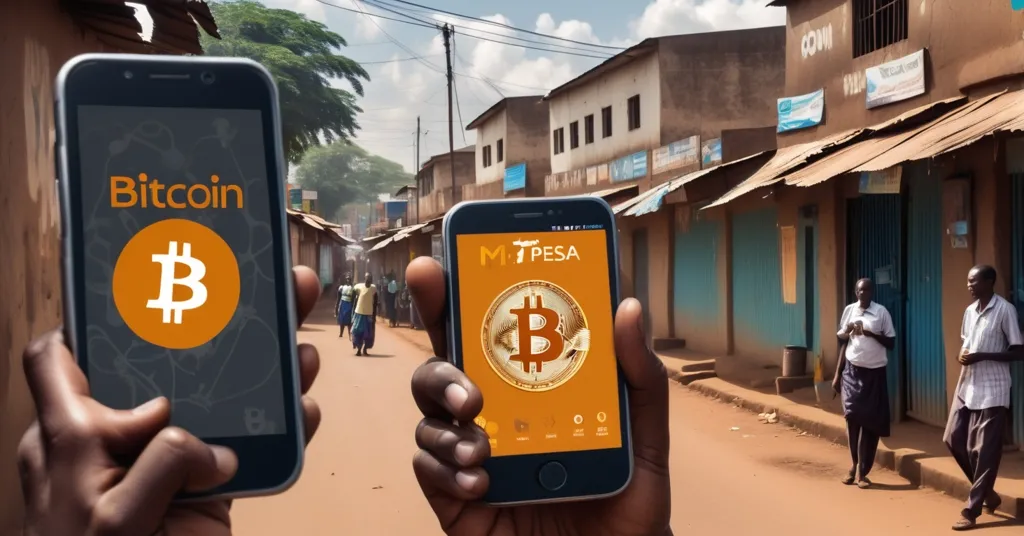
At first glance, this makes a lot of sense. Kenya is one of the most mobile-forward financial markets in the world, and people there are already used to moving money by phone number through services like M-Pesa. So instead of asking users to copy and paste long Bitcoin addresses like it’s still 2013 and everyone has infinite patience, Tando enables 40 million Kenyans to receive Bitcoin via phone numbers, mapping payments to something people already understand: a phone number.
That is not a small UX tweak. It’s the kind of simplification that can make the difference between a tool that only crypto nerds tolerate and one that actual humans might use.
And let’s be honest: Bitcoin onboarding has often been a mess. Wallet setup, seed phrases, address formats, fees, network choices, QR codes, confirmations — it can feel like the industry has spent years building systems that are brilliant in theory and obnoxious in practice. A phone-number-based Bitcoin receiving system is appealing because it removes one of the biggest bits of friction without needing a PhD in “please don’t lose your seed phrase.”
For everyday payments and remittances, that matters. Kenya has a strong use case for both. If you can send value as easily as sending a text message, Bitcoin starts to look less like a speculative asset for Twitter warriors and more like a functional payment rail.
But convenience is not the same thing as sovereignty, and that’s where the real questions start.
Is Tando a non-custodial wallet where users control their own keys, meaning they actually own the Bitcoin? Or is it custodial, where someone else holds the funds on their behalf and users are basically trusting a company’s internal database with a crypto label slapped on top? That distinction is everything. If someone else holds the coins, you don’t really have Bitcoin in the full sense — you have an IOU and a promise that the platform doesn’t implode, freeze withdrawals, or get sloppy with compliance.
There’s also the privacy angle. Phone numbers are not anonymous. They’re personal identifiers, and linking them to Bitcoin transfers can create a neat little surveillance trail for anyone with access to the system. That may be acceptable for some users in exchange for convenience, but it is not a trivial tradeoff. In the name of “ease,” too many crypto products quietly rebuild the same centralized control structures Bitcoin was meant to sidestep.
That said, it would be unfair to dismiss the concept just because it may involve some custodial infrastructure. Real adoption often starts with tools that are easier to use than ideologically pure. For a newcomer in Kenya who wants to receive money from family, a merchant, or a remote client, a phone number is a lot friendlier than a string of characters that looks like it was generated by a malfunctioning toaster.
The best-case scenario is straightforward: Tando lowers the barrier to entry, helps people receive Bitcoin with minimal friction, and gives more users a path into a monetary system that can’t be debased by some central bank press conference. If it also supports self-custody or easy withdrawal to a private wallet, even better. That would mean the product is acting as a bridge, not a cage.
The worst-case scenario is just as familiar: a centralized fintech app that uses the word “Bitcoin” as marketing glitter while keeping control of the funds, the identity layer, and the user experience behind closed doors. That kind of setup can look like adoption on the surface while actually teaching people to trust custodians more, not less. In other words: same old fintech, different costume.
Kenya is a smart place to test this idea because the market already has the habits Tando is trying to serve. Users are familiar with mobile transfers. Merchants understand phone-based payments. The mental model is already there. That gives a product like this a much better shot than it would have in a market where people still treat anything involving money and a phone as suspicious wizardry.
There’s also a broader point here about Bitcoin adoption in Africa. A lot of commentary from outside the continent treats adoption like it’s only about price speculation or ideological purity. That’s lazy. In places where mobile money is already normal and where inflation, fees, or limited banking access affect real people, practical payment tools matter. A good product is not one that impresses Bitcoin purists on X; it’s one that ordinary people can actually use without needing an hour-long onboarding session and a prayer.
Still, the industry has earned its skepticism. Too many “easy Bitcoin” products turn out to be gatekeepers in disguise. So the important questions are not whether the idea sounds clever, but whether Tando can deliver on the basics:
- Can users receive actual Bitcoin, not just a balance on a platform?
- Can they withdraw to a wallet they control?
- Is the system transparent about fees, settlement, and custody?
- Does the phone number mapping protect user privacy, or create a new surveillance layer?
- Does the product reduce friction without turning into a centralized choke point?
If those answers are solid, this could be a meaningful step toward broader Bitcoin use in one of the world’s most mobile-native markets. If not, then it’s just another slick interface sitting on top of someone else’s control tower.
Key questions and takeaways
-
What is Tando trying to do?
Tando reportedly lets people receive Bitcoin using a phone number instead of a long wallet address, making payments far easier for everyday users. -
Why does Kenya matter?
Kenya already has a deeply established mobile-money culture, so phone-number-based Bitcoin payments fit the way many people already send and receive money. -
Why is this important for Bitcoin adoption?
Simpler user experience removes one of the biggest barriers to Bitcoin use. If people can receive BTC as easily as a mobile payment, adoption becomes much more realistic. -
What is the biggest concern?
The main concern is custody. If users do not control their own keys, then the convenience may come at the cost of ownership, privacy, and censorship resistance. -
Does this help financial inclusion?
It can, especially if it lowers friction for remittances and peer-to-peer payments. But financial inclusion only matters if users are not trapped in a system they do not control. -
Is phone-number-based Bitcoin inherently bad?
No. It can be a useful bridge for mass adoption. The problem is when convenience becomes a substitute for real user control.
Tando’s pitch is appealing because it attacks a real problem instead of inventing a new one. Bitcoin does not need more slogans. It needs products that work for regular people. But if the project wants to matter beyond the hype cycle, it will need to prove that easier access doesn’t come with a hidden tax on privacy, self-custody, and freedom. Convenience is great. Losing control of your money is not.