Brian Armstrong: U.S. Could Hold Over $1 Trillion in Bitcoin Reserves
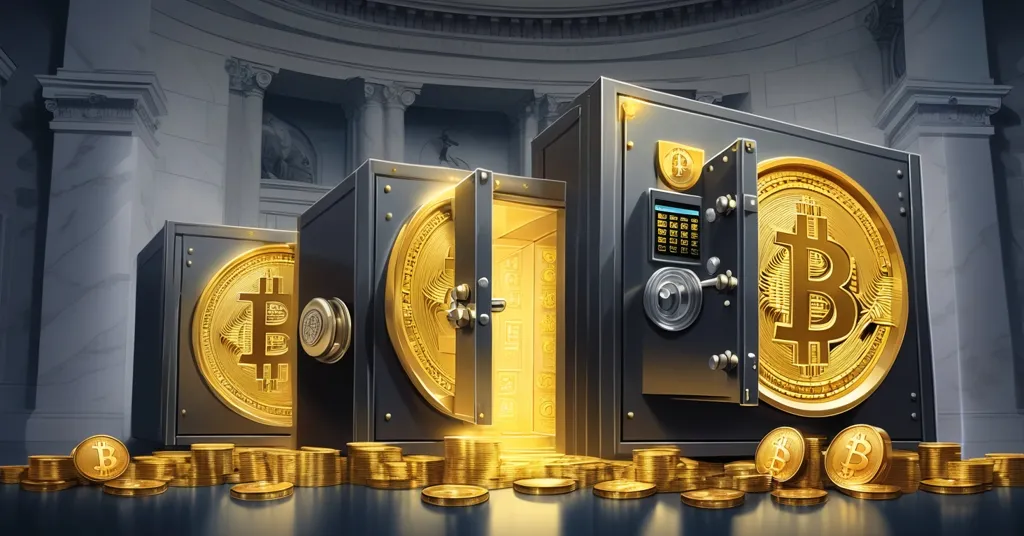
 LTB
LTB Coinbase CEO Brian Armstrong says the U.S. government could one day hold more than $1 trillion in Bitcoin reserves — a staggering idea, but not as far-fetched as it sounds if Bitcoin keeps graduating from speculative asset to sovereign balance-sheet weapon.
- Armstrong’s view: Bitcoin could become a serious U.S. reserve asset.
- The upside: BTC offers scarcity, portability, and a hedge against fiat debasement.
- The catch: Volatility, politics, custody, and government control could make this a bureaucratic circus.
To be clear, a “Bitcoin reserve” means a government would hold BTC the way it holds gold, foreign currencies, or other strategic assets: as a financial backstop, a geopolitical tool, or both. In plain English, it’s money stored for rainy days, power moves, and economic insurance. Not exactly the same as a trader aping into a memecoin at 2 a.m. because a chart looked spicy.
Armstrong’s thesis is simple: if Bitcoin continues to establish itself as a scarce, globally recognized asset with a hard cap of 21 million coins, then holding it in reserve could eventually make sense for a state. That would mark a major shift from the old framing of BTC as internet money for libertarians and speculators to something much bigger — a strategic asset with real macro weight.
The logic is easy to understand. Governments already keep reserves in gold and fiat currencies because they want diversification, liquidity, and some protection against shocks. Bitcoin brings a few unusual advantages to that mix. It is borderless. It cannot be printed into oblivion. It can be transferred without needing a bank or central intermediary. And unlike gold, it can be moved at the speed of the internet instead of on a armored truck.
That’s the bullish case, and it’s not nonsense. Bitcoin’s scarcity is the whole point. When the money printer goes brrr, a fixed-supply asset starts looking less like a toy and more like a pressure valve. For a country worried about currency debasement, sanctions risk, or a changing monetary order, BTC can start to look like digital gold with better transport and worse sleep quality.
But let’s not pretend the jump from “interesting asset” to “U.S. government holds over $1 trillion in Bitcoin reserves” is a small one. It would require a major political and institutional shift. Washington is not known for moving fast unless there’s a lobbyist, a subpoena, or a crisis involved.
There’s also a practical question hiding behind the headline: who would hold it? The Treasury? The Federal Reserve? A special sovereign fund? Would it come from future purchases, seized assets, or a formal policy mandate? None of those answers is simple, and each one opens a different can of worms. Custody alone is a beast. Managing sovereign-scale Bitcoin securely would require serious operational discipline, not some “trust us bro” setup with a laptop and a cold wallet.
Supporters of Bitcoin reserve policy would argue that the U.S. already has exposure to BTC through seizures and law enforcement actions, so the idea is not completely alien. From there, it’s not a giant leap to ask whether the state should just keep some of that BTC instead of dumping it at the first opportunity like a forced seller with commitment issues.
And then there’s geopolitics. If other nations begin to treat Bitcoin as a reserve asset while the U.S. sits on its hands, Washington risks falling behind in the next phase of monetary competition. That’s the part many Bitcoin skeptics still miss. This isn’t just about price. It’s about leverage. Countries stockpile assets because assets are power.
Of course, the critics have a point too, and pretending otherwise would be intellectually lazy. Reserve assets are supposed to be stable, politically manageable, and easy to justify. Bitcoin is liquid and portable, yes, but it is still volatile enough to give treasury officials a migraine. A government buying aggressively could watch its stack swing wildly in value, and that kind of mark-to-market drama is not exactly ideal when taxpayers are watching.
That volatility is the elephant in the room wearing a clown nose. It may get less wild over time as BTC matures and deepens its market structure, but it is still a real issue. No serious state wants to look like it bought the top of the most volatile asset on the planet and then had to explain itself to Congress, the media, and a very annoyed electorate.
Energy usage is another old complaint, though it has become a more tired talking point than a serious killer argument. Bitcoin mining does consume electricity, but that criticism often ignores the growing use of stranded energy, grid balancing, and renewable integration. Still, for policymakers looking for excuses to avoid Bitcoin, energy is a convenient cudgel. Government rarely resists a clean-sounding slogan, even when the economics are messier than the talking point.
The darker side of sovereign Bitcoin accumulation is control. If the state gets too involved, Bitcoin’s original promise can get diluted fast. Self-custody, censorship resistance, and freedom from central gatekeepers are the whole damn point for a lot of Bitcoiners. A government reserve might boost legitimacy and price, but it could also invite more surveillance, more regulation, and more attempts to turn BTC into just another controlled asset in the financial machine.
That tension is the irony at the heart of Bitcoin’s rise. The system that Bitcoin was built to outlast is now the system that increasingly wants a piece of it. That does not mean Bitcoin has failed. If anything, it means Bitcoin is doing what hard money tends to do: surviving long enough to get noticed by the people who once laughed it off.
There’s another way to read Armstrong’s comments, too. Even if the U.S. never accumulates anything close to a trillion dollars in Bitcoin, the fact that the idea is even discussable tells you how far the narrative has moved. A few years ago, the mere suggestion of sovereign Bitcoin reserves would have been dismissed as fringe nonsense. Now it sits inside a legitimate conversation about monetary policy, reserve diversification, and long-term strategic positioning.
Key questions and takeaways:
-
Could the U.S. really hold over $1 trillion in Bitcoin reserves?
In theory, yes. In practice, it would require a major political shift, a clear custody framework, and a level of confidence in Bitcoin that Washington has not fully shown yet. -
Why would a government want Bitcoin?
Because BTC is scarce, portable, borderless, and not controlled by any single central bank. That makes it attractive as a reserve diversifier and a hedge against monetary instability. -
What is the biggest obstacle to a U.S. Bitcoin reserve?
Volatility, custody, and politics. Governments like assets that are boring, predictable, and easy to defend. Bitcoin is none of those things — at least not yet. -
Would a Bitcoin reserve help Bitcoin adoption?
Absolutely. If a major government treated BTC as a strategic asset, it would strengthen Bitcoin’s legitimacy and likely accelerate institutional adoption worldwide. -
What’s the downside of government Bitcoin holdings?
More state control, more surveillance risk, and potentially more pressure on the self-custody and censorship-resistant values that made Bitcoin matter in the first place.
Armstrong’s remarks are another sign that Bitcoin is no longer being treated as a sideshow. Whether the U.S. ends up with a modest stack or a monster reserve, the bigger takeaway is obvious: Bitcoin has moved into the realm of serious sovereign discussion. That alone is a massive validation of the asset’s long-term role — and a warning shot to anyone still pretending it’s just a passing internet fad.