Minnesota Backs Bank Crypto Custody While Cracking Down on Bitcoin ATMs
 LTB
LTB Minnesota is splitting crypto into two buckets: banks may hold digital assets for customers, while crypto kiosks are getting the boot over fraud risks.
- Banks can now offer crypto custody under Minnesota’s rules
- Crypto kiosks, including Bitcoin ATMs, are being targeted over scam abuse
- The state is backing regulated custody while cracking down on weak consumer protections
- Big tension: mainstream adoption vs. self-sovereign control
The message from Minnesota is blunt: if crypto is going to live inside the financial system, officials want it handled by institutions that can be supervised, audited, and dragged over the coals if they screw up. Banks getting the green light for crypto custody means they can hold digital assets on behalf of customers — a service that matters for people who want exposure to Bitcoin or other coins without having to babysit private keys like a paranoid goblin with a hardware wallet, as seen in Minnesota says no to crypto kiosks, greenlights banks for crypto custody.
In plain English, custody means someone else stores your crypto for you. A bank or custodian controls the keys, the access, and the security setup. That can be useful for ordinary users, businesses, and institutions that do not want to take on the full burden of self-custody. It is not sexy, but it is practical. Sometimes boring infrastructure is what actually gets adoption moving instead of another round of vaporware and influencer nonsense.
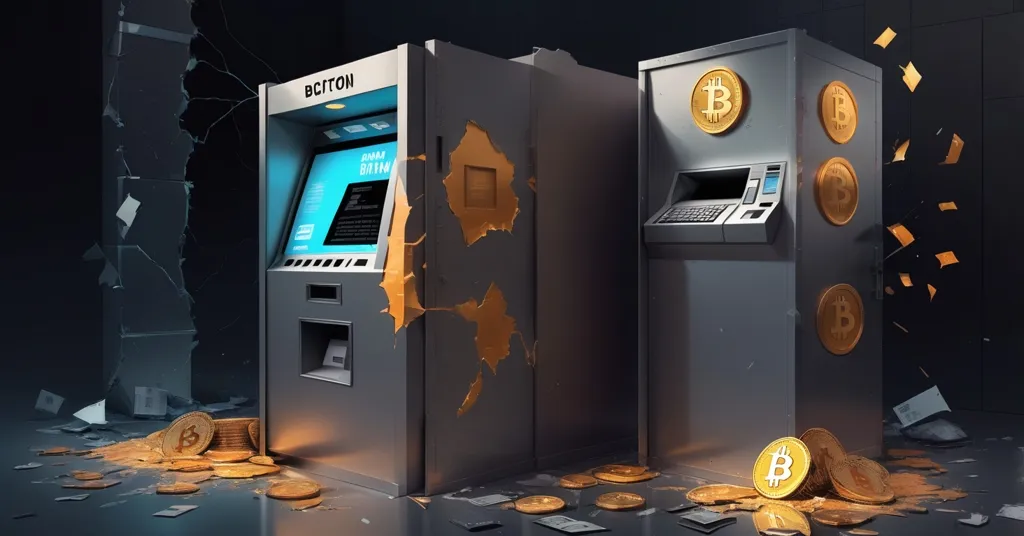
At the same time, Minnesota is taking aim at crypto kiosks — the machines often marketed as easy on-ramps for buying Bitcoin and other digital assets with cash. Most readers know them as Bitcoin ATMs, though the label is a bit generous. These machines have become a favorite tool for scammers because once money is sent through them, the transaction is usually irreversible. In many cases, victims are pressured over the phone or online by fake law enforcement agents, bogus tech support reps, romance scammers, or “urgent payment” fraudsters. By the time the victim realizes what happened, the money has already been sucked into the crypto black hole.
That is the ugly side of “accessibility.” Convenience is great until it becomes a professional-grade theft system with a glowing screen.
Why Minnesota is backing bank custody
Allowing banks to provide crypto custody is the easier sell. Banks already operate under layers of compliance, capital requirements, and consumer protection rules. That does not make them saints — far from it — but it does mean they are not flying completely blind. If a state wants to let residents hold digital assets through a familiar institution, bank custody is a cleaner path than leaving people to navigate exchange hacks, phishing scams, lost seed phrases, and bad security hygiene.
For Bitcoin users in particular, this matters because the market is still split between two realities. On one hand, Bitcoin was built for self-custody and financial sovereignty. On the other, most people are not ready to manage private keys safely. A private key is the secret code that controls access to your coins; lose it, and the funds can be gone forever. Mess that up, and congratulations: you have achieved the most expensive paperweight in finance.
So yes, bank custody can be a gateway for mainstream adoption. It lets people hold digital assets through trusted channels without pretending every user wants to become their own security engineer. That is not betrayal of Bitcoin’s mission; it is often the bridge that gets new users through the door.
Why kiosks are getting crushed
The crypto kiosk crackdown is a different beast. These machines have drawn heat from regulators because they are routinely used in fraud schemes. Victims are often told to deposit cash into a kiosk and send crypto to an address controlled by criminals. Once the transfer is complete, recovery is difficult, if not impossible. That is exactly why scammers love them: speed, anonymity, and irreversibility.
Crypto kiosks are not automatically evil. A well-run kiosk can provide access for people who are unbanked, underbanked, cash-heavy, or simply more comfortable using a physical machine than a mobile app. That use case is real. But the sector has been polluted by enough abuse that regulators are increasingly treating the whole category like a public nuisance with a bad haircut.
The harder question is whether a ban, or near-ban, is the right fix. If a product is so compromised that its main use case becomes fraud facilitation, regulators have a point. But blanket restrictions can also squeeze out legitimate access for people who do not want to deal with traditional exchanges, bank transfers, or identity-heavy onboarding. The tradeoff is real: protect people from scams, or preserve a cash-to-crypto ramp that some users genuinely need.
That tension sits at the center of the broader crypto regulation debate. A lot of the industry’s public pain is self-inflicted. If the market keeps producing scam-friendly infrastructure and pretending it is innovation, lawmakers are going to keep swinging the hammer. Hard to blame them when the alternative is letting fraudsters feast on seniors and newcomers like it is happy hour at the clown buffet.
What this means for Bitcoin and decentralization
Minnesota’s move is not a simple win or loss for Bitcoin. It is both. Bank custody can make Bitcoin easier to hold for mainstream users, which helps adoption. At the same time, it shifts more control toward the same institutions and regulators that Bitcoin was designed to sidestep.
That is the central contradiction of mass adoption: the more people want convenience, the more they lean on trusted intermediaries. For purists, that is a compromise too far. For everyone else, it is simply how a technology moves from the nerd cave into ordinary life.
Self-custody remains the ideological heart of Bitcoin. It is the whole point if you care about sovereignty, censorship resistance, and independence from the banking system. But self-custody also comes with real risk. Bad backups, phishing attacks, weak passwords, fake apps, and sloppy operational security can wreck a portfolio faster than a market crash. So when people insist that every user must self-custody from day one, they are often describing a noble ideal that most people will botch in practice.
That does not mean banks should get a free pass. Bank custody can mean higher fees, account freezes, surveillance, and slower access to your own money if compliance teams get twitchy. Traditional finance loves to wrap control in a nice suit and call it customer protection. Sometimes it is protection. Sometimes it is just permissioned gatekeeping with better branding.
Still, Minnesota’s approach is pretty clear: keep the useful financial plumbing, cut the scam-friendly junk, and do not confuse consumer access with consumer protection theater.
What happened, and why it matters
Minnesota’s policy split reflects a larger trend across the U.S. Regulators are becoming more comfortable with digital asset custody when it is wrapped inside established financial institutions, but far less tolerant of retail crypto channels that are easy to exploit. That is a sign of maturation in one sense. It is also a reminder that crypto’s worst actors keep making the case for heavier regulation on their behalf.
For Bitcoin adoption, this could be a net positive if it encourages safer custody options and better consumer education. It could also be another step toward a future where crypto is increasingly allowed, but only through heavily controlled rails. That is the tradeoff the industry keeps bumping into: more legitimacy usually comes with more oversight, and more oversight usually means less freedom.
Both camps have a point. The anti-bank crowd is right that centralization is the original sin of modern finance. The pro-adoption crowd is right that most people will not self-custody properly, and pretending otherwise is how people get wiped out by avoidable mistakes. Minnesota is not solving that conflict. It is choosing a side for now.
Key takeaways and questions:
-
What is crypto custody?
It is when a bank or custodian holds digital assets on behalf of a customer instead of the customer controlling the private keys directly. -
Why did Minnesota approve bank custody?
Because regulated banks can offer supervised storage for crypto, which may be safer and more familiar for ordinary users and institutions. -
What are crypto kiosks?
They are machines, often called Bitcoin ATMs, that let people buy crypto with cash or card. -
Why are crypto kiosks under fire?
They are heavily used in fraud schemes, and crypto transfers are usually hard or impossible to reverse once sent. -
Does this help Bitcoin adoption?
Yes, bank custody can make Bitcoin easier for mainstream users to hold. But it also pushes more control back toward institutions. -
Is self-custody still important?
Absolutely. For Bitcoin believers, self-custody is still the foundation of financial sovereignty, even if it is not practical for everyone. -
Could banning kiosks hurt access?
Yes. Some people rely on cash-based access and simple physical on-ramps, so a hard crackdown can also squeeze legitimate users.
Minnesota’s stance is a pretty sharp snapshot of the crypto debate right now: keep the parts that can be regulated, clamp down on the parts that keep getting abused, and stop pretending every shiny on-ramp is an innovation miracle. For Bitcoin, that is both a win and a warning.