India Parliament Opens Formal Crypto Regulation Talks with Binance, WazirX and ZebPay
 LTB
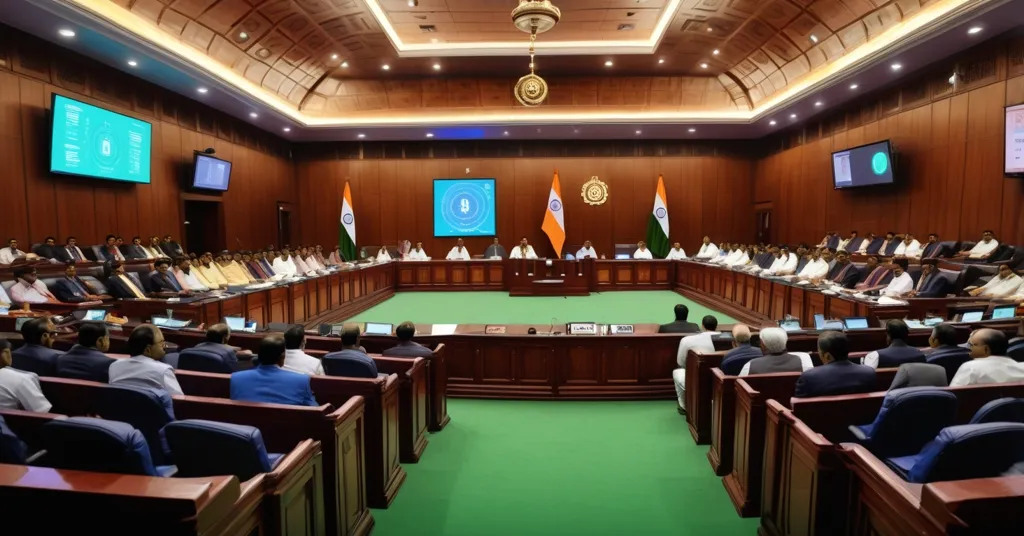
LTB India’s Parliament is finally treating crypto like a real market, not just a headache to tax into oblivion. A formal hearing with Binance, WazirX, and ZebPay marks a notable shift toward direct crypto regulation talks, as reported in this Parliament meeting.
- Formal hearing: India’s Standing Committee on Finance met crypto industry representatives in New Delhi on May 20.
- Policy shift: Lawmakers heard from Binance, WazirX, and ZebPay on virtual digital assets.
- Tax fallout: The 30% gains tax, no loss offsetting, and 1% TDS pushed activity offshore.
- Clear rules wanted: Industry voices say better regulation could improve investor protection and keep liquidity in India.
The hearing at Parliament House Annexe in New Delhi is being described as one of the most formal interactions yet between India’s lawmakers and the crypto industry. That’s a big deal. For years, India’s policy posture on crypto has often felt like a messy blend of suspicion, punishment, and vague warnings — the kind of bureaucratic fog that doesn’t stop an industry, it just shoves it out of sight.
Now the Standing Committee on Finance has heard oral evidence from representatives of ZebPay, Binance, and WazirX on virtual digital assets, the official term India uses for crypto and related digital assets. That matters because when lawmakers hold a serious hearing, it usually means one thing: the asset class is too large, too active, and too politically relevant to keep pretending it doesn’t exist.
For readers unfamiliar with the terms, Binance, WazirX, and ZebPay are major crypto exchanges and platforms. A parliamentary committee is a group of lawmakers tasked with reviewing policy issues in detail before decisions move further through the system. In plain English: this is not a token meeting with a few PowerPoint slides. It is a sign that India may be moving from half-measures to actual policymaking.
The backdrop is India’s heavy-handed crypto tax regime, introduced with a 30% flat tax on crypto gains, no loss offsetting, and a 1% TDS on every transaction. TDS means tax deducted at source — a cut taken at the point of transfer. The intention was to bring order and revenue to a sector many regulators still view with suspicion. The result, according to industry participants, has been very different: activity has migrated offshore instead of disappearing.
That’s the ugly irony. When rules are punishing enough, people don’t magically stop trading. They move to venues outside your reach, where your tax collector and your consumer protection rules are both left standing outside in the rain. The government may get to say it took a hard line, but it also ends up with less visibility, less oversight, and likely less revenue. A spectacular own goal, if the point was to keep the domestic market in the open.
Avinash Shekhar, CEO of Pi42, framed the parliamentary hearing as a meaningful step toward a more mature policy process. His view is that India already has one of the world’s largest digital asset user bases, so the need for clarity is only growing. He stressed that the goal should not be blind encouragement or blanket hostility, but a framework that supports investor protection, market transparency, and responsible innovation.
“India bringing major global and domestic crypto platforms into formal policy discussions is a significant step for the industry’s long-term evolution.”
“It signals that the conversation is gradually moving from uncertainty toward structured engagement between policymakers and the ecosystem.”
“India already represents one of the world’s largest digital asset user bases, and with participation continuing to grow, regulatory clarity becomes increasingly important for investor protection, market transparency, and responsible innovation.”
That argument lands because it is rooted in reality, not hype. Crypto is already here. Users are already here. Businesses are already here. The only serious question is whether India wants those flows happening on platforms that can be supervised, taxed, and secured — or whether it wants to keep pushing them into offshore corners where oversight becomes much harder.
Shekhar also pointed lawmakers toward the practical issues that actually shape a functioning market: compliance, custody, taxation, cybersecurity, and cross-border transactions. These are the boring parts of crypto, which is exactly why they matter. Custody is about who holds the assets and how they are protected. Cross-border transactions matter because crypto does not care about national borders, no matter how many forms governments print. Cybersecurity is the obvious but unforgiving piece: if the rails are weak, hackers will exploit them faster than regulators can schedule the next meeting.
Raghuveer Kancherla of Sprinto focused on another pressure point: the compliance burden on fintech and crypto firms in India. His warning was blunt. India’s regulatory environment is not just strict; it is fast-moving and layered, with overlapping frameworks from the RBI, SEBI, DPDP, and emerging crypto rules. That creates a compliance maze that can slow businesses down and drain resources that should be used for product development and customer service.
“India’s fintech regulatory environment is both complex and fast-moving.”
“Every new framework adds surface area. Every audit cycle creates drag.”
“Manual GRC was not built for this pace. Autonomous GRC is the only way to keep up by monitoring continuously, adapting in real time, and treating compliance as infrastructure rather than overhead.”
GRC stands for governance, risk, and compliance. In practice, it is the machinery companies use to stay within the rules, manage risk, and survive audits without losing their minds. Kancherla’s point is simple: if regulation keeps moving at speed, manual compliance becomes a bottleneck. Autonomous GRC refers to automated systems that monitor obligations continuously and adjust in real time. For fast-growing financial and crypto businesses, that is increasingly less of a luxury and more of a necessity.
There is also a broader policy lesson here, and it is one governments keep relearning the hard way: if rules are too blunt, people route around them. Crypto is especially good at exposing that weakness because it is globally accessible, easy to move, and hard to fence in with old-school controls. That does not mean the answer is no regulation. It means the answer is better regulation.
To be fair, regulators do have legitimate concerns. Crypto has been used for scams, speculative blow-ups, and plain old tax evasion. Exchanges can fail. Bad actors can slip through weak KYC systems. Retail traders can get torched by leverage and nonsense promises from the usual crypto carnival barkers. So a government wanting stronger oversight is not crazy; pretending the sector should be ignored would be lazy. The problem is execution. India’s tax regime appears to have punished activity without creating a clean, usable path for compliance.
The hearing suggests India may be entering a more practical phase. Instead of trying to wish crypto away, lawmakers are hearing how the sector actually works in real life. That includes the plumbing behind trading, custody, taxation, cybersecurity, and cross-border flows. It is a healthier posture, even if it is arriving after plenty of damage has already been done.
What comes next will matter more than the hearing itself. If India uses this moment to build a clear framework, it could strengthen domestic exchanges, improve investor safeguards, and keep liquidity inside the country. If it doesn’t, the market will keep doing what markets do: moving where the friction is lowest. Right now, too much of that friction comes from policy, not technology.
Key takeaways and questions:
Why does this hearing matter?
It shows India is moving from vague hostility toward direct policy engagement with the crypto sector.
What is virtual digital assets?
It is India’s official regulatory term for crypto and related digital assets.
Why did India’s crypto tax regime push activity offshore?
The 30% gains tax, no loss offsetting, and 1% TDS made trading more painful, so many users and volumes moved to offshore exchanges.
What could clearer regulation improve?
Better rules could improve investor protection, market transparency, compliance, and keep liquidity on regulated Indian platforms.
Why is compliance such a burden for firms in India?
Because crypto and fintech businesses must navigate overlapping rules from RBI, SEBI, DPDP, and evolving digital asset frameworks.
What does Autonomous GRC mean?
It means automated governance, risk, and compliance systems that continuously monitor regulatory obligations and adapt in real time.
What does this mean for crypto users in India?
If lawmakers create sensible rules, users could see stronger protections and better domestic platforms. If they don’t, activity will keep leaking offshore, where Indian oversight has far less reach.