Bitcoin and the Iran Deal: Geopolitics Pushes BTC as a Macro Asset
 LTB
LTB Bitcoin and the Iran Deal: Why Geopolitics Is Moving BTC Like a Macro Asset
Bitcoin is increasingly trading less like a niche crypto bet and more like a macro asset that reacts to war risk, sanctions, oil shocks, and global liquidity swings. The Iran deal is a reminder that BTC doesn’t live in a vacuum — it lives in the same messy world that moves gold, forex, and oil.
- Bitcoin is reacting to geopolitics like a macro market asset.
- Iran, sanctions, and oil risk can ripple into BTC through liquidity and panic.
- Bitcoin’s safe-haven case is real, but conditional and often overstated.
- Macro traders now watch BTC alongside dollar strength, yields, and risk appetite.
For years, Bitcoin’s price was explained by halving hype, exchange blowups, regulatory drama, and whatever fever dream was circulating on crypto Twitter that week. That era is not gone, but it’s no longer the whole picture. Bitcoin is now big enough, liquid enough, and globally relevant enough to get dragged into macro trading conversations that used to be reserved for gold, oil, currencies, and bonds.
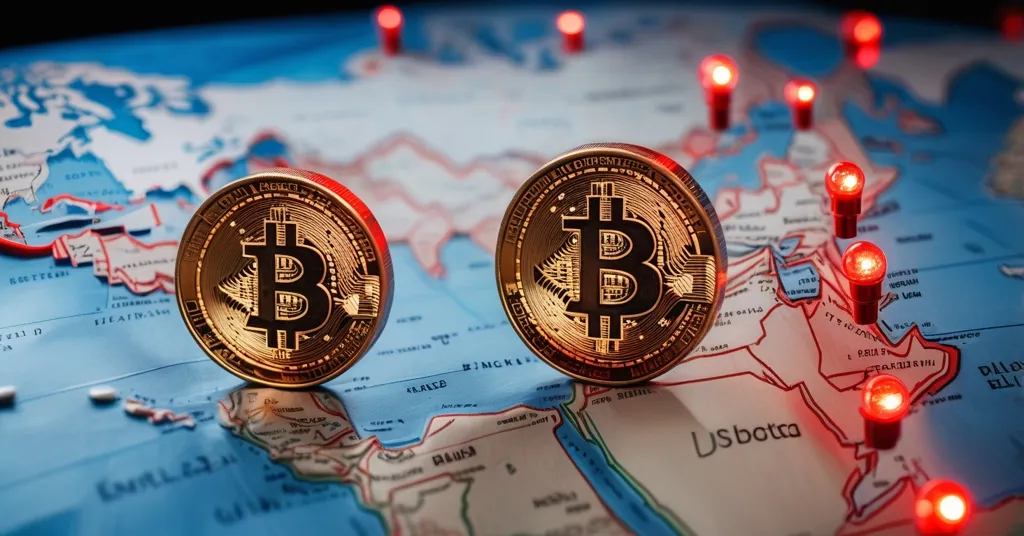
That’s where the Iran deal comes in. When tensions rise around Iran, investors don’t just think “geopolitics.” They think sanctions, energy supply, inflation expectations, dollar demand, capital controls, military escalation, and broader market stress. In other words, they think like macro traders. And once the market starts thinking that way, Bitcoin gets pulled into the same web.
Why Iran matters to Bitcoin price action
The Iran deal matters because it sits at the intersection of diplomacy, sanctions, and energy markets. If negotiations break down or tensions escalate, the knock-on effects can spread fast. Oil can spike. The dollar can strengthen. Risk assets can wobble. Investors can rush toward safer positions. That whole chain matters for BTC because Bitcoin now behaves like an asset sensitive to liquidity and confidence.
For readers less familiar with the term, a macro asset is one that tends to move with big-picture forces like interest rates, inflation, war, currency flows, and overall market liquidity. Bitcoin increasingly fits that description. It is still a volatile, speculative asset, but it is no longer just a crypto-native toy. It is part of the global capital markets conversation whether anyone likes it or not.
That does not mean Bitcoin suddenly became a perfect hedge against geopolitical chaos. Far from it. It means the market is learning to price BTC using the same lens it uses for other major assets: are investors feeling confident or scared, is money moving into or out of risk, and is the global system getting tighter or looser?
Bitcoin as a macro asset: the good news and the messy truth
The bullish interpretation is easy enough to see. Bitcoin has scarce supply, no central issuer, and no government can print more of it on demand. Those traits make it attractive when people are worried about currency debasement, sanctions, censorship, or the reliability of traditional finance. In that sense, geopolitical stress can reinforce the “digital gold” thesis.
But the devil’s-advocate view matters too: Bitcoin often behaves like a high-beta risk asset when markets are panicking. If investors are rushing to cash, dollars, or U.S. Treasurys, BTC can get sold right alongside equities and other speculative assets. That’s the part the maximalist crowd loves to ignore while repeating “number go up” like a broken church hymn.
So is BTC a safe haven or just another risky trade with better branding? The honest answer is: sometimes both, depending on the conditions. During periods of distrust in banks, capital controls, or monetary instability, Bitcoin can shine. During broad risk-off events, it can get crushed with everything else. That does not make the thesis useless. It makes it real.
Gold took centuries to earn its reputation. Bitcoin is trying to do it in real time while also being traded by leverage-happy speculators and macro funds. Of course the result is messy.
Sanctions, capital controls, and the darker utility of BTC
There is also a less comfortable reason geopolitical stress matters for Bitcoin: sanctions and capital controls make borderless money useful.
When people or businesses cannot move funds freely through traditional rails, Bitcoin becomes more than a chart on a screen. It becomes a tool for getting value across borders without asking permission from a bank, a government, or some compliance department that thinks “freedom” is a typo.
That’s part of Bitcoin’s power. It is censorship-resistant money that works outside the old financial bottlenecks. It can help ordinary people protect wealth in unstable regions. It can also be used by bad actors trying to dodge restrictions. Both things are true, and pretending otherwise is childish.
This is where the ideological and practical sides of Bitcoin collide. The same property that makes BTC valuable in oppressive environments — its permissionless, decentralized design — also makes it harder for states to control. That is exactly why governments hate it when it works properly. It weakens their grip on money. No wonder they keep trying to frame it as either a scam, a speculative joke, or an illicit finance tool. Anything to avoid admitting that open money is a threat to closed systems.
Risk-on, risk-off, and why traders care
One reason Bitcoin now moves with geopolitical headlines is that investors increasingly treat it as part of the broader macro basket. When markets are in risk-on mode, investors feel confident and pile into assets with more upside and more volatility. When they shift to risk-off, fear takes over and money flows into safer places like cash, bonds, or the dollar.
That matters because Iran-related headlines can trigger exactly that kind of mood swing. If markets fear escalation, they often price in higher energy costs, more inflation pressure, more uncertainty, and tighter financial conditions. Those are all bad ingredients for speculative assets. Bitcoin, for all its “sound money” branding, still trades like an asset that cares deeply about liquidity.
This is why the conversation around BTC has matured. Traders are no longer just asking what some exchange CEO said or whether a memecoin influencer is trapped in another failed leverage trade. They are looking at dollar strength, oil prices, bond yields, sanctions headlines, and whether the world is getting more brittle. Bitcoin is in the same arena now, whether that flatters the purists or not.
Bitcoin is not a magic crisis-proof asset
The safe-haven narrative needs a reality check. Bitcoin is not a magical shield against chaos. It is an asset with a hard supply schedule and global portability, but it is still young, still volatile, and still heavily influenced by speculative flows.
That means Bitcoin can benefit from geopolitical stress in some cases and get smoked in others. The market does not owe BTC a clean narrative. If anything, the biggest mistake investors make is treating Bitcoin like it must behave consistently to “prove” anything. It doesn’t. Markets are not obligated to validate anyone’s slogan.
There’s a reason analysts keep comparing BTC to both gold and tech stocks. Gold is the classic refuge in uncertainty. Tech stocks are sensitive to liquidity and growth expectations. Bitcoin sits awkwardly between those worlds, which is exactly why it gets misread so often. It has monetary properties, but it trades through modern market plumbing. That combination is powerful, but not neat.
And that’s fine. Bitcoin never needed to be neat. It needed to be useful.
What the Iran deal says about Bitcoin’s future
The larger takeaway is that Bitcoin is becoming harder to dismiss as a fringe asset with no connection to the real world. Geopolitical shocks, sanctions risk, and capital-flow disruptions now show up in BTC conversations because Bitcoin is large enough to matter and open enough to absorb that attention.
That is a milestone, not a verdict. It does not mean Bitcoin has “won” the safe-haven debate. It means the market has started to treat it as something more serious than a casino chip with a cult following. That’s progress, even if the ride is still ugly as hell.
Bitcoin may not be a perfect refuge, but it is increasingly a relevant one. In a world where money is weaponized, borders are weaponized, and financial systems can be frozen with a keystroke, a permissionless asset will always have a role. The question is not whether BTC belongs in the macro conversation. It already does. The question is how often it behaves like a hedge, how often it behaves like a risk asset, and whether investors can handle the contradiction without turning into full-time bagholders.
That contradiction is Bitcoin in a nutshell: freedom and volatility, monetary promise and market chaos, ideological purity and brutal real-world pricing. Welcome to the big leagues.
Key questions and takeaways
Why does the Iran deal matter for Bitcoin?
Because it can influence sanctions, oil prices, inflation expectations, dollar strength, and global risk appetite — all of which can move BTC.
Is Bitcoin becoming a macro asset?
Yes. Bitcoin is increasingly being traded with the same lens used for gold, oil, currencies, and other assets driven by global liquidity and geopolitical risk.
Does geopolitical turmoil help Bitcoin?
Sometimes. It can boost demand for censorship-resistant, borderless money, but it can also trigger broad market selloffs that drag BTC down.
Is Bitcoin a safe haven like gold?
Not consistently. Bitcoin has safe-haven traits, but it often behaves like a volatile risk asset when investors are panicking.
Why do sanctions and capital controls matter so much?
Because they make permissionless money useful. When the banking system is restricted or politicized, Bitcoin can move value across borders without asking for approval.
What does this mean for Bitcoin’s long-term role?
Bitcoin is no longer just a crypto trade. It is becoming part of the global monetary and geopolitical conversation, which strengthens its relevance even when the price action is ugly.