U.S. Strategic Bitcoin Reserve No-Sell Policy, Not a True Buying Spree Yet
 LTB
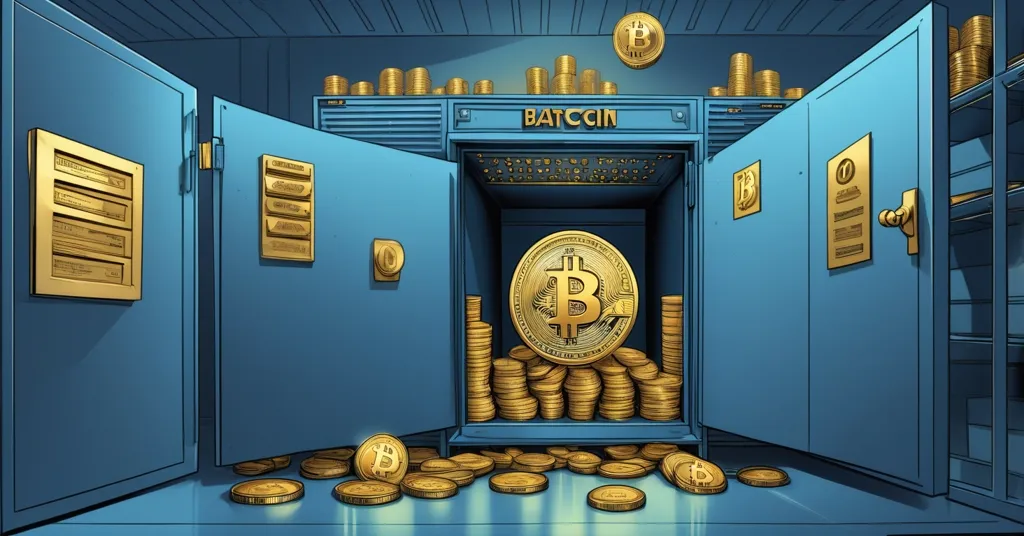
LTB The U.S. Strategic Bitcoin Reserve is real, but it is not the giant sovereign buying machine some people hoped for. Right now, it looks more like a legal and custody framework with a no-sell rule than a full-blown Bitcoin accumulation program.
- No-sell policy, not active buying
- About 328,372 BTC reportedly held by the U.S.
- Congress will decide whether this becomes a true acquisition strategy
President Donald Trump signed the executive order creating the Strategic Bitcoin Reserve on March 6, 2025, and that was a meaningful shift. For years, the U.S. government treated seized Bitcoin like inventory to be liquidated whenever convenient. Now, the direction is different: hold the Bitcoin already in government hands, stop selling it, and separate it from other digital assets the state may also control.
That sounds ambitious, and politically it is. But it is not the same thing as the Treasury or Commerce Department going on a market-buying spree. The Strategic Bitcoin Reserve is, for now, a directive to keep and organize Bitcoin the government already owns. It is not yet a mandate to actively acquire more on the open market.
The distinction matters. A reserve that simply holds seized BTC is one thing. A reserve that buys Bitcoin is something else entirely. The first is defensive. The second would be a sovereign signal that the hardest asset on the planet is now being treated as a strategic monetary holding, not just criminal evidence with a price tag.
By most estimates, the U.S. government holds around 328,372 BTC, worth roughly $25.4 billion at current prices. Much of that came from law enforcement seizures and forfeitures, including Bitcoin tied to Silk Road and BTC recovered from the Bitfinex hack. In plain English, forfeiture means the government legally took the assets through criminal or civil proceedings, usually because they were linked to illegal activity.
That stash is now supposed to sit under a more coherent framework. That is a good thing, because custody has been a mess. An audit found federal Bitcoin storage practices were embarrassingly sloppy, including cold wallets stored in desk drawers. Yes, actual drawers. The kind that belong in filing cabinets, not national reserve management. If a country wants to present itself as a serious Bitcoin holder, “where did we leave the keys?” is not a confidence-building security model.
The mess was not just theoretical either. The U.S. Marshals Service reportedly suffered a $60+ million exploit involving government seizure wallets in late 2025. That should be enough to settle the argument that custody is some boring back-office issue. It is not. Custody is the whole game when the asset is bearer-based and irreversible. If you lose control of the keys, you lose the Bitcoin. No customer support desk. No “please hold.” No mercy.
White House digital asset advisor Patrick Witt has become the public face of the cleanup effort. In May 2026, he said a “major announcement” was coming “in the next few weeks,” and described the custody and legal work as a “breakthrough.” He also said cold wallets had been sitting “in drawers of desks in various agencies,” which sounds less like national reserve policy and more like a badly run office scavenger hunt.
Witt’s comments matter because they point to what is probably coming next: not a gigantic buying announcement, but a more formal custody structure and legal framework. In other words, centralization, process, and governance — not a moonshot order to buy a million Bitcoin tomorrow morning.
The executive order itself does not authorize active Bitcoin purchases. It instructs the Treasury and Commerce Departments to study budget-neutral acquisition strategies, but that is not a buying mandate. Budget-neutral means, in simple terms, that the government is supposed to look for ways to fund purchases without creating new taxpayer spending. Nice phrase, serious promise, plenty of room for bureaucratic smoke.
Treasury Secretary Scott Bessent made the point even more directly in August 2025:
“We’re not going to be buying that [bitcoin] but are going to use confiscated assets and continue to build that up, we’re going to stop selling that.”
That quote cuts through the hype. The government is saying it will hold what it already has and stop dumping it. That is a big improvement over the old “seize, auction, move on” routine. But it is not the same as becoming a strategic buyer in the open market. There is a big gap between “we won’t sell” and “we will actively accumulate.”
The order also carved out a separate U.S. Digital Asset Stockpile for non-Bitcoin crypto assets such as Ethereum, XRP, Solana, and Cardano. That separation is important. Bitcoin gets the strategic reserve treatment because it is the hardest asset in the group and has the strongest case for sovereign holding. The rest sit in a generic stockpile, which is basically the government’s way of saying: “We confiscated these too, and we are still figuring out the paperwork.”
Former White House crypto advisor Bo Hines was the loudest voice behind the more aggressive narrative before stepping down in August 2025. He pushed the idea that the United States should become “the Bitcoin superpower of the world.” That is the kind of line that excites Bitcoin bulls and gives bureaucrats mild indigestion. It is also the kind of language that runs far ahead of what the policy apparatus can actually deliver.
And that is the real issue here: the rhetoric was bigger than the machinery. The Strategic Bitcoin Reserve is not fake, but the most bullish interpretation of it was. The current setup is mostly about legal clarity and custody discipline. It is not yet a sovereign accumulation engine. The beast has awakened, but it has not started eating.
Congress is where that changes, if it changes at all.
Senator Cynthia Lummis has pushed the BITCOIN Act, which proposes buying 1 million BTC over five years. The funding idea is classic Washington wizardry: use Federal Reserve net earnings and gold revaluation to pay for it. Gold revaluation means updating the official value of gold holdings to reflect current market levels, which could create accounting room for new purchases without raising taxes in the obvious way. That is clever on paper. Getting it through Congress is another matter.
If passed, the BITCOIN Act would turn the reserve from a holding framework into an actual state accumulation policy. That would be a seismic move. It would mean the United States is no longer just acknowledging Bitcoin as an asset worth holding when confiscated — it would be actively buying into a scarce monetary network it cannot inflate away. That is a very different message to markets, central banks, and rival states watching from the sidelines.
But there is also a more cautious path on the table. The bipartisan American Reserve Modernization Act, or ARMA, introduced in May 2026 by Representative Nick Begich of Alaska and Democratic Representative Jared Golden of Maine, strips out the 1 million BTC target and adds a 20-year lockup. A lockup means the assets would be held for a long period without being sold, which is a much less aggressive posture than an outright acquisition blitz.
ARMA is the compromise version: still pro-Bitcoin, but far less dramatic. It suggests some lawmakers like the idea of a strategic reserve, but do not want to hand Washington a giant new apparatus for speculation, policy theater, or future political whiplash. That skepticism is fair. Governments are excellent at making grand pronouncements and then fumbling the actual implementation like a drunk uncle at a wedding.
Senate Banking Committee markup of the competing bills is expected by May 31, 2026. That is the next serious checkpoint. If lawmakers favor a framework like Lummis’s BITCOIN Act, the reserve could become a real accumulation vehicle. If they lean toward ARMA, the United States may end up with a more conservative “hold and lock” model instead.
Either way, the custody question remains central. A sovereign Bitcoin reserve only matters if it is secured properly. That means institutional-grade custody, clear legal ownership, and a process that does not leave private keys in a desk drawer next to a half-eaten granola bar. BitGo, Anchorage Digital, and Coinbase Custody have all been mentioned as likely institutional custodians. That makes sense. This is not the place for improvised key management or agency-by-agency chaos.
The broader geopolitical angle is where things get interesting. Sovereign Bitcoin accumulation is still rare, but it is no longer unthinkable. El Salvador already treats Bitcoin as part of its national strategy. Abu Dhabi and the UAE have also emerged as serious sovereign crypto accumulators. If the United States moves from no-sell custody to active buying, other states could respond in kind. China and Hong Kong are obvious candidates to watch, if only because they rarely sit still when a strategic asset starts getting politically validated.
That is why the Strategic Bitcoin Reserve matters even before any new purchases happen. It is a signal that Bitcoin is no longer being treated as disposable contraband. The U.S. government is admitting, at least implicitly, that Bitcoin is worth keeping. That alone is a big shift from the old “auction it off and pretend it was never there” approach.
Still, it is worth keeping both feet planted on solid ground. A lot of crypto politics is shiny nonsense with better lighting. The reserve is real, but it is smaller and more procedural than the loudest headlines implied. The executive order created a legal directive. It did not create an operational acquisition program. That is the core truth.
For Bitcoin, that is both a win and a warning. It is a win because the world’s biggest state actor is no longer treating BTC as trash to dump. It is a warning because the leap from “hold seized Bitcoin” to “buy meaningful amounts of Bitcoin” is a massive one, and it requires Congress, budget mechanisms, legal clarity, and custody standards that actually deserve the name.
Bitcoin does not need government approval to exist, but it does become harder to ignore when governments start holding it like a strategic asset. That is the long-term significance here. The reserve is not the finish line. It is the beginning of a fight over whether the U.S. wants to merely preserve seized Bitcoin or step into the role of an active sovereign accumulator.
- What did the Trump executive order actually do?
It created a Strategic Bitcoin Reserve with a no-sell policy and a separate digital asset stockpile for non-Bitcoin crypto assets. It did not authorize active Bitcoin purchases. - How much Bitcoin does the U.S. government reportedly hold?
Roughly 328,372 BTC, worth about $25.4 billion at current valuations. - Does the U.S. plan to buy more Bitcoin right now?
Treasury Secretary Scott Bessent said the government will not be buying Bitcoin and will instead use confiscated assets while stopping sales. - Why does custody matter so much?
Bitcoin is only as secure as the keys controlling it. Poor custody can lead to losses, hacks, or administrative chaos, which is a terrible look for a state reserve. - What is the difference between the BITCOIN Act and ARMA?
The BITCOIN Act proposes buying 1 million BTC over five years. ARMA removes the 1 million BTC target and adds a 20-year lockup, making it far more cautious. - What is likely to happen next?
The next announcement will likely focus on custody centralization, legal framework clarity, and reserve structure, not immediate large-scale buying authority.