U.S. Shoots Down Iranian Drones Near Strait of Hormuz, Raising Oil and Market Risk
 LTB
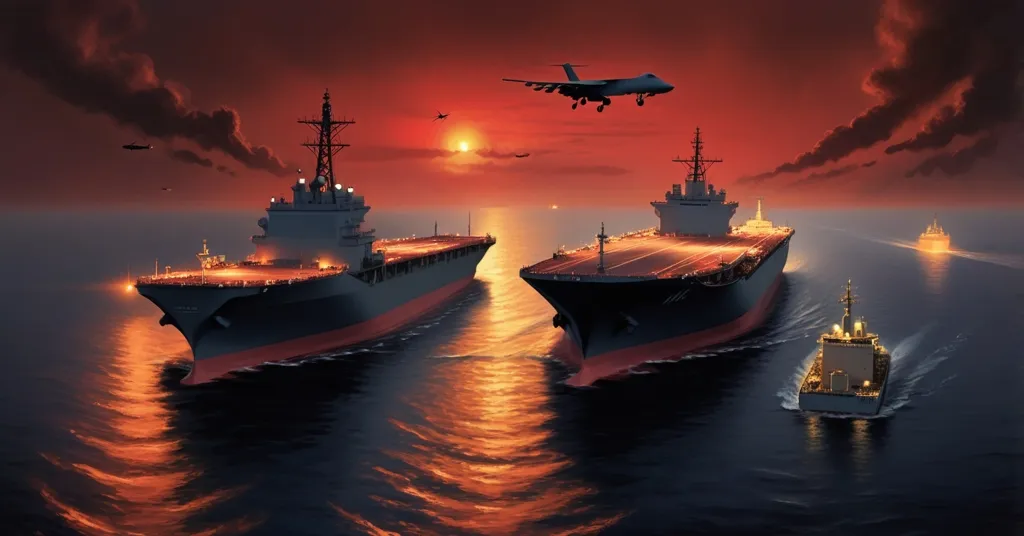
LTB U.S. forces shot down Iranian drones that were reportedly threatening maritime traffic in the Strait of Hormuz, a reminder that this narrow stretch of water remains one of the most dangerous pressure points in global trade.
- Maritime security: U.S. forces intercepted drones after they were seen as a threat to shipping.
- Strategic chokepoint: The Strait of Hormuz is a narrow waterway between Iran and Oman that carries a huge share of global oil traffic.
- Escalation risk: Any flare-up here can hit oil prices, shipping costs, and broader market stability.
The Strait of Hormuz is not some random patch of blue on a map. It is one of the world’s most important shipping lanes, a narrow maritime corridor where a massive amount of crude oil and refined fuel moves every day. If Iranian drones are flying near commercial vessels there, that is not harmless theater. It is a direct challenge to maritime security and a live reminder that the Gulf can turn volatile fast.
The reported U.S. response — shooting the drones down — sends a familiar signal: Washington is still prepared to use force when maritime traffic is threatened. That matters because the strait is a chokepoint in the plain-English sense of the word. Narrow route, big consequences. If shipping gets disrupted there, the shock does not stay local. It can push up oil prices, increase tanker insurance costs, and rattle importers, traders, and consumers far beyond the region.
That is why the Strait of Hormuz keeps showing up in discussions about geopolitical risk. The route sits between Iran and Oman and is one of the most sensitive lanes on the planet. When tensions rise there, markets do not need a full-blown war to get nervous. A handful of drones and a tense military response are often enough to remind everyone that global trade still depends on fragile physical routes guarded by heavily armed states with trust issues.
Iran has long leaned on drones as part of its broader strategy of asymmetric warfare — meaning smaller, cheaper, less conventional tactics used to pressure a stronger opponent. Drones are useful for harassment, surveillance, and deniable escalation. They are relatively low cost, can create confusion, and allow a state or proxy network to apply pressure without immediately crossing into open conventional war. That is the ugly efficiency of gray-zone conflict: cheap tools, expensive headaches.
But the same ambiguity that makes drones useful also makes them dangerous. A drone that is meant to intimidate can be interpreted as the opening move of something bigger. One misread signal, one overreaction, one bad strike, and suddenly the room is full of smoke and everyone claims they were “just defending themselves.” That is how crises get stupid in a hurry.
For the U.S. and its allies, the central issue is not only the drones themselves, but what they represent. Maritime traffic through the Strait of Hormuz is essential to global energy markets. If a hostile actor can interfere there, even briefly, it creates leverage. Not because a few drones can shut the strait down, but because the threat alone is enough to force everyone else to spend more, hedge harder, and worry louder.
That has a knock-on effect for oil, shipping, inflation, and risk assets. Energy is still the bloodstream of the global economy, even if the financial elite likes to pretend everything can be abstracted into spreadsheets and policy decks. Disrupt the sea lanes, and the cost shows up everywhere: fuel, transport, manufacturing, delivery, food prices. Geopolitical tension is never as “contained” as policymakers like to say on television.
Bitcoin readers should pay attention to this sort of event for a simple reason: every time state conflict threatens trade routes, energy supply, or settlement systems, the case for neutral, censorship-resistant money gets a little clearer. Bitcoin does not stop drones — obviously. It is not a magic anti-war ray from cyberspace. But it does sit outside the banking rails, sanctions games, capital controls, and central-bank panic that often intensify when geopolitical risk spikes.
That does not mean BTC automatically moons every time the Middle East gets tense. That kind of lazy price-pumping narrative is nonsense. In real market stress, capital can rush into cash, gold, Treasuries, oil, or Bitcoin depending on the mood, the liquidity setup, and whether investors are feeling brave or terrified. Still, the broader point stands: when governments start flexing around strategic trade routes, hard assets and self-custody look less like internet ideology and more like common sense.
There is also a deeper lesson here about fragility. The modern global economy depends on a handful of maritime chokepoints that can be threatened with surprisingly small amounts of force. That is true for the Strait of Hormuz, but also for other critical shipping routes around the world. The system is efficient, yes. It is also brittle. The more interconnected it becomes, the more a local military incident can trigger a global financial reaction.
And that is why these incidents deserve more than a knee-jerk “routine regional tension” shrug. They are not routine for the crew on a tanker, not routine for the insurer underwriting the cargo, and not routine for countries that rely on stable energy imports. What looks like a tactical drone encounter can quickly become a macroeconomic story.
Why does the Strait of Hormuz matter so much?
It is one of the world’s most important oil shipping routes. A large share of global petroleum exports passes through it, so any disruption can affect fuel prices, transport costs, and market confidence almost immediately.
What does the U.S. shooting down the drones signal?
It signals that Washington is willing to act directly to protect maritime traffic. The message is simple: threats to shipping in this corridor are not going to be ignored.
Why does Iran use drones in this kind of scenario?
Drones are cheap, flexible, and effective for asymmetric warfare. They let Iran apply pressure, probe defenses, and create uncertainty without launching a full conventional attack.
Why should crypto investors care about maritime security?
Because geopolitical shocks can expose how fragile the legacy financial system really is. When trade, oil, and shipping are under stress, the appeal of neutral, permissionless settlement and hard money becomes easier to understand.
Does this mean Bitcoin is a war hedge?
Not automatically. Bitcoin is volatile and still trades like a risk asset in many situations. But in moments when governments, sanctions, and capital controls dominate the headlines, it stands out as a non-sovereign monetary network that does not need permission from any state.
The takeaway is straightforward: the Strait of Hormuz remains one of the world’s most dangerous economic pressure points, and Iranian drone activity there keeps the risk of escalation alive. The U.S. may have stopped this immediate threat, but the underlying reality has not changed. A narrow waterway, a few drones, and a tense military response can still put the entire global market on edge.