Russia Targets USDT, USDC and BNB With New Crypto Fees and Limits
 LTB
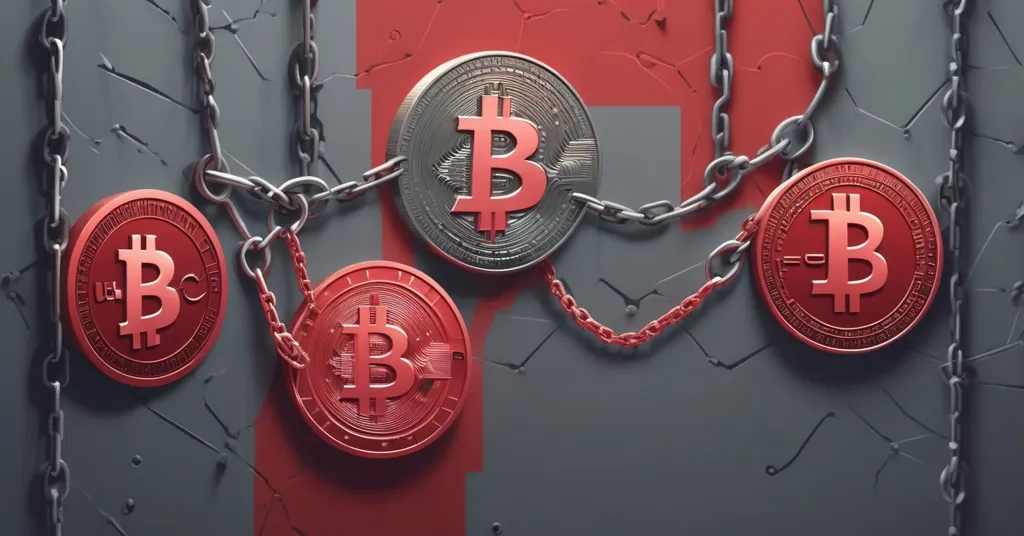
LTB Russia is moving to squeeze Western-linked crypto assets with new fees, trading limits, and technical restrictions, putting USDT, USDC, and Binance’s BNB in the crosshairs.
- Fees, limits, and technical safeguards are being prepared
- USDT, USDC, and BNB are specifically named
- Investor protection is the official line; sanctions pressure is the real backdrop
- Cross-border crypto settlements remain allowed
- Russia wants control, not a free-for-all
Russia’s crypto play: tighten the screws, keep the rails
Russia is not trying to kill crypto. It is trying to domesticate it, tax it, and point it in a direction that serves the state. That means making “unfriendly” crypto assets more expensive and harder to use, while keeping a lane open for cross-border settlements that help Moscow bypass parts of the Western financial system.
Deputy Finance Minister Ivan Chebeskov laid out the direction on June 9 at SPIEF 2026, the St. Petersburg International Economic Forum. According to his comments, the government is considering “technical protection measures” and economic incentives such as commissions or recommendations that would push citizens toward other assets.
“These could include both technical protection measures and various economic incentives, commissions or recommendations, that would encourage citizens to own other assets.”
That’s bureaucrat-speak for a familiar move: if the state doesn’t like where capital is flowing, it makes the route sticky, expensive, and irritating enough that plenty of people simply give up. Not exactly a banner day for financial freedom.
Which crypto assets are targeted?
The names already on the radar are the usual suspects for people who actually move money across borders: USDT, USDC, and BNB.
For readers newer to the space, stablecoins like USDT and USDC are crypto tokens designed to track the value of a fiat currency, usually the U.S. dollar. They’re popular because they combine crypto-style transfer speed with dollar stability. In practice, they are the digital glue for trading, payments, and emergency liquidity.
BNB is different. It is the native token of the Binance ecosystem, used across the exchange’s products and services. It’s not a dollar-pegged stablecoin, but it is still tied to a major centralized crypto power center that governments can pressure.
That’s the rub. These assets are useful precisely because they sit close to the real financial system. But that also makes them vulnerable to political pressure, blacklisting, freezes, compliance demands, and other forms of state-sanctioned misery.
What “unfriendly” means in Russia
In Russia, “unfriendly” is not just a throwaway insult. It is a legally meaningful label tied to countries that imposed sanctions after the 2022 invasion of Ukraine. That includes the United States, EU member states, the United Kingdom, and related jurisdictions seen as aligned with the sanctions regime.
So when Russian officials talk about unfriendly crypto assets, they are not just talking about a generic dislike for foreign tokens. They are targeting assets linked to hostile jurisdictions and the companies behind them.
That matters because USDT and USDC are issued by centralized entities. Tether and Circle can, in certain circumstances, freeze or blacklist addresses. Binance has also been under intense global regulatory pressure. From a user’s perspective, that centralization can be convenient. From the Kremlin’s perspective, it is a liability. A leash is still a leash, even if it’s made of code and legal paperwork.
The numbers being floated
Analyst Vladimir Chernov of Freedom Global estimates that Russia could impose fees ranging from 0.5% to 2% per transaction on broadly defined “unfriendly” assets, with up to 3% per transaction for dollar-pegged stablecoins.
Those figures are not official, but they give a sense of the policy shape being discussed. The aim is not necessarily to ban these assets outright. It is to make them less attractive, less convenient, and more expensive than ruble-based or BRICS-aligned alternatives.
That distinction is important. Governments often prefer not to say “ban” when “friction” will do the job. A good enough tax, a bad enough rule, or a technical restriction can do the same work while sounding less blunt in public.
The bill behind the push
The measures are part of a broader crypto regulation bill in the State Duma titled “On Digital Currency and Digital Rights.” The bill passed its first reading by 327–13 on April 21, 2026, which is about as close to a political love letter as parliamentary voting gets.
The first-reading framework included:
- Five license categories for crypto operators
- Expanded supervisory powers for the Bank of Russia
- A ban on domestic crypto payments
- A carve-out allowing cross-border crypto settlements
Anatoly Aksakov, chairman of the Duma Financial Markets Committee, has said the legislation is a top priority, with the main framework targeted for July 1, 2026 and enforcement rules operational by July 1, 2027.
So Russia’s message is not “crypto bad.” It is more like: crypto is useful when it serves state goals, and deeply annoying when it gives users too much freedom.
What the practical impact could look like
If these fees and limits become law, the effects could land in a few ways.
For ordinary traders, using USDT or USDC in Russia could become more expensive and less efficient. That may push some users to hold different assets, shift to ruble-based instruments, or simply move activity offshore.
For exchanges and brokers, the compliance burden could rise. They may need to add new filters, pricing rules, wallet restrictions, or transaction monitoring systems to keep regulators happy.
For businesses using crypto for settlement, especially in cross-border trade, the picture gets more complicated. Russia clearly wants to preserve crypto as a workaround for sanctions-era commerce, but not necessarily on terms chosen by private users. That can create a messy split between state-approved crypto flows and everything else.
And for stablecoins specifically, this is a reminder that convenience comes with strings attached. When an asset depends on a centralized issuer, it can be pressured by regulators, frozen in some cases, or made less usable through policy alone. That’s a feature if you want compliance. It’s a bug if you want censorship resistance.
Why Bitcoin still matters here
This is where Bitcoin earns its reputation the hard way.
Bitcoin is not the best tool for every payment use case, and anyone pretending otherwise is selling smoke. It is slower than some alternatives, more volatile than stablecoins, and not ideal for everyday pricing in a lot of commercial settings. But Bitcoin does not have a central issuer sitting in an office waiting to be leaned on by a government.
That makes it a very different beast from USDT or USDC. When states start targeting certain assets based on geopolitics, the value of censorship-resistant money becomes obvious fast. Bitcoin can’t solve every problem, but it is much harder to freeze, blacklist, or redirect by decree.
Russia’s move is a good reminder that “decentralized” is not just a marketing slogan. It’s the whole point when governments decide they want a hand on the steering wheel.
Russia’s selective embrace of crypto
The bigger picture is straightforward: Russia is not anti-crypto across the board. It is selectively pro-crypto when digital assets help it move value across borders or reduce reliance on Western financial rails. It is selectively hostile when those same assets empower users, centralize too much influence outside its control, or create exposure to jurisdictions Moscow sees as unfriendly.
That’s classic selective liberalization. Open the door just enough to be useful, then shut it when the state starts feeling nervous.
It also exposes a central tension in the crypto space. Stablecoins are widely treated as neutral, borderless money. In reality, many are deeply embedded in centralized corporate and legal structures. They work brilliantly until politics gets involved. Then the fine print shows up wearing boots.
- What is Russia planning?
It is considering fees, trading limits, and technical restrictions on crypto assets it classifies as “unfriendly,” especially USDT, USDC, and BNB. - What does “unfriendly” mean?
It refers to countries and assets tied to jurisdictions that sanctioned Russia after the 2022 invasion of Ukraine, including the U.S., EU member states, and the U.K. - Is this already law?
No. The measures are still being negotiated as part of the State Duma bill “On Digital Currency and Digital Rights.” - Why target stablecoins like USDT and USDC?
They are dollar-pegged, centralized enough to be pressured, and closely linked to Western financial infrastructure. - What does Russia allow?
Domestic crypto payments are set to remain banned, but cross-border crypto settlements are still allowed. - Is Russia trying to ban crypto completely?
No. It appears to want tighter state control, not total prohibition. - Why does Bitcoin come up in this debate?
Because Bitcoin is far less dependent on centralized issuers and is harder for governments to freeze or steer.
Russia’s latest move is a reminder that crypto doesn’t exist in a vacuum. The same tools that help people move value outside the banking system can also be turned into geopolitical instruments, regulatory targets, or pressure valves for sanctions evasion. Governments understand that. Users should too.
When the state can decide which token gets friction and which gets a pass, the case for truly decentralized money stops being theoretical. It becomes the whole damn argument.