U.S. Faces Brain Drain as BRCA Fight Could Protect Blockchain Developers
 LTB
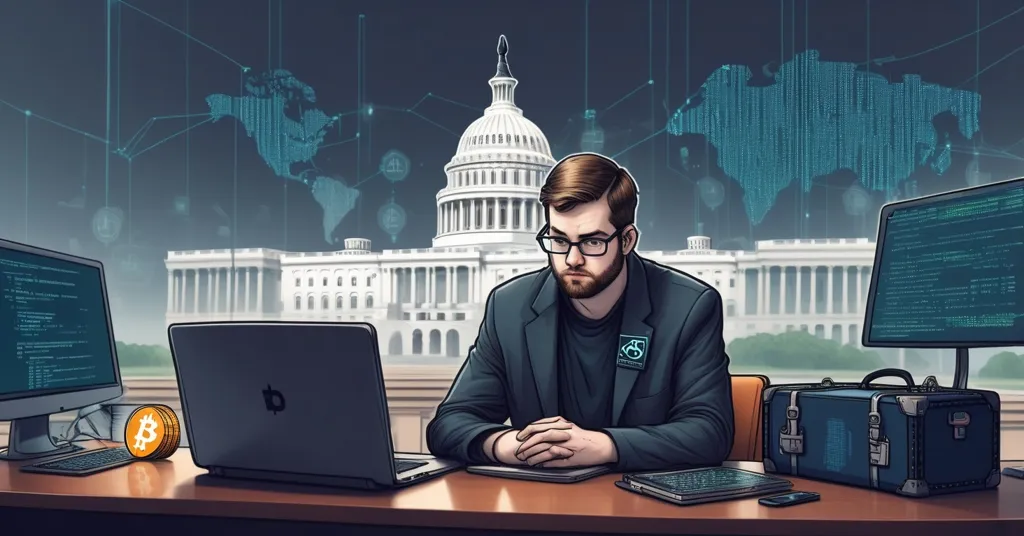
LTB Washington is finally confronting a blunt reality: if the U.S. keeps punishing the people who write blockchain software, the next wave of crypto innovation will keep moving somewhere else.
- BRCA is the key fight inside the Digital Asset Market Clarity Act
- Open-source developers should not be treated like money transmitters
- Regulatory uncertainty is already pushing talent offshore
- Supporters say the fix is narrow and does not weaken AML or fraud laws
Why the Blockchain Regulatory Certainty Act matters
The U.S. Senate is edging closer to passing the Digital Asset Market Clarity Act, but the real flashpoint is whether lawmakers keep the Blockchain Regulatory Certainty Act (BRCA) intact. Industry leaders want that protection preserved because it would stop open-source blockchain developers, node operators, and transaction validators from being labeled money transmitters if they never custody user funds.
That distinction is not a technicality for lawyers to argue over in a conference room. It is the difference between treating software builders like infrastructure providers or treating them like financial intermediaries. A money transmitter is basically a business that moves money for other people. A developer who writes code is not automatically doing that. Neither is someone running a node — the computers that help keep a blockchain network alive — or a validator, which is a participant that checks and confirms transactions on the network.
In plain English: if someone never controls customer assets, they are not acting like a bank, a payment processor, or some shadowy middleman. They are building the rails, not taking custody of the cash. Pretending otherwise is how you end up with a regulatory mess that chases away the very people building the future.
What BRCA would actually protect
Supporters of the measure say the BRCA is a narrow fix, not some sweeping get-out-of-jail-free card for the crypto industry. It would protect open-source software developers, blockchain node operators, and transaction validators from being treated as money transmitters as long as they do not control customer funds.
That matters because open-source software is public code. Anyone can inspect it, use it, or build on it. That is exactly why it is so powerful, and also why it gets abused by bad actors who want to hide behind neutral tools after the fact. The answer to that problem is not to criminalize the people writing the code. The answer is to target the people actually committing the crime.
Existing FinCEN guidance has already pointed in that direction. FinCEN, the U.S. Financial Crimes Enforcement Network, is the Treasury bureau that helps enforce anti-money laundering rules. Its guidance has long suggested that providing software or tools alone does not automatically make someone a money transmitter. The problem is that the line between guidance and enforcement has become muddy enough to scare builders out of the country.
Roman Storm and the chilling effect on developers
The fear is not hypothetical. The prosecution of Roman Storm, a developer behind Tornado Cash, has become a warning sign for the entire sector. Tornado Cash is a crypto mixing protocol, meaning it helps obscure the trail of transactions. Privacy tools like that are controversial, and some are abused. That part is not up for debate.
What is up for debate is whether writing or maintaining neutral software should expose developers to crushing legal risk simply because someone else used the tool badly. If the answer is yes, then plenty of talented engineers are going to decide they want no part of that circus. And honestly, who can blame them?
That legal uncertainty has a cost far beyond one court case. It sends a message that the U.S. may not know how to distinguish between building infrastructure and operating a financial service. That is how you turn a leadership position into a brain drain.
The U.S. is already losing crypto talent
The numbers cited by advocates are hard to ignore. The U.S. share of global open-source crypto developers is said to have fallen from 38% in 2015 to about 19% today. If that trend is even roughly accurate, it is a serious warning that the country is not just regulating crypto — it is exporting talent.
And where does that talent go? To places with clearer rules and less legal fog. Singapore and the United Arab Emirates keep coming up because they offer something the U.S. increasingly does not: predictability. Developers and investors are not allergic to compliance. They are allergic to getting ambushed after doing everything in good faith.
That is the part policymakers seem to keep missing. You can make a jurisdiction “safe” in the sense that it is hostile to experimentation, or you can make it safe in the sense that builders know where the red lines are. Those are not the same thing, no matter how many press releases try to blur the difference.
Supporters say BRCA does not weaken enforcement
The strongest argument in favor of the BRCA is also the simplest: it does not weaken anti-money laundering, sanctions, fraud, or terrorism financing laws. Supporters say the measure only draws a better line between people who build software and people who actually hold, move, or control other people’s money.
That means entities that custody customer assets would still be fully regulated. If a business is holding your coins, moving your money, or acting as a financial intermediary, it should absolutely be on the hook for compliance. No serious decentralization advocate is arguing otherwise. The issue is when the law starts pretending that everyone in the stack is the same thing.
There is a real policy balance here, and regulators are not entirely wrong to worry about bad actors exploiting vague definitions. Criminals do love a good loophole, and some will always try to wrap dirty activity in open-source branding. But that concern cannot justify a legal framework so sloppy that it treats software authors like compliance officers. That is not smart regulation. That is a sledgehammer with a law degree.
Bipartisan support is building
The push to preserve developer protections has drawn support from both parties, which is not something you see every day in crypto policy. Backers include Sen. Cynthia Lummis, Sen. Ron Wyden, Rep. Tom Emmer, and Rep. Ritchie Torres.
That bipartisan lineup matters because it shows the argument is not just about partisan talking points or ideological purity tests. It is about whether the U.S. wants to keep serious blockchain developers onshore or keep handing other countries the upside. For a country that loves to speak in grand terms about innovation, losing builders because of vague enforcement would be a pretty embarrassing self-own.
The broader stakes go well beyond one bill. If the U.S. fails to offer regulatory certainty, the losses could include jobs, tax revenue, investment, and technological leadership. That is not some abstract debate over niche crypto terminology. It is a direct question of whether America wants to lead the next wave of financial infrastructure or watch it get built elsewhere.
Why this matters for Bitcoin, DeFi, and open-source infrastructure
Bitcoin does not need state permission to exist, but the people who maintain wallets, nodes, tooling, and adjacent infrastructure still operate under real-world legal pressure. The same is true across DeFi and broader blockchain ecosystems. Even if Bitcoin itself should stay stubbornly boring at the protocol layer, the software stack around it matters a great deal.
Open-source development is the engine that keeps these systems competitive, auditable, and resilient. If the U.S. becomes a place where writing public code carries legal ambiguity, the damage will not be limited to one protocol or one chain. It will bleed across the whole innovation stack. That includes the kind of infrastructure that decentralization needs to survive.
There is also a bigger philosophical point here. A free society should be able to tell the difference between publishing code and laundering money. If that line gets erased, the result is not better compliance — it is worse innovation and a weaker civil-liberties posture dressed up as prudence.
Protecting software developers is essential to maintaining America’s leadership in blockchain innovation and digital assets.
Key takeaways and questions
What is the BRCA?
It is a proposed safeguard that would prevent non-custodial blockchain developers, node operators, and validators from being treated as money transmitters.
Why do crypto leaders want it preserved?
They believe clear developer protections are necessary to keep blockchain innovation, jobs, and investment in the United States.
Does the BRCA weaken anti-money laundering laws?
No. Supporters say it does not reduce AML, sanctions, fraud, or terrorism-financing enforcement against real custodians or bad actors.
Why is Roman Storm’s case important?
It has become a symbol of the legal uncertainty developers fear when neutral software gets tangled up in enforcement actions.
What is a money transmitter?
It is a business that moves money for other people. Developers who never control user funds are not supposed to be treated the same way.
Why is the U.S. losing crypto talent?
Because vague rules and aggressive enforcement push developers toward jurisdictions with clearer, more predictable frameworks.
Which lawmakers support the measure?
Sen. Cynthia Lummis, Sen. Ron Wyden, Rep. Tom Emmer, and Rep. Ritchie Torres are among the bipartisan supporters.
What happens if the U.S. keeps the current approach?
It risks losing jobs, tax revenue, investment, and leadership in blockchain development to countries like Singapore and the UAE.
Can regulators fight crime without targeting developers?
Yes, and that is exactly the point. Laws should go after people who custody funds or commit crimes, not the engineers writing neutral software.
The bottom line?
America can either protect builders and keep the open-source stack alive, or keep bludgeoning them with uncertainty and watch the next wave of crypto innovation leave without looking back.