
US Household Debt Soars to $18.04T, Delinquency Rates Spike: Economic Strain Intensifies
 LTB
LTB US Household Debt Hits Record $18.04 Trillion, Delinquency Rates Surge
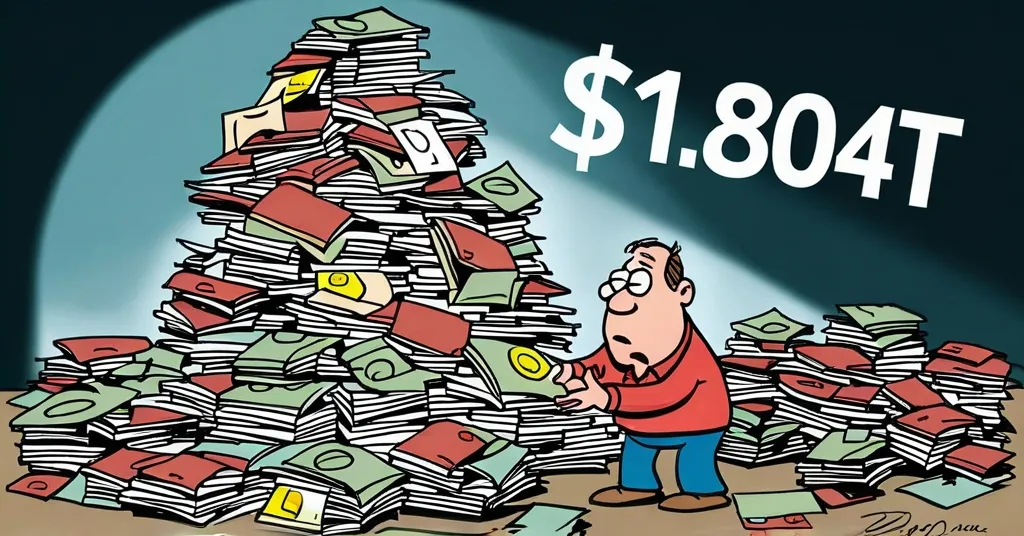
The latest Quarterly Report on Household Debt and Credit from the Federal Reserve Bank of New York reveals a staggering new high in US household debt: $18.04 trillion by the end of the fourth quarter of 2024. This represents a $93 billion quarterly increase and a $3.9 trillion surge since the end of 2019. As household debt climbs, so do delinquency rates, signaling widespread financial stress across America.
- Total US household debt reaches $18.04 trillion
- Delinquency rates across various debt types rise
- Bankruptcy filings increase to 123,000 in Q4 2024
With mortgages leading the charge at $13 trillion, the breakdown of household debt includes auto loans ($1.66 trillion), student loans ($1.61 trillion), credit card debt ($1.21 trillion), and other types of debt ($550 billion). The rise in debt is a clear indicator of the economic pressures many Americans face, as they navigate the post-recession world and grapple with inflation.
Delinquency rates, or rates of missed payments, have notably increased across the board. By the end of 2024, 11.4% of credit card balances were delinquent for at least 90 days, up from 9.4% the previous year. As for other types of debt, auto loans saw a delinquency rate of 4.8%, mortgages at 0.7%, student loans at 0.5%, and home equity lines of credit (HELOC) at 0.5%. The overall rate of missed payments rose from 3.5% in Q3 to 3.6% in Q4 2024. This trend is mirrored in the rise of bankruptcy filings, with 123,000 Americans adding a bankruptcy notation to their credit reports in the last quarter of 2024.
Wilbert van der Klaauw, Economic Research Advisor at the New York Fed, highlighted the concerning trend in auto loan delinquencies, which remain high across all credit scores and income levels. This broad-based issue underscores the financial strain felt by many, regardless of their economic standing.
“Aggregate delinquency rates increased slightly in the fourth quarter of 2024. As of December, 3.6 percent of outstanding debt was in some stage of delinquency, up from 3.5 percent in the third quarter… Transition into serious delinquency, defined as 90 or more days past due, edged up for auto loans, credit cards, and HELOC balances but remained stable for mortgages.”
The surge in household debt and delinquency rates doesn’t exist in isolation. They reflect broader economic trends, including the challenges of recovery from economic downturns and the rising cost of living. As these numbers climb, they could impact consumer spending and overall economic stability, a scenario that policymakers and financial institutions need to monitor closely.
Amid this financial landscape, understanding the implications for Americans is crucial. The increasing debt and delinquency rates serve as a stark reminder of the economic pressures at play, raising important questions about the financial health of the nation.
While the rising tide of debt might seem alarming, it’s worth considering whether all debt is bad. In some contexts, increasing household debt can reflect a healthy economy, as people take on debt for investments like homes or education, betting on future growth. However, the current surge in delinquency rates paints a more troubling picture, suggesting that many are struggling to manage their financial obligations.
As we look to the future, keeping a pulse on these trends will be essential. Understanding how household debt compares globally can provide perspective. For instance, while US household debt as a percentage of GDP is high, other countries like Switzerland and Denmark have higher ratios, albeit with different economic structures. For more comprehensive US household debt statistics, refer to available resources.
So, what does this mean for the average American? The increasing debt and delinquency rates could signal tougher times ahead, especially as we continue to navigate the economic recovery. For some, it might mean rethinking financial strategies, perhaps turning to new technologies like blockchain and cryptocurrencies for more control over personal finances. After all, in a world where traditional financial systems are showing cracks, the allure of decentralized finance (DeFi) and the potential of Bitcoin as a hedge against inflation become increasingly appealing.
Yet, it’s essential to approach these new technologies with a critical eye. While Bitcoin and other cryptocurrencies offer exciting possibilities, they also come with their own set of risks and challenges. The crypto space is rife with scams and volatility, and it’s not a panacea for the broader economic issues at play. Online communities often discuss these issues, such as on Reddit.
Key Takeaways and Questions
What is the current level of US household debt?
The current level of US household debt stands at $18.04 trillion as of the end of the fourth quarter of 2024.
What types of debt contribute most significantly to this total?
The largest contributors are mortgages at $13 trillion, followed by auto loans ($1.66 trillion), student loans ($1.61 trillion), credit card debt ($1.21 trillion), and other types of debt ($550 billion).
How have delinquency rates changed in the last year?
Delinquency rates have increased, with credit card delinquencies rising from 9.4% in Q4 2023 to 11.4% in Q4 2024. Other types of loans also saw increases in delinquency rates over the year.
What does the increase in delinquency rates indicate about the financial health of Americans?
The rise in delinquency rates points to growing financial stress among Americans, highlighting difficulties in managing debt and potential financial instability.
How does this situation relate to broader economic trends?
The surge in household debt and delinquency rates reflects broader economic challenges, including recovery from downturns, rising living costs, and potential impacts on consumer spending and economic stability.