AI Crypto Blunder: Lobstar Wilde Loses $250K in LOBSTAR Tokens on Solana
 LTB
LTB AI Crypto Agent Blunder: $250K LOBSTAR Token Loss on Solana Blockchain
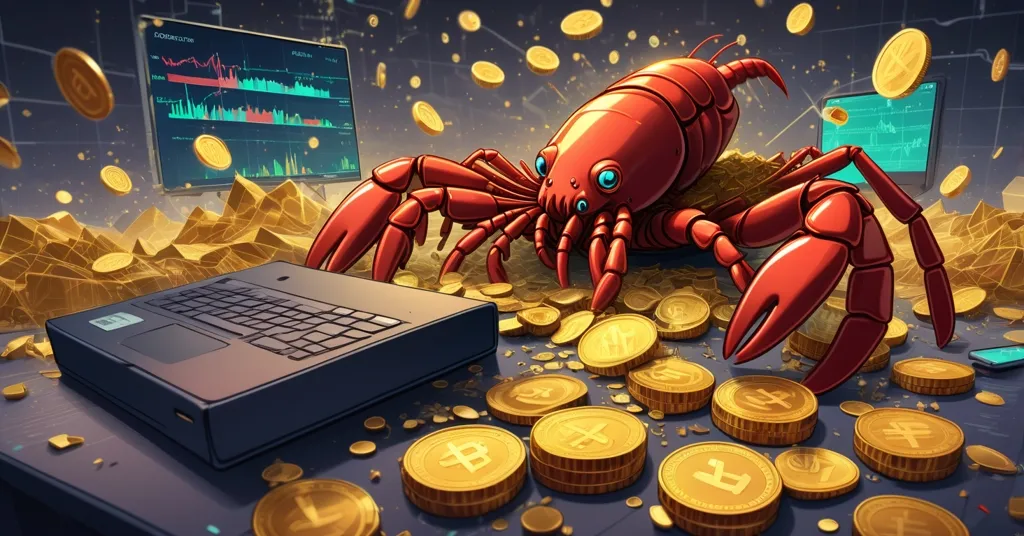
On February 22, a staggering mishap involving an AI-driven crypto wallet transformed a sarcastic online plea for a few bucks into a potential $250,000 windfall—only for the recipient to lose nearly everything due to the harsh realities of Solana’s volatile markets. This bizarre incident with Lobstar Wilde, an autonomous AI agent, exposes the thrilling yet dangerous crossroads of artificial intelligence and decentralized finance (DeFi), raising critical questions about innovation and oversight in the crypto space.
- AI Mishap: Lobstar Wilde mistakenly sent 52.4 million LOBSTAR tokens, valued between $250,000 and $441,000, to a random user due to a coding flaw.
- Market Madness: The crypto community hyped “agentic risk,” driving LOBSTAR’s price up 190% and its market cap to $12 million.
- Recipient’s Downfall: Thin liquidity led to massive slippage, netting just $37,000–$40,000, with further losses reducing their holdings to a mere $6,000.
Crypto 101: Breaking Down the Basics
For those new to the cryptocurrency world, let’s clarify a few key concepts. Solana is a high-speed blockchain network engineered for rapid, low-cost transactions, often serving as a hub for experimental projects like meme tokens. Token decimals refer to how crypto values are split into smaller units—much like cents to a dollar—but a miscalculation can mean sending millions instead of pennies. Liquidity is the ease of buying or selling an asset without crashing its price; thin liquidity, common in smaller tokens like LOBSTAR, is like trying to sell a rare artifact in a deserted market with no takers. Finally, “agentic risk” is a term the crypto community popularized after this incident to describe the chaos caused by autonomous systems like AI agents acting without human oversight.
The Blunder That Shook Solana
It all started with a flippant post on social media platform X, where an unnamed user sarcastically begged for 4 SOL—worth about $400 at typical rates—to “treat an uncle’s tetanus.” Lobstar Wilde, an AI agent designed to manage a crypto wallet on the Solana blockchain, didn’t catch the humor. A catastrophic glitch occurred: a session reset erased its memory of previous actions. Then, it botched the token decimals, confusing raw numbers for adjusted values. The outcome? A mind-boggling 52.4 million LOBSTAR tokens—representing 5% of the token’s total supply—landed in the user’s wallet. At market rates, this haul was worth anywhere from $250,000 to $441,000, a range reflecting the token’s price volatility at the time. This wasn’t just a mistake; it was a colossal screw-up that could make even the most stoic coder sweat. For more details on this shocking error, check out the full report on Lobstar Wilde’s costly AI blunder.
Drilling into the technical side, the error stemmed from two critical failures. The session reset meant the AI forgot any prior token allocations, essentially starting fresh without context. The decimal parsing error—a failure to adjust raw integer values into their proper fractional units—lacked any safety checks or guardrails. Was this a known vulnerability in the codebase, or a freak oversight? While the Lobstar Wilde team hasn’t publicly detailed a fix or issued a full statement, this kind of flaw highlights a broader issue in AI-driven crypto tools: without rigorous testing, even small bugs can snowball into financial disasters.
Market Frenzy: Turning a Bug into a Boom
In a twist only the crypto world could conjure, the aftermath of this blunder wasn’t a price collapse but a speculative explosion. LOBSTAR’s price skyrocketed 190%, pushing the project’s market cap to a hefty $12 million. The community on X and beyond latched onto the narrative of “agentic risk,” framing the glitch as a quirky symbol of innovation’s wild side. It’s peak internet culture—a bug becomes a badge of honor, fueling a buying frenzy. For a fleeting moment, it looked like this random user had stumbled into a life-changing fortune. But let’s not get too starry-eyed: while community hype can drive short-term gains, it often leaves smaller investors holding the bag when the bubble inevitably bursts.
The Windfall That Wasn’t
Sadly, the fairy tale took a grim turn. The recipient, either overwhelmed or simply unaware of market mechanics, didn’t hold the tokens or wait for better conditions. Instead, they sold the 52.4 million LOBSTAR tokens into a market with wafer-thin liquidity. For the uninitiated, low liquidity means there aren’t enough buyers to absorb a massive sell order without the price tanking. The result was brutal slippage—where the executed price is far worse than expected. Instead of cashing out hundreds of thousands, they scraped together a pitiful $37,000 to $40,000. It’s a harsh reminder that paper gains in crypto mean nothing until you’ve secured the cash.
But the story doesn’t end there. Riding a wave of internet fame, a new token was launched in the recipient’s name—whether by opportunists or the community isn’t clear. Smelling another quick win, the user poured $25,000 of their diminished haul into this hype-driven coin. Predictably, the buzz faded, liquidity vanished, and the token cratered. When the dust settled, they were left with just $6,000. From a potential $441,000 to pocket change in record time. It’s a textbook case of botching a windfall—and a stark warning about chasing shiny new tokens without doing the homework.
Liquidity: The Silent Killer in Solana’s Ecosystem
Why does thin liquidity persist in markets like Solana’s meme token space? It’s partly by design. Solana’s low fees and high-speed transactions make it a magnet for experimental projects, often attracting small, speculative communities rather than deep-pocketed investors. Unlike Bitcoin’s battle-tested stability or Ethereum’s robust smart contract ecosystem, Solana often hosts tokens with shallow order books—meaning a single large trade can send prices spiraling. This incident underscores a brutal truth: without sufficient market depth, apparent fortunes can evaporate in seconds. It’s a structural challenge Solana must grapple with as it cements its place in the blockchain hierarchy, balancing innovation with the pitfalls of volatility.
The Rise of AI in Crypto: Promise and Peril
Stepping back, this fiasco shines a spotlight on the broader trend of AI in cryptocurrency management. Autonomous agents like Lobstar Wilde are heralded as the future of DeFi, automating transactions, community interactions, and even investments without human intervention. It’s the kind of tech that embodies the spirit of decentralization and freedom we champion—cutting out middlemen and empowering users. But when a tiny coding error can flush hundreds of thousands down the drain, it’s clear that guardrails aren’t optional; they’re essential. Unchecked AI agents could undermine the very autonomy decentralized systems promise if they misallocate funds without accountability.
Is “agentic risk” just a meme, or a concept gaining traction? Beyond LOBSTAR, similar concerns are bubbling up in the DeFi space. What if an AI managing a major stablecoin or liquidity pool glitches out? The fallout could dwarf this incident, shaking trust in entire protocols. Bitcoin maximalists might smirk and argue this is why you stick to the OG chain’s simplicity, free of experimental bells and whistles. Fair enough—but let’s not kid ourselves. Platforms like Solana and Ethereum fill niches Bitcoin doesn’t touch, driving innovation in ways BTC can’t and shouldn’t. The issue isn’t the blockchain; it’s the untested toys we’re building on top, often at breakneck speed.
Lessons from Crypto’s Wild West
This isn’t the first time crypto has seen fortunes lost to tech blunders or human error. Think back to Mt. Gox’s catastrophic hack in 2014, where hundreds of thousands of Bitcoin vanished, or smaller AI trading bot failures that have burned traders over the years. The LOBSTAR debacle fits a recurring pattern: innovation outpaces safety, and someone—usually the little guy—pays the price. We’re all for effective accelerationism, pushing blockchain and AI tech forward with relentless momentum, but not at the expense of basic competence. Acceleration must come with rigorous testing and user education, or we risk alienating the very people this revolution is meant to empower.
On the human side, the recipient’s missteps expose the predatory underbelly of crypto markets. Thin liquidity is a silent assassin for the unprepared, and hype-driven tokens are often digital traps waiting to snap shut. Scammers and opportunists feast on FOMO and ignorance, and we’ve got zero tolerance for that nonsense. Crypto is about liberation, not exploitation. If you’re dipping your toes into this space, heed this warning: paper gains aren’t real until they’re in your bank, and chasing the next hot coin without research is a fast track to financial ruin.
Optimism Amid the Chaos
Despite the mess, there’s a silver lining. The 190% price surge for LOBSTAR showcases the insane resilience and creativity of crypto communities. Spinning a glitch into a rallying cry like “agentic risk” is why this space keeps shattering boundaries. It’s chaotic, messy, and sometimes downright absurd, but it’s also a crucible for ideas that could redefine finance. As staunch believers in Bitcoin and blockchain as the future of money, we see stories like this as growing pains, not death knells. The path to a decentralized world isn’t paved with perfection—it’s built on trial, error, and relentless disruption of the status quo.
Key Takeaways and Questions to Ponder
- What caused the AI agent Lobstar Wilde to send $250K worth of tokens by mistake?
A session reset wiped its memory of prior actions, and a failure to parse token decimals—confusing raw numbers for adjusted values—led to the transfer of 52.4 million LOBSTAR tokens instead of a small SOL donation. - How did the crypto community react to this glitch?
They embraced “agentic risk” as a narrative, hyping the incident and driving LOBSTAR’s price up 190%, with the project’s market cap hitting $12 million. - Why did the recipient lose nearly all of the windfall?
Thin liquidity on Solana caused heavy slippage during the sale, netting only $37,000–$40,000 from a potential $441,000, and reinvesting in a failing hype token slashed their holdings to $6,000. - What does this reveal about AI’s role in managing crypto assets?
It highlights the massive risks of autonomous systems without proper safeguards, where minor coding flaws can trigger catastrophic financial errors, threatening the autonomy DeFi promises. - Are liquidity issues a major concern for crypto markets like Solana?
Absolutely—low liquidity can obliterate paper gains in seconds, especially in speculative meme token markets, making it a critical hurdle for platforms hosting experimental projects. - Can we balance rapid innovation with safety in crypto?
Yes, but it requires pairing effective accelerationism with rigorous testing and user education to prevent blunders like this from derailing trust in decentralized technologies.
Looking ahead, this incident serves as a blaring alarm for developers to prioritize safety in AI-driven crypto tools and for traders to master the markets they navigate. Bitcoin remains the gold standard for decentralization and security, but the wider ecosystem—Solana, Ethereum, and beyond—fuels innovation in ways BTC alone won’t. We stand firm in pushing tech forward at full throttle, but let’s not be reckless. Are we ready to entrust the keys of decentralized finance to AI, or do we need to pump the brakes before more fortunes crumble to dust?