AI Energy Surge and LNG Shortage by 2035: A Threat to Bitcoin Mining?
 LTB
LTB AI Energy Hunger and Blockchain: Could an LNG Crunch by 2035 Threaten Crypto Mining?
Qatar’s Energy Minister has sounded a dire warning about a potential liquefied natural gas (LNG) shortage by 2035, driven by the insatiable energy appetite of AI data centers and a glaring lack of investment in new production capacity. While this might seem like a distant concern for the crypto world, the ripple effects could hit Bitcoin mining and blockchain operations harder than a bear market crash. Let’s break down the threat and explore whether decentralized tech can outsmart this looming energy crisis.
- AI Energy Surge: LNG demand could jump from 400 million tonnes per annum (mtpa) to 600–700 mtpa by 2035, fueled by AI infrastructure devouring power like a small city.
- Investment Gap: Without major funding in the next 5–6 years, supply shortages may cause price spikes, hitting energy-intensive industries like crypto mining.
- Crypto’s Stake: Rising energy costs could throttle Bitcoin miners and blockchain networks reliant on power-hungry data centers.
The AI Energy Monster Behind the LNG Warning
At the Doha Forum, Saad Sherida al-Kaabi, Qatar’s Minister of State for Energy Affairs and CEO of QatarEnergy, laid out a grim reality. LNG, which is natural gas cooled to a liquid state for storage and transport, is a critical fuel for powering everything from industrial plants to data centers. Current global demand sits at around 400 million tonnes per annum (mtpa—a measure of weight per year), but al-Kaabi projects this could skyrocket to 600–700 mtpa by 2035. The culprit? Artificial intelligence. Those sprawling data centers running AI models—think ChatGPT or cloud computing hubs—are guzzling energy at an insane pace, accounting for 10% to 20% of total energy demand in many countries.
“Every country we talk to has 10% to 20% of their demand coming from AI,”
al-Kaabi stressed, underlining how tech’s hunger is reshaping global energy needs with warnings of potential crises ahead, as highlighted in reports about Qatar’s forecast on LNG supply issues by 2035. To put this in perspective, imagine a single AI data center consuming as much power as a mid-sized town. Now multiply that by hundreds worldwide, and you’ve got a recipe for grid strain that could make blackouts look like a minor glitch.
But the real gut punch comes from another angle: underinvestment. Despite LNG’s role as a cleaner “bridge fuel” between dirtier fossil fuels like coal and the renewable utopia we’re chasing, the energy sector’s cowardice in funding new projects is a middle finger to progress. Regulatory uncertainty, economic slowdowns, and the mad dash to go green are scaring off investors. Al-Kaabi didn’t mince words on the consequences.
“There’s underinvestment, and if that doesn’t happen in the next five to six years, we will have issues in 2035,”
he warned. Translation? If we don’t pump money into production capacity soon, supply won’t match demand, and energy prices will spike faster than a memecoin on a hype train. For most, that means higher bills. For crypto miners? It could mean the difference between profit and packing up shop.
Qatar’s Push and the Global Energy Chessboard
Qatar, the world’s top LNG exporter, isn’t twiddling its thumbs. Through QatarEnergy, the nation is aggressively expanding its North Field, a massive offshore gas reserve, to boost output and meet this surging demand. But even their efforts can’t plug the hole if global investment continues to lag. The International Energy Agency (IEA) echoes al-Kaabi’s concerns with cold, hard stats. Their World Energy Outlook predicts LNG trade will grow from 560 billion cubic meters (bcm—think of it as a volume measure for gas) in 2024 to 880 bcm by 2035, nearly doubling in just over a decade. By 2050, they expect it to hit 1,020 bcm, with AI and data centers as key drivers.
By 2030, around 300 bcm of new annual LNG export capacity is slated to come online, with the United States leading at 50% of the increase and Qatar contributing 20%. Major markets like China, with its tech and industrial boom, and Europe, desperate for energy security after geopolitical shakeups, will soak up most of this supply. But Europe’s got a snag—strict methane emissions regulations might force them to loosen rules to secure enough LNG, sparking a clash between green ideals and raw energy needs. Al-Kaabi also pegged an ideal oil price of $70–$80 per barrel to fund infrastructure, a delicate balance to keep investments flowing without choking economies.
The Crypto Connection: Bitcoin Miners on Thin Ice
So, why the hell should crypto enthusiasts care about some gas shortage a decade away? Simple: energy is the lifeblood of blockchain networks, especially for Bitcoin. Mining BTC is a power-hungry beast due to its Proof-of-Work (PoW) consensus mechanism, where miners solve complex puzzles to validate transactions and secure the network. Estimates suggest Bitcoin’s network alone consumes around 100 terawatt-hours (TWh) annually—roughly the energy footprint of a small country like Argentina. That’s not far off from the scale of AI data centers, meaning crypto and AI are in the same boat when it comes to fighting over limited power resources.
If LNG shortages drive energy costs through the roof, Bitcoin miners could get squeezed hard. Many mining operations already operate on razor-thin margins, relocating to regions with cheap, often fossil-fuel-based power. A price spike in LNG—often a key backup for grids—could jack up electricity costs, making mining unprofitable unless BTC’s price moons to compensate. And it’s not just Bitcoin. Altcoin networks, NFT platforms, and DeFi systems often rely on cloud infrastructure tied to the same data centers al-Kaabi warns about. Even Ethereum, post its energy-efficient shift to Proof-of-Stake (PoS), isn’t immune if hosting services face higher operational costs.
Let’s not sugarcoat it: the crypto industry’s energy addiction has long been a PR nightmare, with critics slamming Bitcoin’s carbon footprint. An LNG crunch might force miners to pivot—either to renewables, which are still inconsistent and expensive at scale, or to stranded energy sources like flare gas, which some innovative operations are already tapping. But scaling those solutions in under a decade? That’s a tall order, even for a space as scrappy as crypto.
Counterpoint: Can Blockchain Out-Innovate the Crisis?
Before we doomscroll into oblivion, let’s play devil’s advocate. Could decentralized tech actually help solve this mess? Blockchain isn’t just about mining coins; it’s a framework for disruption. Projects on Ethereum and other protocols are already experimenting with peer-to-peer energy trading—think of it as a decentralized energy grid where households or businesses can sell excess solar power directly via smart contracts. If scaled, this could ease pressure on traditional fuels like LNG by optimizing local energy distribution, especially for power-hungry setups like AI data centers or mining rigs.
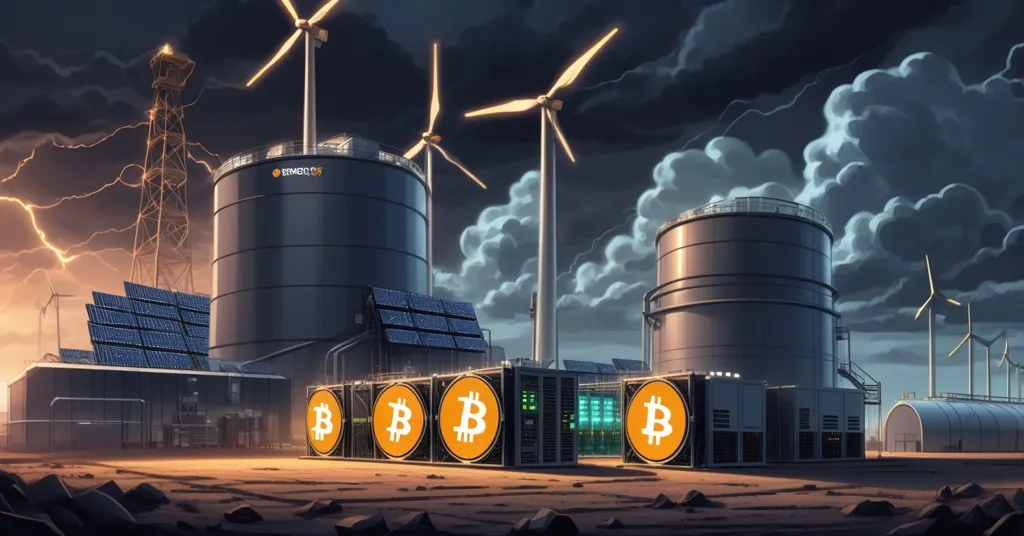
Bitcoin miners, too, are getting creative. Some are co-locating with renewable projects or using “stranded” energy—power that’s produced but can’t be fed into the grid due to location or infrastructure limits. In Texas, for instance, miners have partnered with wind farms to absorb excess energy during off-peak times, stabilizing grids while keeping costs down. If Qatar’s right about a 2035 crunch, these experiments could be a lifeline, proving crypto doesn’t just leech power—it can innovate around constraints.
Still, let’s not get carried away with hopium. These solutions are niche and far from mainstream. Most miners still chase the cheapest juice, often coal or gas, because profit trumps ideals in a cutthroat market. And while blockchain-based energy trading sounds sexy, regulatory hurdles and tech adoption lag could keep it a pipe dream for years. The question isn’t just whether crypto can adapt—it’s whether it can do so before energy prices turn mining into a rich man’s game.
Key Takeaways and Questions to Ponder
- What’s behind the predicted LNG shortage by 2035?
Surging energy demand from AI data centers, combined with chronic underinvestment in LNG production, sets the stage for a supply crunch that could spike prices. - How does AI’s energy use compare to crypto mining?
AI data centers consume 10% to 20% of energy in many countries, rivaling Bitcoin’s network, which burns around 100 TWh yearly—both are massive grid stressors. - Could an LNG shortage impact Bitcoin mining costs?
Absolutely. Higher LNG prices could drive up electricity costs, squeezing miners’ thin margins and potentially making operations unprofitable without a BTC price surge. - What’s Qatar doing to address the LNG demand spike?
Qatar, the top LNG exporter, is expanding its North Field capacity to boost supply, but global investment shortfalls could undermine even their hefty efforts. - Can blockchain tech solve energy grid issues for AI and crypto?
Potentially, through innovations like peer-to-peer energy trading on Ethereum or miners using stranded renewables, but scaling these solutions by 2035 is a long shot.
The clock’s ticking, and the next five to six years will be make-or-break for energy markets—and by extension, the crypto ecosystem. Qatar’s stepping up, the U.S. is pitching in with new capacity, but the specter of underinvestment looms like a bad rug pull. Add the unrelenting power demands of AI and crypto mining to the mix, and we’ve got a high-stakes game on our hands. If al-Kaabi’s warning pans out, Bitcoin miners might have to mine for oil instead of sats—talk about a hard fork. The future of decentralized tech could hinge on whether we innovate faster than the grid collapses. Ignore this at your peril; the hash rate of reality doesn’t mess around.