Altcoin Crash 2023: Retail Panic Sells Off as Crypto Whales Quietly Accumulate
 LTB
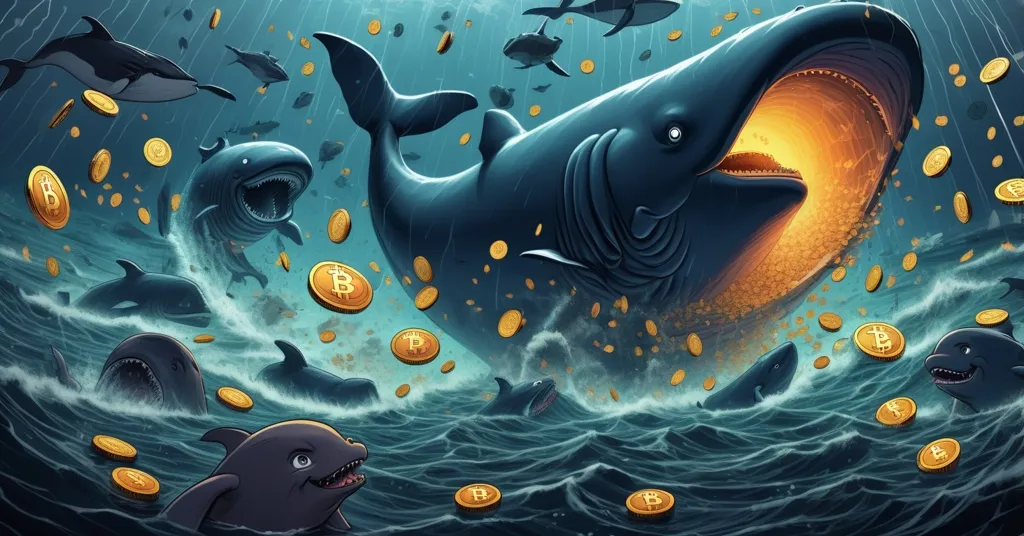
LTB Crypto Whales Build a Fortress While Retail Panics in the Altcoin Bloodbath
The altcoin market is in a brutal tailspin, with retail investors dumping their holdings in a fear-fueled frenzy while crypto whales—those with deep pockets and deeper strategies—quietly scoop up discounted assets. This sharp divide between panic and patience reveals a chaotic yet intriguing landscape in the crypto space, especially for altcoins facing a market crash in 2023.
- Retail investors are capitulating, selling altcoins amid volatility and fear.
- Crypto whales are absorbing selling pressure, hinting at strategic accumulation.
- Capital rotation to Bitcoin suppresses altcoin recovery amid liquidity woes.
Retail Panic: Fear Takes the Wheel
The altcoin sector is under siege from relentless selling pressure, and retail investors—everyday traders without the capital or nerves of steel—are leading the charge out the door. According to a recent CryptoQuant report, these smaller players are liquidating positions at a frantic pace, driven by prolonged price drops, stomach-churning volatility, and a pervasive sense of dread. It’s not just numbers on a screen; it’s psychological. Loss aversion—the fear of losing more than you’ve already lost—combined with social media echo chambers of doom, amplifies the panic. Every red candle feels like a personal attack, and for many, selling at a loss is the only way to stop the bleeding.
Looking back, this isn’t new. During the 2018 bear market, retail investors similarly fled altcoins en masse after the ICO bubble burst, leaving countless projects in the dust. Today’s Google Trends data shows spikes in searches like “sell altcoins” during price dips, a clear sign fear is once again in the driver’s seat. Macro uncertainty—think persistent inflation or geopolitical flare-ups—only pours fuel on the fire, leaving little room for bullish hope. For the average trader, it’s a grim cycle: sell now, regret later, or hold and pray.
Whale Strategy: Building the Floor
While retail investors scramble, crypto whales are playing a different game. These heavyweights, often holding millions in assets, are systematically absorbing the selling volume, as per CryptoQuant’s analysis. Since Ethereum’s recent price bottom, trading volumes across the altcoin space have spiked—a signal not of total capitulation, but of potential repositioning or outright accumulation. Take, for instance, wallet activity on chains like Solana, where large transactions have ticked up despite price weakness. This isn’t blind speculation; it’s calculated positioning, perhaps a bet on undervalued assets or a play to stabilize markets for future gains, as detailed in reports like this analysis of whale activity in the altcoin sector.
But let’s play devil’s advocate here. Are these whales truly signaling a bottom, or are they setting up for a bigger dump? History shows that large players can manipulate sentiment—buying low to create buzz, only to sell high when retail FOMO kicks in. Without transparency into their motives, whale accumulation, while intriguing, isn’t a guaranteed green light. It’s a chess move in a game where retail often plays checkers. Whether they’re building a fortress floor or a house of cards remains an open question.
Bitcoin Dominance: The Safe Haven Effect
Where’s the money going if not into altcoins? It’s flowing back to Bitcoin, the digital gold of the crypto world. During times of uncertainty, Bitcoin dominance—its share of the total crypto market cap—often rises, a pattern seen in past downturns like 2017-2018 and 2021-2022. When the market gets shaky, investors treat Bitcoin as a safer bet compared to speculative altcoins. It’s a hedge against chaos, a store of value that’s weathered more storms than any token out there. As a Bitcoin maximalist, I see this as validation of BTC’s role as the backbone of decentralized finance.
Yet, there’s a downside to this metric. Bitcoin dominance spiking doesn’t account for the innovation altcoins bring to the table. It’s a blunt tool that can overshadow projects solving real problems—think scalable networks or decentralized apps. Still, right now, capital rotation to BTC and top-tier assets like Ethereum is draining liquidity from smaller tokens, leaving them gasping for air. Until Bitcoin stabilizes, altcoins will struggle to catch a break.
Regulatory and Macro Pressures: The Bigger Picture
Beyond market dynamics, external forces are hammering the altcoin sector. Macroeconomic headwinds—rising interest rates from the Federal Reserve, stubborn inflation, and geopolitical tensions like the ongoing Russia-Ukraine conflict—create a risk-off environment where speculative assets like altcoins suffer most. Fresh capital isn’t flowing in; it’s fleeing to safer havens like bonds or, you guessed it, Bitcoin. This isn’t just theory; it’s reflected in declining venture funding for crypto startups in 2023 compared to the 2021 boom.
Then there’s the regulatory specter. In the US, the SEC continues its crackdown on crypto projects, labeling many altcoins as unregistered securities. Across the pond, the EU’s MiCA framework aims to bring order but risks stifling smaller tokens with compliance costs. These moves hit altcoins harder than Bitcoin, which largely escapes the “security” label. The result? Investor hesitance and a chilling effect on innovation, especially for projects without deep legal budgets. It’s a stark reminder that crypto doesn’t operate in a vacuum—governments and central banks still pull strings.
Altcoin Diversity: Gems Amid the Rubble
Not all altcoins are doomed, though. The sector is a sprawling mess of brilliance and garbage, and downturns like this separate the wheat from the chaff. Decentralized finance (DeFi) protocols on Ethereum, like Uniswap, continue to see usage despite price drops, offering real utility in swapping tokens without middlemen. Layer-2 scaling solutions like Arbitrum cut transaction costs on Ethereum, tackling a key pain point. Privacy coins like Monero, while controversial, fill a niche Bitcoin doesn’t—true anonymity for those who value it.
Contrast that with meme coins like Dogecoin knockoffs or hyped tokens with no roadmap. These are the first to crumble when liquidity dries up, and frankly, good riddance. As much as I champion Bitcoin’s supremacy as a store of value, I can’t ignore that altcoins carve out unique roles in this financial revolution. The trick for investors is discerning signal from noise—a skill most retail traders lack in the heat of a crash.
What Can Investors Do? Practical Tips
So, how do you survive this altcoin bloodbath? First, ditch the emotions. Fear of missing out (FOMO) or fear of losing everything can wreck your portfolio faster than a rug pull. Focus on fundamentals—research projects using tools like CoinMarketCap or Glassnode to check developer activity, community engagement, or on-chain metrics. If a token has no clear use case, steer clear, no matter how cheap it looks.
Second, consider dollar-cost averaging into Bitcoin or blue-chip altcoins like Ethereum. This spreads out your risk over time instead of betting the farm on a single dip. Lastly, beware of scams and shills promising moonshot gains—our stance is zero tolerance for that nonsense. Crypto rewards the informed and resilient, not the reckless. Stay sharp, and don’t let panic or hype dictate your moves.
Altcoin Future: Hope or Hype?
The altcoin market is a mess right now, no two ways about it. Retail panic is bleeding the sector dry, whales are making cryptic moves, and Bitcoin’s dominance is a gut punch to smaller tokens. Add in macro and regulatory pressures, and it’s easy to see why sentiment is in the gutter. Yet, in the spirit of decentralization and effective accelerationism, I view this carnage as a necessary reset. Crypto isn’t about coddling speculators; it’s a disruptive force meant to overhaul finance, privacy, and freedom. Shakeouts purge the weak—scams, shitcoins, and overleveraged dreamers—leaving room for real innovation.
Whale accumulation hints at a potential floor, but it’s no promise of sunshine. Recovery hinges on Bitcoin stabilizing and broader market confidence returning, neither of which is guaranteed. For now, it’s survival of the fittest. Question every narrative, do your own digging, and remember that the crypto rollercoaster doesn’t stop for anyone. Whether altcoins rise from the ashes or keep burning, the revolution marches on. Stack sats, stay skeptical, and let’s build a future worth fighting for.
Key Takeaways and Questions Answered
- Why are altcoin prices crashing in 2023?
Retail investors are selling aggressively due to fear, fueled by volatility, prolonged losses, and macro uncertainty like inflation and geopolitical tensions, amplifying market weakness. - What are crypto whales doing during this altcoin downturn?
Whales are absorbing selling pressure with increased trading volumes since Ethereum’s bottom, suggesting strategic accumulation or repositioning rather than exiting the market. - How does Bitcoin dominance impact altcoins?
Capital rotation to Bitcoin as a safe haven during uncertainty drains liquidity from altcoins, suppressing their prices and hindering recovery until BTC stabilizes. - Can altcoins recover soon from this market crash?
Recovery depends on improved sentiment and Bitcoin price stability; without these, altcoins face ongoing challenges with no immediate bullish catalysts in sight. - Is whale accumulation a reliable bullish signal for altcoins?
It’s promising but not definitive—while it suggests a potential price floor, it could also be redistribution or manipulation, so caution and skepticism are warranted. - How can retail investors protect themselves in a crypto downturn?
Focus on research, avoid emotional trading, use tools like CoinMarketCap for analysis, and consider gradual investments in Bitcoin or established altcoins to manage risk.