Anti-US Apps Surge to 40,000 Scans Amid Greenland Crisis: Blockchain’s Potential Role
 LTB
LTB Anti-US Apps Hit 40,000 Daily Scans in Greenland Crisis: Is Blockchain the Next Frontier?
President Donald Trump’s audacious push to acquire Greenland has unleashed a wave of anti-American sentiment across Denmark and the Nordic region, fueling an explosive rise in mobile apps designed to boycott U.S. products. This geopolitical clash, peaking in late January, has transformed grocery shopping into a form of protest, with tools like Made O’Meter and NonUSA empowering consumers to strike back through their purchasing choices.
- Staggering Growth: Made O’Meter’s daily scans surged from 500 to nearly 40,000 at the crisis peak.
- User Boom: NonUSA crossed 100,000 downloads, while Made O’Meter gained 30,000 new users in just three days.
- Symbolic Resistance: Though economic impact is minimal, these apps channel deep frustration over U.S. policy into tangible action.
The Greenland Spark: Why It Hit a Nerve
The tension ignited when Trump expressed interest in acquiring Greenland, an autonomous territory under Danish sovereignty, for its critical location in the Arctic and vast mineral wealth. This wasn’t a casual remark; it was seen as a bold overstep, challenging Denmark’s control over a region that’s long been strategically vital. Greenland’s position makes it a key player for military bases—like the U.S.-operated Thule Air Base—and shipping routes, not to mention its untapped resources like rare earth metals. For Danes, this felt like a personal insult, reviving historical friction over Greenland’s role as a Cold War asset. The fallout wasn’t just diplomatic; it spilled into emergency EU meetings, Arctic security discussions, and, most strikingly, the everyday lives of Scandinavian shoppers.
Barcode Rebellion: How Apps Became Protest Tools
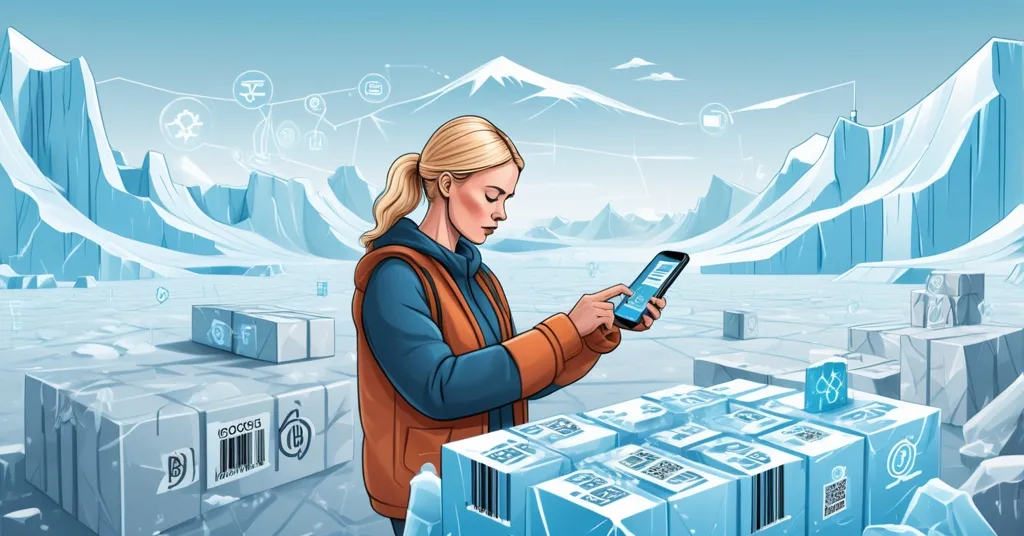
Amid this uproar, two apps—Made O’Meter and NonUSA—emerged as digital weapons for consumer resistance. Made O’Meter, brainchild of 53-year-old Copenhagen resident Ian Rosenfeldt, uses a smart algorithm to scan product barcodes and pinpoint origins with over 95% accuracy. Think of it as a detective in your pocket, figuring out if your cereal or soda hails from the U.S., then suggesting European alternatives. Its daily scans skyrocketed from 500 last summer to 40,000 on January 23, later settling at around 5,000, with over 100,000 total downloads since launching last March. It boasts 20,000 regular users in Denmark alone, plus growing bases in Germany, Spain, Italy, and even Venezuela.
NonUSA, created by 21-year-old Jonas Pipper, followed a similar trajectory, surpassing 100,000 downloads by early February, with 25,000 of those on January 21 alone. At its peak, users scanned 526 products in a single minute. With 46,000 users in Denmark, 10,000 in Germany, and others across Norway, Sweden, and Iceland, it’s clear this isn’t a small-scale tantrum. Picture a Copenhagen mom scanning her grocery haul, discovering her snacks are U.S.-made, and opting for a Swedish brand instead—she’s one of thousands sending a daily digital slap to Uncle Sam, as reported in a recent analysis of anti-US shopping app usage.
Rosenfeldt captured the raw frustration driving this movement:
“Many people were frustrated and thinking, ‘How do we actually do this in practical terms?’”
His goal isn’t just convenience but impact:
“Maybe we can send a signal and people will listen and we can make a change.”
He’s targeting grocery chains and policymakers, hoping to boost European producers. Pipper echoed this empowerment vibe, noting:
“They feel like they kind of gained the power back in this situation.”
Economic Reality Check: Symbolism Over Substance?
Before we get carried away, let’s ground this in hard numbers. Louise Aggerstrøm Hansen, an economist at Danske Bank, points out that only 1% of Danish food consumption comes directly from the U.S. That’s barely a blip—hardly enough to dent American exporters. Compared to other EU nations, Denmark’s reliance on U.S. goods is minimal; countries like Germany or France, with heavier trade ties, could pack a bigger punch if they jumped on this bandwagon. For now, this boycott is more about making noise than inflicting pain.
Yet, symbolism carries weight. Take AkademikerPension, a Danish pension fund, which dumped $100 million in U.S. Treasury bonds in January as a direct protest over Greenland. U.S. Treasury Secretary Scott Bessent shrugged it off with a sneer, calling Denmark’s investments—and Denmark itself—“irrelevant.” That kind of dismissive arrogance only pours fuel on the fire. Rosenfeldt clarified the Danish mindset:
“Danish citizens love the American people, but we don’t like the way that the government is treating Europe and Denmark.”
This isn’t blind hatred; it’s a pointed critique of policy, not people. Trump might’ve wanted Greenland’s ice, but Danish shoppers are giving him the cold shoulder instead.
Geopolitical Fallout: A Fragile Truce
Beyond the supermarket aisles, the Greenland crisis has strained transatlantic relations. Trump’s initial tariff threats rattled the EU, sparking emergency meetings and exposing cracks in U.S.-Europe ties already worn thin by trade spats. A temporary calm emerged after talks with NATO Secretary-General Mark Rutte, yielding a “framework” deal on Greenland’s minerals and Arctic security. Hold the celebration, though—Denmark and Greenland stand firm against any sovereignty concessions. This isn’t just about territory; it’s about power, resources, and the Arctic’s escalating role in global chess games. From a U.S. perspective, Greenland isn’t a whim; it’s a linchpin for military dominance and access to minerals critical for tech and defense. Both sides have stakes, and neither is backing down fully.
The Dark Side of Digital Protest: Risks and Limits
Let’s not pretend these apps are flawless. For all their empowering hype, they’re centralized tools, meaning developers hold the keys to user data. Imagine a hack exposing thousands of boycott participants—your shopping habits could become a political target. Supply chain opacity also trips up their AI; a product might scan as “European” but have U.S. components buried in its origins. And here’s a devil’s advocate take: could shunning U.S. goods backfire on consumers? Danish shoppers might face higher prices for alternatives, especially if local supply can’t keep up. If this scales globally, we risk fragmented, tribal economies—hardly the utopia of resistance some envision.
Moreover, the protest’s reach is limited. While Denmark’s movement is loud, will it inspire others? Places like Iran or Venezuela, with deep anti-US sentiment, could adopt similar tools, but cultural and economic differences might stifle momentum. These apps are a start, but let’s be real: they’re a megaphone, not a sledgehammer.
Blockchain Horizon: The Next Consumer Revolution?
Now, flip the script. If barcode scanners are today’s protest, could Bitcoin and blockchain technology be tomorrow’s game-changer? These apps rely on centralized servers—vulnerable to hacks, censorship, or shutdowns by Big Tech or governments. A decentralized alternative built on blockchain could cut out the middleman. Imagine a peer-to-peer app where users crowdsource product origin data, logged immutably on a public ledger like Bitcoin’s. No dev, no corporation—just code and consensus ensuring transparency.
Bitcoin, with its censorship-resistant design, could take this further. It’s already a tool for financial sovereignty in places dodging sanctions—think Venezuela or Iran. Pair it with a protest app, and you’ve got a way to “vote with your wallet” by redirecting funds to local vendors, bypassing traditional banking gatekeepers. Ethereum or other altcoins could add smart contracts, automating boycotts by flagging U.S. products and routing payments elsewhere, all without human oversight. It’s not far-fetched; blockchain’s transparency could outshine AI guesses, tracking supply chains down to the raw material if enough data gets on-chain.
Don’t get too starry-eyed, though. Scaling decentralized apps is a mess—user interfaces suck for the average Joe, and adoption crawls at a snail’s pace. Bitcoin transactions can be slow and pricey during peak demand, and Ethereum’s gas fees aren’t much friendlier. Plus, getting accurate supply chain data on-chain is a logistical nightmare; garbage in, garbage out. Still, the potential is undeniable. As consumers clamor for agency in a world of geopolitical giants, blockchain offers a path to true decentralization—parallel to Denmark’s fight for control over Greenland. If barcode scans are battle cries, will Bitcoin become the ultimate weapon in the shopper’s arsenal?
Key Takeaways and Burning Questions
- What triggered the explosion of anti-US app usage in Denmark?
Trump’s aggressive push to acquire Greenland, seen as a direct attack on Danish sovereignty, sparked widespread anger, peaking in late January. - How widespread is the adoption of these protest apps?
Hugely so in a short window—Made O’Meter gained 30,000 users in three days, and NonUSA hit 100,000 downloads, with daily scans peaking at 40,000. - Do these boycotts pose a real threat to the U.S. economy?
Not significantly, as only 1% of Danish food comes from the U.S., but the symbolic message and potential institutional ripple effects carry weight. - What risks come with relying on centralized protest apps?
Privacy is a big concern—data breaches could expose users, and AI inaccuracies might mislead. Centralized control also means vulnerability to censorship. - Could blockchain and Bitcoin redefine consumer resistance?
Absolutely, by offering decentralized, transparent tools to track products and redirect funds, though scaling and usability hurdles remain massive barriers.