Australian Court Shuts Down NGS Crypto for Unlicensed Operations and Investor Fraud
 LTB
LTB Australian Crypto Firm NGS Crypto Shuttered by Federal Court Over Unlicensed Operations
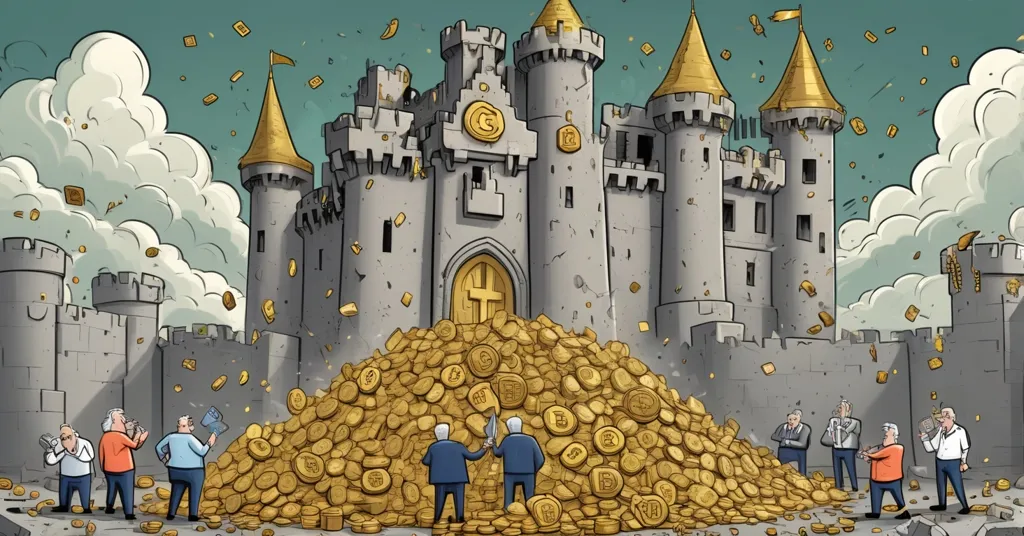
Imagine pouring your life savings into a crypto firm dangling the carrot of 16% annual returns, only to watch it vanish into the digital ether. For over 450 Australians, this nightmare became reality with NGS Crypto, a Gold Coast-based platform that marketed itself as a retirement solution. A federal court has now ordered its shutdown for operating without a financial services license, exposing the seedy underbelly of unregulated crypto schemes and sending a stark warning to investors chasing impossible dreams.
- Court Mandates Closure: NGS Crypto breached securities and consumer protection laws, posing severe risks to investors.
- Investor Deception: Over 450 individuals, often using retirement savings, were promised 16% fixed returns.
- Recovery Struggles: Liquidators have identified only $4.4 million in assets amid crypto volatility and locked funds.
How NGS Crypto Lured the Vulnerable
NGS Crypto positioned itself as a game-changer in retirement planning, peddling what it called “digital mining packages” with a jaw-dropping guarantee of 16% fixed annual returns and full capital repayment. For roughly six years, this promise hooked hundreds of investors, many of whom diverted their self-managed superannuation funds—Australia’s version of self-directed IRAs—into the scheme. These are often retirees or near-retirees, a group desperate for yield in an era of rock-bottom interest rates and spiraling inflation. The allure of crypto as an alternative asset class blinded many to the glaring red flags.
Let’s call it what it is: a setup that reeks of a Ponzi scheme. For the uninitiated, a Ponzi scheme is a fraud where returns to early investors are paid with money from newer ones, not from actual profits, until the whole house of cards collapses. Promising fixed returns in the crypto space—where Bitcoin can drop 10% in an hour—isn’t just naive; it’s a deliberate con. Yet, the hype around blockchain and mining (the process of validating transactions on networks like Bitcoin by solving computational puzzles) gave NGS Crypto’s pitch a veneer of legitimacy, enough to dupe even cautious savers.
Regulatory Hammer Drops Hard
The Australian federal court, presided over by Justice Berna Collier, didn’t mince words in its ruling. NGS Crypto was ordered to permanently cease offering financial services due to its unlicensed operations and flagrant violations of securities and consumer protection laws. These laws exist to ensure companies can’t mislead investors or operate without oversight, protecting the public from financial ruin. The scale of funds raised and the audacity of the promises made left the court with no choice but to intervene decisively. For more details on the court’s decision, check out the report on NGS Crypto’s shutdown by Australian authorities.
Justice Berna Collier declared, “[The] structure and conduct of the business posed grave risks to investors and warranted immediate intervention. The lack of licensing, combined with the scale of funds raised, and the nature of the promises made to investors, justified [the] decision.”
For those new to the regulatory maze, any entity in Australia offering financial products—yes, even crypto investments—must hold an Australian Financial Services (AFS) license from the Australian Securities and Investments Commission (ASIC). This ensures transparency, proper risk disclosure, and accountability. NGS Crypto dodged this entirely, operating in a lawless void while making claims no sane financial outfit could back up. The court’s ruling signals a broader crackdown on such wild-west antics in the crypto frontier.
Fund Recovery: A Digital Quagmire
The aftermath for investors is nothing short of catastrophic. Court-appointed liquidators from McGrath Nicol are scrambling to salvage what they can, but the numbers are grim. Out of potentially tens of millions invested—precise figures remain murky—only $4.4 million in digital assets have been pinned down. This is where the quirks of crypto turn a bad situation into a disaster.
A chunk of these funds is tied up in staking agreements, where crypto is locked in a wallet to support blockchain operations, earning rewards in return. Think of it as lending your money to a bank for interest, except you can’t touch it for a set period—sometimes years. In NGS Crypto’s case, some assets are reportedly locked until 2037. By then, the crypto market could be unrecognizable, and those holdings might be worthless or inaccessible due to protocol shifts or obsolescence.
Then there’s the issue of tracing funds. Crypto’s pseudonymous nature means transactions can be split across countless wallets, often mixed through privacy tools to obscure origins. Add in the market’s notorious volatility—where a 50% price crash isn’t unheard of—and liquidators are playing whack-a-mole with a ghost. Even with blockchain forensics tools, which analyze transaction patterns to track illicit flows, recovery remains a long shot. For investors, it’s a gut punch: their retirement dreams are likely gone for good.
Directors Under Fire, Accountability in Question
Regulators aren’t stopping at the firm itself. Freezing orders were imposed last year on NGS Crypto and its directors—Ryan Brown, Brett Mendham, and Mark Ten Caten—to block any further asset movement. Mendham’s passport has been seized, Ten Caten is believed to have fled Australia, and Brown’s last known address is in Brisbane. These steps, sparked by investor complaints over fund mismanagement and lack of access, show the authorities mean business.
But here’s the rub: holding bad actors accountable in crypto is like nailing jelly to a wall. The borderless, decentralized nature of blockchain means scammers can vanish into jurisdictions with no extradition treaties, their funds hidden in untraceable wallets. While freezing orders are a start, they’re often too late. It’s a bitter reminder that while decentralization empowers individuals with privacy and freedom, it’s also a playground for parasites who exploit trust hard-earned by projects like Bitcoin over a decade.
Lessons for the Crypto Industry
Zooming out, the NGS Crypto fiasco isn’t just a local tragedy—it’s a snapshot of the crypto industry’s growing pains. We’re unwavering believers in Bitcoin and blockchain as tools to redefine money, offering censorship resistance, financial sovereignty, and a middle finger to fiat debasement. As proponents of effective accelerationism (e/acc), we push for a decentralized future built on better tech and education, not just red tape. But let’s not kid ourselves: the space is crawling with grifters who taint the mission with get-rich-quick scams wrapped in blockchain jargon.
As Bitcoin maximalists, it stings to see these frauds drag down the ecosystem’s credibility. Bitcoin’s strength lies in its fixed supply and proven security—a store of value, not a lottery ticket. Yet, altcoins and other platforms often carve out niches Bitcoin doesn’t touch. Ethereum’s smart contracts, for instance, fuel innovation in DeFi and NFTs, but they also enable scams through overly complex or exploitable code. NGS Crypto is the ugly side of that spectrum—as scammy as they come. Separating legit innovation from pure hustles is the challenge, and failures like this make mainstream adoption a harder sell.
While NGS Crypto exploited the uninformed, we can’t ignore the flip side of regulation. Heavy-handed rules risk driving genuine projects underground or out of jurisdictions like Australia. Look at decentralized finance (DeFi) protocols—some have relocated to crypto-friendly havens like Dubai or Singapore to escape suffocating oversight. If regulators overreach, they could choke the very disruption we’re fighting for. It’s a precarious balance: protect the vulnerable without killing the golden goose of blockchain innovation.
Global Regulatory Trends and Enforcement Hurdles
Australia’s crackdown mirrors a worldwide shift toward tighter crypto oversight. The European Union is rolling out its Markets in Crypto-Assets (MiCA) framework by 2024, aiming to standardize rules across member states. In the U.S., the Securities and Exchange Commission (SEC) is hammering unregistered exchanges and dubious token offerings with lawsuits. These moves aim to shield retail investors from the wave of scams—think rug pulls, fake ICOs, or outright frauds like BitConnect—that have plagued the space since the early 2020s.
Yet, enforcement in a decentralized, borderless market is a beast. How do you seize assets scattered across a hundred blockchains? How do you prosecute someone operating from a laptop in a non-cooperative nation? NGS Crypto’s case, with directors potentially out of reach and funds in limbo, shows the limits of traditional legal tools. Regulators are playing catch-up, and while their intent to safeguard investors is valid, the cat-and-mouse game with bad actors often leaves victims empty-handed.
Protecting Yourself in the Crypto Wild West
Navigating this landscape demands vigilance. Here are a few hard-earned tips to avoid becoming the next NGS Crypto casualty:
- Verify Licensing: Always check if a platform holds a valid financial services license from a reputable authority like ASIC.
- Beware Guaranteed Returns: If it sounds too good to be true—like 16% fixed gains—it’s likely a scam. Crypto isn’t a savings account.
- Secure Your Funds: Use hardware wallets to store crypto offline, reducing exposure to platform hacks or mismanagement.
- Do Your Homework: Research projects thoroughly, scrutinize whitepapers, and track community feedback on forums like Reddit or X.
Key Takeaways and Questions for Reflection
- Why Was NGS Crypto Shut Down by Australian Courts?
The federal court acted due to unlicensed operations, violations of securities and consumer protection laws, and the extreme risks posed to over 450 investors with false 16% return guarantees. - Why Is Recovering Investor Funds So Challenging?
Liquidators struggle with crypto volatility, assets locked in staking until 2037, and funds spread across multiple wallets, with just $4.4 million identified so far. - What Measures Were Taken Against NGS Crypto’s Directors?
Freezing orders hit the firm and directors Ryan Brown, Brett Mendham, and Mark Ten Caten; Mendham’s passport was seized, and investigations persist. - What Can Crypto Investors Learn From This Debacle?
It stresses the need for due diligence, confirming regulatory compliance, and steering clear of schemes promising unrealistic gains, especially with retirement savings. - How Does This Case Mirror Broader Crypto Regulation Trends?
It reflects a global push for investor protection via stricter licensing, yet highlights enforcement struggles in a decentralized market where fund recovery often fails.
Bitcoin and blockchain remain our best shot at financial freedom, but only if we purge the NGS Cryptos of the world from the ecosystem. These aren’t just nuisances; they’re roadblocks to a decentralized future. Stick to first principles—verify before you trust—and let’s accelerate toward a system where scams are relics, not recurring nightmares. The revolution is worth fighting for, but only with eyes wide open.