Bank of Korea Warns: Non-Bank KRW Stablecoins Risk Financial Chaos
 LTB
LTB Bank of Korea Sounds the Alarm: Could Non-Bank Stablecoins Unleash Financial Chaos?
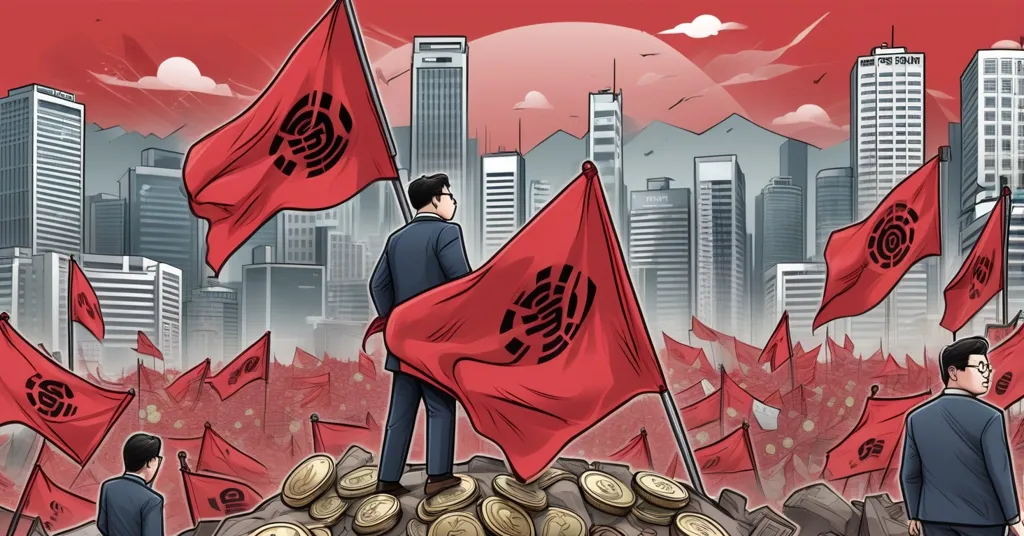
South Korea’s central bank is waving a giant red flag over the rising tide of stablecoins pegged to the Korean Won (KRW), especially those issued by non-bank entities. Governor Lee Chang-yong of the Bank of Korea (BOK) has bluntly warned that this trend could sabotage monetary policy, clash with foreign exchange rules, and drag markets into a chaotic mess straight out of history’s dustiest financial disasters.
- Core Warning: Non-bank KRW stablecoins could disrupt central control and spark market confusion.
- CBDC on Hold: BOK pauses Hank River Project to navigate stablecoin uncertainties.
- Industry Action: South Korean banks forge partnerships to brace for stablecoin legalization.
Decoding Stablecoins and the BOK’s Big Fear
For the uninitiated, stablecoins are cryptocurrencies engineered to hold a steady value, often tied to a fiat currency like the US dollar or the Korean Won. Think of them as digital dollar bills that don’t swing wildly like Bitcoin, making them handy for payments, transfers, or just parking cash in the crypto realm. But when non-bank players—tech giants, crypto exchanges, or blockchain startups—start minting these digital Wons, the BOK sees a nightmare unfolding. At a recent press conference, Governor Lee didn’t hold back, likening the potential fallout to the Free Banking Era in the US (1837-1864), a wild-west period when private banks printed their own money, often leading to scams, failures, and economic turmoil due to zero central oversight. For more on the BOK’s concerns, check out this detailed report on their warnings about market confusion.
“If multiple non-bank institutions issue won-pegged stablecoins, it could lead to confusion similar to that caused by private currency issuance in the 19th century,”
Lee declared, as reported by Yonhap News Agency. He doubled down on the stakes, adding:
“In such a situation, it would be difficult to implement monetary policy, and adverse effects such as having to go through the process of returning to a central bank system again could arise.”
Let’s break this down. Monetary policy—think interest rates and money supply—is how the BOK keeps the economy on track. If a flood of private KRW stablecoins hits the market, the central bank might lose its ability to steer the ship. It’s like trying to control traffic when every driver has their own set of rules—good luck managing inflation or capital flows. Then there’s the clash with foreign exchange regulations; stablecoins could become a sneaky parallel currency, bypassing the BOK’s grip on cross-border money movements. And don’t forget traditional banks—they rely on payments and settlements for profits. If non-banks offer faster, cheaper stablecoin alternatives, the banking sector’s revenue could take a nosedive.
South Korea’s Legislative Push: Regulation or Revolution?
While the BOK sounds the alarm, lawmakers are sketching a different blueprint. South Korea, a tech powerhouse with massive crypto adoption, isn’t ducking the digital asset wave—it’s trying to tame it. Min Byeong-deok, a member of the Democratic Party of Korea (DPK), has proposed the Digital Assets Basic Act, a potential game-changer that could let non-bank entities issue stablecoins under a strict licensing system. This would build on existing safeguards like the Virtual Asset Investor Protection Act, which aims to shield crypto users from fraud and market shenanigans. Though specifics on licensing—capital requirements, audits, or penalties—remain murky, the bill signals a nod to innovation with guardrails. Governor Lee, aware of the brewing policy clash, stressed the need for teamwork:
“Once the relevant minister is appointed, we will discuss and determine the direction to take.”
This legislative push isn’t just talk. South Korea’s history of proactive crypto regulation shows it means business, balancing investor protection with tech progress. But here’s the rub: can a licensing system truly rein in the risks the BOK fears, or is this just a fancy bandage on a gaping wound?
Banks Gear Up: Partnerships Over Panic
South Korean banks aren’t twiddling their thumbs while regulators and the BOK duke it out. They’re diving headfirst into the stablecoin game, forming joint ventures and striking deals with non-bank firms, crypto exchanges like Upbit, and blockchain innovators. The goal? Be ready if legalization drops, ensuring they’re not sidelined by nimbler competitors. It’s a smart play—why risk obsolescence when you can co-opt the tech? These partnerships often focus on building stablecoin infrastructure or securing liquidity, though exact players and projects remain under wraps. What’s clear is the momentum: stablecoins, globally hailed as a bridge between fiat and crypto, promise speed and cost savings that legacy systems can’t match. South Korean banks want a piece of that pie.
CBDC on Pause: Hank River Project Hits the Brakes
Meanwhile, the BOK has slammed the pause button on its own digital currency experiment. The Hank River Project, South Korea’s Central Bank Digital Currency (CBDC) pilot, finished its first phase in June, testing basic functionalities. For clarity, a CBDC is a digital version of the Won, issued and backed by the central bank—like government cash, but on your phone. The second phase, meant to tackle peer-to-peer transfers and merchant payments, is now in limbo. Why the delay? The BOK is taking a “wait-and-see” stance as stablecoin legalization debates heat up. A senior bank official captured the uncertainty:
“Wait and see how the situation develops, given that the legalization of stablecoins is currently underway, while it is unclear how CBDC, stablecoins, and deposit tokens differ and can coexist.”
Deposit tokens, by the way, are blockchain-based versions of bank deposits, blending old-school finance with decentralized tech. The BOK’s hesitation also stems from pushback by participating banks, who’ve grumbled about sky-high development costs and the lack of a clear commercialization plan. Why sink millions into a CBDC if private stablecoins might steal the spotlight for a fraction of the price? It’s a fair question, and one that exposes the broader tug-of-war between centralized control and decentralized disruption.
The Other Side: Stablecoins as Financial Freedom
Let’s cut the fluff: the BOK’s panic reeks of a central authority desperate to cling to its money-printing monopoly. Sure, unchecked stablecoins could spell trouble, but well-regulated non-bank issuance might just be the shake-up finance needs. Imagine slashing cross-border payment fees—often 5-7% through banks—down to pennies with blockchain-based stablecoins. Or picture South Korea’s tech-savvy masses, already hooked on crypto (over 10% of the population reportedly owns digital assets), accessing cheaper, faster financial tools without banking middlemen skimming off the top. This aligns with the ethos of decentralization and disruption we cheer for—breaking the status quo to empower users. Effective accelerationism, anyone? Sometimes, you’ve got to let the chaos play out to build something better.
That said, Governor Lee isn’t entirely off-base. The ghost of TerraUSD looms large—a so-called algorithmic stablecoin that crashed in 2022, wiping out billions overnight when it lost its peg to the dollar. South Korea felt that sting hard, given its huge crypto user base. A similar flop with KRW stablecoins could shatter trust and trigger economic ripples. The Free Banking Era analogy, while dramatic, isn’t pure hyperbole—private money without oversight can spiral fast. So, while we root for innovation, ignoring the need for robust regulation would be reckless.
Global Context: South Korea Isn’t Alone
This isn’t just a local drama. Across the globe, nations grapple with the stablecoin-CBDC conundrum. In the US, debates rage over regulating giants like USDC and USDT, with fears of systemic risk if pegs break. China’s digital Yuan pushes full central control, sidelining private stablecoins altogether. The EU’s MiCA framework, meanwhile, sets strict rules for stablecoin issuers, a model South Korea might eye for its Digital Assets Basic Act. The point? South Korea’s wrestling match mirrors a worldwide struggle to balance financial innovation with stability—a tightrope walk with trillion-dollar stakes.
Bitcoin’s Edge in the Stablecoin Storm
While stablecoins hog the headlines for payments and settlements, let’s not forget Bitcoin’s quiet strength. As a decentralized store of value, it sidesteps the pegged-currency drama altogether. No central bank meddling, no shaky stablecoin algorithms—just pure, censorship-resistant money. For us Bitcoin maximalists, it’s a reminder: while stablecoins and altcoins fill niche roles in this financial revolution, BTC remains the bedrock of true monetary freedom. South Korea’s stablecoin saga might shape transactions, but Bitcoin’s long game is sovereignty.
What’s Next for South Korea’s Crypto Crossroads?
South Korea stands at a pivotal junction, weighing the allure of stablecoins against the perils of losing control. The BOK’s CBDC pause signals cautious adaptability, while banks and blockchain players charge ahead, betting on a digital currency future—centralized or not. Legislative moves like the Digital Assets Basic Act could forge a middle path, but the devil’s in the details. Will this gamble spark a financial revolution or a regulatory fiasco? History hints at both outcomes, and only time will tell if South Korea can thread the needle.
Key Takeaways on KRW Stablecoins and South Korea’s Crypto Future
- What are the risks of KRW stablecoins issued by non-bank entities?
The Bank of Korea warns they could undermine monetary policy, evade foreign exchange rules, and cause market chaos akin to the unstable Free Banking Era in the US, while also slashing traditional banks’ profits. - Why has the BOK paused its CBDC project, the Hank River Project?
It’s on hold to monitor stablecoin legalization trends and figure out how CBDCs, stablecoins, and deposit tokens can coexist, alongside banks’ gripes over high costs and unclear rollout plans. - What steps is South Korea taking to regulate stablecoin issuance?
The Digital Assets Basic Act, proposed by DPK’s Min Byeong-deok, aims to allow non-bank issuance under a licensing system, extending existing crypto investor protections. - How are South Korean banks preparing for stablecoin legalization?
They’re forming alliances with crypto exchanges, blockchain firms, and non-bank entities to build stablecoin infrastructure and stay competitive if regulations shift. - What historical warning did Governor Lee Chang-yong issue?
He pointed to the US Free Banking Era (1837-1864), when private currencies caused rampant instability, as a cautionary tale for unchecked non-bank stablecoin issuance. - How does South Korea’s stablecoin debate fit into global trends?
It echoes worldwide tensions, from US stablecoin oversight battles to China’s CBDC dominance and the EU’s regulatory push, highlighting a shared struggle between innovation and control.