Bank of Russia Sets 2026 Deadline for Strict Crypto Rules and Penalties
 LTB
LTB Bank of Russia Targets 2026 for Ironclad Crypto Regulation and Harsh Penalties
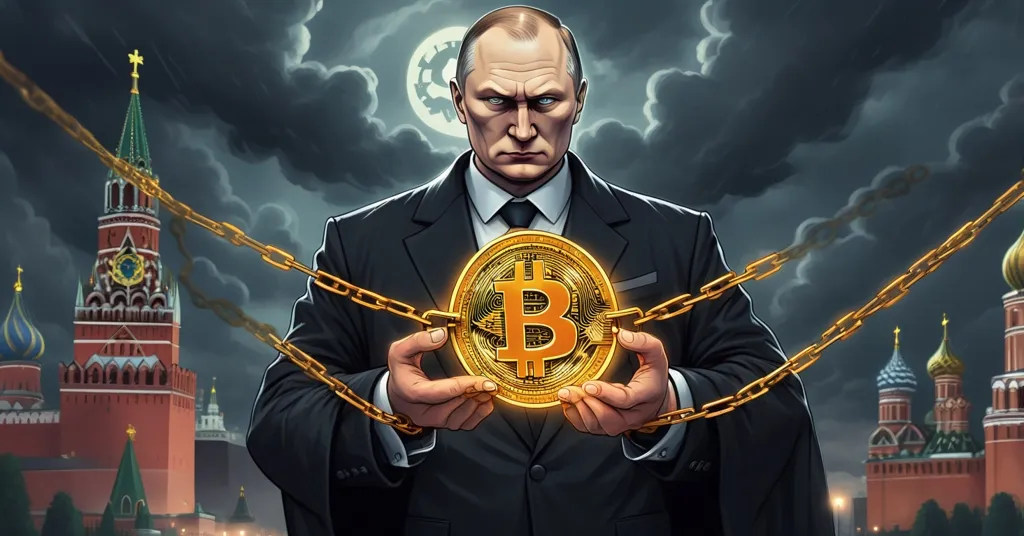
Russia is poised to clamp down on the wild west of cryptocurrencies with a sweeping regulatory framework set for mid-2026, as the Bank of Russia pivots from outright hostility to a controlled embrace. Driven by economic isolation from Western sanctions and staggering domestic adoption, this move aims to rein in decentralized finance while preserving state dominance over the financial system.
- Regulatory Deadline: Comprehensive crypto rules to be finalized by July 1, 2026, with penalties for violations starting July 1, 2027.
- Investor Restrictions: Non-qualified investors face tight caps and tests; qualified ones get more freedom but still under scrutiny.
- Payment Lockout: Cryptocurrencies banned from domestic use, restricted to investment assets only.
- Sanctions Factor: Economic exclusion pushes Russia to leverage crypto as a financial workaround.
Once a fierce opponent of cryptocurrencies, the Bank of Russia spent years lobbying for a total ban on trading and mining, citing risks to financial stability and the ruble’s sovereignty. That stance crumbled after 2022, when Western sanctions—particularly exclusion from the SWIFT international payment system—severely restricted Russia’s access to global finance following its military actions in Ukraine. Crypto, once a bogeyman, became a necessary tool for cross-border transactions and economic survival. With Russia now ranking among the top 10 countries for crypto adoption, logging over $376 billion in transactions between July 2024 and June 2025 according to Chainalysis data, the central bank has no choice but to regulate rather than suppress. But make no mistake—this isn’t a love letter to decentralization. It’s a state-controlled cage, designed to harness crypto’s utility while keeping a tight grip on its potential to disrupt. For more on the specifics of this shift, check out the detailed plan from the Bank of Russia’s regulatory framework for 2026.
Why the Shift to Regulation?
The catalyst for this regulatory U-turn is glaringly obvious: Western sanctions have left Russia scrambling for alternatives to traditional financial systems. Being cut off from SWIFT and facing frozen assets abroad, businesses and individuals turned to cryptocurrencies like Bitcoin and stablecoins—digital assets pegged to fiat currencies like the US dollar—for peer-to-peer trades and international settlements. Legalizing crypto mining earlier (thanks to Russia’s cheap energy resources) and experimenting with digital currencies for cross-border payments were initial steps. Now, with a full framework slated for July 1, 2026, the Bank of Russia, alongside the Finance Ministry, is building a domestic crypto market under strict oversight. This is pragmatism, not progressiveness. They’re not embracing the cypherpunk ethos; they’re corralling a beast they can’t kill.
Let’s not sugarcoat it—Russia’s crypto adoption isn’t just about tech enthusiasts. That $376 billion in transactions likely includes a hefty chunk tied to sanction evasion, whether it’s citizens hedging against ruble volatility or entities moving funds under the radar. Chainalysis hasn’t broken down the split between retail and institutional use, or whether Bitcoin dominates over stablecoins or privacy coins like Monero, but the sheer volume suggests a deep reliance on decentralized finance. This reality forces the state’s hand: ban it, and you push it underground; regulate it, and you might just keep some control.
Key Rules for Investors: A Tale of Two Tiers
The proposed framework splits investors into two camps with wildly different rulebooks. If you’re a non-qualified investor—basically, the average person trying to dip into crypto—you’re slapped with a measly annual purchase cap of 300,000 rubles (about $3,800) through a single intermediary. You’re also restricted to a curated list of “liquid” cryptocurrencies, likely meaning widely traded and less volatile coins like Bitcoin or Ethereum, and you must pass a knowledge test to even participate. Fail the test? Tough luck, no trading for you. These tests are pitched as a way to protect the uninformed from speculative disasters, but let’s call it what it is: gatekeeping dressed as caution.
Qualified investors—those with significant wealth or financial expertise—get a longer leash. They can buy any cryptocurrency, barring anonymous tokens like Monero, with no volume limits. Still, they’re not exempt from oversight; they must pass risk-awareness tests to prove they grasp the volatility and pitfalls of crypto markets. This tiered system aims to balance access with protection, but it reeks of elitism. Imagine a Russian worker wanting to shield savings from ruble devaluation—$3,800 a year won’t cut it, and a test feels like a humiliating hurdle. It’s like rationing lifeboats on a sinking ship.
Crypto’s Shackled Role: Investment, Not Money
Don’t even think about buying borscht with Bitcoin in Moscow. Cryptocurrencies and stablecoins are explicitly barred from domestic payments, a policy cemented in 2020 legislation to protect the ruble’s dominance. State Duma financial markets committee chairman Anatoly Aksakov summed it up with brutal clarity:
Cryptocurrencies would “never become money” in Russia and could only function as investment instruments.
While Aksakov dismisses crypto as a medium of exchange, its growing use in cross-border trades tells a different story—it’s already functioning as money, just not on Russia’s books. This ban is about monetary sovereignty; the state isn’t about to let decentralized assets undermine the national currency, especially in a sanctioned economy where every ruble counts. So, crypto remains a speculative asset or store of value—nothing more, nothing less.
Infrastructure and Enforcement: The Iron Grip Tightens
On the operational front, the framework dictates who can play ball. Licensed exchanges, brokers, and trustees will facilitate transactions under existing licenses, while specialized crypto depositories and exchangers face fresh, stringent requirements. Russian residents can engage with foreign platforms via overseas accounts and transfer assets abroad through local intermediaries, but only if they report everything to tax authorities. Slip up, and you’ll face penalties starting July 1, 2027. While the specifics of these punishments are still murky, the Bank of Russia means business—expect crackdowns on black-market trading, tax evasion, or money laundering, likely with fines or worse, based on their history of financial enforcement.
Beyond cryptocurrencies, the rules extend to Digital Financial Assets (DFAs)—blockchain-based instruments broader than just coins or tokens. These will circulate on open networks to attract foreign capital, aligning their terms with crypto investments. It’s a calculated move to draw investment when traditional channels are throttled by sanctions, acknowledging that blockchain tech offers more than just Bitcoin hype.
Mining and Privacy: Unanswered Questions
Russia’s a heavyweight in crypto mining, thanks to abundant, cheap energy in regions like Siberia. Legalizing mining was a precursor to this framework, yet details on how miners fit into the 2026 rules remain vague. Will they face new taxes, licensing, or penalties for off-grid operations? It’s a gaping hole in the proposal, given mining’s role in Russia’s crypto ecosystem. Similarly, privacy takes a hit with bans on anonymous coins and mandatory reporting for foreign transactions. For Russians seeking financial privacy under an authoritarian regime, this framework could feel like a surveillance net—decentralization’s promise of freedom gets smothered by state oversight.
Global Context: Russia’s Play in the Crypto Chess Game
Russia’s approach isn’t unique—governments worldwide are wrestling with how to handle crypto’s rise. Compared to the EU’s Markets in Crypto-Assets (MiCA) framework, which seeks harmonized rules with consumer protections, Russia’s plan feels more draconian with its payment ban and low caps. Against the US’s fragmented, state-by-state patchwork, Russia’s unified (if restrictive) stance looks decisive, if not suffocating. Could this influence other nations like India, teetering between bans and regulation, or China, with its outright crypto prohibition but blockchain enthusiasm? Russia’s experiment might set a precedent for sanctioned economies—control crypto, don’t crush it, but don’t let it run free either.
Counterpoint: Stability Over Freedom?
Let’s play devil’s advocate for a moment. While Bitcoin maximalists and decentralization purists might scoff at these shackles, there’s an argument that tight regulation could stabilize Russia’s crypto scene. Weeding out scams, protecting naive investors from rug pulls, and curbing illicit use might build trust in a market often seen as a speculative casino. Sure, it’s not the borderless financial utopia cypherpunks envisioned, but in a country battered by economic volatility, stability might trump freedom for now. On the flip side, these rules risk choking innovation—developers and users could flee to less restrictive jurisdictions, and the $3,800 cap for regular folks is a pathetic barrier to meaningful adoption. It’s a half-win for Bitcoin: a foothold in Russia, but diluted by altcoins and DFAs muddying the waters of true financial sovereignty.
Looking Ahead: Acceleration or Asphyxiation?
From an effective accelerationism perspective, Russia’s controlled crypto adoption could paradoxically spur blockchain innovation. Constraints often breed creativity—developers might build compliant yet groundbreaking tools within these limits. But the opposite is just as likely: overregulation could strangle progress, pushing talent and capital elsewhere. As we approach 2026, the stakes are high. Will Russia’s tight leash choke the life out of crypto’s potential, or is this the only way to tame a wild beast in a sanctioned economy? One thing’s clear—Russia isn’t playing for freedom; it’s playing for survival, on its own terms.
Key Takeaways and Questions on Russia’s Crypto Regulation Pivot
- Why is Russia regulating cryptocurrency by 2026 instead of banning it?
Western sanctions since 2022, including SWIFT exclusion, have forced Russia to rely on crypto for cross-border transactions, while $376 billion in domestic transactions make a ban impractical. - How do these rules impact everyday versus wealthy investors?
Everyday investors are limited to a $3,800 annual cap and select coins after passing tests, while qualified investors can trade freely (barring anonymous tokens) with risk assessments. - Why are cryptocurrencies banned as payment in Russia?
To protect the ruble’s dominance, officials insist crypto will never be “money” domestically—only an investment tool—ensuring state control over the financial system. - What does Russia’s $376 billion crypto volume indicate?
It shows crypto’s deep integration into the economy, likely fueled by sanction evasion and ruble instability, making regulation a necessity over suppression. - Is this a step forward or backward for decentralization?
It’s a mixed bag—crypto gains legitimacy, but heavy restrictions and surveillance undermine the core promise of financial freedom and privacy. - Could Russia’s framework influence global crypto policies?
Possibly, especially for sanctioned or developing economies; it offers a blueprint for control over prohibition, though its harsh limits might deter true innovation.