Bessent’s Heated Hearing: Bitcoin Regulation and Economic Turmoil Take Center Stage
 LTB
LTB Treasury Secretary Bessent’s Fiery Hearing: Bitcoin, Crypto Regulation, and Economic Chaos in Focus
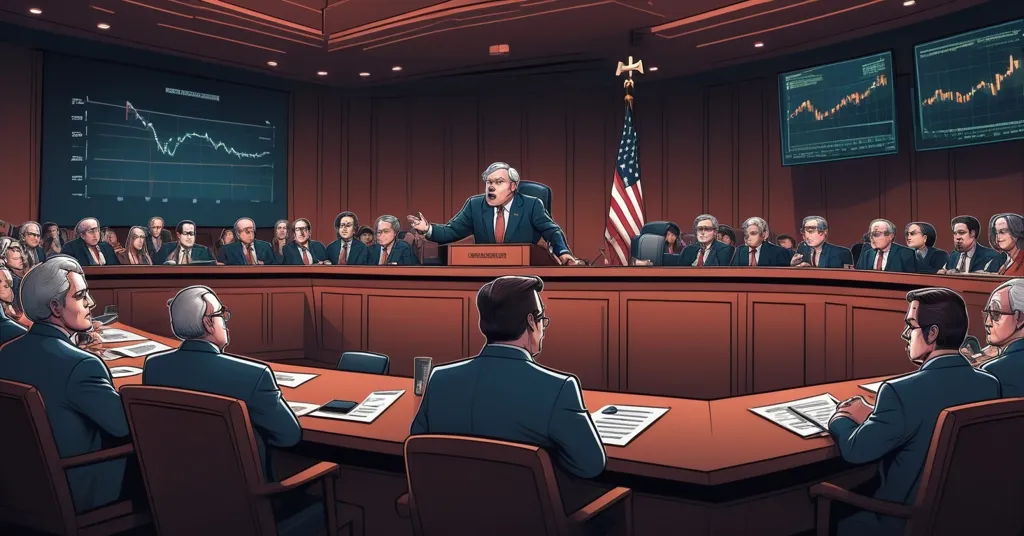
U.S. Treasury Secretary Scott Bessent faced a storm of criticism and partisan jabs during a heated session with the House Financial Services Committee, defending the Trump Administration’s economic playbook. While presenting the Financial Stability Oversight Council’s annual report, discussions veered into tariffs, inflation, cryptocurrency regulation, and housing crises—issues that ripple directly into the world of Bitcoin and decentralized finance.
- Economic Resilience: Bessent claims the U.S. economy is holding strong despite tight conditions.
- Policy Clashes: Tariffs and inflation spark fierce debate with Democratic lawmakers.
- Crypto’s Role: Regulation and economic uncertainty could shape Bitcoin’s future.
A Tense Showdown: Economic Outlook Under Fire
The hearing was anything but a sleepy bureaucratic affair. Bessent stepped into the ring with Democratic lawmakers throwing punches over the Trump Administration’s economic strategies, turning a routine review of financial stability into a full-blown ideological slugfest. He painted a picture of a U.S. economy that’s tougher than it looks, urging skeptics to ignore short-term market hiccups and see the current tight conditions as a bitter but necessary pill after years of easy money policies—think of it as the economy finally sobering up after a decade-long binge on cheap loans. For our readers, this matters because economic turbulence often sets the stage for Bitcoin’s appeal as a hedge against uncertainty, though not without its own risks. If you want to dig deeper into Bessent’s defense of the administration’s stance, check out his tense exchange with lawmakers in this recent House hearing.
Bessent’s optimism didn’t land with everyone. Democrats hammered him on whether the administration’s policies are steering the country toward a cliff, especially with inflation still stinging American wallets. His counter? Short-term volatility isn’t a death knell; it’s just the system recalibrating. But let’s play devil’s advocate here—what if he’s wrong? If a recession slams us harder than expected, will Bitcoin stand as a digital fortress, or will it crumble alongside traditional markets like it has in past downturns? The jury’s still out, and that uncertainty keeps the crypto community on edge.
Tariffs and Inflation: A Bitcoin Hedge in Waiting?
President Trump’s tariff policies took center stage as a lightning rod for criticism. Democrats argued these trade barriers are jacking up prices for everyday goods, fueling inflation that’s already a pain point for most households. Bessent pushed back hard, denying any clear evidence from recent data tying price spikes directly to tariffs. He framed them as a calculated long-term move to protect American interests, not a reckless inflation trigger.
Bessent argued there is no clear evidence from recent data that price increases are directly caused by tariffs, describing them as a necessary and strategic economic tool for long-term benefits.
Here’s why this spat hits home for crypto enthusiasts: if inflation keeps climbing—tariffs or not—Bitcoin often gets hyped as “digital gold,” a way to shield your wealth from a shrinking dollar. With its capped supply of 21 million coins, Bitcoin’s scarcity mimics gold’s appeal during economic uncertainty. Look at 2021, when post-COVID stimulus flooded markets with cash—Bitcoin soared past $60,000 as inflation fears grew. But let’s not get starry-eyed. Bitcoin’s price swings can be brutal, and it’s often moved in lockstep with risky assets like stocks during crashes. So, is it really the ultimate hedge, or just another gamble? Tariffs might indirectly nudge more folks toward crypto, but don’t bet the farm on it saving the day.
Monetary Policy Mess: Federal Reserve Under Scrutiny
Bessent didn’t hold back on blasting the Federal Reserve for dragging its feet on inflation control, pointing out that sustained high interest rates are now choking sectors like small businesses and real estate. For those new to the game, the Fed is the U.S. central bank, setting the cost of borrowing money through interest rates. High rates mean loans get pricier—imagine trying to buy a car when the loan interest jumps from 3% to 8%. It cools off spending to tame inflation, but it also slows everything down.
This squeeze has a direct line to the crypto space. High rates make traditional investments like bonds more attractive, potentially siphoning money away from speculative assets like Bitcoin. Historically, though, low-rate environments—like 2020-2021—saw Bitcoin explode as cheap money chased high-risk, high-reward plays. Bessent’s critique raises a juicy question: if the Fed keeps rates elevated, will Bitcoin struggle to regain momentum, or could economic frustration drive more investors to ditch fiat systems altogether? It’s a coin toss, but one worth watching as decentralized finance promises an escape from centralized mismanagement.
Crypto Regulation: Walking a Dangerous Tightrope
Cryptocurrency regulation lit up the hearing as lawmakers lobbed accusations of both heavy-handed overreach and reckless leniency. Bessent didn’t mince words—he’s hell-bent on balancing consumer safety with the raw innovation that defines this space. The goal, he says, is to stop scams and rug pulls without smothering the tech that’s rewriting finance.
Bessent stated that legislative efforts are focused on striking a balance between consumer protection and fostering innovation in the crypto space.
For Bitcoin maximalists in our crowd, any whiff of regulation smells like a betrayal of decentralization’s core ethos—freedom from meddling overlords. But let’s be real: without some guardrails, the space risks turning into a cesspool of fraud that scares off mainstream adoption. Altcoin ecosystems, especially DeFi protocols on Ethereum, might actually crave clearer rules to scale safely. Here’s the devil’s advocate take—could overregulation choke Bitcoin’s rebellious spirit before it truly disrupts the old guard? Isn’t a few bruises worth the fight for financial sovereignty? On the flip side, ignoring consumer protection could taint crypto’s reputation for decades. Bessent’s tightrope walk could make or break whether Bitcoin becomes a household name or stays a niche experiment.
Housing Crisis: Can Blockchain Break the Mold?
Housing affordability emerged as a gut punch, with median U.S. house prices clocking in at over $410,000 in Q2 2025, per St. Louis Federal Reserve data. Bessent pointed fingers at structural roadblocks like zoning constraints—local rules that often block dense, affordable housing in favor of sprawling, pricey single-family zones—and chronic underbuilding, rather than just blaming high interest rates.
Bessent noted that high interest rates are not the sole reason for rising home prices, pointing to structural issues like zoning constraints and underbuilding as key drivers.
This mess highlights the failures of centralized systems, and that’s where blockchain tech could sneak in as a dark horse. Platforms like RealT and Harbor are already experimenting with tokenization—turning real estate into digital shares you can buy with crypto, often via Ethereum smart contracts. Imagine owning a sliver of a rental property for a few hundred bucks instead of scraping together a $80,000 down payment. It’s a democratizing idea, but hurdles like legal recognition and market liquidity loom large. Still, if traditional policies keep flunking the housing test, decentralized solutions might just get their shot. Or are we dreaming too big? Centralized gatekeepers won’t relinquish control easily, and crypto’s volatility could spook would-be investors. It’s a long road, but the seed is planted.
Partisan Gridlock: A Roadblock for Crypto Clarity?
The hearing’s partisan fireworks weren’t just noise—they signal a deeper rift over the U.S. economy’s direction in 2025. Bessent is gearing up for another round before the Senate Banking, Housing, and Urban Affairs Committee, where the same debates over financial stability and policy will likely flare up. This gridlock isn’t abstract for the crypto world. While lawmakers bicker over tariffs and interest rates, the lack of consensus on regulation leaves Bitcoin and blockchain tech in limbo. If they can’t agree on lunch, good luck getting a unified crypto framework. Meanwhile, other nations—like China with its digital yuan—aren’t waiting for permission to innovate. Wake up, folks—decentralization isn’t pausing for political theater.
Key Takeaways and Burning Questions
- What’s the current state of the U.S. economy according to Scott Bessent?
He sees it as resilient, arguing tight conditions are a needed reset after years of cheap borrowing, and short-term market dips don’t spell collapse. - How might tariffs and inflation impact Bitcoin adoption?
Bessent denies tariffs directly cause price hikes, but persistent inflation could drive more people to Bitcoin as a hedge, though its volatility remains a gamble. - What’s the U.S. stance on cryptocurrency regulation in 2025?
The focus is on balancing consumer protection with innovation—a critical pivot that could either fuel mainstream crypto growth or stall it under heavy-handed rules. - Why does the housing crisis matter to the crypto community?
With median prices over $410,000 due to zoning and underbuilding, centralized policy failures spotlight the potential for blockchain-based real estate solutions like tokenization. - Can political divides derail Bitcoin and blockchain progress?
Absolutely—Republican-Democrat clashes over economic policy could delay clear crypto regulations, risking stagnation while global competitors advance digital finance.
As Bessent heads to the Senate, the crypto community watches with bated breath. These economic battles aren’t just about tariffs or interest rates—they’re shaping the battlefield where Bitcoin and decentralized tech will either soar or stumble. Will policy finally catch up to innovation, or are we doomed for another round of missed chances? One thing’s clear: in the fight for financial freedom, every skirmish counts, and we’re tracking every move.