Best Buy Sells Tangem Hardware Wallets Nationwide, Boosting Crypto Self-Custody in the US
 LTB
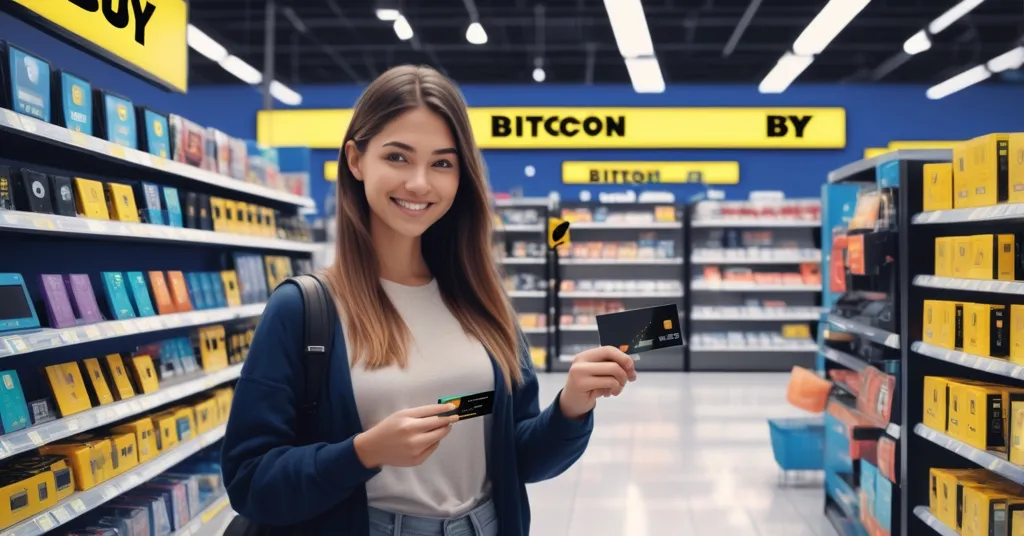
LTB Best Buy has started selling Tangem hardware wallets nationwide, pushing crypto self-custody further into the mainstream and giving U.S. shoppers a simple way to buy a device that keeps private keys off exchanges and away from company servers.
- Best Buy now sells Tangem hardware wallets online and in 200+ U.S. stores
- Tangem calls it its largest retail expansion in the United States
- The lineup includes the Tangem Wallet and Tangem Ring
- Tangem says it supports 16,000+ tokens across 90+ blockchains
- The company says its security architecture has not been breached across more than 6 million devices
The move matters because hardware wallets are the blunt, unsexy backbone of crypto security. If you don’t control your private keys, you don’t truly control your coins. That’s the whole point of self-custody. A centralized exchange can be useful for trading, but as a long-term vault it’s still someone else’s spreadsheet, someone else’s servers, and someone else’s bad day waiting to happen. Hacks, freezes, bankruptcies, account restrictions — crypto has already run that movie too many times.
Tangem is trying to make the safer route easier to buy. Best Buy’s shelves and website now carry Tangem products, marking the company’s biggest retail push in the U.S. so far. Tangem already sells through Walmart, Amazon, and Virgin Megastore, but Best Buy is a different kind of signal. It puts a Best Buy crypto wallet beside familiar consumer electronics, which is a lot less intimidating than hunting through niche crypto shops and trying to decode whether some random website is legit or just another scam with a slick landing page.
That matters because adoption is often blocked by friction, not ideology. Plenty of people like the idea of Bitcoin and crypto self-custody until they hear words like “private key,” “backup,” and “seed phrase,” at which point they mentally tap out and leave funds on an exchange. Tangem’s pitch is that it removes some of that friction without gutting security. Whether it succeeds is the real question.
The products now available at Best Buy include the Tangem Wallet, a credit card-sized NFC hardware wallet, and the Tangem Ring, a wearable ring-format hardware wallet. NFC stands for near-field communication, the same short-range wireless tech used in tap-to-pay cards and phones. In plain English, it means the device can communicate when held close to a phone, which makes it feel more familiar to normal users than a tiny USB stick that looks like it escaped from a 2007 tech drawer.
The Tangem Wallet comes in sets of two or three cards, with each card acting as both a primary access device and a backup key. The Tangem Ring package includes one ring and two backup cards. Private keys are generated and stored on secure chips inside the device, so the keys never need to sit on an exchange, in a phone’s cloud backup, or in some brittle software wallet waiting to get phished.
For readers newer to the term, private keys are the secret cryptographic codes that prove ownership of crypto. Lose them and you lose access. Hand them to the wrong person and you’ve gifted away your funds with all the finality of a signed check and none of the customer support. That’s why hardware wallets exist: they keep those keys offline and away from common attack surfaces.
Tangem says it uses a seedless backup system, though optional seed phrase imports are available. A seed phrase is the recovery phrase used to restore a wallet if the device is lost or damaged. Seed phrases are powerful, but they’re also where a lot of users get wrecked by mistakes, bad storage habits, phishing scams, and the classic “I wrote it down somewhere safe” disaster. Tangem’s seedless model is designed to reduce that headache.
That convenience is the selling point, but it also raises the obvious devil’s-advocate question: does easier self-custody make people safer, or just more relaxed about what they’re actually doing? The answer is probably “both.” Less complexity can help adoption, but it can also encourage laziness. A hardware wallet isn’t a magical talisman. If a buyer treats it like a debit card with upside, they’re already halfway to a mess.
Tangem says its products are used in 170 countries, and the company claims its security architecture has not been breached across more than 6 million devices. That’s a strong boast, but it should still be read carefully. Company claims are not the same thing as independent, universal proof. Still, in a sector where a lot of products have been hacked, drained, or socially engineered into dust, a long security track record is better than a marketing deck full of buzzwords and vibes.
The wallet app supports store, swap, stake, and spend functions, while Tangem Pay supports Visa payments and works with Apple Pay and Google Pay. That puts the product in the growing camp of crypto tools trying to become useful in everyday life rather than just sitting around as cold storage for people who only check balances during bull runs.
There’s an important tension here. A lot of the crypto industry still sells itself like a casino with extra steps, but the real breakthrough comes when digital assets become usable, boring, and dependable. Self-custody is part of that. Payments are part of that. Retail access is part of that. If the goal is a financial system that doesn’t need to ask permission from a middleman every five seconds, then distribution through places like Best Buy is progress worth noticing.
Tangem chief technology officer Andrey Lazutkin framed the launch as a major access point for ordinary consumers, saying:
“Getting Tangem Wallets onto Best Buy shelves means that for the first time, any consumer can access a hardware wallet that is both genuinely secure and genuinely easy to use. That combination has never existed at that scale, and it fundamentally changes who self-custody is for.”
That’s a big statement, but it lands because the pain point is real. For years, hardware wallets have been strong on security and weak on friendliness. Many products require enough setup discipline to make a casual user feel like they need a laminated checklist, a priest, and a spare fireproof safe. Tangem is betting that a card-based wallet and a ring-based option can lower that barrier without turning security into a joke.
The timing also fits a broader pattern: crypto companies are increasingly trying to win adoption through utility, not just speculation. The industry is slowly moving from “number go up” to “this thing actually does something.” Examples include Shopify adding native USDC payments in 2025 through Coinbase and Stripe, Fold launching a Bitcoin bonus program for employers, and Newegg previously adding Dogecoin payments through BitPay.
That shift matters, but it should not be romanticized. Mainstream retail access does not magically fix the core risks of crypto ownership. Users still have to verify authenticity, store backups properly, understand what they’re signing, and avoid handing their recovery info to scammers in a panic. Buying a hardware wallet is the easy part. Using it responsibly is where the adults get separated from the people who thought “backup” meant “I’ll deal with that later.”
There’s also a subtle supply-chain and trust angle. Buying from Best Buy is better than buying from some sketchy pop-up site because it reduces the odds of counterfeit hardware or shady fulfillment. That said, users still need to check packaging, set up the device carefully, and follow the vendor’s instructions without assuming retail shelf space equals invincibility. It doesn’t. Nothing in crypto does.
- What did Best Buy start selling?
Best Buy started selling Tangem hardware wallets online and in more than 200 U.S. stores, making self-custody tools easier for mainstream shoppers to buy. - Why does this matter for crypto adoption?
It puts a crypto security product in a major consumer retail channel, which lowers the barrier for people who want to hold their own private keys instead of leaving assets on exchanges. - What is a hardware wallet?
A hardware wallet is a device that stores private keys offline and signs transactions securely, reducing exposure to hacks, malware, and exchange failures. - What makes Tangem different from other self-custody wallets?
Tangem uses a credit-card-style NFC wallet, a ring form factor, and a seedless backup model by default, aiming to make self-custody simpler and more approachable. - Is Tangem only for Bitcoin?
No. Tangem says it supports more than 16,000 tokens across over 90 blockchains, but the core value for Bitcoin holders is the same: secure self-custody without relying on a third party. - What is the main risk with hardware wallets?
User error. Losing backups, falling for phishing scams, or misunderstanding recovery can still lead to disaster even if the hardware itself is secure. - Does retail availability guarantee safety?
No. It improves access and trust, but users still need to understand how private keys, seed phrases, and backups work.
Best Buy selling Tangem hardware wallets is a useful sign that crypto infrastructure is inching closer to normal life. That’s good news for self-custody, good news for Bitcoin holders who want real control, and good news for anyone tired of pretending an exchange is a bank. But the hard truth remains unchanged: freedom is only useful if people are willing to handle it. The wallet can be easy. The responsibility never is.