Binance Hit with A$10M Fine in Australia for Crypto Compliance Failures
 LTB
LTB Binance Slapped with A$10M Fine in Australia: A Harsh Lesson in Crypto Compliance
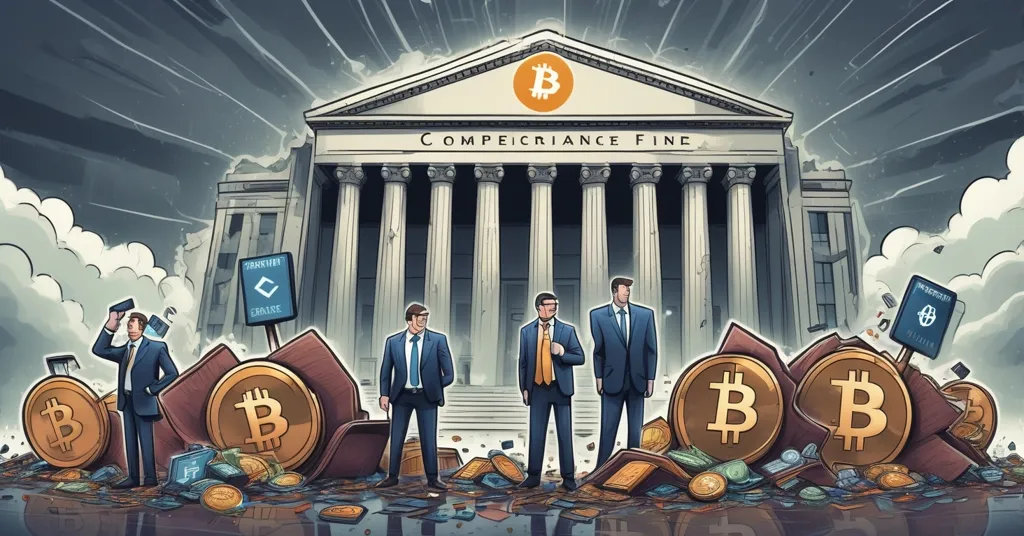
Binance, the titan of cryptocurrency exchanges, has been hit with a bruising A$10 million civil penalty by Australia’s Federal Court for a staggering compliance failure that left hundreds of retail investors exposed to high-risk crypto products. Operating through its local arm, Binance Australia Derivatives (under Oztures Trading Pty Ltd), the exchange’s missteps have reignited debates over consumer protection in the Wild West of digital finance, and it’s a wake-up call the industry can’t afford to snooze through.
- Massive Fine: A$10 million penalty for misclassifying 524 retail investors as wholesale clients.
- Financial Fallout: Affected clients lost A$8.66 million and paid A$3.89 million in fees on dangerous crypto derivatives.
- Regional Heat: Binance faces mounting regulatory pressure across the Asia-Pacific, with restrictions tightening in the Philippines.
The Compliance Catastrophe: How Binance Dropped the Ball
From July 2022 to April 2023, Binance Australia Derivatives wrongly classified 524 retail investors—over 85% of its Australian client base—as wholesale clients. For those new to the financial lingo, a wholesale client is typically a seasoned or high-net-worth investor, subject to fewer regulatory safeguards under Australian law compared to retail investors, who are often less experienced and require more protection. By slapping the “wholesale” label on everyday folks, Binance opened the door for them to trade crypto derivatives—complex financial instruments that bet on the price swings of cryptocurrencies, often using borrowed funds (leverage) to amplify gains or losses. These are high-stakes products, akin to playing poker with a loaded gun, and they’re not meant for the average Joe.
The financial toll was brutal. These misclassified retail investors racked up A$8.66 million in trading losses during a punishing bear market, still reeling from the 2022 collapses of Terra-LUNA and FTX. On top of that, they shelled out A$3.89 million in fees to Binance for the privilege of being burned. The Australian Securities and Investments Commission (ASIC), the nation’s financial watchdog responsible for policing everything from stock markets to crypto platforms, dug into the mess and found compliance failures so egregious they border on farce.
ASIC’s investigation revealed that Binance’s onboarding process was a joke. Clients could take a multiple-choice quiz to qualify as “sophisticated investors”—a designation meant to prove financial acumen—and if they failed, no problem! They got unlimited retries until they passed. It’s like letting someone guess a bank vault code until they stumble on the right combo. Beyond that, there was zero proper verification for those claiming “professional investor” status, and senior staff at Binance seemed to be asleep at the wheel, offering no meaningful oversight of these glaring red flags.
“Binance failed to set up basic compliance checks and incorrectly approved hundreds of applications for complex, wholesale investor products.” – ASIC Chair Joe Longo
Joe Longo’s statement is a scathing indictment. This wasn’t a minor paperwork slip-up; it was a systemic disaster that left vulnerable investors holding the bag during one of crypto’s darkest periods. The timing—spanning mid-2022 to early 2023—only amplifies the damage, as trust in the industry was already shattered by billion-dollar implosions. For many of these retail traders, lured by the promise of quick gains, the reality was a gut punch of financial ruin, all because Binance couldn’t be bothered with the basics.
Binance’s Response and ASIC’s Hammer
To their credit, Binance didn’t entirely bury their head in the sand. The company claims they self-identified the issue, reported it to ASIC, and fully remediated the problem by 2023. They also paid out A$13.1 million in compensation to affected clients last year under ASIC’s supervision—a hefty sum, though it hardly erases the sting of those losses. But contrition only goes so far. Justice Moshinsky, overseeing the Federal Court case, wasn’t in a forgiving mood, slamming Binance with the A$10 million fine and ordering them to cover part of ASIC’s legal costs. The message is crystal clear: owning up after the fact doesn’t absolve you of screwing over hundreds of people.
Let’s play devil’s advocate for a moment. Binance might argue that self-reporting shows accountability, a sign they’re willing to clean up their act. Fair enough—but that’s a weak defense when the damage is already done. A$8.66 million in losses isn’t a rounding error; it’s life-changing money for many. And systemic flaws this blatant suggest a deeper rot, not a one-off oopsie. If anything, this penalty feels light compared to the emotional and financial toll on those burned by Binance’s negligence.
Bigger Picture: Regulatory Storm in Asia-Pacific and Beyond
This A$10 million fine isn’t an isolated jab at Binance—it’s part of a broader regulatory haymaker swinging across the Asia-Pacific region. In the Philippines, regulators have zeroed in on unlicensed offshore exchanges, yanking Binance’s main app from the local Google Play Store and blocking its website for many users, as noted by local outlet BitPinas. This mirrors a growing impatience with crypto platforms that operate in legal gray zones, reaping profits while dodging accountability. Governments in the region are drawing a hard line: innovate all you want, but not at the expense of financial stability or consumer safety.
Globally, this fits into a post-2022 regulatory reckoning for crypto. After the spectacular meltdowns of Terra-LUNA and FTX, plus countless rug pulls and scams, authorities worldwide are cracking down. Binance itself is no stranger to the hot seat—last year, they settled with the U.S. Commodity Futures Trading Commission (CFTC) for a staggering $4.3 billion over anti-money laundering and sanctions violations. From the UK to Nigeria, the exchange has faced fines, warnings, and outright bans. This Australian penalty is just the latest chapter in a saga of compliance struggles that raises a glaring question: can centralized giants like Binance survive in a world increasingly hostile to their cavalier approach?
Crypto’s Trust Deficit: A Bitcoin Maximalist Perspective
As someone who leans hard into Bitcoin maximalism, I can’t help but see this as a glaring indictment of centralized exchanges, which often undermine the very principles Bitcoin was built on. Satoshi Nakamoto envisioned a world of peer-to-peer money, free from middlemen and bureaucratic failures. Yet here we are, with behemoths like Binance acting as gatekeepers, exposing users to risks that decentralization was meant to eliminate. Sure, exchanges are vital on-ramps for new adopters, and altcoins on platforms like Ethereum fill niches Bitcoin doesn’t touch—think smart contracts or DeFi experiments. But when the quest for profits leads to disasters like this, it’s a betrayal of the ethos we’re fighting for.
That said, let’s not pretend overregulation is the answer. ASIC and other watchdogs have a point—retail investors need protection from predatory practices. But heavy-handed crackdowns risk smothering the innovation that makes blockchain revolutionary. Look at frameworks like the EU’s Markets in Crypto-Assets (MiCA) regulation; they aim to set clear rules without choking growth. Australia could learn from that, crafting policies that demand accountability from exchanges while leaving room for decentralized tech to flourish. The balance is tricky, but it’s non-negotiable if we’re serious about effective accelerationism—pushing progress responsibly, not recklessly.
Industry Implications: Beyond Binance’s Blunder
This debacle isn’t just about Binance; it’s a cautionary tale for every crypto platform, from mega-exchanges to scrappy DeFi protocols. Smaller players might look at this and think, “We’re too tiny to be on ASIC’s radar.” Wrong. Regulators are sharpening their knives, and the fallout from high-profile cases often trickles down to tighter scrutiny across the board. Even decentralized platforms aren’t immune—while they dodge some of the centralized pitfalls, issues like user misclassification or inadequate education around risks could still land them in hot water, especially as governments start eyeing DeFi more closely.
Imagine a retail trader, fresh to crypto, enticed by hype of overnight riches, only to lose their nest egg on a derivative they didn’t even understand. That’s not just a financial hit; it’s a erosion of trust that poisons the well for everyone. Crypto’s promise of financial sovereignty means nothing if the on-ramps are rigged traps. Exchanges must adopt voluntary standards—think third-party audits or transparent onboarding—before regulators impose draconian rules that stall progress. And for users, the lesson is brutal but necessary: do your homework, avoid high-risk plays unless you’re a pro, and consider self-custody in decentralized wallets to keep control of your funds.
Key Questions and Takeaways on Binance’s Australia Fine
- What triggered Binance’s A$10 million fine in Australia?
Binance Australia Derivatives misclassified 524 retail investors as wholesale clients between July 2022 and April 2023, exposing them to risky crypto derivatives without proper protections, compounded by abysmal onboarding controls and oversight. - How did these compliance failures hit retail investors?
Misclassified investors lost A$8.66 million in trades and paid A$3.89 million in fees, a devastating blow during a bear market that highlighted the dangers of complex products without safeguards. - What’s the wider impact for Binance in the Asia-Pacific?
Beyond Australia, Binance is under siege in the Philippines, with its app pulled from stores and website access blocked, part of a regional clampdown on unlicensed crypto exchanges. - Does this reflect a global shift in crypto regulation?
Absolutely—it’s tied to a worldwide push for stricter oversight after 2022’s market implosions, as regulators balance consumer protection with the need to nurture blockchain innovation. - Can Binance regain trust after this fiasco?
Self-reporting and paying A$13.1 million in compensation are steps forward, but rebuilding trust demands consistent, transparent compliance, not just damage control after the fact. - How can retail investors shield themselves from similar risks?
Research a platform’s regulatory status, steer clear of high-risk products like derivatives without expertise, and use decentralized wallets for greater control over your assets.