Binance SAFU Fund Buys $300M Bitcoin Near $70K: Bold Move or Market Play?
 LTB
LTB Binance SAFU Fund Drops $300M on Bitcoin as Price Teeters at $70K: Confidence or Clever Dip-Buy?
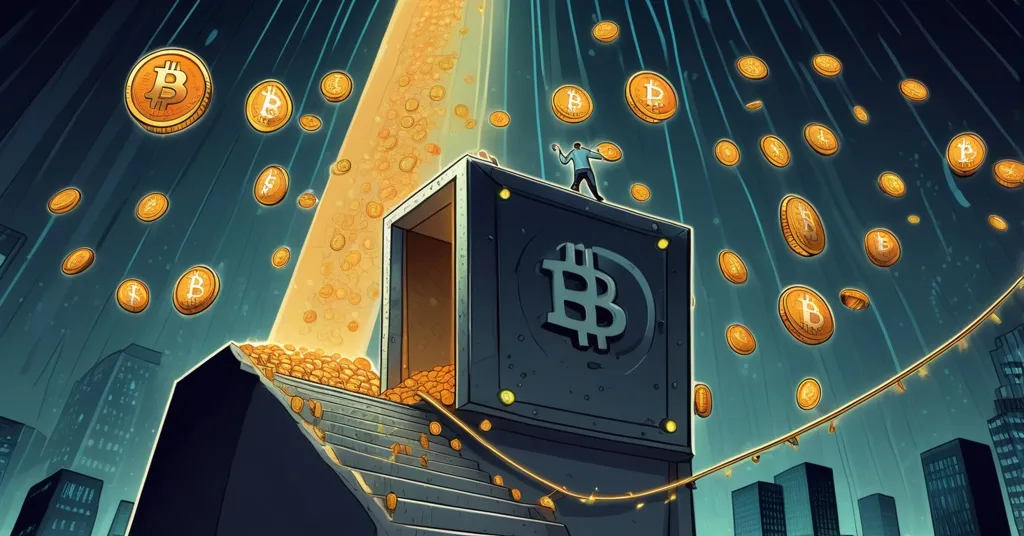
Bitcoin is scraping its way back toward the $70,000 threshold after a brutal slide to $60,000, but the climb feels more like a wobbly tightrope act than a confident stride. In the midst of this market mayhem, Binance’s Secure Asset Fund for Users (SAFU) has made a hefty play, scooping up 4,225 BTC valued at roughly $299.6 million. This pushes their total Bitcoin holdings to 10,455 BTC, worth a staggering $734 million, and has the crypto community buzzing: is this a rock-solid vote of confidence or just a slick move to buy low while blood is in the streets?
- Bitcoin’s Shaky Recovery: BTC fights to reclaim $70,000 after dipping to $60,000, with heavy resistance ahead.
- Binance SAFU Fund’s Big Buy: Adds 4,225 BTC ($299.6M), bringing total reserves to 10,455 BTC ($734M).
- Market Mixed Signals: Is this institutional optimism or opportunistic buying amid crypto market volatility?
Bitcoin’s Battle for $70K: A Fragile Foothold
Bitcoin’s recent price action has been a whiplash-inducing ride for even the most battle-hardened HODLers—those who “hold on for dear life” through the chaos. After teasing all-time highs earlier this year, a toxic mix of macroeconomic fears, like rising interest rates and stubborn inflation, combined with internal crypto turbulence, dragged BTC down to $60,000. Think forced sell-offs and cascading liquidations, where over-leveraged traders—folks betting borrowed money on price swings—get wiped out, dumping more Bitcoin onto the market and pushing prices even lower. Now, as BTC inches back toward $70,000, the momentum feels anything but solid.
From a technical standpoint, the picture isn’t exactly inspiring. Bitcoin is trading below its short-term moving averages—tools traders use to track price trends over specific periods. More critically, it’s hovering near the 200-week moving average, a long-term support level that often acts as a floor during bearish phases or a ceiling during recoveries. If BTC holds above the mid-$60,000 range, we might see some consolidation, a period of sideways trading to catch a breath. If it slips, the bears could feast, driving prices toward deeper support zones. It’s like balancing on a razor’s edge—one wrong move, and the fall could sting.
For those new to the game, understanding these technical levels is key. Moving averages smooth out price data to reveal the bigger trend; the 200-week average, in particular, is a heavyweight indicator for Bitcoin, often marking turning points in past cycles. Watching BTC dance around this line is a stark reminder of how precarious this recovery attempt really is.
Inside Binance’s SAFU Fund Play: Timing and Intent
Amid this uncertainty, Binance’s SAFU Fund steps onto the stage with a blockbuster move. Established in 2018 by Binance, one of the world’s largest crypto exchanges, the SAFU Fund—short for Secure Asset Fund for Users—exists to shield users from losses due to hacks or security breaches. According to blockchain analytics platform Arkham, the fund just loaded up on 4,225 BTC, a purchase worth nearly $300 million at current prices, boosting its total Bitcoin reserves to 10,455 BTC, or about $734 million. Talk about a heavyweight flex—but what’s the real story behind this buy? For more details on this significant acquisition, check out the report on Binance SAFU Fund’s latest Bitcoin addition.
The timing couldn’t be more eyebrow-raising. Retail sentiment is tepid at best, with many small-time investors spooked by recent volatility. Liquidity, the ease of buying and selling without massive price swings, is tight. Every upward tick feels like it could be a trap. So, is Binance signaling unwavering faith in Bitcoin’s long-term value as digital gold, or are they just capitalizing on a discount while the market licks its wounds? Historically, the SAFU Fund has been a safety net—used to cover user losses during past incidents like hacks—but its asset allocation has evolved over time, often including a mix of crypto and stablecoins. This heavy bet on BTC specifically might be a strategic hedge against fiat devaluation, or even a subtle PR stunt to project strength when confidence is shaky.
Let’s not forget the context of Binance as a centralized giant in a space that’s supposed to champion decentralization. While their move might reassure some, it also underscores a lingering tension: relying on big players to stabilize markets can feel like a double-edged sword in a movement built on cutting out middlemen. Are they steadying the ship, or just steering it for their own gain? Call me a skeptic, but I’d rather see fundamentals drive recovery than headlines from any single exchange.
Market Headwinds: Why Recovery Isn’t a Sure Bet
Historically, institutional accumulation during corrective phases—those annoying dips after a rally—has sometimes hinted at stabilization. Look back at the post-2018 bear market or the rebound after 2022’s crypto winter; when big fish started buying, it often signaled to the market that the worst might be over. But let’s not get carried away with the hopium. Binance’s SAFU Fund dropping $300 million on Bitcoin is a bold statement, yet it’s hardly a cure-all for the market’s deeper aches.
For starters, broader dynamics are still a mess. Recent price drops came with spikes in trading volume, a sign of forced selling or liquidations. Data from platforms like Coinglass shows hundreds of millions in leveraged Bitcoin positions wiped out in the past month alone, flooding the market with unwanted supply. Then there’s the derivatives market—futures and options contracts that let traders bet on price movements without owning BTC. Heavy positioning here can amplify volatility, turning small dips into full-blown crashes. Without strong spot demand, which means actual purchases of Bitcoin for immediate ownership rather than speculative bets, institutional buys like this one can only do so much. It’s like tossing a life preserver into a storm—the gesture’s nice, but the waves keep coming.
Zoom out further, and the macro environment looks just as grim. Bitcoin doesn’t trade in isolation. Central bank policies, geopolitical flare-ups, and economic uncertainty keep global investors on edge. Even with spot Bitcoin ETFs gaining steam in places like the U.S., grassroots buying power remains lackluster. Exchange inflows—Bitcoin being sent to trading platforms, often a precursor to selling—are still elevated, per on-chain data. Add whispers of market manipulation (whales playing 4D chess while retail fumbles with checkers), and it’s clear why sentiment hasn’t flipped bullish despite this headline-grabbing purchase. Let’s call a spade a spade: one big buy doesn’t erase systemic pressures.
The Bigger Picture: Decentralization, Bitcoin, and Beyond
Binance’s SAFU Fund move also feeds into a larger narrative of institutional creep into the crypto space. As a Bitcoin maximalist, I’ll always root for BTC as the ultimate store of value and the poster child for financial sovereignty. It’s the bedrock of decentralization, a middle finger to the status quo of centralized finance. Every accumulation like this reinforces Bitcoin’s centrality to the fight for privacy and freedom. But I’m not blind to the ecosystem’s diversity. Ethereum’s smart contracts power decentralized apps, Solana’s speed targets scalability, and hell, even meme coins (as much as they pain me) carve out weird cultural niches. The SAFU Fund itself holds a mix of assets, not just BTC, a nod to the reality that this financial revolution isn’t a one-coin crusade.
Still, Bitcoin remains king, and its battle for $70,000 is more than a price story—it’s a litmus test for the staying power of decentralized ideals. Institutional actions, especially from centralized behemoths like Binance, highlight both promise and peril. On one hand, their involvement can onboard millions and stabilize markets; on the other, it risks concentrating influence in ways that defy crypto’s ethos. What if the SAFU Fund’s heavy Bitcoin allocation backfires during a deeper crash? Over-reliance on one asset—or one exchange—could ripple through the market, reminding us why trustless systems matter. It’s a tightrope of its own.
For the OGs out there, keep an eye on funding rates in futures contracts. If they flip positive, signaling more bets on price rises, this dip-buying could trigger a short squeeze, where bears get forced to cover losses and push prices higher. But that’s a big “if” in this choppy environment.
Key Takeaways for Crypto Enthusiasts
- What does Binance SAFU Fund’s $300M Bitcoin purchase mean for the market?
It’s a significant addition of 4,225 BTC, pushing their reserves to 10,455 BTC worth $734 million. It could signal long-term confidence from a major player, but it’s not a guaranteed bullish trigger given persistent market headwinds. - Can Bitcoin sustain a recovery above $70,000?
It’s uncertain. BTC faces stiff resistance, trades below key technical levels like short-term moving averages, and needs robust spot buying to break through this psychological barrier. - Does institutional buying like this always spark a Bitcoin price recovery?
Not necessarily. While past corrections saw big buys precede turnarounds, current macroeconomic pressures, weak retail demand, and derivative volatility could limit the impact of isolated moves like Binance’s. - What risks loom if Bitcoin falls below mid-$60,000 support?
A breakdown below this level could unleash further selling pressure, potentially dragging prices to lower support zones and delaying any meaningful recovery for bulls. - Why isn’t market sentiment rallying despite this institutional Bitcoin investment?
Broader fears dominate—macroeconomic uncertainty, high crypto market volatility, and ongoing liquidations keep investors cautious, overshadowing even significant buys with downside risks.
Bitcoin’s journey embodies the raw, unfiltered spirit of decentralization, and Binance’s SAFU Fund dropping nearly $300 million on BTC is a hell of a plot twist. Yet, it’s no crystal ball. We’re braced for more turbulence before any clear direction emerges—be it a triumphant march to new highs or a sobering retreat to lower depths. Keep your focus on technical levels, on-chain signals, and the fundamentals, not just splashy headlines. Crypto’s a long game, and Bitcoin’s got the scars—and the grit—to prove it’s still in the fight.