Bitcoin Accumulation Surge: From Retail to Whales, Everyone’s Buying BTC
 LTB
LTB From Top to Bottom: Bitcoin’s Largest and Smallest Hands Now Accumulating
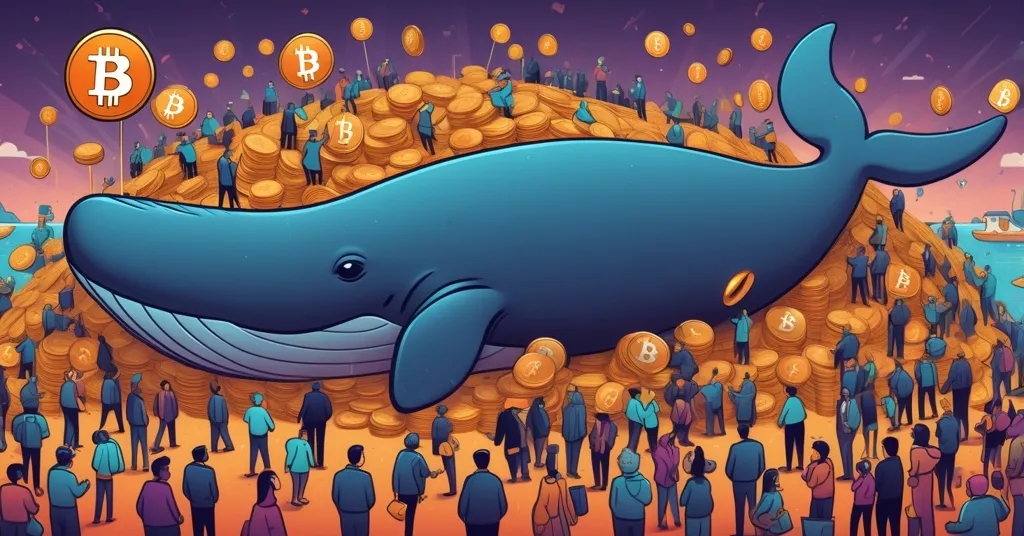
Bitcoin’s investor landscape is undergoing a rare and striking transformation, with everyone—from the smallest retail holders to the heavyweight whales—stacking coins in unison. This synchronized buying wave, captured through on-chain data, signals either a bold vote of confidence or a collective gamble, even as Bitcoin’s price stumbled 3% to $89,300 in the last 24 hours.
- Market-Wide Buying: All investor groups, from retail (<1 BTC) to mega-whales (10,000+ BTC), are accumulating Bitcoin.
- Retail Zeal: Small holders have been aggressively buying since November’s price low.
- Whale Caution: Larger players only recently shifted to accumulation, with the biggest showing less conviction than the little guys.
Decoding the Accumulation Trend Score
At the heart of this shift lies a powerful metric called the Accumulation Trend Score, crafted by blockchain analytics firm Glassnode. For those new to the space, think of this score as a report card for Bitcoin holders: it tracks whether investors are net buyers (accumulation) or sellers (distribution) by analyzing changes in wallet balances across different holder sizes. A score above 0.5 means more buying than selling, while below 0.5 indicates holders are dumping their BTC. Right now, Glassnode’s data reveals a historic moment—every segment of the market, from the tiniest to the mightiest, has crossed above that 0.5 threshold. This isn’t just noise; it’s a unified chorus of accumulation across Bitcoin’s investor spectrum, as detailed in this comprehensive analysis of Bitcoin accumulation trends.
Retail Resilience: Stacking Sats on Dips
Leading the charge are the retail investors—those holding less than 1 BTC. These are the everyday folks, often buying small fractions of Bitcoin over time, a practice known as “stacking sats.” Since the price hit a low in November, their Accumulation Trend Score has been near a perfect 1, reflecting relentless buying. With inflation still biting (3.2% in the U.S. as of late 2023) and trust in traditional banks wavering for many, these small players likely see Bitcoin as a hedge or a long-term bet against a creaking financial system. They’re snapping up coins during dips, driven by hope, fear of missing out (FOMO), or just sheer grit. It’s the kind of stubborn faith that’s always fueled Bitcoin’s grassroots community, even when the charts flash red.
Sharks Stay Steady: Calculated Confidence
While retail investors charge ahead, the mid-tier players—often called “sharks” with holdings between 100 and 1,000 BTC—are playing a more measured game. These are typically high-net-worth individuals or small funds with enough capital to feel market swings but not so much that they’re paralyzed by them. Despite Bitcoin’s price sliding since early October, their accumulation has held firm. This isn’t blind optimism; it’s a calculated stance, likely rooted in technical analysis or a deep belief in Bitcoin’s future as a store of value. They’re not just testing the waters—they’re wading in with purpose, unfazed by short-term volatility.
Whales Wake Up: A Cautious Comeback
Then we have the big fish—Bitcoin whales—split into two key groups. First, the mid-tier whales holding 1,000 to 10,000 BTC. These players were offloading their stacks after the November low, possibly securing profits or hedging against uncertainty. Recently, though, their Accumulation Trend Score tipped over 0.5, showing a pivot back to buying. It’s not a full-throttle rush, but it’s significant. Even more telling are the mega-whales—those with 10,000 BTC or more, often institutional investors or early adopters with jaw-dropping stacks. From August to November, they were distributing, a move that likely rattled smaller holders watching on-chain activity. Post-November low, however, even these giants have started accumulating, though their score shows far less enthusiasm than retail’s near-perfect 1. Are they just dipping a toe, or do they smell something bullish on the horizon—perhaps tied to institutional moves like BlackRock’s ongoing push for a Bitcoin ETF?
Why This Uniform Accumulation Matters
This across-the-board shift to buying is a rare snapshot in Bitcoin’s volatile history, and it’s worth unpacking. On-chain data, like Glassnode’s metrics, cuts through the speculative chatter on social media and gives us raw insight into wallet activity. Retail’s aggressive buying tracks with their tendency to act on emotion—snapping up coins on dips with dreams of the next bull run. Sharks holding steady through price drops suggests discipline, perhaps driven by long-term conviction in Bitcoin’s decentralized ethos. Whales flipping to accumulation, especially the largest, could hint at a broader sentiment shift—maybe they’re banking on regulatory clarity or bigger corporate adoption, like MicroStrategy’s relentless BTC purchases for its treasury.
But let’s not pop the champagne just yet. Bitcoin’s price took a 3% nosedive in the last 24 hours, settling at $89,300 as per TradingView charts. So, while wallets are filling up, the market isn’t exactly rolling out the red carpet. Historically, widespread accumulation has often preceded bullish surges—look at early 2020, when buying across classes laid the groundwork for Bitcoin’s climb past $60,000 post-halving. Yet, history isn’t destiny. External pressures, like interest rate hikes from the Federal Reserve or sudden regulatory crackdowns, can derail even the strongest on-chain signals. Bitcoin doesn’t give a damn about your Accumulation Trend Score when a major exchange implodes or geopolitical tensions spike.
The Dark Side of Accumulation Hype
Let’s play devil’s advocate for a moment. This buying frenzy sounds great, but it’s not all sunshine and HODL memes (HODL meaning “hold on for dear life,” a crypto mantra for weathering storms). What if this accumulation is just a mirage? Retail investors might be over-leveraging themselves, borrowing or dumping savings into BTC at unsustainable levels, setting up for a brutal crash if prices tank further. Whales accumulating slowly could be a sign of doubt rather than caution—maybe they’re only buying to manipulate sentiment before a massive dump. And let’s not forget the blind spots in on-chain data: Glassnode can’t track off-chain deals or coins held on exchanges, meaning some whale moves might be invisible. Plus, a word of caution—beware the influencers and moon-boys hyping this trend as a guaranteed rocket to $100K. That’s pure shilling nonsense. Crypto is still a wild west, lousy with grifters, and accumulation isn’t a crystal ball.
External Forces Looming Large
Zooming out, Bitcoin doesn’t exist in a vacuum. Broader economic challenges—think persistent inflation or central banks tightening monetary policy—can crush even the most bullish on-chain trends. Regulatory uncertainty remains a wildcard; a harsh crackdown in a major market like the U.S. or EU could send prices spiraling, no matter how many retail holders stack sats. On the flip side, positive catalysts like a spot Bitcoin ETF approval or another corporate giant adopting BTC as a reserve asset could turbocharge this accumulation into a full-blown rally. Then there’s the ever-present risk of black swan events—unpredictable shocks like a major hack or geopolitical crisis that can blindside markets in a heartbeat. On-chain data is a powerful lens, but it’s not the whole picture.
Key Questions on Bitcoin Accumulation Trends
- What’s Fueling Bitcoin Accumulation Across All Investor Classes in 2023?
It’s likely a mix of retail optimism during price dips, like the recent slide to $89,300, and larger players regaining confidence, possibly tied to Bitcoin’s long-term promise as a decentralized store of value or looming catalysts like ETF approvals. - Can Retail Bitcoin Investors Shape Market Trends Despite Small Holdings?
Their direct impact is smaller than whales, but their collective buying signals grassroots faith in Bitcoin, potentially creating momentum that nudges bigger players and shapes broader market sentiment. - Why Are Bitcoin’s Biggest Whales Accumulating More Slowly Than Retail?
With massive stakes, they’re likely more risk-averse, balancing exposure and market impact. Their cautious pace might reflect strategic timing or wariness of volatility, unlike retail’s emotional drive to buy dips. - Does Bitcoin Accumulation Guarantee a Price Rally or Bull Run?
Not by a long shot. Despite strong on-chain buying trends, the recent 3% price drop proves external forces—like central bank policies or regulatory shocks—can override Bitcoin investor behavior without warning. - How Reliable Is On-Chain Data for Predicting Bitcoin Market Moves?
Metrics like Glassnode’s Accumulation Trend Score provide real insights into crypto investor behavior, but they’re not infallible. Macro events or hidden off-chain trades can derail even the sharpest blockchain analytics in an instant.
The Bigger Picture for Bitcoin’s Future
This wave of accumulation paints a vivid picture of Bitcoin’s current tug-of-war between belief and uncertainty. Retail holders are diving in headfirst, sharks are pacing themselves with steady conviction, and whales are edging back in, though with a wary glance at the exit. On-chain data offers a raw, unfiltered look at wallet activity, but interpreting it demands skepticism and context. If retail keeps driving the narrative, it’s a small but potent win for Bitcoin’s vision of empowering the many over the few—assuming the tech and conviction hold under pressure. Yet, let’s keep it real: a 3% dip is child’s play compared to Bitcoin’s past gut-punches, and if this buying persists, it could spark something bigger. But crypto remains a ruthless frontier, and even the best metrics can’t predict the next showdown. For now, from top to bottom, Bitcoin’s hands are grabbing what they can—whether that’s a lifeline or a ticking bomb, only the blockchain will tell.