Bitcoin at $90K: Short-Term Holders Sell at Loss Amid Market Standoff
 LTB
LTB Bitcoin Hangs on at $90K: Short-Term Holders Bleed in a Market Standoff
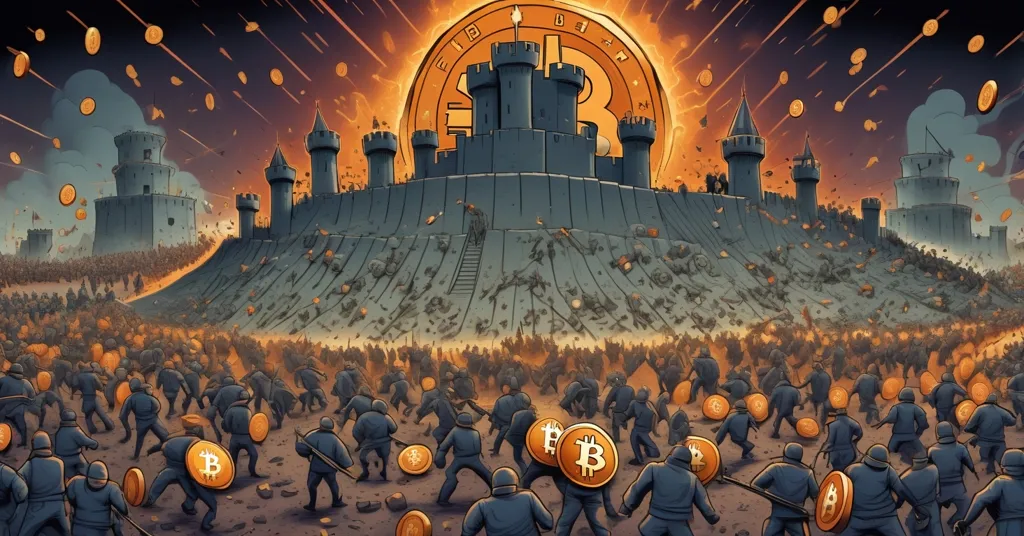
Bitcoin is locked in a tense battle at the $90,000 support level, with short-term holders selling at a loss and market sentiment stuck in neutral. On-chain data reveals a brutal capitulation phase among newer investors, raising the stakes on whether this is a temporary shakeout or the start of a steeper slide.
- Critical Support: Bitcoin struggles to defend $90,000 after slipping from the $95,000–$100,000 zone.
- Holder Distress: Short-term holders (STH) have been offloading at a loss since October 13, 2025, per Spent Output Profit Ratio (SOPR) metrics.
- Market Limbo: Compressed volatility and dwindling volume highlight indecision, with the next big move hanging in the balance.
Price Under Pressure: The $90K Battleground
Bitcoin’s price action in early 2026 is a nail-biter. After a late 2025 rally teased six-figure valuations, momentum fizzled, leaving the top cryptocurrency clinging to $90,000—a psychological and technical threshold. Dropping below this could spark panic selling, potentially dragging prices toward $88,000 or lower. On the flip side, holding firm might lure buyers back in, eyeing a push toward $95,000. But price charts only tell half the story. Beneath the surface, on-chain data exposes a raw struggle among short-term holders, those who’ve held Bitcoin for less than 155 days, often newer to the game and quicker to flinch under pressure.
Short-Term Holders Under Fire: Decoding SOPR
For the uninitiated, short-term holders (STH) are typically retail investors or speculators jumping in for quick gains, unlike the battle-hardened long-term holders who’ve survived Bitcoin’s wild swings. The Spent Output Profit Ratio, or SOPR, acts like a report card for Bitcoin transactions, showing whether coins sold or transferred are netting a profit or loss. Above 1.0, sellers are in the green; below 1.0, they’re underwater. Since October 13, 2025, STH SOPR has languished below this neutral mark, with a 7-day average of 0.994 and a daily low of 0.9817 as of January 11—the weakest reading this year. In plain terms, these investors are dumping Bitcoin at a loss, and they’ve been doing it for months, as highlighted in a recent analysis of Bitcoin entering a loss-dominant phase.
Diving into the numbers from analyst Axel Adler Jr., the 7-day STH SOPR average fell below the 30-day average on January 8, slipping from 0.9996 to 0.9928. This shift confirms a deficit-driven selling spree—newer players are bleeding cash and hitting the panic button. Another metric, the SOPR Z-Score, sits at -0.58, meaning current losses are half a step below the yearly norm (think of it as a gauge of how unusually bad the selling pain is compared to the past 12 months). Historically, such readings have flagged local price bottoms, hinting at a possible reversal. But let’s not kid ourselves—history isn’t a cheat code, and capitulation, or panic-selling at a loss, can grind on longer than your nerves can handle.
Market Deadlock: Volatility Dries Up
Zooming out, the broader market vibe is paralyzed. Volatility—those gut-wrenching price swings Bitcoin is infamous for—has tightened, almost like the market’s holding its breath. Trading volume is also drying up, showing neither buyers nor sellers have the conviction to make a bold move. This isn’t outright bearish; consolidation phases often set the stage for explosive shifts, up or down. Picture the market as a cat staring at a fishbowl, waiting for the right moment to pounce. The question is whether short-term holders will exhaust their selling spree, paving the way for a rebound, or if their desperation will snowball, cracking the $90,000 floor. Right now, it’s anyone’s guess.
Long-Term Strength vs. Short-Term Wobble
Despite the immediate gloom, Bitcoin’s bigger picture still leans bullish. The price hovers above key long-term trend lines like the 200-week moving average, a benchmark often used to separate bull markets from bear territory. This suggests the macro narrative—Bitcoin as a decentralized store of value, a middle finger to fiat inflation, and a future of finance—remains solid. But shorter-term signals are less cheery. Bitcoin’s lagging below faster trend lines, like the 50-day or 100-day moving averages, which act as quick snapshots of recent momentum. Combine that with relentless loss-selling by short-term holders, and you’ve got a heavyweight taking punches. The champ’s still upright, but the knees are buckling.
Historical Echoes: Capitulation and Recovery
Here’s where it gets interesting. Bitcoin’s been through this wringer before. Look back at the 2018 bear market or the 2021 mid-cycle correction—short-term holders often fold under pressure, selling at a loss while long-term whales quietly scoop up cheap coins. Those capitulation phases, while brutal, frequently marked turning points. Data from past cycles shows SOPR dipping below 1.0 often coincided with price bottoms, followed by sharp recoveries as weak hands cleared out. But here’s the flip side: not every dip is a guaranteed bounce. Prolonged selling in 2018 dragged Bitcoin down over 80% from its peak. Today’s context—post-2025 highs and a $90,000 support—feels different, but complacency is a killer. Are we witnessing a healthy flush of speculators, or a sign of fading retail hype? Time will tell.
External Forces: Beyond the Blockchain
Bitcoin doesn’t exist in a vacuum. Macroeconomic winds could sway this standoff. Rising interest rates or sticky inflation data might spook investors, draining risk appetite for assets like crypto. Conversely, cooling economic pressures or fresh institutional inflows—say, via Bitcoin ETFs—could jolt buying interest. Regulatory chatter is another wildcard. A crackdown on crypto markets in major economies could amplify selling, while clearer, pro-innovation policies might stabilize sentiment. Even altcoins play a role. If Ethereum or other blockchains see similar holder capitulation, it signals a sector-wide chill. If they hold steady—perhaps buoyed by staking yields or stablecoin usage—Bitcoin might face unique headwinds tied to its dominance. These layers add complexity to an already murky picture.
Counterpoints: Is This Pain a Positive?
Let’s play devil’s advocate. Some analysts argue this short-term holder bleed-out is a net positive—a purge of weak hands that sets the stage for stronger, conviction-driven growth. After all, every bull run needs a cleanup crew, and capitulation often hands discounted sats to patient accumulators. On-chain tools like Glassnode show long-term holder supply creeping up during these dips, a sign whales are unfazed. But there’s a darker take: persistent loss-selling could reflect deeper cracks, like waning retail interest or over-leveraged positions unwinding. If newer investors sour on Bitcoin after getting burned, adoption could stall. Both views have merit, but we’re not here to peddle hopium or doom. The data shows stress, not collapse—$90,000 hasn’t broken yet, and for every seller, there’s a buyer betting on the future.
A No-BS Reality Check for Investors
For Bitcoin enthusiasts, from fresh-faced newbies to grizzled OGs, this phase is a gut check. Short-term losses might tempt bargain hunters—capitulation has historically flagged opportunities—but timing a bottom is a fool’s errand. Chasing quick flips without grasping these cycles is how you get wrecked. Bitcoin isn’t a casino, no matter what TikTok shills claim. Instead, weigh your belief in its long-term promise: censorship resistance, freedom from fiat decay, and a decentralized rebellion against the status quo. If that conviction holds, short-term dips are noise. If not, you’re just gambling. Want to dig deeper? Free platforms like Glassnode or CryptoQuant let you track SOPR and other on-chain signals yourself—don’t just trust the headlines.
Key Questions and Takeaways for Bitcoin Investors
- What’s the deal with Bitcoin’s price right now?
Bitcoin is fighting to hold $90,000 after sliding from $95,000–$100,000, with market indecision and short-term holder losses fueling uncertainty. - Why are short-term holders selling at a loss?
On-chain metrics like STH SOPR, below 1.0 since October 2025, reveal newer investors are panicking under financial stress, a classic capitulation move during corrections. - Does SOPR data hint at a price bottom?
The SOPR Z-Score of -0.58 shows current losses are below the yearly average, often tied to local bottoms in past cycles, though it’s no sure bet for a rebound. - Is Bitcoin’s long-term outlook still bullish?
Yes, staying above the 200-week moving average keeps the macro uptrend alive, even as short-term momentum falters. - What might trigger Bitcoin’s next major shift?
The next move depends on short-term selling drying up (sparking a recovery) or worsening (breaking $90,000 support), alongside external factors like economic data or regulation. - Should I buy now or hold off?
While dips can signal opportunity, don’t bet on timing the bottom; focus on Bitcoin’s long-term value as a decentralized asset over short-term price games.
Bitcoin’s current grind at $90,000 is a test of grit—for the market and for you. Short-term holders are getting hammered, and their underwater exits paint a bleak snapshot of sentiment. Yet, this space was built on volatility, and every savage drop has forged sharper comebacks. Whether this is a fleeting tremor or a warning of worse depends on the coming weeks. Keep your focus on the data, your hands steady, and your skepticism sharp. In crypto, the real danger isn’t just a bear market—it’s buying into blind hype or despair. So, is this struggle a signal for the bold to stack sats, or a caution for the wary to step back? The numbers don’t lie, but how you read them is everything.