Bitcoin Hits $75K on Gate Exchange: Can Bulls Smash Through Resistance?
 LTB
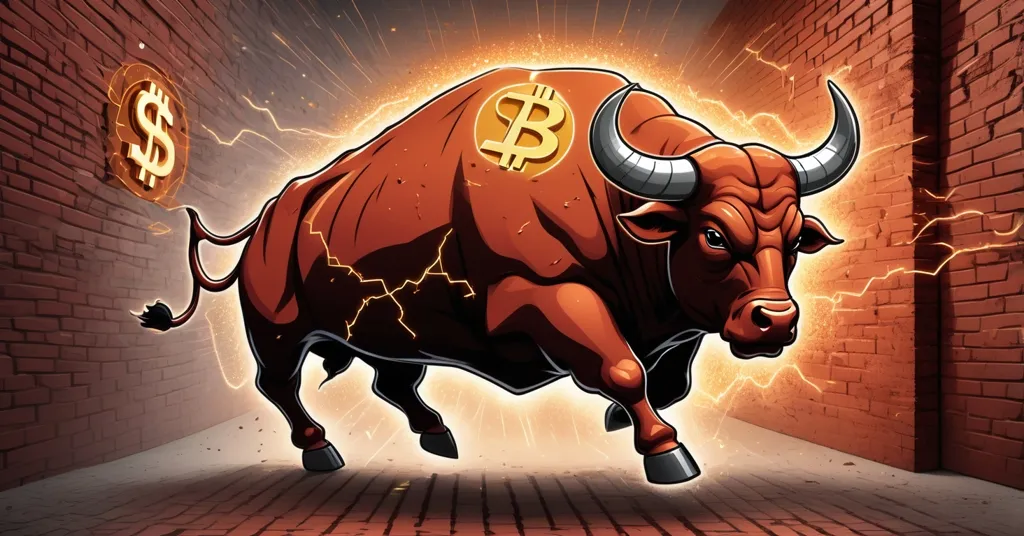
LTB Bitcoin Blasts Through $75K on Gate Exchange: Bulls vs. a Brutal Resistance Wall
Bitcoin has charged to $75,000 on the Gate Exchange’s BTC/USDT market as of April 15, sending a jolt through the crypto community. This pivotal moment puts BTC face-to-face with a resistance zone that has mercilessly crushed rallies all year, leaving traders on edge as they watch for a breakout—or another bitter rejection.
- Bitcoin hits $75,000 on Gate, posting a 1.19% 24-hour gain.
- Resistance between $75,000 and $76,100 stands as a critical barrier.
- Support at $68,000 anchors the rebound, but volatility risks persist.
What’s Propelling Bitcoin to $75K?
The price action on Gate Exchange shows Bitcoin pushing hard, with intraday trades ranging from a low of $73,510 to a high of $74,949 before landing at the psychologically charged $75,000 mark. Data from RootData even pegged the BTC/USDT pair slightly above at $75,008.8, with a more aggressive 24-hour jump of 5.65%, highlighting how quickly momentum can shift at these levels. Fresh off a bounce from the sturdy $68,000 support—often called the “last line of defense” against steeper drops by market watchers—this surge is fueled by a powerful mix of forces. We’re seeing heavy spot market buying, which means direct purchases of Bitcoin for immediate ownership, paired with derivatives activity, where traders speculate on future price moves through contracts like futures or options. Add to that substantial ETF inflows—think mainstream investment funds tracking Bitcoin’s price and bringing in institutional cash—and whale accumulation, where big players are snapping up BTC in bulk, and you’ve got a bullish cocktail. Short liquidations are also playing a role; these happen when traders betting against Bitcoin (shorting) get squeezed out as prices rise, forcing them to buy back at a loss and pushing the price even higher. For the latest update on this milestone, check out the report on Bitcoin surpassing $75K on Gate Exchange.
The $75K Resistance: A Historical Fortress
Before anyone gets too giddy, let’s pour some cold water on the hype. The resistance zone between $75,000 and $76,100 isn’t just a random number—it’s a damn fortress. Since the US-Iran ceasefire earlier this year, which aligned with a pre-war swing high in February, this band has repeatedly slapped Bitcoin back down. It’s not just technical; it’s psychological, a level where traders start taking profits or doubting the rally’s legs. Looking back to April 2025, we saw $75,000 switch from a supportive floor to a brick wall ceiling during macro risk events—think global economic scares or geopolitical shocks—and leverage unwinds. For those new to the game, a leverage unwind is when over-leveraged traders, who borrowed money to amplify their bets, get margin-called as prices wobble, sparking a domino effect of forced selling. It’s ugly, and it showed how fragile sentiment can be at this level. If Bitcoin wants to aim for its all-time high of $125,600 from late 2025, it needs to punch through this zone with conviction, not just flirt with it.
Why This Level Matters Beyond the Charts
This isn’t just about squiggly lines on a chart. Bitcoin at $75,000 is a litmus test for its credibility as a disruptive force against traditional finance’s stranglehold. Historically, levels like this have marked turning points—think post-halving rallies or institutional pile-ins that redefined BTC’s trajectory. A sustained close above $75,000, especially on high volume, could signal a technical breakout, potentially unleashing a wave of momentum that’s been bottled up for months. Traders are hawkishly eyeing daily and weekly candles to confirm if the bulls have the guts to hold this ground. If they do, the road to six figures starts looking less like a fever dream. But if they falter, we could see a swift retreat to $68,000 or below, especially if macro headwinds—like lousy economic data or a sudden geopolitical flare-up—kick the market in the teeth.
Altcoins Caught in Bitcoin’s Shadow
Bitcoin’s battle at $75,000 doesn’t just affect its own fate; it drags the rest of the crypto market along for the ride. Altcoins—those other cryptocurrencies beyond BTC—like Ethereum (ETH), Solana (SOL), and the meme-fueled Dogecoin (DOGE), are often left choking on dust when Bitcoin stalls at resistance. For newer readers, altcoins are generally riskier assets that tend to boom when BTC paves the way with strong gains, as investor appetite for speculative plays increases. When Bitcoin gets stuck, sentiment sours, and capital either stays parked in the relative safety of BTC or flees crypto altogether. Ethereum, the backbone of decentralized finance (DeFi) with its smart contracts powering everything from lending protocols to NFTs, desperately needs BTC’s momentum to reignite interest in its ecosystem. Solana, a high-speed blockchain often pitched as a rival to ETH for scalability, and DOGE, the joke coin turned cultural oddity, fare even worse without Bitcoin leading the charge. If BTC can’t break through, the altcoin party stays on hold.
Institutional Power and Decentralized Dreams
As a staunch advocate for decentralization, I see Bitcoin’s push as more than price action—it’s a middle finger to the bloated, censorable systems of traditional finance. The ETF inflows driving this surge, with funds like BlackRock’s iShares Bitcoin Trust pulling in mainstream money, are a double-edged sword. They validate BTC’s staying power and bring stability, but they also risk diluting its rebellious ethos by tying it to Wall Street’s whims. Meanwhile, whale accumulation—big players hoarding Bitcoin—shows confidence, with on-chain data from firms like Glassnode often revealing large wallet movements at key levels like this. It’s a sign of strength, but also a reminder of centralization risks if too few hands hold too many coins. Beyond price, Bitcoin’s relevance shines in use cases like the Lightning Network, enabling fast, cheap payments, or its growing role in remittance-heavy regions facing currency crises. A breakout at $75,000 could accelerate these real-world adoptions, proving BTC’s worth as uncensored, peer-to-peer money.
Risks and Roadblocks: Don’t Ignore the Bear Traps
Let’s cut through the rose-tinted haze. Trading near $75,000 is a tightrope walk between euphoria and collapse. Yes, market dynamics are robust, with institutional cash and big holders stacking Bitcoin like it’s on sale. But history screams caution—this resistance isn’t just a hurdle; it’s a battleground scarred by past defeats. The volatility of April 2025, where macro risks flipped $75,000 from support to resistance overnight, looms large. A single bad headline—be it a central bank tightening or a geopolitical mess—could trigger profit-taking or panic selling. And let’s not even entertain the clowns on social media shouting “$100K by breakfast!” If I had a satoshi for every absurd prediction, I’d be a whale myself. These are often just shills pumping their bags, not serious analysis. We’re here to champion adoption and innovation, not peddle fairy tales. Bitcoin is a revolutionary force, but it’s also a brutal arena. Traders, keep your eyes on volume, order books, and global news, not hype tweets.
Counterpoints: Maximalists vs. Altcoin Innovators
From a Bitcoin maximalist lens—a view I lean toward—altcoins are often distractions, unnecessary noise when BTC already offers a pure, decentralized store of value. Why bother with Ethereum’s gas fees or Solana’s outages when Bitcoin’s network security is battle-tested? A breakout at $75,000 should refocus the market on BTC’s dominance, not speculative side projects. Yet, there’s a flip side I can’t ignore. Ethereum’s DeFi ecosystem and smart contracts power innovations Bitcoin wasn’t designed for, filling niches like decentralized lending or tokenized assets that BTC shouldn’t stretch to cover. Solana’s speed, when it works, offers a glimpse of scalable blockchain potential. A balanced market needs both: Bitcoin as the unshakeable foundation, altcoins as the experimental labs. Still, if BTC cracks this ceiling, it’s the king’s show—everyone else is just along for the ride.
What Lies Ahead for Bitcoin?
Looking forward, potential catalysts could tip the scales. The next Bitcoin halving, which historically slashes mining rewards and tightens supply, looms as a bullish spark. Regulatory moves, like SEC rulings on additional ETFs, could either inject confidence or cast a shadow. For now, the $75,000 level on Gate and beyond is a spectacle of raw market forces—technicals, sentiment, and macro chaos colliding. As someone rooting for financial freedom through decentralization, I’m cheering for BTC to shatter this barrier and show the world what unstoppable, borderless money can achieve. But as a realist, I’m strapped in for the turbulence that comes with testing such a pivotal point. Whether you’re a long-term HODLer, a day trader, or just dipping your toes into crypto, the coming days will reveal if Bitcoin can claim the next rung on its climb—or if the old guard’s gravity yanks it back down.
- What’s driving Bitcoin’s surge to $75,000 on Gate Exchange?
Heavy spot buying, derivatives speculation, ETF inflows from institutional investors, whale accumulation, and short liquidations are fueling the climb. - Why is the $75,000 to $76,100 resistance zone so crucial?
It’s a historical ceiling tied to past swing highs, repeatedly blocking rallies; a breakout could open the path to the $125,600 all-time high. - How does Bitcoin’s struggle at this level impact altcoins?
Altcoins like ETH, SOL, and DOGE lag when BTC stalls, as market sentiment and capital flow depend on Bitcoin’s leadership. - What risks should traders brace for at $75,000?
Past volatility, like April 2025’s macro-driven flips and leverage unwinds, warns of sharp reversals if momentum or global conditions falter. - Can Bitcoin sustain a breakout above $75,000?
Sustained closes above this level with strong volume are key to confirming bullish control, though historical rejections and external shocks pose real threats. - How do institutional investors shape Bitcoin’s price at this point?
ETF inflows from giants like BlackRock bring stability and mainstream validation, but tie BTC to traditional finance’s volatility and influence.