Bitcoin Holders Withdraw Coins from Exchanges Amid Stagnant Market Accumulation
 LTB
LTB Bitcoin Holders Pull Coins Off Exchanges: Quiet Accumulation in a Stagnant Market
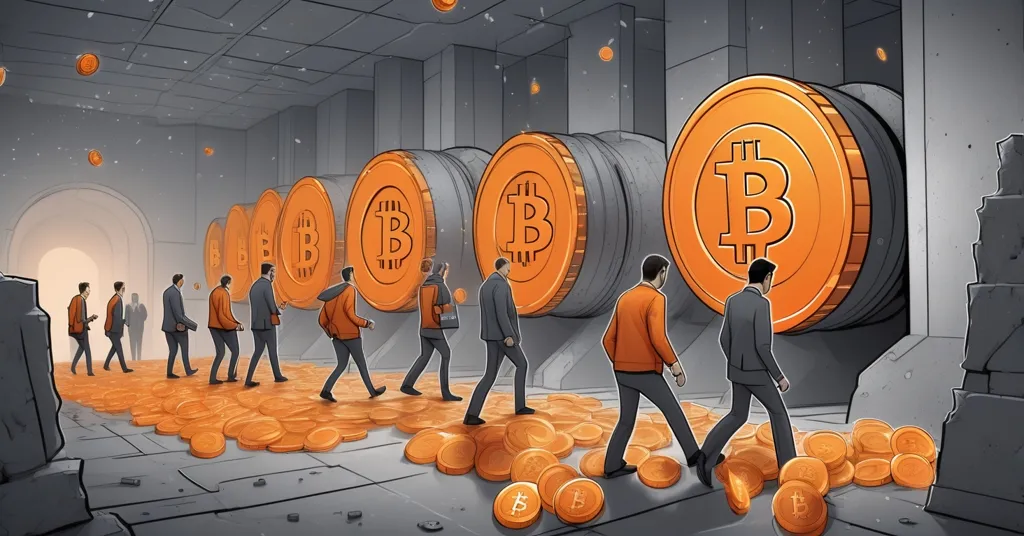
Bitcoin investors are quietly making moves, withdrawing more coins from exchanges than they’re depositing throughout March, pointing to a steady trend of accumulation. Despite a market that refuses to budge, this behavior suggests a growing confidence among holders who are betting on the long game, even as Bitcoin’s price action remains a snooze fest.
- Key Trend: Bitcoin outflows from exchanges have outpaced inflows for most of March.
- Price Update: Bitcoin is trading at $71,215, with a negligible 0.20% daily change.
- Implication: Investors are stacking coins for the long haul, not looking to sell anytime soon.
The Data Behind the Outflows
Let’s break down the hard numbers. Data from CryptoQuant, a top-tier cryptocurrency analytics platform, shows that Bitcoin outflows—coins leaving centralized exchanges for personal wallets—have consistently exceeded inflows for most of March. There was a brief hiccup just before March 17, when Bitcoin spiked to a six-week high of $76,000, prompting a short wave of deposits, likely profit-taking or repositioning. But the overarching trend is clear: net outflows dominate. For those new to the space, net outflow (or negative Netflow, a metric tracking the net amount of Bitcoin entering or leaving exchanges) typically signals that holders are securing their assets, often in cold storage—think hardware wallets or offline setups—rather than leaving them on platforms for quick trades.
As of the latest snapshot, Bitcoin’s price sits at $71,215, barely moving with a measly 0.20% uptick over the past 24 hours. CryptoQuant analyst Darkfost captured the essence of this trend with a pointed remark on social media:
“It has been one month that BTC outflows from exchanges have largely dominated flows. While BTC continues its liquidation phase, Netflow has remained negative for almost an entire month. —> This persistent outflow suggests genuine accumulation by investors, who continue to buy…”
What Darkfost is getting at is simple: this isn’t random noise. Investors are buying Bitcoin and whisking it off exchanges, a behavior often tied to long-term conviction rather than short-term speculation. It’s like squirrels hoarding nuts for a brutal winter—methodical, patient, and forward-thinking. For more insights on this trend, check out the detailed analysis on Bitcoin holders’ steady buying patterns.
Meanwhile, on-chain data from Glassnode, another heavyweight analytics firm, adds a layer of context to the market mood. There’s a slight easing of unrealized losses—meaning fewer investors are sitting on Bitcoin bought at higher prices than its current value—but don’t get too excited. Overall sentiment remains fragile, with stabilization described as tentative. In plain terms, the market isn’t bleeding as badly as before, but it’s still on shaky legs, wary of the next stumble.
Why Holders Are Stacking
So why are investors pulling Bitcoin off exchanges in droves? For many, it’s about self-custody in crypto—a growing mantra in the Bitcoin long-term investment playbook. Taking control of your own assets means not trusting centralized exchanges, which, let’s be honest, have a rap sheet longer than a CVS receipt. From Mt. Gox to FTX, history is littered with exchange failures that wiped out billions. Moving coins to personal wallets is a small but powerful act of rebellion, embodying Bitcoin’s core ethos: be your own bank.
Beyond distrust in middlemen, there’s a deeper belief at play. Long-term holders, often dubbed “diamond hands” in crypto slang, see Bitcoin as digital gold—a hedge against fiat inflation and centralized overreach. Nick Ruck, Director of LVRG Research, frames this outflow trend as a sign of confidence in Bitcoin’s fundamentals, not a gamble on quick price pumps. These aren’t day traders chasing the next 10% pop; they’re seasoned players building positions with unwavering faith in decentralization and censorship resistance. And here’s a kicker: every coin moved off an exchange reduces the liquid supply available for trading, which could, in theory, nudge prices up if demand spikes. For now, though, the market seems content to take a long nap.
Macro factors might also be fueling this trend. With inflation fears lingering and geopolitical tensions simmering, Bitcoin’s allure as a borderless, non-sovereign asset grows. Even if the price isn’t soaring, the narrative of Bitcoin as a safe haven—however debated—keeps drawing in quiet accumulators. It’s not sexy, but it’s steady.
Market Challenges Persist
Here’s where the optimism hits a brick wall: despite this consistent buying, Bitcoin remains stuck in a tight trading range, a frustrating sideways grind that’s been dragging on for months. The accumulation is real, but it lacks the muscle to spark a breakout. Long-term holders are soaking up supply, but there’s still enough selling pressure—or just a plain lack of fresh buyers—to keep prices pinned down. It’s a tug-of-war with no clear winner, and frankly, it’s boring as hell to watch.
Let’s play devil’s advocate for a moment. What if this accumulation doesn’t translate to gains anytime soon? It’s possible that large whales—those mega-holders with deep pockets—could dump their stacks at the first sign of weakness, offsetting the reduced supply. Or consider the broader economic picture: if global markets tank due to a recession or aggressive rate hikes, Bitcoin might not escape the carnage, safe-haven narrative be damned. History shows us that crypto isn’t immune to macro downturns; just look at the 2022 bear market, when Bitcoin cratered alongside stocks. Steady buying is nice, but it’s not a guaranteed ticket to the moon.
Market sentiment, as Glassnode highlights, isn’t helping either. Sure, unrealized losses are down a tad, but confidence is still wobbly. Investors have been burned by past volatility, spooked by regulatory saber-rattling, and fatigued by endless hype cycles that fizzle out. Bitcoin’s price may be holding steady, but the undercurrent of doubt is thick. Are these diamond hands onto something, or are they just stubbornly clinging to hope?
Bitcoin and the Broader Ecosystem
Bitcoin maximalists, myself included, often view trends like this as proof of its staying power—the ultimate middle finger to centralized control and fiat debasement. But let’s not pretend Bitcoin is the only game in town. Other blockchains and altcoins are carving out vital roles in this financial revolution. Take Ethereum, for instance: its smart contracts power decentralized finance (DeFi) protocols and non-fungible tokens (NFTs), niches Bitcoin was never built to serve. Bitcoin is the bedrock, the digital gold, but Ethereum and others bring utility and experimentation that push decentralized tech forward. This diversity isn’t a threat; it’s a strength, filling gaps and driving innovation across the board.
That said, Bitcoin’s simplicity remains its superpower. It doesn’t need to be everything to everyone. As long as it holds its ground as a store of value and a symbol of financial sovereignty, it’s doing its job. Outflows like those we’re seeing now reinforce that narrative, even if altcoins steal the spotlight with flashier use cases.
Risks and Pitfalls
Let’s not drink the Kool-Aid just yet. The road to mass adoption is a minefield. Regulatory uncertainty looms large—governments could crack down on self-custody, slap punitive taxes on crypto gains, or outright ban certain activities. Then there’s the ever-present risk of market crashes. If altcoins implode or another major exchange goes belly-up, Bitcoin could take collateral damage, no matter how many coins are tucked away in cold storage.
And don’t get me started on the scammers and shillers infesting this space. From fake gurus peddling baseless hype to rug-pull projects promising 100x returns, the crypto Wild West is full of traps. We’ve got zero tolerance for that nonsense here. Our mission is to drive adoption through raw, honest reporting, not empty promises or ridiculous price predictions. If someone’s telling you Bitcoin will hit $1 million by next Tuesday, run the other way—they’re full of it.
Looking Ahead
Zooming out, this exchange outflow trend offers a compelling snapshot of Bitcoin’s current state. It’s a quiet vote of confidence from dedicated investors, even as the broader market wrestles with doubt and stagnation. Tying this back to the bigger picture, every coin moved off an exchange is a small step toward financial sovereignty, aligning with the ethos of decentralization and the push for effective accelerationism—speeding up the disruption of outdated systems through tech like Bitcoin. But the jury’s still out on whether this accumulation will ignite a breakout or just mark another chapter in Bitcoin’s rollercoaster history. One thing is certain: the fight for a freer financial future continues, and we’re here to cut through the noise every step of the way. Stay sharp, keep your keys secure, and remember—trust no one but the blockchain.
Key Takeaways and Questions on Bitcoin’s Exchange Outflow Trend
- What do persistent Bitcoin outflows from exchanges mean for investor behavior?
They signal a long-term accumulation strategy, with investors buying Bitcoin and moving it to personal wallets, showing a clear intent to hold rather than trade or sell. - Why hasn’t this accumulation triggered a significant Bitcoin price surge?
The buying pressure is steady but not intense enough to overcome selling pressure or market resistance, keeping Bitcoin trapped in a narrow trading range. - How does current market sentiment influence Bitcoin’s outlook?
Glassnode data shows a slight drop in unrealized losses, but confidence remains fragile, indicating the market isn’t fully convinced of a stable recovery yet. - What role do long-term holders play in Bitcoin’s future?
By pulling coins off exchanges, they reduce liquid supply and signal faith in Bitcoin’s fundamentals, potentially setting the stage for future price stability or growth. - What risks could undermine this accumulation trend?
Regulatory crackdowns, broader market crashes, or large whale sell-offs could offset the reduced supply, while scammers and baseless hype continue to pose threats to investor trust. - How does Bitcoin fit into the wider crypto ecosystem alongside altcoins?
Bitcoin remains the bedrock as a store of value, while altcoins like Ethereum drive innovation in areas like DeFi and NFTs, showcasing the strength of a diverse decentralized tech landscape.