Bitcoin Miners in Crisis: 15-20% of Global Fleet Bleeding Cash with Legacy Rigs
 LTB
LTB Legacy Bitcoin Miners Face Cash Crunch: 15-20% of Global Fleet Running in the Red
Bitcoin mining, once a wild west of opportunity for tech-savvy trailblazers, has turned into a ruthless arena where only the most efficient survive. Reports indicate that 15-20% of the global mining fleet is bleeding cash, with legacy miners—those tethered to outdated hardware—taking the hardest hits in this financial bloodbath.
- Massive Losses: 15-20% of Bitcoin miners worldwide are operating at a loss.
- Legacy Woes: Older rigs are crushed by rising costs and network challenges.
- Industry Shift: This crisis could redefine the mining landscape, for better or worse.
The Perfect Storm: Halving, Energy Costs, and Brutal Competition
Bitcoin mining is no longer the get-rich-quick scheme it once appeared to be. Miners secure the network by solving complex cryptographic puzzles, earning freshly minted BTC as block rewards for their efforts. But the game has gotten vicious. The April 2024 halving slashed block rewards from 6.25 BTC to 3.125 BTC per block—a 50% pay cut overnight with no relief on operational expenses. Pair that with skyrocketing energy prices and a dynamically adjusting network difficulty, and the profit margins for many have evaporated. For those new to the space, network difficulty is like a puzzle that gets tougher as more solvers join in, ensuring blocks are mined roughly every 10 minutes but punishing slower, less efficient players.
Energy costs are the real killer. Bitcoin mining is a power-hungry beast, with the network consuming as much electricity as some mid-sized countries. In regions without dirt-cheap power—like Texas, where costs hover around $0.10 per kWh, versus parts of Europe hitting $0.30 per kWh—miners are getting crushed. Legacy hardware, often over three years old, guzzles electricity while delivering pitiful hash rates. Hash rate, simply put, is the measure of a miner’s computational muscle—how many guesses it can make per second to crack Bitcoin’s puzzles. Older Application-Specific Integrated Circuits (ASICs), think early Antminer S9s, are like vintage race cars: they burn more fuel for far less speed compared to modern beasts like Bitmain’s S19 series or MicroBT’s WhatsMiner M50. For many, the power bill now exceeds the Bitcoin earned. That’s not a business; that’s a subsidy for utility companies.
Legacy Miners: Relics of a Bygone Era
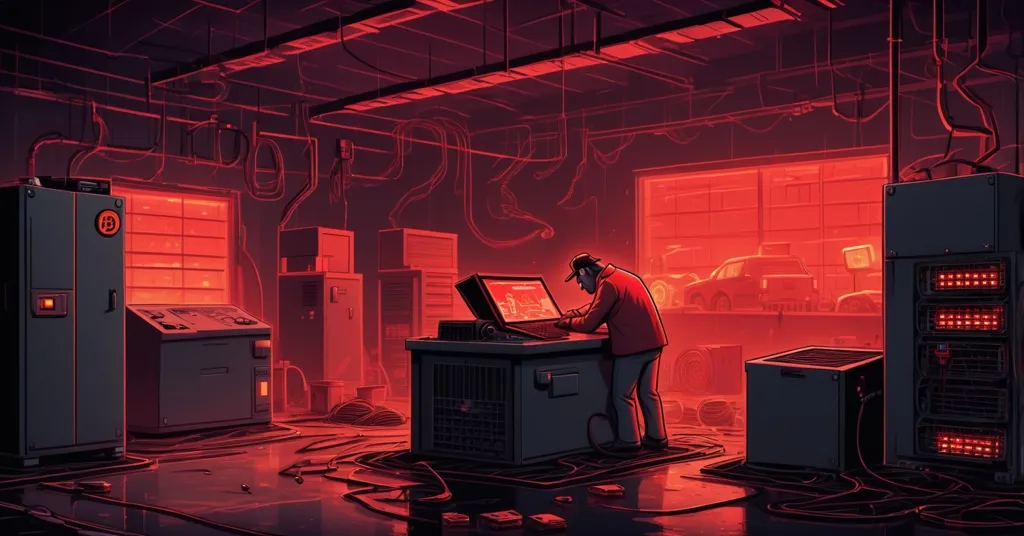
Beyond the raw economics, who are these struggling legacy miners? They’re often small-scale operators or hobbyists who jumped in during past Bitcoin booms—think the 2017 or 2021 bull runs. Back then, a second-hand ASIC could still turn a profit if you had access to affordable electricity. Today, these rigs are dinosaurs, barely scraping by unless power is near-free. Meanwhile, institutional giants like Marathon Digital and Riot Blockchain have upgraded to cutting-edge fleets, securing bulk deals on new hardware and locking in low-cost energy contracts, often in hydro-rich or renewable-friendly zones. It’s a stark divide: the small players are stuck, unable to shell out for upgrades, while watching their revenue dwindle. Picture a small-time miner in a garage, staring at a stack of S9s humming away, knowing each kilowatt is another step toward insolvency. David versus Goliath? More like David forgot to trade in his slingshot for a bazooka.
Market conditions add insult to injury. Bitcoin’s price, while still a speculative darling, has lingered far from its peak in recent times, hovering at levels that render mining unprofitable for inefficient setups. Transaction fees, another revenue stream for miners, are erratic and often fail to bridge the gap left by halved block rewards. Industry estimates suggest that 15-20% of the global fleet is in the red, burning cash just to keep rigs running. This isn’t a temporary hiccup; it’s a structural reckoning for those who didn’t—or couldn’t—adapt.
Centralization Risks: A Threat to Bitcoin’s Soul
What does this cash crunch mean for Bitcoin’s future? On the surface, it’s a brutal but natural culling. Inefficient miners dropping out could streamline the industry, pushing it toward leaner, greener operations. Modern rigs are far more energy-efficient, and larger players are increasingly tapping renewables—solar, wind, or even stranded natural gas—to slash costs and counter environmental backlash. Initiatives like Square’s Bitcoin Clean Energy Investment highlight a path forward, aiming to make mining carbon-neutral. But there’s a darker side to this shakeout: the risk of centralization.
If small miners capitulate en masse, hash power could concentrate among a handful of well-capitalized giants. Bitcoin’s strength lies in its decentralized nature—a network of diverse miners worldwide ensures no single entity can control or censor transactions. Yet, data shows the top five mining pools already command a significant chunk of global hash rate, a trend that’s worsened over the past decade. A further exodus of small players could exacerbate this, edging us closer to scenarios like a 51% attack, where one group controls enough power to manipulate the blockchain (think rewriting transaction history or double-spending). While not imminent, it’s a shadow looming over Bitcoin’s promise of freedom. If mining becomes a corporate playground, the dream of a people-powered currency could slip through our fingers.
Historical Echoes and Global Dynamics
This isn’t the first time miners have faced a reckoning. Post-2018 bear market, many operations shut down as Bitcoin’s price cratered and margins vanished. Those cycles proved the industry’s resilience, with survivors adapting through better tech or cheaper energy. Today’s crisis mirrors those struggles but with higher stakes due to the scale of institutional involvement. Global dynamics play a role too. Regions like Texas lure miners with favorable policies and low-cost power, while China’s 2021 crackdown forced a mass exodus, reshaping the geographic spread of hash power. Government intervention—or lack thereof—could either save small miners via incentives for renewable setups or hasten their demise through restrictive regulations. The playing field is uneven, and not everyone has the capital to relocate or lobby for better terms.
Survival Strategies: Slim Pickings for the Underdogs
For many legacy miners, the outlook is grim. Some are unloading hardware at fire-sale prices—think Black Friday for mining rigs, except nobody’s popping champagne. Others are unplugging entirely, cutting their losses. A few are pivoting, experimenting with mining altcoins using GPUs if their ASICs can’t handle Bitcoin’s SHA-256 algorithm (that’s the specific math behind Bitcoin’s proof-of-work). Coins like Litecoin or Dogecoin might offer a lifeline for repurposed gear, but the volatility and lower liquidity of these markets make it a gamble, not a strategy. Then there are the creative outliers—miners using waste heat from rigs to warm greenhouses or power local businesses. Admirable, but these are stopgaps, not scalable solutions. The cold reality? Bitcoin mining is now a capital-intensive, cutthroat game, and nostalgia for the garage-mining days won’t cover the electric bill.
Devil’s Advocate: Is This Crisis a Necessary Evil?
Let’s flip the script for a moment. Could this cash crunch be a bitter but necessary pill for Bitcoin’s evolution? Proof-of-work thrives on competition—survival of the fittest is baked into its DNA. Weeding out inefficient players might spark innovation, as seen with companies like Great American Mining, which uses stranded gas to power rigs, turning waste into profit. Fewer struggling miners also means less immediate selling pressure on Bitcoin’s price, since many liquidate BTC to stay afloat. A leaner industry could focus on sustainability and scalability, aligning with broader goals of making Bitcoin a viable global currency.
But the counterargument stings. Every miner that shuts down chips away at network diversity. Centralization isn’t just a technical risk; it’s a betrayal of Bitcoin’s ethos. And let’s not ignore the human toll—behind every unplugged rig is someone who poured savings, time, and hope into this financial revolution, only to walk away empty-handed. As advocates of decentralization, we must root for the underdogs, not just the titans. Community-driven solutions, like pooled mining resources or open-source hardware designs, could be lifelines. Governments could step in with incentives for small-scale renewable setups, leveling the field. Bitcoin isn’t just tech; it’s a movement to upend centralized finance. Movements need fighters, not just spectators.
Key Takeaways and Burning Questions
- Why are 15-20% of Bitcoin miners operating at a loss?
Soaring energy costs, a 50% block reward cut post-halving in April 2024, and outdated hardware are hammering profitability for legacy miners unable to match modern efficiency. - What defines a legacy miner, and why are they hit hardest?
Legacy miners rely on older ASICs, often over three years old, with poor hash rates and high power draw, making their operations unsustainable compared to newer, optimized rigs. - How does Bitcoin halving impact mining profitability?
Halving events, like the one in 2024, halve block rewards, slashing miner income while costs remain static, pushing inefficient setups into the red. - Is centralization a real threat from this cash crunch?
Yes, as small miners exit, hash power could concentrate among large firms, risking Bitcoin’s decentralized nature and increasing vulnerability to control or attacks. - Are there upsides to this industry shakeout?
Potentially, as inefficient players drop out, the sector might pivot to greener, innovative models, though this must not come at the cost of network diversity. - What options do struggling miners have to survive?
Slim pickings—upgrading hardware, securing cheaper energy, mining altcoins, or repurposing heat waste are possibilities, but many lack the capital to pivot effectively.
Looking Ahead: A Stress Test for Bitcoin’s Resilience
The road for Bitcoin mining is treacherous, no doubt. This cash crunch serves as a stark wake-up call, not just for legacy miners but for the entire ecosystem. We’re witnessing a real-time stress test of Bitcoin’s resilience—can it preserve its decentralized spirit while maturing into a sustainable, scalable network? The answer hinges on how fast we innovate and adapt. Effective accelerationism demands we push boundaries, build tools, and create networks to ensure no miner is left behind in this financial uprising. For now, the numbers are brutal: 15-20% of the fleet is hemorrhaging, and without bold solutions, they’re doomed. Let’s make sure their downfall doesn’t drag Bitcoin’s soul down with them.