Bitcoin Mining Centralization: US, Russia, China Control 65% of Global Hashrate
 LTB
LTB Bitcoin Mining Powerhouse: US, Russia, and China Dominate with 65% of Global Hashrate
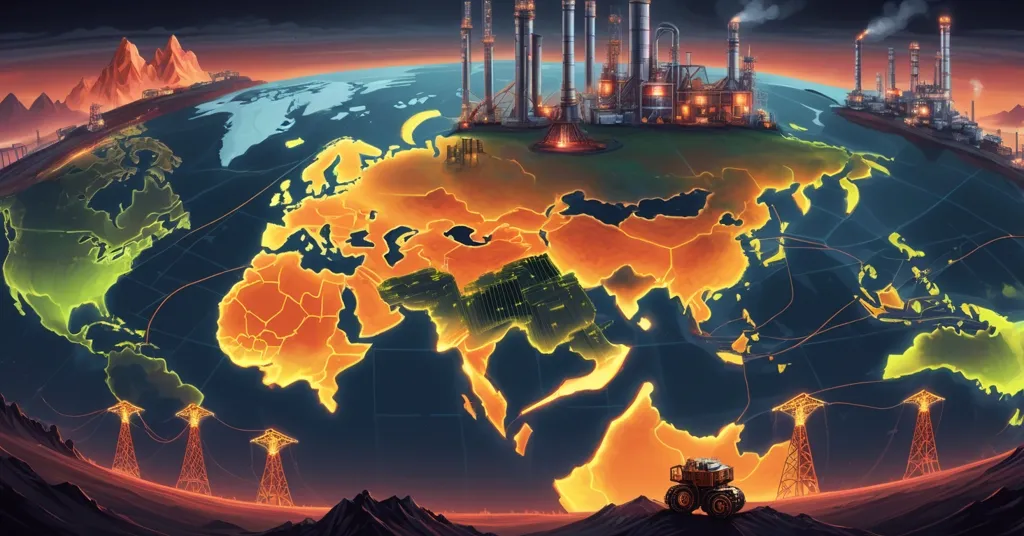
Bitcoin was designed to be a borderless, unstoppable force, yet 65% of its mining muscle is controlled by just three nations—the United States, Russia, and China. This staggering concentration of power isn’t just a quirky stat; it’s a potential Achilles’ heel for a network built on the promise of decentralization, exposing it to geopolitical games and local disruptions.
- Dominant Trio: US holds 37.4%, Russia 16.9%, and China 12% of global Bitcoin Hashrate.
- Power Drop: Global Hashrate fell from 1,083 EH/s in October 2025 to 953 EH/s recently.
- Centralization Threat: Heavy reliance on few countries risks network stability through policy shifts or disasters.
The Big Three: Why US, Russia, and China Rule Bitcoin Mining
Let’s get straight to the numbers. According to the latest Hashrate Index report, the United States commands 37.4% of Bitcoin’s global mining power. That’s a massive slice of the pie, largely thanks to favorable energy policies in states like Texas and Wyoming, where cheap electricity and miner-friendly regulations have turned the US into a post-2021 haven for rigs displaced by China’s ban. Russia isn’t far behind with 16.9%, leveraging dirt-cheap energy in regions like Siberia despite international sanctions that could complicate hardware access. Then there’s China, still holding 12% even after its 2021 crackdown forced many miners underground or out of the country entirely—rumors of covert operations persist, fueled by access to low-cost hydropower in remote areas. For more on this concentration, check out the detailed breakdown of Bitcoin mining power distribution.
Combined, these three nations account for 65% of the computational power securing Bitcoin’s blockchain. For those new to the game, Hashrate measures the total computing strength miners dedicate to solving complex puzzles that validate transactions and secure the network. It’s counted in exahashes per second (EH/s)—think of it as the raw muscle behind Bitcoin’s defenses. A higher Hashrate means better protection against attacks, but when most of that muscle is flexed in just a few spots, a single punch—like a government ban or natural disaster—could knock out a huge chunk of the network’s strength.
Hashrate Decline: Price Slumps and the AI Temptation
Bitcoin’s global Hashrate isn’t just concentrated; it’s shrinking. Data from Blockchain.com’s 7-day average chart shows a drop from a peak of 1,083 EH/s in October 2025 to 953 EH/s now. That’s a significant retreat, and the reasons cut deep into mining economics. Bitcoin’s price has slumped into the $60K-$70K range recently, sitting around $67,900 with little upward momentum. Miners are paid in BTC for their work, so when the value tanks, their revenue does too—but those pesky electricity bills keep piling up. For smaller or less efficient miners, it’s often game over; they unplug their rigs rather than bleed cash.
Then there’s the shiny distraction of AI datacenters. Major mining firms, once all-in on Bitcoin, are pivoting to lease their computational power for machine learning projects. Why grind for volatile BTC block rewards when you can train AI bots for steadier, often juicier returns? It’s a pragmatic move, no doubt, but damn if it isn’t a middle finger to Bitcoin’s long-term security. Less Hashrate means less protection, and if big players keep jumping ship, the network feels the burn. Add in the constant pressure of halved block rewards every four years—cutting miner payouts in half—and it’s no shock that profitability is a bloodbath for many.
Decentralization on Thin Ice: Lessons from History
Bitcoin’s ethos is decentralization—a system where no single entity or region calls the shots. Yet with 65% of Hashrate in three countries, that ideal looks more like a pipe dream. The risks are glaring. Imagine a sudden regulatory crackdown in the US, where federal agencies like the SEC or energy boards decide mining’s too power-hungry and slap on heavy taxes or outright bans. Or consider Russia, where energy blackouts amid geopolitical tensions could idle rigs en masse. Even China, despite its ban, still influences the game—any further enforcement could disrupt that lingering 12%.
History isn’t kind to concentrated power. Back in 2021, China’s mining ban sent the global Hashrate into a nosedive as miners scrambled to relocate, many landing in the US. That single policy gutted what was once over 50% of the network’s power almost overnight, proving how fragile concentration can be. More recently, a brutal snowstorm in the US forced miners offline temporarily, denting the global metric. Picture thousands of small miners in Texas powering down as grids fail—that’s not just a local headache; it’s a global vulnerability. Bitcoin’s supposed to be unstoppable, but these events scream otherwise.
Small Players Rising: A Glimmer of Decentralized Hope?
Not all the news is doom and gloom. While the big three dominate, smaller nations are carving out tiny but noteworthy slices of the Hashrate pie. Kyrgyzstan has bumped its share by 0.4% since early 2026, likely driven by cheap hydropower and a growing interest in crypto infrastructure. Paraguay, up 0.3% in the same period, benefits from abundant renewable energy and a government eyeing blockchain as an economic booster. These gains are drops in the bucket against the giants, but they hint at a slow spread of mining power.
Could this be the start of true decentralization? Maybe, if the trend accelerates. Smaller regions often have lower operational costs and less regulatory baggage, making them appealing for miners fleeing tighter controls elsewhere. But let’s not get carried away—these increments won’t dethrone the US or Russia anytime soon. Still, as a Bitcoin maximalist at heart, I can’t help but root for these underdogs. Every rig outside the big three’s grip is a step toward a network that lives up to its borderless promise.
What’s Next for Bitcoin Mining: Solutions and Outlook
So, how do we fix this mess? Bitcoin’s community has always been scrappy, and there are paths to spread the load. First, incentivizing mining in diverse regions could help—think tax breaks or grants for rigs in underserved countries, much like Paraguay’s early moves. Community-driven initiatives, like open-source mining pools that prioritize geographic diversity, could also nudge power away from concentrated hubs. Then there’s tech innovation: off-grid or solar-powered mining setups are gaining traction, letting miners operate in remote areas without relying on national grids prone to outages or policy meddling.
Looking ahead, policy will be a battleground. In the US, state-level incentives in places like Texas keep miners flocking, but federal overreach looms as energy debates heat up. Russia’s cheap power is a draw, but global tensions could disrupt supply chains for mining hardware. China’s wildcard status—underground operations defying bans—adds uncertainty. On the flip side, emerging tech like more efficient ASICs (specialized mining chips) could lower barriers for smaller miners, while mining difficulty adjustments post-Hashrate drops ensure the network chugs along, even if slowly. And a quick heads-up: beware scammers peddling “cloud mining” schemes tied to Hashrate buzz—most are pure fraud, preying on the uninformed.
Playing devil’s advocate, let’s not pretend Bitcoin’s model is untouchable. Altcoins like Ethereum, post its Merge to Proof of Stake, slashed energy use and shifted power dynamics away from geographic hubs—something Bitcoin’s Proof of Work can’t easily replicate without losing its rugged identity. Other blockchains experiment with hybrid consensus models to distribute control. BTC doesn’t need to be everything, but ignoring these alternatives as learning tools feels like stubbornness, not strength. Effective accelerationism means adapting fast, not clinging to flaws under the guise of purity.
Key Takeaways and Burning Questions
- What is Bitcoin Hashrate, and why does it matter?
Hashrate is the total computing power miners use to secure Bitcoin’s network, measured in exahashes per second (EH/s)—basically, how many complex calculations happen every second. It matters because it determines network security; more power means better defense, but concentration in few areas risks major disruptions. - Why is Bitcoin mining concentrated in just three countries a problem?
With 65% of Hashrate in the US, Russia, and China, local issues like government bans, energy crises, or natural disasters could cripple a huge portion of Bitcoin’s security, undermining its decentralized core. - How does Bitcoin’s price slump impact mining operations?
A drop to the $60K-$70K range cuts miner revenue since rewards are in BTC, while costs like electricity stay fixed. Less efficient miners shut down, reducing global Hashrate and network strength. - What’s pushing miners toward AI datacenters over Bitcoin?
AI projects offer stabler, often higher profits compared to Bitcoin’s volatile returns, especially during price dips, pulling critical computing power away from the network. - Can smaller nations like Kyrgyzstan and Paraguay change the mining game?
Their recent gains—0.4% and 0.3%—signal growing interest with cheap energy as a draw, but they’re far from challenging the dominant trio’s grip on Hashrate. - What solutions exist to decentralize Bitcoin mining power?
Incentives for mining in diverse regions, community-driven pools prioritizing geographic spread, and innovations like solar-powered rigs could dilute concentration, strengthening Bitcoin’s resilience.
Let’s cut the fluff: Bitcoin’s mining centralization is a gaping hole in the fortress of decentralization, and ignoring it is just reckless. The network’s adaptability—surviving bans, crashes, and chaos—is its ace card, but 65% of power in three nations isn’t a temporary glitch; it’s a ticking time bomb. The community, miners, and innovators need to spread the load before a rogue policy or disaster forces the issue. Bitcoin remains the king of crypto, a beacon of financial freedom, but even kings fall if their foundations crack. Will we accelerate true decentralization in time, or wait for the chessboard to flip?