Bitcoin Stalls at $90K: Retail Investors Missing as Demand Drops in 2023
 LTB
LTB Bitcoin Price Stalls at $90K: Retail Investors Vanish as Demand Fades in 2023
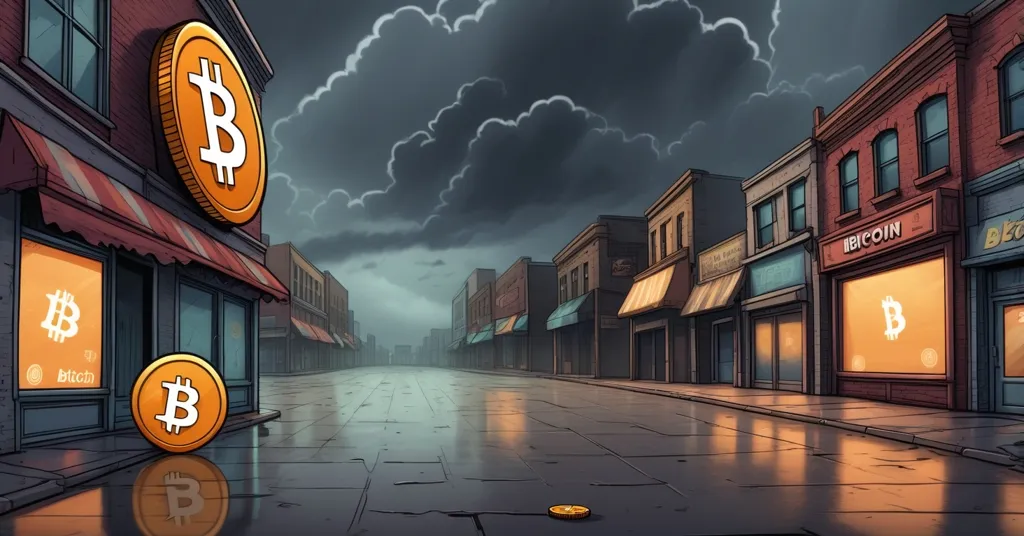
Bitcoin, the pioneer of cryptocurrencies, is hitting a brick wall just above $90,000, unable to shatter the $94,000 resistance barrier. Since late November, the market has been stuck in a dreary consolidation phase, with price action reflecting hesitation rather than hunger for a breakout. Most alarming, retail investors—the heartbeat of past bull runs—are missing in action, casting serious doubt on Bitcoin’s ability to sustain any upward push.
- Bitcoin fails to hold above $90,000, rejected repeatedly at $94,000 resistance.
- On-chain data reveals a sharp drop in retail investor demand, threatening price stability.
- Price trapped between $87,000 and $92,000, with low volatility and muted sentiment.
The Retail Desert: Where’s the Crowd?
Cast your mind back to 2021. Bitcoin was the talk of the town, and even your tech-illiterate uncle was scrambling to buy a sliver of BTC on apps like Coinbase, driven by viral FOMO (fear of missing out) on social media. That retail frenzy—ordinary folks throwing in small sums of $50 or $100—propelled Bitcoin to a staggering $69,000 peak. Fast forward to 2023, and the vibe couldn’t be more different. The dance floor is empty, and the hype DJ has packed up. Analyst Maartunn, in a recent post on X, shared damning on-chain data showing a deeply negative 30-day change in retail investor activity, as highlighted in a recent analysis of Bitcoin’s retail demand trends. Fewer small wallets are buying, micro-transactions have dwindled, and the grassroots momentum that once defined Bitcoin’s surges is nowhere to be seen.
For those new to the space, on-chain data is the unfiltered truth of a blockchain like Bitcoin. It tracks every transaction, wallet balance, and activity pattern, offering a peek behind the curtain of market sentiment that price charts alone can’t provide. A negative trend in retail participation means the average person isn’t jumping in. Historically, Bitcoin’s most enduring rallies have leaned on this broad-based demand to balance out the heavy hitters—often called “whales,” the big fish like institutional investors or mega-holders who can sway the market with a single trade. Without the little guys as a buffer, Bitcoin’s foundation feels like it’s built on sand. If whales decide to cash out or if a sudden shock hits—think regulatory bans or global financial tremors—there’s precious little to stop a nosedive.
Price Stagnation: A Market on Pause
Zooming into the current charts, Bitcoin’s behavior is borderline comatose. It’s caged in a narrow range between $87,000 and $92,000, with sellers slapping it down near the upper edge and buyers too skittish to pile in at the bottom. Trading volume, which signals the strength of market conviction, is anemic—imagine a stadium full of fans too bored to even chant. Peering at the 4-hour technical chart, Bitcoin languishes below its 50-period and 100-period moving averages, which act like invisible ceilings signaling the trend’s direction. For the uninitiated, these averages smooth out price fluctuations over time to reveal whether bulls or bears hold the reins. Sitting below them, as Bitcoin does now, often spooks buyers and hints that bearish forces—or at least stagnation—rule the day.
What’s the outlook? If Bitcoin cracks below the $87,000 support, we could see a uglier slide, potentially testing $80,000 or worse, shaking the resolve of even the most stubborn HODLers—those who “hold on for dear life” through wild swings. On the other hand, a decisive push above $92,000, backed by solid volume, could hint at a bullish revival. But don’t bank on it just yet. The market is in a state of volatility compression, akin to a tightly wound spring ready to burst. Without retail energy or a clear trigger, though, predicting the direction is like flipping a coin in the dark.
Risks Looming: Why Retail Absence Stings
Let’s not mince words: Bitcoin without retail buzz is a shadow of the decentralized revolution we champion. Its core promise—a currency free from centralized control, a tool for financial freedom—still burns bright, but mass adoption needs the masses. The current drought of retail interest isn’t just a cold statistic; it’s a glaring red flag. Are Bitcoin’s lofty prices—hovering near $90,000—intimidating newcomers who flinch at the thought of a $5,000 dip on a modest $500 stake? Or has the crypto world’s cesspool of scams, from rug pulls to shady token launches, eroded trust beyond repair? Whatever the culprit, Bitcoin’s heavy reliance on whales and institutional players makes it feel less like a people’s money and more like a speculative plaything for the 1%, drifting from Satoshi Nakamoto’s original peer-to-peer cash ideal.
Then there’s the bigger economic storm brewing. Rising interest rates, persistent inflation, and whispers of recession are spooking retail investors away from high-risk assets like Bitcoin. Back in 2022, aggressive rate hikes by central banks like the Federal Reserve gutted crypto markets as liquidity vanished; we could see a sequel if confidence falters again. Without retail demand as a shock absorber, Bitcoin is dangerously exposed to these macro headwinds. One sour headline or policy shift, and the downward spiral could be brutal.
Playing Devil’s Advocate: Can Institutions Save the Day?
Here’s a counterpoint to chew on: maybe retail’s disappearance isn’t a fatal blow. Institutional interest in Bitcoin has been ramping up, with heavyweights like BlackRock pushing for Bitcoin ETFs and firms like MicroStrategy stockpiling BTC as a treasury asset. These big players bring deep pockets and a veneer of stability, potentially filling the void left by retail. But there’s a catch—and it’s a big one. Leaning on institutions risks turning Bitcoin into just another Wall Street asset, stripped of its rebellious, anti-establishment soul. Is that a trade-off we’re willing to make? Stability might come at the expense of decentralization, a bitter pill for those of us who see Bitcoin as a middle finger to traditional finance. It’s a tension worth wrestling with as the market evolves.
Another angle: the broader crypto ecosystem might be siphoning retail attention. Platforms like Ethereum draw crowds with dazzling decentralized finance (DeFi) projects and non-fungible tokens (NFTs)—shiny toys Bitcoin doesn’t play with, and frankly, shouldn’t. As a store of value, Bitcoin’s strength lies in simplicity and scarcity, not speculative gimmicks. Yet, Ethereum’s sandbox offers retail investors entry points and excitement that Bitcoin currently lacks. Could this diversion be part of the problem? While I’m a Bitcoin maximalist at heart, I’ll concede that altcoins fill niches and fuel innovation in ways that keep the crypto revolution dynamic. Still, Bitcoin’s dominance needs that retail spark to truly ignite.
Looking Ahead: Catalysts and Long-Term Hope
Despite the gloom, I’m not ready to write Bitcoin off. This isn’t its first rodeo. It clawed back from the 2018 bear market abyss at $3,000, survived the Mt. Gox debacle, and shrugged off countless “Bitcoin is dead” proclamations. Its bedrock as a borderless, unconfiscatable asset remains unshaken. Periods of consolidation like this often prelude major moves—whether to the moon or the gutter. One potential spark is the upcoming 2024 Bitcoin halving, a programmed event that slashes mining rewards in half, tightening supply. Historically, halvings in 2016 and 2020 triggered massive rallies as scarcity fueled FOMO. Could it lure retail back? It’s no guarantee, but the pattern is hard to ignore.
Beyond events, reviving retail interest demands practical fixes. Better education to demystify crypto’s complexities, user-friendly wallets to smooth onboarding, and community efforts to rebuild trust after scam fatigue could help. Globally, emerging markets like Nigeria or India—where Bitcoin often acts as a hedge against crumbling local currencies—might drive the next retail surge if barriers like cost and access shrink. For now, though, the market feels like a ghost town, and Bitcoin’s solo waltz risks a stumble.
Let’s also consider the ethos of effective accelerationism we hold dear. Overcoming hurdles like retail adoption isn’t just a challenge—it’s a necessary step to speed up Bitcoin’s disruption of a broken financial system. The road is rocky, sure, but every barrier crossed brings us closer to a world where centralized control over money is a relic. The question hangs heavy: can Bitcoin still claim to be the people’s currency if the people aren’t showing up?
Key Takeaways and Burning Questions
- Why Is Bitcoin Price Stuck Below $94,000 in 2023?
Relentless selling pressure and a stark lack of retail investor demand keep Bitcoin locked in a consolidation range with weak trading volume. - Why Are Retail Investor Trends Critical to Bitcoin’s Momentum?
Retail demand fuels lasting rallies with widespread support; without it, Bitcoin depends on erratic whale activity, heightening downside risks. - What Are the Key Bitcoin Price Levels to Monitor Now?
Support at $87,000 is vital to avoid steeper losses, while $92,000–$94,000 requires strong volume to signal a bullish shift. - Does Current Crypto Market Sentiment Spell Trouble for Bitcoin?
Fragile sentiment and low volatility demand caution; without a retail comeback or catalyst, Bitcoin risks staying stuck or facing sharp drops. - Can Bitcoin Survive Without Retail Investors in the Near Term?
It might with institutional or whale backing, but such dependence leaves price stability precarious, open to sudden shifts in their actions.