Bitcoin Whales Grab 600K BTC in Dip While Pepeto Presale Stirs Controversy
 LTB
LTB Bitcoin Whales Snap Up 600K BTC in Dip as Pepeto Presale Sparks Heated Debate
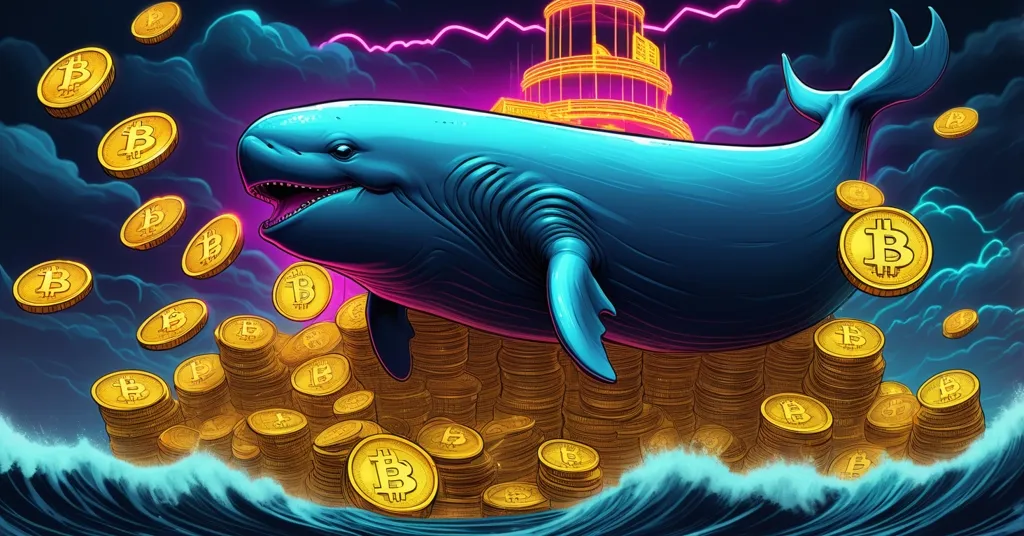
Bitcoin whales have made headlines by accumulating a staggering 600,000 BTC during a recent price dip below $70,000, signaling unshakable confidence in a market rebound. Meanwhile, a new presale project, Pepeto, is generating buzz with claims of a revolutionary revenue-sharing model that could outshine traditional crypto investments. Are we witnessing the calm before a Bitcoin storm, or is Pepeto just another overhyped gamble in a sea of speculative noise?
- Whale Power Move: 600,000 BTC bought by large investors during a dip, with 200,000 in the last two weeks alone.
- Bitcoin Rebound: BTC climbs past $71,000, fueled by geopolitical signals.
- Pepeto Hype: Presale promises permanent revenue from exchange fees, but skepticism looms large.
Bitcoin Whales: Betting Big on Recovery
Let’s kick off with the giants of the Bitcoin world. Data from blockchain analytics firm Glassnode, corroborated by CoinDesk, reveals that whales—investors holding massive amounts of Bitcoin, often capable of swaying market trends with their sheer trading volume—have scooped up 600,000 BTC during a recent price correction below $70,000. A hefty chunk, 200,000 coins, was acquired in just the past two weeks. This isn’t frantic FOMO buying; it’s a cold, calculated play by wallets that have played this game before. As one market observer noted:
Traders accumulated 600,000 Bitcoin during the correction below $70,000, with 200,000 coins in two weeks alone. That is not panic buying. That is calculated accumulation from wallets that have done this before.
For the uninitiated, blockchain analytics refers to tools that track transactions on Bitcoin’s public ledger, identifying patterns like these large-scale accumulations. Whales buying at a dip often signals that smarter money sees value where retail investors see fear. Historically, this isn’t a new tactic—during the 2022 bear market, similar whale activity preceded a 50% rally within six months, per Glassnode data. Their moves can stabilize prices by absorbing selling pressure, but they also raise concerns about market manipulation if a few players hold too much sway. For the average investor, this 600,000 BTC haul suggests a potential bottoming out of the dip, hinting at greener days ahead. But what sparked the recovery?
Bitcoin’s Bounce: What’s Pushing Past $71K?
Bitcoin has already fought its way back above $71,000, a recovery partially tied to macroeconomic factors. Reuters points to signals from Donald Trump suggesting a nearing resolution to conflict with Iran as a calming force for global markets. Geopolitical stability often boosts investor confidence across all asset classes, including Bitcoin, by reducing uncertainty and risk aversion. We’ve seen this before—back in 2020, US-Iran tensions spiked Bitcoin volatility as investors sought safe havens outside traditional finance. When fear subsides, risk assets like BTC often catch a bid.
Bitcoin’s role as a market bellwether can’t be overstated. When its price ticks up, trading volume surges across exchanges, often igniting altcoin rallies and so-called “alt seasons” where smaller cryptocurrencies see outsized gains. This ripple effect is why whale accumulation and price recovery matter beyond just BTC hodlers—it sets the stage for broader market activity. Exchange inflows and trading data from platforms like CoinGecko show a notable uptick in activity post-recovery, suggesting momentum is building. But while Bitcoin’s fundamentals remain a beacon for decentralized finance, the altcoin and presale space is buzzing with speculative projects promising quick riches. Let’s turn to one such contender: Pepeto.
Pepeto Presale: Innovation or Overhyped Gamble?
While Bitcoin whales play the long game with a proven asset, the presale arena is heating up with projects like Pepeto, which is being marketed as a disruptive force in crypto investing. For those new to the space, a presale is an early funding round where investors buy a project’s tokens before they hit public exchanges, often at a discount, betting on future price spikes. The catch? They’re high-risk, largely unregulated, and frequently turn out to be scams or flops. Pepeto stands out by promising not just potential price gains but a permanent share of trading fees from its associated exchange for presale holders. In other words, every trade on their platform—bull market, bear market, or sideways slog—supposedly puts revenue into early investors’ wallets. Business Insider is cited as verifying this bold claim:
Pepeto broke that model completely. Business Insider reported that presale wallets receive a permanent share of all exchange trading fees.
The pitch is seductive. Unlike Bitcoin, where returns hinge on price appreciation, Pepeto’s model thrives on trading volume. Promoters argue that when whales trade their 600,000 BTC back into altcoins during a market upswing, the resulting flood of volume through exchanges could mean steady income for Pepeto holders, regardless of price direction. Their messaging hammers this point home:
When those 600,000 BTC start trading back into altcoins during the recovery, the volume floods through exchanges and your wallet earns a share. Not because the price went up. Because the trades happened.
Numbers add to the allure. Pepeto’s treasury reportedly stands at $7.85 million, a respectable sum for a presale, and they’re offering a 200% staking yield for early participants—a carrot to lock in funds. An upcoming listing on Binance, a heavyweight exchange with massive daily volume, is said to trigger this revenue-sharing mechanism permanently. If it works as advertised, it’s a stark contrast to Bitcoin’s model, where even the biggest whales only profit from upward price movement. Pepeto’s backers drive this wedge further, as detailed in a report on whale activity and Pepeto’s unique revenue-sharing approach:
Whales loaded 600,000 coins because they know what comes after fear. But even those whales only earn when BTC goes up. Pepeto presale holders earn from every trade regardless of direction, and that is a model Bitcoin will never offer.
Hold your horses before you jump in. This smells like classic presale hype, and I’ve seen enough “next big thing” pitches to fill a crypto graveyard. Let’s dissect the red flags. First, how sustainable is this revenue-sharing if the exchange fails to attract significant volume? Exchanges are a dime a dozen, and most bleed users to giants like Binance unless they offer something truly unique. Second, what’s the split on trading fees? Are holders getting a meaningful cut, or just pennies while the project rakes in the bulk? Third, presales often hide ugly truths—anonymous teams, unaudited smart contracts, or straight-up rug pulls where founders vanish with the funds. BitConnect promised passive income too, and we all know how that ended: a $2 billion scam. A disclaimer tied to Pepeto’s promotion, reportedly from CaptainAltcoin, urges caution and research, hinting this might be paid content. If the loudest cheerleaders are paid to shout, it’s not a revolution—it’s a billboard.
Playing devil’s advocate, if Pepeto’s exchange somehow captures serious volume, this could offer a passive income stream Bitcoin can’t match. It aligns with our belief in effective accelerationism—pushing tech forward fast by testing new financial incentives. But that’s a massive “if.” Most presales collapse under the weight of their own promises, and without a track record or transparent audits, Pepeto is a gamble at best, a sham at worst. Compare this to other presale flops like DeepSnitch AI, priced at $0.04313 with under $2 million raised and no major exchange backing or revenue model, or BlockDAG, which raised $452 million but risks tanking to $0.001 due to a flood of unlocked tokens. Oversupply kills token value when demand can’t keep up. Pepeto’s narrative as the golden child feels suspiciously polished against these weaker contenders.
Bitcoin vs. Altcoin Plays: Where’s the Real Value?
As a Bitcoin maximalist, I see BTC as the unassailable bedrock of this financial revolution—a decentralized, censorship-resistant store of value no altcoin can fully replicate. Whales stacking 600,000 BTC aren’t betting on gimmicks; they’re banking on a system that’s weathered over a decade of storms. Its network effects and security are unmatched, embodying the ethos of freedom and privacy we champion. That 600K haul reflects trust in a system that governments and banks can’t touch, a trust altcoins rarely earn.
That said, I’m not blind to innovation beyond Bitcoin. Ethereum pioneered smart contracts, other blockchains tackle scalability, and projects like Pepeto at least attempt to fill niches with unique economic models. If legitimate, such experiments could accelerate crypto adoption by offering incentives BTC doesn’t address, aligning with our push for disruption. But let’s be real—most altcoins and presales are cash grabs, not revolutions. Bitcoin’s value lies in its proven resilience; Pepeto’s is a shiny brochure with fine print yet to be tested. Decentralization remains the north star, and while Bitcoin leads the charge, altcoins must prove they’re more than centralized hype machines undermining those principles.
Key Takeaways and Questions to Ponder
- What drives Bitcoin whales to accumulate 600,000 BTC during a dip?
Whales likely see the drop below $70,000 as a strategic entry point, expecting a rebound based on historical market cycles where fear gives way to rallies. - Why does Bitcoin’s recovery above $71,000 impact the broader crypto market?
As the dominant cryptocurrency, Bitcoin’s uptick often boosts trading volume across exchanges, sparking altcoin rallies and fueling market-wide optimism. - Is Pepeto’s revenue-sharing model a true game-changer for crypto investors?
It’s a novel idea—earning from exchange fees regardless of price trends—but remains unproven and risky in the scam-prone presale landscape. - What are the hidden risks of revenue-sharing models in crypto presales?
Sustainability is a major concern; low trading volume, high operational costs, or outright fraud can render such promises worthless, as past scams like BitConnect demonstrate. - How do Bitcoin whale movements signal broader market trends?
Large accumulations often precede recoveries, as whales absorb selling pressure and position for gains, potentially stabilizing prices for retail investors. - Should investors trust hyped presales like Pepeto in a recovering Bitcoin market?
Proceed with extreme caution—verify claims, scrutinize teams, and remember that most presales prioritize marketing over substance, especially during BTC-driven hype cycles.
Bitcoin remains the kingpin, and whale moves like this 600,000 BTC accumulation remind us why: fundamentals over flash. Yet, as the market heats up past $71,000, the siren call of presales like Pepeto will only grow louder. Stay sharp, keep your skepticism cranked to max, and don’t forget that true disruption—like Bitcoin itself—takes years to prove, not weeks of slick pitches. We’re all in for accelerating adoption and championing decentralization, but not at the expense of falling for every shiny distraction. Let’s track these developments and push this space forward, one block at a time, grounded in reality over fantasy.