Bitcoin Whales Scoop 10,000 BTC in 3 Days: Bullish Signal or Market Trap?
 LTB
LTB Bitcoin Whales on a Buying Spree: 10,000 BTC Accumulated in 3 Days Amid Market Doubt
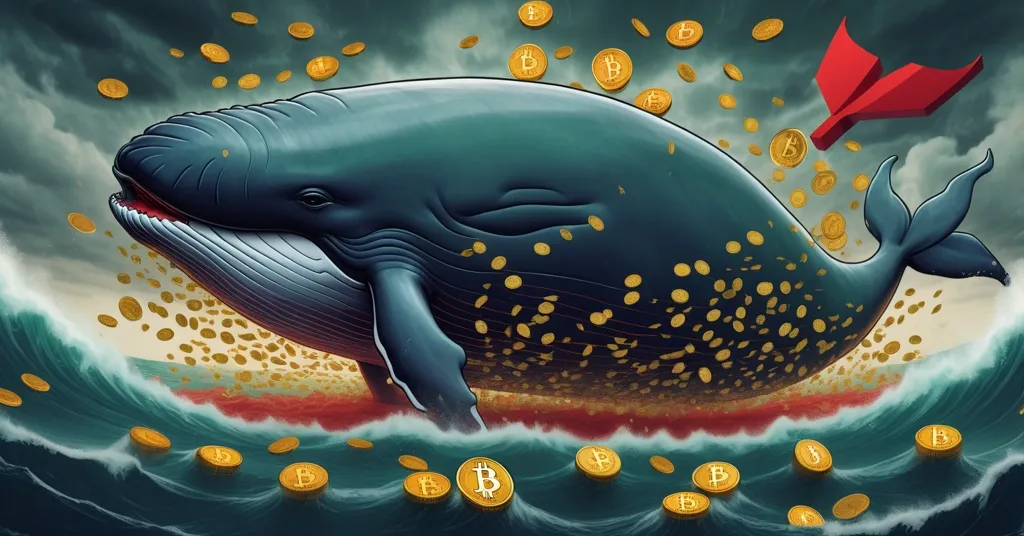
Big players in the Bitcoin market are making bold moves, with whales—those mega-holders of BTC—snatching up a hefty 10,000 coins in just three days as of April 4, 2026. This surge in accumulation, spotted by market analyst Ali Martinez on the X platform, could hint at renewed confidence among the heavyweights, even as social media drowns in bearish noise. Let’s unpack this clash of signals and what it might mean for Bitcoin’s next chapter.
- Bitcoin whales amassed 10,000 BTC in three days, per Santiment’s BTC Held By Whales metric.
- Bearish sentiment dominates online, with a bullish-to-bearish comment ratio at a low of 0.81 to 1.00.
- Current BTC price sits at $67,400, up 1% in 24 hours, showing slight but cautious momentum.
Who Are Bitcoin Whales, and Why Do They Matter?
For the uninitiated, Bitcoin whales are individuals or entities holding massive stashes of BTC, typically ranging from 100 to over 10,000 coins. These aren’t your average retail investors; their wallets are so large that their buying or selling can ripple through the market, often nudging price trends in one direction or another. Thanks to the transparency of blockchain technology, we can track their moves via public ledger data, giving us a rare peek into the strategies of crypto’s biggest players. When whales accumulate at this scale—10,000 BTC in just three days, as flagged by Ali Martinez using Santiment’s on-chain analytics—it’s often seen as a leading indicator of market shifts. Historically, such activity has preceded significant rallies, like the 2020-2021 bull run when whale buying signaled the start of Bitcoin’s climb to all-time highs.
But let’s not get ahead of ourselves. While a $674 million haul at current prices (with Bitcoin at $67,400) sounds like a ringing endorsement, whale behavior isn’t always altruistic. Their influence cuts both ways—they can stabilize markets with long-term holding or destabilize them with sudden dumps. So, why are they buying now, and should we care? Let’s dig deeper.
Whale Accumulation: Bullish Bet or Calculated Gamble?
The raw numbers are striking: 10,000 BTC accumulated in a mere 72 hours. For context, that’s a significant uptick even for whales, whose transactions are often measured in smaller bursts unless a major market play is underway. Santiment’s BTC Held By Whales metric, which tracks wallets with substantial holdings, confirms this isn’t random noise—it’s a deliberate move. Ali Martinez, sharing this insight on X, suggested it might reflect growing confidence among large investors, possibly anticipating catalysts that retail folks haven’t yet sniffed out, as detailed in a recent report on Bitcoin whale activity. Could it be tied to whispers of institutional adoption, a shift in global monetary policy, or even an upcoming Bitcoin halving event if we’re projecting into 2026 timelines? Whales often act on information or conviction ahead of the curve, positioning themselves before the herd catches on.
Yet, there’s a flip side we can’t ignore. Whales aren’t saints; some have been known to orchestrate pump-and-dump schemes, inflating prices with big buys only to offload their stash on overeager retail investors—often dubbed “bagholders,” or those left holding devalued assets after a crash. While on-chain data offers transparency, it doesn’t reveal intent. Is this accumulation a genuine vote of confidence in Bitcoin’s future, or a setup for a rug pull? History offers mixed lessons: look at the 2017 ICO craze, where whale-driven hype in altcoins often ended in tears for smaller players. Caution is warranted, even if the optics of this buying spree scream optimism.
Bearish Noise on Social Media: FUD or Reality?
While whales are busy stacking Bitcoin (that is, accumulating coins, often in fractions known as satoshis), the online crypto community seems stuck in a pit of despair. Santiment, a firm specializing in on-chain and sentiment analysis, dropped a telling update on X, revealing a bullish-to-bearish comment ratio of just 0.81 to 1.00—the lowest since February 28, 2026. Picture a crowded room where for every person cheering Bitcoin’s potential, there’s more than one grumbling about its stagnation or predicting doom. Santiment captured the mood perfectly:
“There has been an extended period of stagnancy among cryptocurrencies throughout 2026, and social media indicates that Saturday’s ratio of just 0.81 bullish comments per 1.00 bearish is the lowest ratio since February 28th.”
Sentiment analysis, for those new to the term, is a method of gauging public opinion by scraping data from social media platforms, forums, and comment sections. It’s not a perfect science, but it offers a window into the collective psyche of investors. When negativity—often labeled FUD, or Fear, Uncertainty, and Doubt—reaches extreme levels like this, it can spread panic or deter new entrants. Think of FUD as the crypto equivalent of a rumor mill, sometimes based on real concerns (like regulatory crackdowns or hacks) and other times just baseless noise meant to manipulate sentiment.
Here’s the kicker, though: markets love to defy the crowd. Extreme bearish sentiment often acts as a contrarian indicator, meaning when everyone’s down on Bitcoin, the stage might be set for a reversal. It’s like the market giving a sly wink to the skeptics before heading in the opposite direction. We’ve seen this play out before—think back to late 2018, when despair peaked just before Bitcoin began its slow recovery. Could this wave of online pessimism, juxtaposed with whale buying, be the setup for a bullish surprise? Or are we just grasping at straws in a market that’s been flatlining for too long?
Why the Stagnation? Unpacking 2026’s Crypto Funk
The bearish vibe isn’t coming from nowhere. Santiment notes a “prolonged period of stagnancy” in 2026, and while specifics are scarce, we can piece together likely culprits. Bitcoin at $67,400 isn’t cheap, but for a market hooked on rollercoaster highs and lows, sideways price action feels like watching grass grow. Add to that the usual suspects—regulatory uncertainty with governments flip-flopping on crypto rules, macroeconomic headwinds like rising interest rates curbing risk appetite, and the occasional high-profile scam or exchange collapse—and you’ve got a recipe for frustration. Retail investors, often more vocal on platforms like X, might feel burned by unmet expectations of “moonshot” gains, fueling the negative chatter.
Meanwhile, altcoin narratives could be siphoning attention. Are Ethereum whales or those on other blockchains like Solana showing similar accumulation patterns, or is this confidence BTC-specific? Without broader data, it’s hard to say, but Bitcoin’s dominance as the original crypto often makes it the bellwether for market sentiment. If whales are doubling down on BTC while ignoring others, it might signal a flight to safety amid uncertainty—a vote for Bitcoin’s staying power over speculative altcoin bets. Still, let’s not pretend Bitcoin is immune to competition; Ethereum’s smart contract ecosystem and other innovative protocols fill niches BTC was never meant to serve, and that diversity is crucial to the decentralized revolution.
Bitcoin Price and Market Dynamics: A Flicker of Hope?
As of now, Bitcoin hovers at $67,400, nudging up by nearly 1% in the last 24 hours. It’s not exactly a victory parade, but in a stagnant market, any green is a small win. The interplay between whale accumulation and retail despair paints a messy picture. On one hand, big investors piling into BTC could mean they’re bracing for a breakout, perhaps tied to unseen catalysts or simply a long-term belief in Bitcoin as the future of money. On the other, social media’s gloom reminds us that public perception often lags behind on-chain reality. For every whale wallet growing fatter, there’s a doomscrolling thread predicting Bitcoin’s crash to zero—and let’s be honest, both sides have been spectacularly wrong in the past.
I’m a staunch believer in Bitcoin’s potential to disrupt centralized finance and champion freedom, privacy, and decentralization. But I’m not here to peddle hopium. The market is a volatile beast, and whale activity, while a powerful signal, isn’t a prophecy. External factors like regulatory bombshells or global economic shifts could derail any rally, no matter how much BTC whales hoard. And let’s not forget the risk of manipulation—following these giants blindly is a quick way to get rekt. Blockchain data gives us clues, not certainties, so keep your skepticism sharp.
Key Takeaways and Burning Questions
- What does the accumulation of 10,000 BTC by whales signal about market trends?
It points to potential confidence among large investors, often a precursor to upward price momentum for Bitcoin, though outcomes aren’t guaranteed. - Why are Bitcoin whales pivotal to understanding crypto market dynamics?
Their enormous holdings can sway price trends through bulk transactions, making their actions a critical signal for investors to watch. - How does overwhelming bearish sentiment on social media contrast with whale behavior?
While online chatter reflects negativity with a bullish-to-bearish ratio of 0.81 to 1.00, whale buying suggests big players might see a brighter future for BTC. - Can extreme negativity online actually hint at a bullish turn for Bitcoin?
Yes, historically, peak pessimism often serves as a contrarian indicator, suggesting a rebound could be looming as sentiment bottoms out. - What are the risks of trusting whale accumulation as a bullish signal?
Whales might manipulate markets with pump-and-dump tactics, so their buying doesn’t always mean a rally—retail investors should stay wary. - What’s Bitcoin’s current price, and what does it suggest about the market?
At $67,400 with a 1% gain in the last 24 hours as of April 4, 2026, Bitcoin shows faint positive movement but remains trapped in a broader stagnation.
Navigating the Chaos: What’s Next for Bitcoin?
The Bitcoin market is a labyrinth of hype, fear, and raw data, and this latest whale buying spree of 10,000 BTC in three days is just another twist in the tale. Against a backdrop of social media despair, these big moves stand out as a beacon of potential—or a mirage. I’m not here to shill you on price predictions; frankly, most of that noise is garbage meant to lure in suckers. Instead, focus on the signals—on-chain metrics like Santiment’s, whale wallet activity, and yes, even the grumbling on X. Whether this sparks a bullish surge or fizzles into nothing, one truth remains: crypto rewards the patient and punishes the reckless. Keep your eyes peeled, filter the FUD, and remember that in this space, the only certainty is uncertainty itself.