
Blockchain’s Real-Time Settlement: Revolutionizing Distributed Energy Grids
 LTB
LTB Real-Time Settlement: Blockchain’s Game-Changer for Distributed Energy
Electricity zips through power lines in milliseconds, data flashes across networks in a heartbeat, but the money to pay for it all? It’s stuck in a bureaucratic quagmire, dragging on for days or even weeks. This absurd lag is choking the explosive rise of distributed energy resources (DERs)—think rooftop solar, electric vehicles (EVs), and virtual power plants (VPPs)—and blockchain technology, the bedrock of Bitcoin and decentralized finance, could be the sledgehammer to smash through this bottleneck.
- Core Problem: Legacy settlement systems create massive delays in energy payments, stunting DER adoption and grid flexibility.
- Blockchain Solution: Real-time, on-chain settlement syncs financial transactions with instant energy flows via tokenized accounting.
- Wider Impact: Modernizing this infrastructure could rebuild trust, slash costs, and turbocharge participation in the energy shift.
The Settlement Bottleneck: A Dinosaur in the Grid
The energy sector is in the midst of a radical transformation. The International Energy Agency (IEA) projects that DERs—small-scale energy sources like solar panels on homes or batteries in garages—will play a pivotal role in modern grids as renewables outpace fossil fuels. Add to that EVs, which can act as mobile power storage, and virtual power plants (VPPs), which aggregate thousands of these tiny resources into a grid-responsive network, and you’ve got a decentralized energy revolution. But there’s a catch: while electricity moves at the speed of physics and data at the speed of fiber optics, financial settlements are lumbering along like grandpa’s abacus. In many demand-side programs, even with precise meter data tracking every kilowatt-hour, payments to participants can take weeks to process. That’s not just slow—it’s a slap in the face to innovation.
These delays wreak havoc. Late compensation frustrates users, whether it’s a homeowner waiting for solar credits or an EV driver who’s fed power back to the grid via vehicle-to-grid (V2G) services (a setup where EVs return stored energy during peak demand). Opaque reconciliation processes—where bills and payments are a black box—erode trust. And without immediate incentives, there’s little reason for anyone to adjust their behavior in real time, like charging an EV during off-peak hours to ease grid strain. The result? A grid that’s desperate for flexibility but can’t get participants to care. As Parth Kapadia, Co-Founder and CEO of OpenVPP, puts it with brutal clarity:
“Electricity moves in milliseconds, while settlement still moves in days.”
Without fixing this financial lag, the promise of distributed energy remains half-baked. Kapadia warns of the stakes:
“If energy participation remains tied to delayed settlement and opaque billing cycles, distributed systems will underperform their potential.”
Blockchain’s Real-Time Revolution: Syncing Capital with Kilowatts
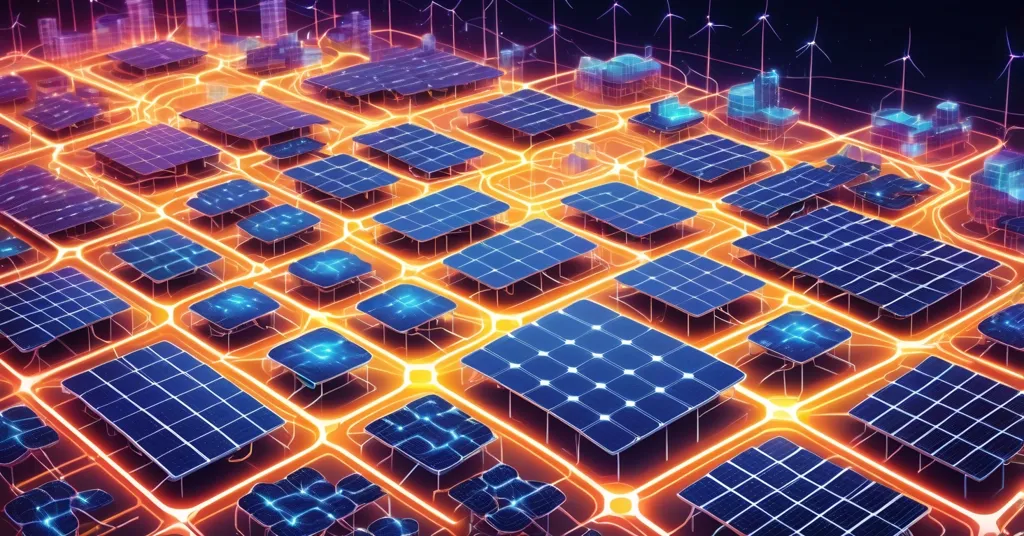
This is where blockchain storms in with a solution straight out of the crypto playbook. Real-time, on-chain settlement can align financial transactions with the near-instant nature of energy flows. At its core, this means using tokenization—representing physical energy units, like a kilowatt-hour of solar power or a unit of grid flexibility, as digital tokens on a blockchain. Think of it as turning energy into a digital coupon that can be instantly tracked, traded, or redeemed with full transparency. These tokens are verifiable, tied directly to real-world energy events, and can be programmed for automatic payments. No more waiting weeks for a check; the system settles in seconds.
Kapadia, whose company OpenVPP is building blockchain-based settlement rails for energy markets, describes this leap:
“Tokenization transforms physical grid resources… into standardized, digital representations that can be measured, dispatched, and settled with precision.”
This isn’t idle speculation. Research into blockchain for energy trading shows it can automate reconciliation, cut costs, and create transparent tokenized credits, as explored in discussions around real-time settlement as critical infrastructure for distributed energy. OpenVPP aims to enable programmable payments using stablecoins—digital currencies pegged to stable assets like the dollar—to ensure price predictability while leveraging blockchain’s speed. For utilities, EVs, and VPPs, this means slashing the overhead of sorting out who owes what, boosting capital efficiency by freeing up funds stuck in clearing cycles, and rebuilding trust with transparent ledgers. Kapadia doesn’t mince words on its necessity:
“On-chain, real-time settlement is not a speculative upgrade. It is the financial backbone required for the next phase of energy market design.”
Projects like Power Ledger, which enables peer-to-peer energy trading on blockchain, and Energy Web Token, focused on decarbonizing grids, already hint at real-world potential. Power Ledger’s trials in Australia have shown how neighbors can trade solar power directly, cutting out middlemen. But don’t pop the champagne yet—there are serious roadblocks to tackle, and not every pilot has been a home run.
EVs: A Test Case for Instant Incentives
Let’s zero in on electric vehicles, a linchpin of grid flexibility. EVs aren’t just cars; they’re rolling batteries that can charge when power is cheap (off-peak) or feed energy back during spikes via V2G services. The problem? Current systems often leave owners waiting weeks for compensation after contributing to the grid. Imagine dumping 10 kilowatt-hours back during a heatwave, only to see a measly credit show up a month later—if you’re lucky. Trust tanks, and so does participation.
Real-time settlement changes the game. Instant rewards—say, a $5 credit pinged to your digital wallet the second you return power—turn frustration into motivation. It’s not just cash; it’s behavioral engineering. When EV owners or solar producers see immediate benefits, they’re more likely to align with grid needs, like charging at 3 a.m. instead of 6 p.m. Suddenly, passive ratepayers become active market players. This psychological tweak could scale participation massively, especially as EV adoption surges—IEA data predicts over 230 million EVs on roads by 2030.
Roadblocks: Why Blockchain Isn’t a Magic Fix
Before we get too starry-eyed, let’s play devil’s advocate. Blockchain in energy sounds sexy, but it’s not a plug-and-play fix. First, there’s the scalability nightmare. Bitcoin, the gold standard of decentralized trust, handles about 7 transactions per second (TPS). Energy markets, with millions of microtransactions from DERs, need thousands of TPS. Ethereum’s base layer isn’t much better at scale, though layer-2 solutions (like rollups) and faster chains like Solana offer hope. Still, a glitch in a high-frequency energy market isn’t just a bad trade—it’s a potential blackout. Energy isn’t crypto gambling; the stakes are sky-high.
Then there’s regulation. Energy grids are tightly controlled beasts, with rules varying wildly across jurisdictions. The EU’s strict energy laws and the US’s state-by-state patchwork of grid policies clash hard with blockchain’s borderless, code-is-law ethos. Convincing regulators to greenlight tokenized energy credits when half of them still think Bitcoin is for drug dealers is a Herculean task. And let’s not forget cultural resistance—good luck getting utilities or consumers to ditch legacy systems for something still branded as “magic internet money” by skeptics.
Here’s a controversial thought to chew on: is blockchain even necessary? Couldn’t centralized fintech, like instant bank transfers, solve this without the baggage of decentralized tech? It’s worth asking if we’re over-engineering a problem when simpler fixes might do. Still, centralized systems often lack the transparency and trustlessness blockchain brings—qualities that energy markets, riddled with opacity, desperately need.
Bitcoin vs. Altcoins: Who Powers the Future Grid?
As a Bitcoin maximalist at heart, I see Satoshi’s creation as the ultimate blueprint for trustless value transfer, a principle energy markets crave. Bitcoin’s battle-hardened blockchain offers unmatched security for settlement, embodying the decentralized ethos that could free energy from centralized chokeholds. But I’ll concede—grudgingly—that Bitcoin isn’t the whole answer here. Its limited throughput and lack of complex programmability mean it’s not ideal for the intricate, automated agreements energy trading demands.
Enter altcoins like Ethereum, whose smart contracts—self-executing code on the blockchain—can handle programmable payments and tokenized energy swaps with finesse. Ethereum’s flexibility makes it a better fit for stitching together DERs, EVs, and VPPs into a dynamic market. Other protocols, like Solana with its blistering speed, also carve out niches. Bitcoin sets the philosophical tone of decentralization, but altcoins often do the heavy lifting in specialized use cases. It’s not betrayal to admit they fill gaps Bitcoin shouldn’t—or doesn’t need to—tackle.
The Bigger Picture: Decentralization Beyond Energy
If blockchain can sync capital with kilowatt-hours, it’s not just about energy—it’s a blueprint for disrupting every outdated system holding us back. Bitcoin taught us that trust doesn’t need a middleman, and applying that to energy markets echoes Satoshi’s vision of freedom and autonomy. Real-time settlement could enable peer-to-peer energy trading as seamless as sending sats over the Lightning Network. It’s a stepping stone to a world where decentralized tech dismantles inefficiency across industries, from finance to logistics. Energy is just the proving ground.
What’s Next for Blockchain in Energy?
The road ahead isn’t distant sci-fi. OpenVPP is already prototyping settlement rails, aiming to integrate stablecoin payments for utilities and DERs within the next few years. Other players like Power Ledger and Energy Web are running live pilots, with mixed but promising results. The timeline depends on tech scaling—layer-2 solutions need to mature—and regulators getting over their crypto jitters. But if momentum holds, we could see tokenized energy credits in mainstream grids by the decade’s end. The grid is waiting; blockchain just needs to catch up.
Key Takeaways and Burning Questions
- Why do settlement delays cripple distributed energy?
Delays in payments frustrate participants, obscure processes kill trust, and weak incentives discourage real-time grid support, stunting DER and VPP growth. - How does blockchain tackle this problem?
It enables real-time, on-chain settlement and tokenization, syncing financial transactions with energy flows for instant, transparent payments. - Can instant settlement shift consumer behavior?
Yes—immediate rewards, like credits for off-peak EV charging, motivate users to align with grid needs, transforming them into active players. - Is blockchain in energy overhyped or legit?
The potential for cost cuts and trust is real, as seen in pilots like Power Ledger, but scalability limits and regulatory walls pose brutal challenges. - What’s Bitcoin’s role versus other blockchains?
Bitcoin’s trustless model sets the tone for decentralized settlement, but Ethereum’s smart contracts and faster chains like Solana better handle complex energy trading needs. - Could energy grids ditch fiat for tokenized credits?
It’s a radical idea, but fully tokenized energy could bypass traditional currency, though adoption and regulation make it a distant—if intriguing—prospect.
As we charge toward a renewable, decentralized energy future, the financial plumbing must keep pace. Real-time settlement isn’t a luxury; it’s the missing layer to unleash distributed energy’s full power. Whether Bitcoin’s unshakeable trust or Ethereum’s programmable wizardry leads the charge, one truth stands: crypto’s toolkit is primed to revolutionize more than wallets—it’s set to power the grid of tomorrow. Let’s not let dinosaur systems hold us back while the future waits to spark.