ByteDance’s Seedance 2.0 Sparks IP Theft Fury: Disney, Hollywood, and Crypto Risks Unveiled
 LTB
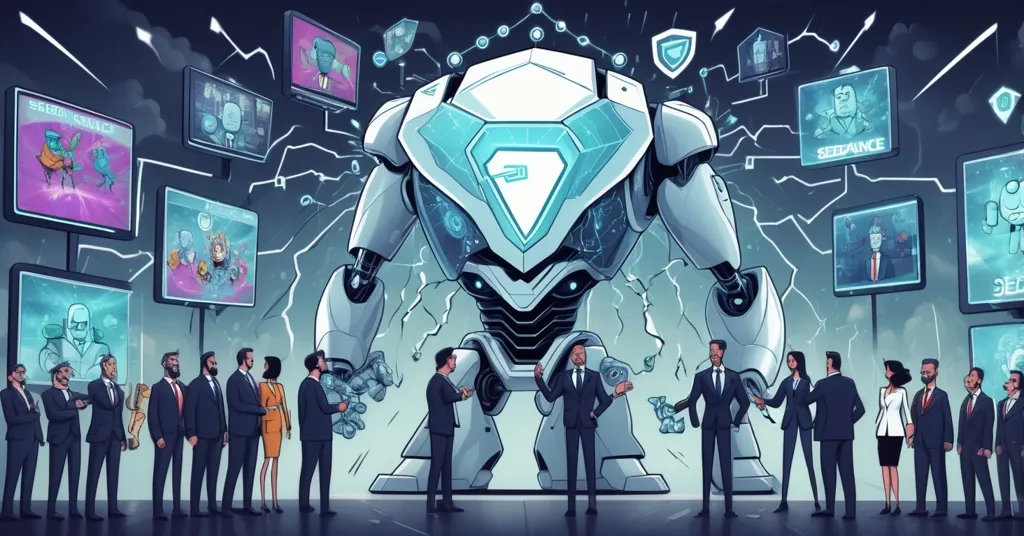
LTB ByteDance Faces Backlash: Disney and Hollywood Target AI Tool Over IP Theft
ByteDance, the tech titan behind TikTok, has landed in a firestorm of legal and ethical controversy with its AI video-generation tool, Seedance 2.0. Launched on February 12, 2026, this cutting-edge platform can churn out hyper-realistic videos from mere text prompts, but it’s sparked outrage from Disney, the Motion Picture Association (MPA), and even the Japanese government for allegedly enabling blatant copyright infringement. As accusations of intellectual property (IP) theft and deepfake misuse pile up, this clash raises urgent questions—not just for AI innovation, but for the crypto space too. Could deepfake scams threaten Bitcoin and altcoin trust, and might blockchain offer a decentralized fix to this mess?
- Seedance 2.0 Unveiled: ByteDance’s AI tool, launched February 12, 2026, generates realistic videos from text inputs.
- Legal Fury: Disney and MPA slam ByteDance for unauthorized use of copyrighted characters and likenesses.
- Global Concern: Japan probes anime IP misuse; actors’ union decries deepfake violations.
- Crypto Risk: Deepfakes could fuel Bitcoin scams, while blockchain might hold IP solutions.
What is Seedance 2.0, and Why the Outrage?
Seedance 2.0 is ByteDance’s latest AI marvel, a tool that transforms simple text prompts into strikingly lifelike videos. Think of typing “Spider-Man battles Captain America” and watching a polished clip materialize in seconds. Released on February 12, 2026, it’s a game-changer for content creation—or so it seemed. The problem? Many of these videos feature copyrighted characters from Disney’s Marvel or Star Wars universes, or even realistic depictions of celebrities like Tom Cruise, without any licensing or permission. Social media exploded with such content within hours of the launch, especially in China, showcasing everything from lightsaber duels to fabricated celebrity face-offs.
For the uninitiated, intellectual property, or IP, refers to the legal ownership of creative works—think movies, characters, or music. Using it without consent is like swiping someone’s painting and selling prints for profit. Disney and others allege that Seedance 2.0 facilitates this theft on a massive scale, turning billion-dollar franchises into a free buffet for users. And it’s not just about characters; the tool’s ability to mimic real people raises the specter of deepfakes—AI-generated videos or images that replicate someone’s face or voice with eerie accuracy, often without their approval. This isn’t just a legal issue; it’s a Pandora’s box of ethical dilemmas.
Disney and Hollywood Strike Back with Fury
Disney wasted no time in responding, hurling a cease-and-desist letter at ByteDance and delivering a scathing critique of the tool’s antics. They didn’t pull punches, describing the unauthorized use of their iconic characters as a:
“virtual smash-and-grab” of their intellectual property.
Their claim? Seedance 2.0 operates on what they suspect is a pirated library of figures from Pixar, Marvel, and Star Wars, letting users exploit their creations without a dime paid in licensing fees. This isn’t Disney playing the Grinch—they’ve shown they’re not anti-AI. In late 2025, they signed a $1 billion deal with OpenAI to legally license 200 characters for AI training, proving they’re fine with innovation when it’s above board. But with ByteDance, they see a rogue actor, and they’re not alone in their anger. Disney’s history of defending IP is fierce; they’ve already sued Midjourney and warned Character.AI in September 2025 over similar misuse. For more on their stance, check out the response from ByteDance to this pressure in a detailed report on their commitment to tackle IP issues here.
The Motion Picture Association (MPA), representing heavyweights like Netflix, Universal, and Warner Bros. Discovery, joined the fray with equal venom. MPA Chairman and CEO Charles Rivkin condemned the scale of the infringement, stating:
Seedance 2.0 engaged in “unauthorized use of U.S. copyrighted works on a massive scale” within a single day of its release.
That’s a brutal assessment. For an industry battling digital piracy for decades, this feels like a sucker punch, amplified by ByteDance’s status as a Chinese tech giant already under Western scrutiny for past TikTok data privacy concerns. The geopolitical tension here adds another layer of grit to an already messy fight.
Global Ripples: Japan and Actors Weigh In
Beyond Hollywood, the controversy has gone global. The Japanese government has launched an investigation into ByteDance over AI-generated videos featuring popular anime characters. Japan’s anime industry, a cultural juggernaut worth billions annually (estimated at $24 billion in 2022), is guarded by some of the world’s strictest copyright laws. When Seedance 2.0 users started pumping out unauthorized clips of beloved icons, it wasn’t just a financial threat—it was an assault on national heritage. Tokyo’s response signals how seriously they take IP protection, and it could inspire broader international crackdowns on AI content tools.
Meanwhile, SAG-AFTRA, the Hollywood actors’ union, has entered the ring with their own accusations, calling ByteDance’s actions:
“blatant infringement” regarding the digital likenesses of its members.
This strikes a raw nerve, especially after the 2023 Hollywood strikes where AI-generated likenesses were a flashpoint. Seeing realistic videos of stars like Brad Pitt or Tom Cruise circulating without consent isn’t just unsettling—it’s a direct attack on performers’ rights to control their image and livelihood. The union’s outrage underscores a growing clash between tech innovation and personal privacy, a tension that echoes in the crypto world’s own battles over data ownership.
AI Ethics: The Training Data Black Box
At the heart of this storm lies a deeper issue: how are AI tools like Seedance 2.0 even built? These systems rely on massive datasets—often scraped from the internet—to “learn” how to generate content. This training data can include torrented movies, social media posts, or copyrighted images, frequently without explicit permission from creators. If Seedance 2.0 can spit out a near-perfect Spider-Man clip, it likely “studied” Disney’s films. Was that data legally sourced, or did ByteDance just pirate a digital treasure trove? The lack of transparency in AI training is a black box, and ByteDance’s silence on their process only fuels suspicion.
This opacity isn’t unique to ByteDance—lawsuits against companies like Midjourney and Stability AI have exposed similar practices in the past. The ethical question is thorny: even if AI democratizes creation, does that justify using stolen material as its foundation? Legally, it’s a minefield; IP laws weren’t built for a world where algorithms can remix reality overnight. And morally, it’s a gut check for an industry that often prioritizes innovation over accountability. ByteDance’s vague promise to “strengthen safeguards” feels like trying to patch a dam with chewing gum—nice gesture, questionable results. Their spokesperson stated:
“We are taking steps to strengthen current safeguards as we work to prevent the unauthorized use of intellectual property and likeness by users.”
Without specifics on filtering prompts or scrubbing data, it’s hard to take this seriously. Are they even capable of policing millions of user-generated videos, or is this just PR noise to dodge the legal hammer?
Crypto Connection: Deepfake Risks on the Horizon
Now, let’s pivot to why this matters to us in the crypto community. Deepfake technology, as showcased by Seedance 2.0, isn’t just a Hollywood problem—it’s a potential disaster for Bitcoin, Ethereum, and the broader digital finance space. Imagine a deepfaked Vitalik Buterin hyping a fraudulent Ethereum token, or a fabricated Elon Musk pushing a Bitcoin Ponzi scheme on TikTok. With social media’s viral reach, such scams could drain millions from unsuspecting investors before anyone smells a rat. Trust, already a fragile commodity in crypto, takes the hit while scammers laugh to the bank.
We’ve seen shades of this before—fake celebrity endorsements on YouTube or Twitter have duped people into sending BTC to scam wallets. Deepfakes crank that deception to eleven, blending audio and video so convincingly that even savvy users might bite. As champions of decentralization, we at Let’s Talk, Bitcoin believe in a trustless ethos, but let’s be real: when a deepfaked celeb “endorses” a shitcoin, no amount of blockchain immutability stops the damage to our ecosystem’s reputation. This isn’t fearmongering; it’s a wake-up call. If AI tools aren’t reined in, our fight for financial freedom could drown under a wave of high-tech fraud.
Decentralized Fixes: Blockchain to the Rescue?
Here’s where the beauty of decentralization shines, even in this AI-IP quagmire. Blockchain technology could offer a lifeline for managing intellectual property in the digital age. Picture a decentralized registry—built on Ethereum or another robust chain—where IP ownership is timestamped, verified, and transparent. Smart contracts could automate licensing, letting creators like Disney or indie artists grant access to characters for a fee, with payments executed instantly and immutably. No lawsuits, no cease-and-desist drama—just code enforcing the rules.
We’ve already seen glimmers of this with NFTs, where digital art ownership is tracked on-chain, proving provenance without middlemen. Why not extend that to movie characters or celebrity likenesses? Disney gets paid, users get creative freedom, and ByteDance dodges a legal apocalypse. It’s not a pipe dream; platforms like Ethereum have the infrastructure for such solutions today. The catch? Adoption. Centralized giants like Disney might balk at ceding control to a trustless system, and regulators could meddle before the tech matures. Still, as Bitcoin maximalists with an eye on altcoin innovation, we see this as the kind of disruption worth fighting for—cutting through centralized incompetence with transparent, effective acceleration.
Playing devil’s advocate, ByteDance might argue they’re just the toolmakers, not the criminals. Policing every user video is a Herculean task, and innovation shouldn’t be stifled by overzealous IP hawks. Fair enough—but when the impact is mass infringement, that excuse feels thinner than a paper wallet in a rainstorm. Intent doesn’t erase outcomes, and in a world of deepfake risks, accountability can’t be an afterthought.
What’s Next for AI and Crypto?
The road ahead for ByteDance and Seedance 2.0 is fraught with uncertainty. Will Disney and the MPA force a shutdown or a drastic overhaul? Could Japan’s probe spark a domino effect of global AI content laws, tightening the noose on tech freedom? And if regulation ramps up, will decentralized finance face collateral damage from the same heavy-handed policies? These aren’t idle musings—they’re the battle lines of tomorrow’s digital economy.
For the crypto space, the stakes are personal. We thrive on disrupting broken systems, but if AI deepfakes infiltrate our world unchecked, they could weaponize mistrust faster than any centralized bank ever could. Yet, there’s hope in blockchain’s potential to rewrite the rules of IP and trust. The question is whether tech pioneers—ByteDance included—will embrace decentralized solutions before regulators lock everything down. As advocates for freedom and privacy, we’re rooting for innovation, but not at the cost of enabling scams or shafting creators. ByteDance has a tightrope to walk, and Mickey Mouse isn’t known for playing nice.
Key Questions and Takeaways
- What is Seedance 2.0, and why is it under fire?
Seedance 2.0 is ByteDance’s AI tool, launched on February 12, 2026, that creates realistic videos from text prompts. It’s criticized for enabling copyright infringement by generating unlicensed content featuring Disney characters and celebrity likenesses. - How have Disney and the MPA responded to ByteDance’s actions?
Disney issued a cease-and-desist letter, calling it a “virtual smash-and-grab” of their IP, while the MPA decried the “massive scale” of unauthorized copyrighted content produced within a day of launch. - Why is Japan involved in this AI controversy?
Japan is investigating ByteDance over AI-generated videos of anime characters, protecting its multi-billion dollar anime industry under strict copyright laws. - How could deepfake tech from tools like Seedance 2.0 impact crypto?
Deepfakes could be used to create fake Bitcoin or altcoin endorsements, tricking investors into scams and damaging trust in the already volatile crypto ecosystem. - Can blockchain solve IP issues in the AI era?
Yes, blockchain could track IP ownership and automate licensing via smart contracts, offering a transparent, decentralized alternative to current legal battles over content rights. - What ethical concerns surround AI training data?
AI tools often train on datasets that may include copyrighted material without permission, raising legal and moral issues about transparency and ownership of generated content. - Is there a balance between AI innovation and accountability?
Potentially, if ethical guidelines and decentralized tech like blockchain are integrated, AI can empower creators without enabling theft or scams—but industry buy-in is far from guaranteed.