California Teens Caught in $66M Bitcoin Heist Plot: Crypto Crime Spikes in Arizona
 LTB
LTB California Teens Busted in $66M Bitcoin Heist Plot: Crypto Crime Hits Hard in Arizona
Two California high school students were nabbed by police in Scottsdale, Arizona, after a botched home invasion targeting a jaw-dropping $66 million in cryptocurrency. This wild case, paired with a chilling Bitcoin ransom demand in Tucson on the same day, exposes the dark underbelly of digital assets becoming prime bait for real-world crime. It’s a stark reminder that as Bitcoin and blockchain tech reshape finance, they also attract predators willing to cross dangerous lines.
- Failed $66M Heist: Teens arrested in Scottsdale for targeting massive crypto stash.
- Digital Manipulation: Unknown figures allegedly coerced students via encrypted app Signal.
- Growing Trend: Concurrent Bitcoin ransom case in Tucson signals rise in crypto crime.
The Botched Scottsdale Heist: Teens as Pawns
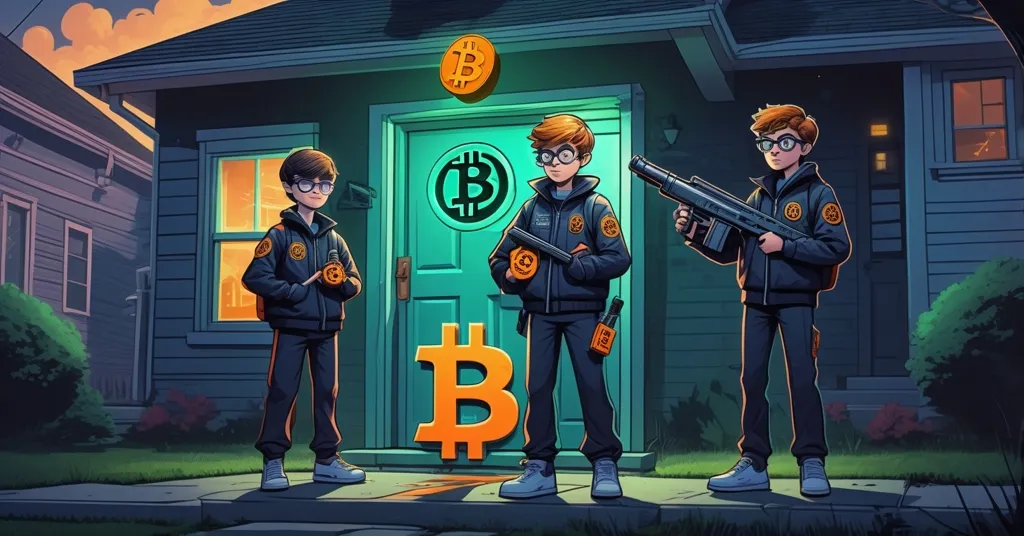
On January 31, the quiet Sweetwater Ranch neighborhood in Scottsdale was shaken by an emergency call around 10:45 AM. Two California teenagers—a 17-year-old from San Luis Obispo and a 16-year-old from Morro Bay, some 600 miles from the scene—were caught red-handed in a scheme straight out of a bad crime flick. Disguised as deliverymen in UPS-style clothing, they planned to invade a home and steal $66 million in cryptocurrency. Their toolkit was sinister: zip ties, duct tape, and a 3D-printed gun, items that scream intent far beyond a teenage prank. But their plan crumbled fast. When confronted, they bolted out the back door, jumped into a blue Subaru, and led Scottsdale police on a chase that ended at a dead-end street. Handcuffs followed swiftly. For more details on this shocking incident, check out the report on the arrest of two California teens for a crypto-related home invasion plot.
What’s unnerving here isn’t just the audacity, but the puppet strings behind it. According to authorities, these kids weren’t the brains of the operation. They claimed to be coerced through Signal, an encrypted messaging app, by shadowy figures known only as “8” and “Red.” These mystery contacts allegedly sent the teens $1,000 for disguises and fed them step-by-step instructions for the burglary. It’s a gut-wrenching example of how privacy tools, while vital for protecting free speech, can be twisted into weapons for manipulating vulnerable minds—especially high schoolers who might not grasp the full weight of their actions. The charges slapped on them are no joke: aggravated assault, kidnapping, and second-degree burglary. Booked into Maricopa County Juvenile Detention Facility, they were later released on $50,000 bail, ankle monitors tracking their every move.
Tucson Ransom: Crypto’s Dark Pull for Criminals
As if one crypto-fueled crime wasn’t enough for Arizona, just two hours south in Tucson, another disturbing story broke on the same day. Nancy Guthrie, mother of well-known host Savannah Guthrie, vanished, and a ransom note surfaced demanding millions in cryptocurrency be sent to a specific Bitcoin address. Reported by media outlet TMZ, the note included tight deadlines—first on Thursday at 5 PM, then Monday if unmet. The Pima County Sheriff’s Department and FBI are on the case, but the use of Bitcoin for extortion is hardly novel. Its borderless, pseudonymous nature makes it a favorite for criminals who can obscure their tracks if payments aren’t traced swiftly. While no direct link ties the Scottsdale heist to Guthrie’s disappearance, the timing and crypto connection paint a grim picture of a growing wave of crime in the state.
For the uninitiated, Bitcoin runs on a decentralized network—a public ledger called the blockchain where transactions are recorded without a central authority like a bank or government. Users are identified only by wallet addresses, not names, offering incredible privacy but also a veil for misuse. Criminals exploit this, demanding Bitcoin in ransom schemes, knowing that once funds are transferred and shuffled through mixers—tools that obscure transaction trails, much like shell companies in traditional finance—they’re often near-impossible to recover. For victims, whether it’s a family facing a kidnapping or a crypto holder targeted in a home invasion, the stakes are brutally high.
Why Crypto Attracts Real-World Crime: A Perfect Storm
Let’s cut through the noise: the Scottsdale plot targeting $66 million in digital assets isn’t a fluke. Bitcoin and other cryptocurrencies have skyrocketed in value over the years, especially during bull runs in 2017 and 2021, minting millionaires overnight. But unlike money in a bank, protected by FDIC insurance, crypto wallets are on their own. If someone snags your private key—think of it as the unique password to your digital safe—your funds are gone, no recourse. The pseudonymous nature of blockchain transactions only sweetens the pot for thieves, whether they’re hackers cracking wallets online or, as in Scottsdale, burglars kicking down doors.
Ever wonder why criminals are as drawn to crypto as libertarians? It’s the same reason: freedom from oversight. But that freedom cuts both ways. Many crypto holders—often called “whales” when they hold massive amounts—make themselves easy marks by flaunting wealth online. Posting wallet balances on social media or bragging about “lambo dreams” is like painting a bullseye on your front door. And let’s not kid ourselves—how many store their millions securely? Keeping crypto in a hot wallet, an online storage solution vulnerable to hacks, or worse, jotting private keys on a sticky note, isn’t just negligent—it’s damn near suicidal in today’s world. The Scottsdale target dodged a bullet thanks to quick police action, but not everyone will get that lucky.
Playing Devil’s Advocate: Is Bitcoin Really the Problem?
Before we pile all the blame on crypto, let’s flip the script. Cash has fueled crime for centuries—drug cartels, money laundering, you name it—and nobody’s banning dollar bills. Bank robberies were the scourge of the early 20th century when physical currency was king. New forms of value always attract new forms of theft; Bitcoin isn’t unique in that sin. The real issue isn’t the tech—it’s the glaring lack of education and security around it. If anything, these incidents are a twisted validation of crypto’s worth. People don’t rob homes for worthless assets; they do it for life-changing money, and Bitcoin is exactly that. As maximalists, we see it as the ultimate middle finger to centralized control, a tool for financial sovereignty. But we’d be blind to ignore that altcoins and other blockchains have their place too. Ethereum’s DeFi ecosystem, despite its mess of hacks, pioneers financial tools Bitcoin doesn’t touch—yet. Privacy coins like Monero push anonymity even harder, for better or worse. Each fills a niche in this revolution.
Still, freedom demands responsibility. The crypto community can’t keep dodging accountability with “not your keys, not your crypto” mantras while ignoring the bloodshed. Mainstream adoption won’t happen if mainstream crime waves keep pace. We’re all about accelerating this financial shift, but not by turning holders into sitting ducks for lowlifes with zip ties and 3D-printed guns.
Encrypted Apps and Teen Exploitation: A Predatory Game
The role of Signal in the Scottsdale plot adds a sinister layer. Encrypted messaging apps are double-edged swords; we champion them for shielding users from overreach, but they also let criminals coordinate in the shadows. The mysterious “8” and “Red” likely picked teenagers as foot soldiers because they’re easy to manipulate—impressionable, eager for quick cash, and less likely to face harsh penalties if caught. Reports suggest the teens were baited with small payments like the $1,000 for disguises, a classic grooming tactic used by online predators. It mirrors broader trends where youth are targeted via social media or gaming platforms, lured into scams—think Fortnite V-Bucks frauds escalating to crypto schemes. It’s predatory as hell, and it’s on us as a society to arm kids with digital literacy to spot and resist this exploitation. Schools need to teach more than just algebra; they need to cover the dangers of anonymous online deals.
Beyond Signal, encrypted platforms often pair with crypto in darker corners like the dark web, where ransomware gangs demand Bitcoin via untraceable channels. Law enforcement is playing catch-up, often lacking the blockchain forensics experts or international reach to nab masterminds. Tools like Chainalysis help trace illicit transactions, but they’re not foolproof—funds can slip through cracks when laundered across borders or through sophisticated mixers. While the teens in Scottsdale were caught, “8” and “Red” remain at large, a chilling loose end that shows how far behind authorities can be in this cat-and-mouse game.
Security Wake-Up Call: Protecting Your Digital Gold
These Arizona cases are a blaring alarm for anyone holding crypto, whether you’re a Bitcoin OG or just bought your first fraction of a coin. Security isn’t optional; it’s life-or-death in this space. Imagine waking up to armed intruders demanding your seed phrase—how prepared are you? Here’s a no-nonsense guide to locking down your assets, because no one’s coming to save you if you screw this up.
First, ditch hot wallets for serious holdings. These online storage solutions are convenient but ripe for hacking. Get a hardware wallet—devices like Ledger or Trezor that store your private keys offline, away from internet threats. Set it up by generating a seed phrase, a string of words that acts as your backup key. Never store this digitally or on the cloud; write it on paper or engrave it on metal, then lock it in a safe. Second, consider multisig setups—wallets requiring multiple keys to authorize transactions, so even if one is compromised, your funds stay secure. Third, beware social engineering. Scammers impersonate support staff or friends to trick you into revealing keys—don’t fall for it. Verify every contact. Finally, keep your mouth shut. Don’t flash your crypto wealth online or at parties. Physical security matters as much as digital; if you’re a known whale, why advertise your address or routines?
This isn’t paranoia—it’s survival. With crypto’s value soaring, criminals aren’t just hacking; they’re showing up at doorsteps. Looking ahead, the threats could get uglier. AI-driven scams or deepfake videos could pair with ransom demands, making extortion even more convincing. The wild west of crypto isn’t over, and staying ahead of the game means treating security like your lifeline.
The Road Ahead for Crypto Safety
As we push for Bitcoin and blockchain to disrupt the status quo, we can’t shy away from the ugly side. The Scottsdale heist and Tucson ransom are harsh lessons in the stakes of this space. Freedom and privacy come at a cost, and if we’re serious about a decentralized future, we’ve got to match that with cold, hard vigilance. The crypto community has stepped up before—crowdfunding for hack victims, building open-source security tools—and it’s time to double down. Education, not regulation, is the path forward. We don’t need big brother clamping down on sovereignty; we need users who aren’t easy prey. So, will you be the next target, or the one who outsmarts the thieves? No excuses, no bullshit—just action.
Key Takeaways and Burning Questions
- Why are cryptocurrency holders becoming prime targets for physical crimes?
High-value digital assets, like the $66 million stash in Scottsdale, combined with public displays of wealth and poor security habits, make holders magnets for theft and extortion. - How do encrypted apps like Signal fuel crypto-related crimes?
They allow anonymous coordination, as seen with teens manipulated by “8” and “Red,” letting criminals instruct pawns while staying hidden from law enforcement’s grasp. - What can Bitcoin and crypto users do to shield themselves after such incidents?
Use hardware wallets, set up multisig for added security, avoid cloud storage for keys, and never flaunt wealth online to minimize risks of digital and physical targeting. - Does the spike in crypto crime weaken the argument for decentralization?
Not at its core—crime chases value, just as it did with cash or gold. The focus must be on user education and robust security, not sacrificing the freedom decentralization brings. - Are teenagers being exploited in the crypto crime surge, and how?
Absolutely, as Scottsdale shows. Vulnerable teens are coerced by online predators using small payments and psychological tactics, often via encrypted apps or gaming platforms, acting as pawns for larger networks.