CLARITY Act 2026: Crypto Regulation or Government Surveillance Overreach?
 LTB
LTB CLARITY Act 2026: Crypto Regulation or Surveillance Threat?
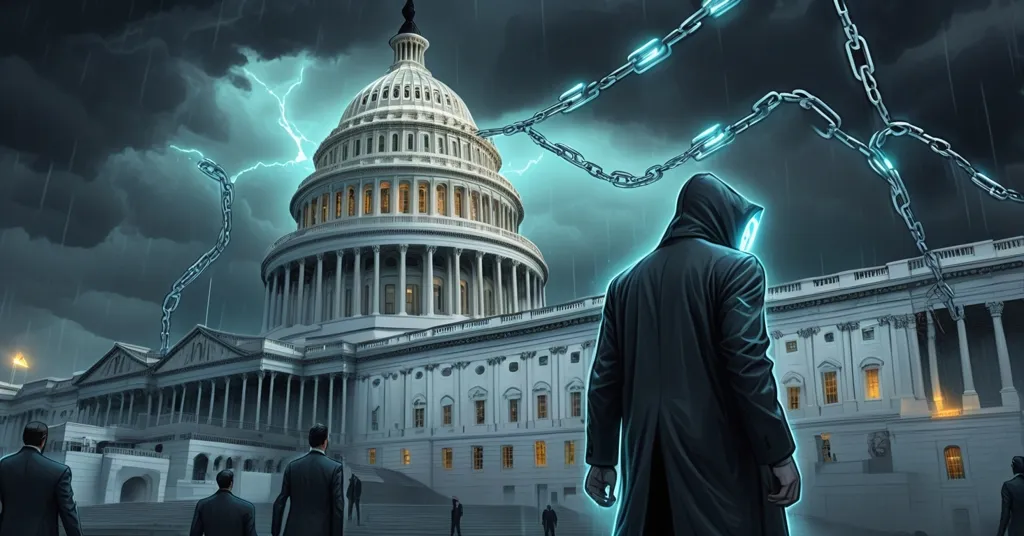
The Digital Asset Market CLARITY Act, under heated debate in the U.S. Senate as of January 2026, is being sold as the holy grail of crypto regulation—a way to finally tame the wild west of digital assets while fostering innovation. But beneath the shiny promises, a darker shadow looms: whispers of financial surveillance on a scale not seen since the post-9/11 era. Is this the clarity we’ve been begging for, or a Trojan horse for government overreach?
- Regulatory Goal: Seeks to combat illicit finance and provide clear rules for crypto.
- Surveillance Fears: Risks expanding government oversight to unprecedented levels.
- Industry Risks: Threatens DeFi and self-custody with heavy compliance burdens.
- Wall Street Influence: Traditional finance pushing to maintain control over market structures.
The Promise of Clarity
For years, the crypto community has been screaming for regulatory clarity in the U.S., a global financial heavyweight whose policies ripple worldwide. Ambiguity from agencies like the Securities and Exchange Commission (SEC) has left projects like Ripple tangled in lawsuits, while startups hesitate to innovate under the threat of legal hammers. The CLARITY Act, at first glance, seems to answer this call. Supporters within the Senate Banking Committee argue it’s a necessary framework to combat illicit finance while protecting legitimate growth. They point to data from the U.S. Treasury’s Office of Foreign Assets Control (OFAC), which has sanctioned 518 Bitcoin addresses holding roughly 9,306 BTC—worth around $707 million at current prices—as proof that digital assets can be a haven for bad actors like money launderers or sanctioned entities. The bill, they claim, equips the Treasury with sharper tools to intercept such assets, ensuring crypto doesn’t become a shadow economy.
Let’s be real, though: rooting out scams and protecting users is long overdue. Clear rules could legitimize Bitcoin and other cryptocurrencies in the eyes of mainstream finance, potentially unlocking mass adoption. Imagine pension funds or everyday Joes feeling safe enough to dip their toes into BTC as a store of value. But before we start high-fiving, we need to ask—does this clarity come at the cost of the very freedoms that Bitcoin was built to defend? The devil’s always in the details, and this bill’s fine print is raising red flags louder than a Bitcoin price dump. For a deeper look into these concerns, check out this analysis on whether the CLARITY Act might be a surveillance bill in disguise.
The Surveillance Shadow
Dig into the CLARITY Act, and you’ll find provisions that have industry leaders sweating bullets. Alex Thorn, head of research at Galaxy Digital, isn’t holding back, warning that this legislation could mark the largest expansion of financial surveillance since the USA PATRIOT Act. For those not up on history, that post-9/11 law gave the government carte blanche to monitor citizens’ every move under the guise of national security—think mass data collection and wiretaps without much oversight. Thorn’s concern is that the CLARITY Act’s language opens the door to similar overreach, but this time targeting your wallet’s every transaction on the blockchain.
“While the industry has long wished for regulatory clarity, the current version of the bill contains ‘fine print’ that represents the largest expansion of financial surveillance since the USA PATRIOT Act.” – Alex Thorn, Galaxy Digital
Charles Hoskinson, the mind behind Cardano, doubles down on this unease, pointing out that the bill’s broad wording could be a blank check for future administrations—red or blue—to exploit at will. Picture a scenario where a political shift turns crypto into a scapegoat for economic woes, and suddenly your private keys are under a government microscope. That’s not paranoia; it’s a plausible risk when laws are written with vague, sweeping powers.
“The legislation’s broad provisions could be exploited by future political administrations, regardless of which party is in power.” – Charles Hoskinson, Cardano
Now, let’s talk geopolitics. If the U.S. clamps down too hard, users might flock to privacy-focused coins like Monero or offshore platforms in less intrusive jurisdictions. Bitcoin’s ethos of censorship resistance could drive capital and talent away from American soil, undermining the country’s financial dominance. Is the Treasury ready to risk that just to play Big Brother? And let’s not forget Bitcoin maximalists like myself who see BTC as peer-to-peer money free from state control—could even this core use case dodge the surveillance net, or are we all screwed?
DeFi and Self-Custody Under Fire
One of the nastiest gut-punches in the CLARITY Act targets decentralized finance (DeFi)—those permissionless protocols that let you trade, lend, or borrow without a bank breathing down your neck. Think of DeFi as a peer-to-peer marketplace with no middleman; platforms like Uniswap or Aave run on smart contracts, not corporate HQs. The bill, however, introduces compliance rules through what it calls “Distributed Ledger Application Layers.” Translation: the front-end apps you use to interact with DeFi might be forced to act like banks, monitoring users and reporting “suspicious” activity. Imagine a small DeFi developer, barely scraping by, having to shut down because they can’t afford the legal fees to comply. That’s not just impractical; it’s a blatant assault on decentralization’s core principles.
Self-custody, another pillar of crypto freedom, isn’t safe either. For the uninitiated, self-custody means holding your own private keys—essentially, being your own bank—instead of trusting a third party like an exchange. The CLARITY Act includes a “Keep Your Coins Act” provision, which sounds like a victory, promising to prevent outright bans on self-custody wallets. But here’s the rub: loopholes in the text allow government intervention if they suspect illicit finance. So, you might “keep your coins,” but Uncle Sam could still demand a peek if they don’t like the look of your transactions. For Bitcoiners who live by the motto “not your keys, not your crypto,” that’s a non-starter. While altcoin ecosystems like Ethereum might bear the brunt due to their complex DeFi layers, even Bitcoin’s simplicity as sound money could be at risk if self-custody gets choked. Are we really okay trading sovereignty for a false sense of security?
Wall Street’s Hidden Agenda
While the crypto community fights for its soul, Wall Street is quietly stacking the deck. Giants like JPMorgan Chase and Citadel LLC are lobbying the SEC to ensure tokenized securities—digital versions of traditional assets like stocks or bonds—don’t get any special treatment under the CLARITY Act. On the surface, they’re all smiles, claiming to support crypto integration. Behind closed doors? They’re desperate to keep market structures under their iron grip. Alex Thorn nails it when he says forcing decentralized tech to mimic legacy systems isn’t progress—it’s a deliberate sabotage of innovation.
“Forcing a new architecture to clone the old one is not technology neutrality.” – Alex Thorn, Galaxy Digital
Let’s call it what it is: Wall Street guarding its turf. Guess crypto’s finally a big enough threat to rattle the old guard. This isn’t new—traditional finance has a history of resisting disruption, from early internet banking to fintech apps. But in a world where Bitcoin and blockchain promise to upend centralized control, their push to shackle tokenized securities feels like a middle finger to the entire ethos of decentralization. Why should legacy players dictate the rules of a tech they didn’t build? If this bill bends to their will, it’s not clarity—it’s capitulation.
Stablecoin Yields: Banks vs. Users
Another battlefield in the CLARITY Act debate is stablecoin yields, and it’s a mess. Stablecoins, for those new to the game, are cryptocurrencies pegged to stable assets like the U.S. dollar to avoid Bitcoin-style volatility—think USDT or USDC. Some protocols offer yields on these, akin to earning interest on savings. You can get “passive” yields just by holding them or “active” yields by staking or lending them out. The bill’s tentative compromise bans passive “idle yield” to protect traditional bank deposits, while allowing active rewards. The logic? Don’t let crypto siphon off savings accounts. But critics like Ryan Adams aren’t having it, arguing this tilts the playing field toward banking interests over everyday users who rely on yields for passive income.
“If banks succeed in killing yield provisions, it proves the Senate is prioritizing bank interests over the public.” – Ryan Adams, Critic
Here’s why this matters: yields drive adoption. They’re a gateway for normies to see crypto as more than just speculation—they’re a way to grow wealth without a bank’s measly 0.5% interest rate. Banning passive yields might kill that appeal, especially for stablecoin users who want low-risk returns. Sure, there’s a counterargument—passive yields can be a scam magnet, luring users into shady projects. But is the fix to hand banks a win, or to educate users and target fraud directly? Adams and others push for the latter, but with Wall Street’s fingerprints all over this bill, don’t hold your breath for a people-first outcome.
The Bigger Picture and Stakes
Zoom out, and the stakes of the CLARITY Act couldn’t be higher. The U.S. risks losing its edge if it overplays its regulatory hand. Jurisdictions like Singapore and Switzerland are already rolling out the red carpet for blockchain projects, offering friendly frameworks while America debates surveillance creep. If talent and capital flee overseas, the U.S. could cede its role as a financial innovator—a blow to global dominance far bigger than any illicit Bitcoin transaction. Look at history: overregulation in tech sectors like early internet infrastructure pushed companies abroad. Crypto could be next.
Then there’s the tension of effective accelerationism—our belief that pushing tech forward, flaws and all, can reshape the world for the better. Some argue regulation, even messy, could accelerate mainstream crypto adoption by lending legitimacy. Imagine Bitcoin ETFs on every boomer’s portfolio if rules calm institutional fears. But at what cost? If we lose the disruptive edge of decentralization—privacy, autonomy, resistance to control—then we’ve just built a shinier cage for the same old system. Time’s ticking too: Thorn warns that if the bill doesn’t pass committee by April 2026, its odds of becoming law this year drop to “extremely low.” That deadline fuels urgency as lawmakers and lobbyists scramble. For the crypto community, staying informed and amplifying voices through advocacy groups like Coin Center or the Blockchain Association is crucial. This isn’t just a bill—it’s a battle for the soul of decentralized tech.
Key Questions and Takeaways
- What is the Digital Asset Market CLARITY Act, and why does it matter?
It’s a 2026 U.S. Senate bill aiming to regulate cryptocurrencies with clear guidelines, critical because it could shape the future of crypto innovation and adoption in a major market. - Why are crypto leaders warning about surveillance?
Experts like Alex Thorn and Charles Hoskinson fear its provisions echo the invasive USA PATRIOT Act, potentially enabling mass financial monitoring under the guise of fighting illicit activity. - How could this impact DeFi and self-custody?
DeFi platforms may face forced user monitoring via compliance rules, while self-custody protections have loopholes allowing government interference, threatening user autonomy. - What’s Wall Street’s role in shaping this bill?
Firms like JPMorgan and Citadel lobby to keep tokenized securities under traditional control, prioritizing their dominance over true innovation in the crypto space. - Where do stablecoin yields stand in the debate?
A compromise bans passive yields to favor banks while allowing active rewards, but critics argue this sacrifices public benefit for legacy finance’s gain. - Could the CLARITY Act drive crypto innovation out of the U.S.?
Yes, harsh rules risk pushing talent and capital to friendlier hubs like Singapore or Switzerland, costing the U.S. its edge in blockchain tech.
The CLARITY Act is a double-edged sword, teetering between much-needed structure and a surveillance state that could choke the life out of crypto’s rebellious spirit. We’re all for weeding out scammers and building trust—hell, it’s about time. But when the price of “clarity” is a system that spies on every transaction and bends to Wall Street’s whims, we’ve got to draw a line. Bitcoin was born to challenge centralized power, not to cozy up to it. Can we secure crypto’s future without sacrificing the freedom it promised? That’s the million-BTC question, and every voice in this space—newbie or OG—has a stake in the fight.