Coinbase, Kraken, Gemini Push Senate to Kill Crypto Token-Listing Ban
 LTB
LTB Coinbase, Kraken, and Gemini are pressuring U.S. senators to kill a crypto token-listing rule they say would slam the door on smaller assets before they ever reach regulated markets.
- Exchanges want the listing ban removed
- Senate bill targets tokens “not readily susceptible to manipulation”
- Fight pits market access against anti-fraud safeguards
The fight centers on a provision in the Digital Asset Market Structure Bill that would block registered digital commodity exchanges from listing assets considered “not readily susceptible to manipulation.” Coinbase, Kraken, and Gemini have submitted redlined edits to Senate Agriculture Committee staff, urging lawmakers to strip the language from the bill, as reported in press pressure to drop the manipulable token listing ban.
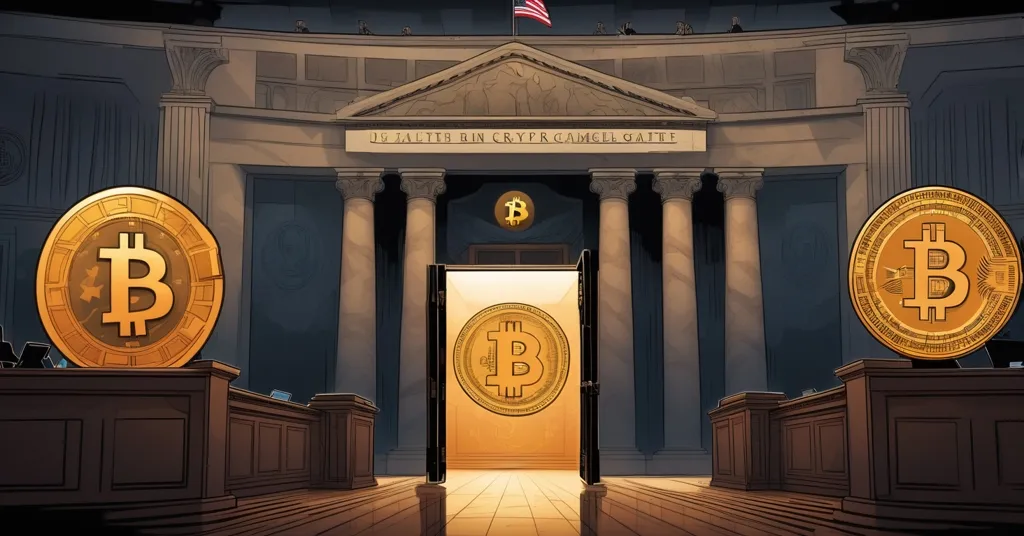
At first glance, the clause sounds reasonable enough. Nobody wants U.S. crypto markets stuffed with junk tokens, fake volume, and pump-and-dump bait. But in practice, the exchanges argue the rule would function like a blunt-force whitelist: Bitcoin and Ethereum at the top, smaller assets mostly shut out, and innovation left dangling outside the gate like a loser waiting for permission from the clipboard police.
That is the real dispute here. Should U.S. crypto regulation focus on keeping obviously manipulable assets off licensed venues, even if that means cutting off many early-stage tokens? Or should it allow broader access and rely on surveillance, enforcement, and market depth to clean things up over time?
Why the Senate Agriculture Committee? Because this part of the market-structure bill would hand the Commodity Futures Trading Commission, or CFTC, oversight over spot digital commodities. In plain English, that means the agency responsible for certain derivatives markets would also help police which crypto assets can be traded on federally regulated exchanges.
That makes the committee a key battleground for the rules governing digital commodity exchanges — basically, U.S.-registered crypto exchanges that would be allowed to list certain tokens under federal standards.
The clause mirrors a futures-market-style test, where the CFTC can reject contracts tied to assets that are too easy to manipulate. On paper, that sounds tidy. In crypto spot markets, it gets messy fast.
Liquidity is fragmented across venues. Price discovery can be all over the place. Thin order books can make a token look like a carnival ride with a ticker symbol. And yes, small projects often start out vulnerable. That does not automatically make them scams, but it does mean they can be manipulated with embarrassingly little effort.
Coinbase says the rule creates a classic “chicken-and-egg problem”: tokens often need liquidity, exchange access, and real market participation before they become harder to manipulate, but under this standard they may never get the chance to build those things in the first place.
The company and its allies argue the clause would effectively “shut small, low-liquidity tokens out of regulated venues and hand future CFTC chairs a blunt tool to choke innovation.” That is not subtle lobbying. It is a flashing neon sign saying: if you write this too tightly, you are not regulating crypto — you are freezing most of it out.
They also say the bill should be about “expanding oversight, not limiting it,” and that millions of Americans are already trading digital assets without the federal protections they deserve. Their pitch is simple: build a tailored framework that improves market surveillance, but do not turn the law into a de facto permission slip for only the biggest names in crypto.
And to be fair, that concern is not nonsense. If the standard is too rigid, smaller projects may be forced offshore, where U.S. regulators have less visibility and retail traders have even fewer protections. That does not make those tokens better. It just means the mess gets exported to less supervised venues. A classic Washington solution, really: make the problem somebody else’s problem.
But the opposite argument also has teeth.
Critics of the clause say it may be one of the few actual guardrails against the usual swamp of crypto market abuse: wash trading, spoofing, coordinated hype, and pump-and-dump schemes. For newer readers, wash trading means fake trading activity created by the same party buying and selling to itself, usually to make a token look more active than it really is. A pump-and-dump is the old scam with a new coat of paint: hype the price up, dump on retail, disappear before the smoke clears.
That kind of garbage thrives in thin markets. If a token has weak liquidity — meaning not enough real buy and sell orders to absorb trades without big price swings — then a few wallets, bots, or coordinated insiders can move the price around like it owes them money. That is exactly why some market-abuse experts and consumer groups like the clause. They want a clearer line between legitimate market access and open season for scammers.
From that angle, the proposed rule is not a clamp on innovation. It is a sanity check. If a token cannot survive even basic scrutiny around manipulation risk, should a regulated U.S. exchange be giving it a halo of legitimacy? That is a fair question, and not one the industry likes to hear because the answer may knock a few cherished bags off the table.
The bigger issue is that crypto does not fit neatly into old-market templates. Bitcoin and Ethereum likely clear almost any serious listing standard because they are large, liquid, and heavily traded. Smaller altcoins are another matter. Some are genuine experiments with real utility. Others are just speculative confetti with a website, a mascot, and a Telegram army. Regulators have to separate those categories without becoming so restrictive that only blue-chip assets survive.
That is why this dispute matters far beyond a single clause. If lawmakers set the bar too high, they risk building a market that mostly protects incumbents. If they set it too low, they risk turning regulated exchanges into a polished front end for the same old garbage the industry is trying to escape. Neither outcome is great.
The legislative backdrop is getting heavier too. More than 120 firms recently urged Senate Banking Committee action on the CLARITY Act, another market-structure push aimed at giving the U.S. a coherent framework for crypto regulation. House and Senate negotiators are trying to assemble a broader rulebook covering digital commodities, securities questions, and stablecoins without making a complete bureaucratic hash of it. Good luck. Congress and crypto policy have historically gone together like a wrench and a marshmallow.
The Senate crypto bill fight is really a debate over what the U.S. wants its regulated crypto markets to look like.
One camp wants broad access, stronger oversight, and room for smaller assets to grow into legitimacy. The other wants a firmer listing filter to keep manipulation out before it gets a foothold. Both sides have a point. Both sides also have blind spots.
If the exchanges win, more tokens may get a shot on regulated U.S. platforms, and the market may stay more open to experimentation. That could help legitimize newer projects and reduce the incentive to trade on offshore venues. It could also mean more bad assets slip through and more retail users get burned by speculative junk dressed up as innovation.
If the stricter language stays in place, investors may get stronger protection against thin-market fraud, but the result could also be a narrower, more centralized market where only the biggest assets are practical to list. That might be fine for Bitcoin and Ethereum. It is a much uglier outcome for smaller networks trying to bootstrap liquidity inside the regulated system.
Key questions and takeaways:
Why are Coinbase, Kraken, and Gemini opposing the Senate token-listing rule?
They say it would block small, low-liquidity tokens from regulated U.S. exchanges and create a de facto whitelist for only the biggest assets.
What does “not readily susceptible to manipulation” mean?
It means a token would have to be hard to manipulate with fake trading, coordinated price moves, or other market games before a regulated exchange could list it.
Why do critics support the rule?
They see it as a practical defense against wash trading, pump-and-dump scams, and other forms of crypto market abuse.
What is a digital commodity exchange?
It is a federally regulated crypto exchange that would be allowed to list qualifying digital assets under the proposed market-structure framework.
Could the rule push trading offshore?
Yes. That is one of the main arguments from the exchanges. If U.S. rules are too tight, trading may move to offshore platforms with weaker oversight.
Would Bitcoin and Ethereum likely be affected?
Probably not in the same way as smaller tokens. Their size, liquidity, and market depth make them far more likely to meet stricter listing standards.
What is the larger policy battle here?
Whether U.S. crypto regulation should prioritize broad market access with surveillance, or tighter listing standards that block risky assets before they can trade on licensed venues.
The bottom line: if lawmakers want to keep scams out, they need rules that target manipulation without turning regulated crypto markets into a gated community for only the biggest coins. If they get this wrong, they may not protect users at all — they may just send the mess offshore, where the fraudsters will be waiting with open arms and fake volume to spare.