Core Scientific Converts Texas Bitcoin Mine into 1.5GW AI Data Center Campus
 LTB
LTB Core Scientific shifts Bitcoin mining site toward 1_5GW AI data center plan is converting a Bitcoin mining site in Pecos, Texas into a 1.5GW AI data center campus, a blunt reminder that power, land, and grid access may be more valuable than hash rate alone.
- 1.5GW campus planned in Pecos, Texas
- 1GW expected to be available for leasing
- 300MW of Bitcoin mining power being repurposed for AI
- First capacity targeted for 2027
- More miners are shifting toward AI and high-performance computing
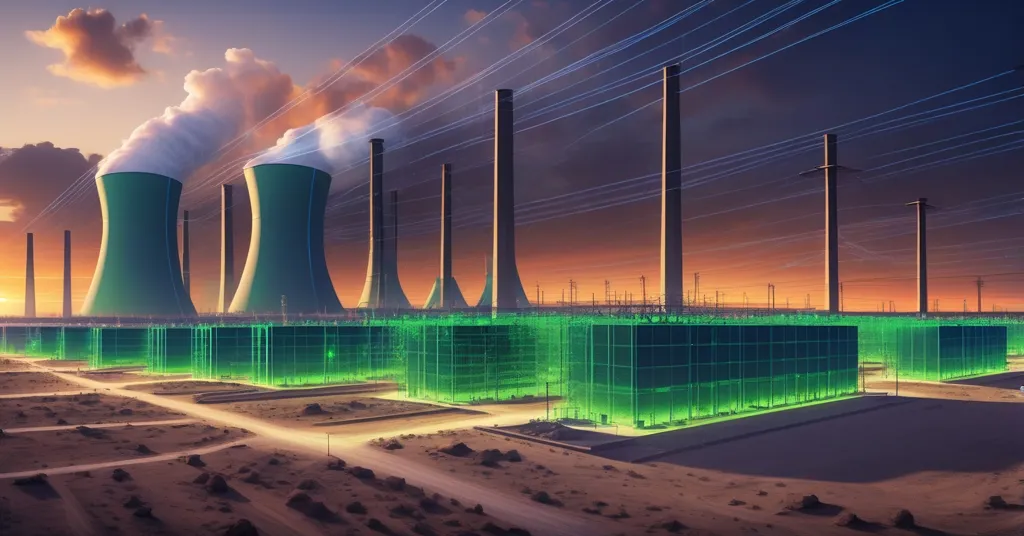
Bitcoin mining built the site, but artificial intelligence may end up paying the bills. Core Scientific’s Pecos project is being reshaped into a massive AI data center campus with total gross power capacity projected to reach 1.5 gigawatts. About 1 gigawatt is expected to be leasable, while roughly 300 megawatts now tied to Bitcoin mining will be redirected toward AI workloads.
The first data hall has already completed foundation work, vertical construction is beginning, and the company says early capacity should come online in 2027. That timeline matters. These projects are not quick flips; they are slow, expensive, steel-and-concrete bets on what compute demand will look like years from now. In other words: big money, big risk, and a lot of hoping the market doesn’t get cute.
Core Scientific also secured another 300MW of power under contract with its utility provider and plans to expand further through a behind-the-meter power solution. For readers unfamiliar with the term, behind-the-meter means power used directly on-site rather than being fully routed through the public grid. That setup can give operators more control over supply, costs, and reliability — exactly the kind of thing that matters when you’re feeding racks of power-hungry servers instead of simply grinding out Bitcoin blocks.
The company also acquired more than 200 acres of land near the Pecos site to support the buildout. That may not sound glamorous, but land is destiny in the data center business. AI infrastructure is not just about chips and servers; it’s about space, cooling, electrical gear, transmission access, and the sort of industrial plumbing that only becomes interesting once something catches fire or stops working.
CEO Adam Sullivan framed the strategy as an extension of Core Scientific’s technical strengths, saying:
“We continue to leverage our deep in-house expertise to differentiate how we build and scale next generation artificial intelligence infrastructure,” said CEO Adam Sullivan.
That’s polished corporate language, but the message underneath is simple: Core Scientific wants to be more than a Bitcoin mining company. It wants to become a power-and-compute operator, selling infrastructure and hosting capacity to customers that need serious electricity for AI and high-performance computing, or HPC.
HPC, for anyone new to the acronym, stands for high-performance computing — the kind of extremely powerful computing used for demanding tasks like scientific simulations, model training, large-scale inference, and other jobs that laugh at ordinary office hardware. AI data centers and HPC facilities both need dense power delivery, heavy cooling, and a reliability standard that makes normal IT rooms look like a garden shed with a fan.
This pivot is part of a bigger industry correction. Bitcoin mining is still the heart of the sector, but it’s a brutal business: energy costs are relentless, network competition keeps rising, and margins can get crushed when the math stops cooperating. If a miner already owns the land, power contracts, and grid connections, it becomes awfully tempting to monetize that infrastructure in a different way. Why keep swinging a hammer at thinner and thinner margins when a leasing contract for AI infrastructure might offer cleaner revenue?
That’s especially true in a market where “AI infrastructure” is the phrase investors can’t seem to stop fawning over. Some of that demand is real. AI needs massive compute, and the bottleneck is often power and buildout speed, not just chips. But there’s also a fair amount of buzzword chasing in the air. Not every Bitcoin miner with a spare megawatt and a PowerPoint deck is suddenly Nvidia’s favorite landlord. Some conversions will be smart, some will be clumsy, and some will probably end up as very expensive monuments to optimism.
Core Scientific is not alone in the pivot. MARA Holdings has taken a stake in Exaion, the French infrastructure firm, as part of its own AI push. Hive, Hut 8, TeraWulf, and Iren are also pursuing similar strategies, proving that Bitcoin miner diversification into AI is no longer a side experiment. It’s becoming a mainstream survival move.
The broader trend is visible beyond crypto miners too. Energy-intensive industrial sites are being repurposed for mining and AI infrastructure, which makes sense when you think about it. Alcoa is close to selling the idle Massena East smelter in New York to NYDIG, while TeraWulf bought Century Aluminum’s Hawesville smelter in Kentucky for $200 million and plans to transform it into an AI and high-performance computing facility. Old industrial assets are getting a second life, and in many cases a far better one than simply rusting into the earth.
Core Scientific is also making a financial push to fund the next phase. The company announced plans to raise $3.3 billion through senior secured notes due in 2031, with the capital intended for data center expansion in Georgia, Texas, North Carolina, and Oklahoma. Senior secured notes are debt backed by the company’s assets, which gives lenders a stronger claim if things go sideways. That can unlock major growth, but it also adds leverage, and leverage is just a polite word for pressure with a spreadsheet.
There’s a real strategic logic here. Bitcoin mining infrastructure already teaches operators how to manage electricity, heat, uptime, and large-scale deployment. Those are the same muscles needed for AI and HPC hosting. The difference is what’s being sold: block rewards on one side, compute services on the other. For firms with access to cheap power and a serious balance sheet, that’s a smart way to squeeze more value out of fixed assets. For weaker players, it can be a desperate attempt to reinvent themselves before mining economics chew them up.
That tension is the real story. On one hand, this is a sign of maturity. Bitcoin mining companies are learning to behave like infrastructure businesses instead of one-trick hash factories. On the other hand, it’s also a sign that pure mining is getting harder to defend at scale. If the most compelling use for your site is no longer mining Bitcoin, that says something about where the market is rewarding capital right now.
Key takeaways and questions:
What is Core Scientific doing in Pecos, Texas?
It is converting a Bitcoin mining site into a large AI data center campus.
How large is the project?
The planned campus could reach 1.5GW of gross power capacity.
How much of that power is expected to be leasable?
About 1GW is expected to be available for leasing.
What happens to the existing Bitcoin mining power?
Roughly 300MW currently used for Bitcoin mining will be repurposed for AI workloads.
When will capacity start coming online?
Early capacity is expected in 2027.
Why are Bitcoin miners moving into AI?
Mining margins are being squeezed by energy costs and competition, while AI and high-performance computing can offer stronger and more predictable revenue.
What does “behind-the-meter” power mean?
It means power is used directly on-site instead of being fully routed through the public grid.
Is Core Scientific the only miner making this move?
No. MARA Holdings, Hive, Hut 8, TeraWulf, and Iren are also pursuing AI and data center strategies.
What is the main risk in this pivot?
Heavy capital spending, debt, long construction timelines, and the possibility that some AI infrastructure projects turn into overpriced hype with cooling systems.
What does this mean for Bitcoin mining overall?
It shows the industry is evolving from pure Bitcoin mining into broader power and compute monetization, which may be good business even if it bruises the old-school mining purists.
Core Scientific’s Pecos buildout is a clean example of the new miner playbook: use the power, keep the land, and sell the infrastructure to the highest-value customer. That may irritate the “Bitcoin only” crowd, but markets do not care about purity tests. They care about margins, contracts, and who can turn a megawatt into money without blowing up the balance sheet.