Crypto Chaos: XRP Short Squeeze, Binance Cuts 22 Pairs, Coinbase Clashes with Regulators
 LTB
LTB Morning Crypto Meltdown: XRP Squeeze Carnage, Binance Slashes Pairs, and Coinbase Faces Fire
Today’s crypto news hits like a lightning strike on a clear day—explosive, unexpected, and leaving a trail of wreckage. We’ve got XRP bears annihilated in a mind-boggling 16,559% liquidation imbalance, Binance gutting 22 trading pairs in a cold-blooded liquidity purge, and a pro-Ripple lawyer tearing into Coinbase’s CEO over regulatory double-dealing. Buckle up; this is the raw, unfiltered pulse of the market.
- XRP Liquidation Chaos: Shorts obliterated with a 16,559% imbalance, $84,290 wiped out.
- Binance Cuts Deep: 22 spot pairs, including Bitcoin and Ethereum, delisted for efficiency.
- Coinbase Under Siege: Fred Rispoli slams Brian Armstrong over regulatory clashes.
The Fragile State of Crypto: Volatility and Power Plays
Before zooming into the specifics, let’s set the stage. The crypto market is a pressure cooker right now—prices swing wildly on leveraged bets, exchanges tighten their grip under regulatory glare, and the fight for clear rules in the U.S. remains a mess. Bitcoin hovers at precarious levels, altcoins like XRP spike and crash on speculation, and centralized players face off against the very ethos of decentralization we champion. These stories—spanning liquidations, delistings, and policy battles—reveal a space teetering between spectacular innovation and systemic fragility. Let’s unpack the chaos.
XRP Price Surge Triggers Massive Short Squeeze Carnage
Whale Games or Genuine Rally?
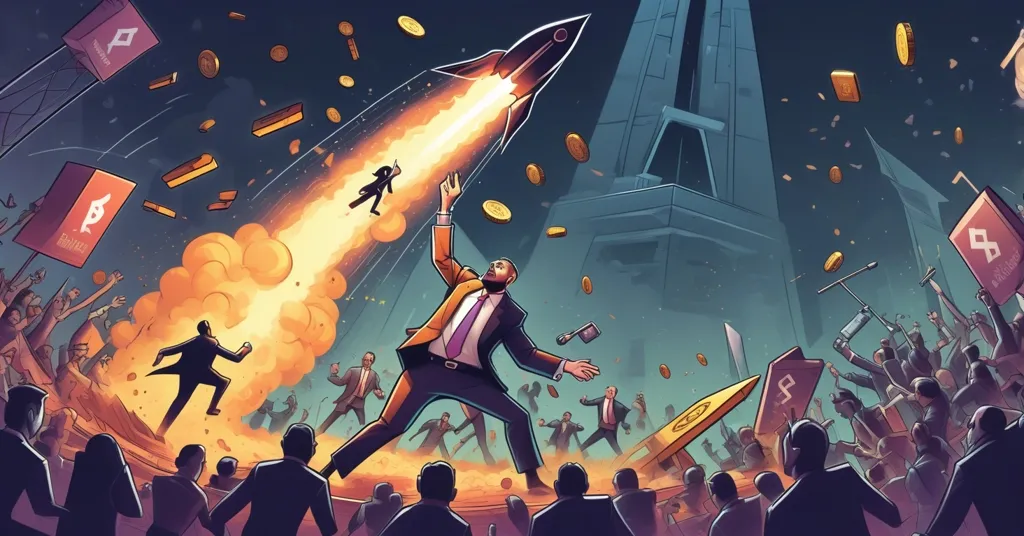
Starting with XRP, where short sellers just got dragged through the mud. In a single hour, $84,290 in short positions—traders betting on a price drop—were liquidated, compared to a laughable $509.63 on the long side. That’s a 16,559% liquidation imbalance, a brutal short squeeze that favored the bulls. For the uninitiated, a short squeeze is like betting against a stock only for it to rocket overnight; you’re forced to buy back at a loss to limit damage, which pushes the price even higher. XRP/USD blasted past $1.98 before settling at $1.976, and the rumor mill is buzzing with talk of whale activity. Whales are the billionaires of crypto—when they dump or accumulate massive amounts, markets tremble, often leaving retail traders as collateral damage. Could this be a coordinated move to crush shorts, or is there genuine momentum behind XRP? On-chain analytics, which track large transactions on the blockchain, suggest big players might be stacking chips, but without hard proof, it’s anyone’s guess. For more details on this staggering XRP short squeeze chaos, check out the full breakdown.
Leverage: A Double-Edged Sword
Let’s break down why this hurts so bad. Many traders use leverage—borrowing funds to amplify bets. A 10x leverage means a mere 10% price move against you wipes out your entire stake. When XRP surged, over-leveraged shorts didn’t just lose their position; they got liquidated, forced to exit at the worst possible price. If $1.95 holds as a support level—a price where buyers historically step in—we could see XRP push to $2.04 or even $2.10. But if it cracks, a drop to $1.89 looms. Here’s the harsh truth: this volatility screams manipulation potential. Is this a sustainable rally or a classic pump-and-dump by whales looking to fleece the FOMO crowd? I’m leaning toward skepticism—XRP’s history with sudden spikes tied to Ripple news doesn’t inspire confidence. Traders, beware: don’t chase hype without research. We’re all for adoption, but not at the cost of getting burned by scams.
Stepping back, the wider crypto market felt the heat too. Hourly liquidations totaled $2.54 million across all coins, with Bitcoin leading the pack at $1.02 million. Over 24 hours, a staggering $874.89 million in positions got wiped, with long bets—those expecting price rises—taking the bigger hit. This paints a picture of a market high on bullish leverage, where overconfident traders are getting crushed when volatility strikes. Yet, price swings seem oddly tame for now. Is this the quiet before the next storm?
Binance Delisting Shocks: 22 Pairs Axed in Liquidity Overhaul
Why FDUSD Matters
Shifting focus, Binance, the heavyweight of crypto exchanges, just swung a brutal axe, delisting 22 spot trading pairs effective January 20 at 8:00 a.m. UTC. Spot pairs are direct markets for swapping one crypto for another—like BTC/ZAR (Bitcoin to South African Rand) or ETH/ZAR (Ethereum to South African Rand), both of which are toast now. Other victims include ENS/BTC, SLP/ETH, and ORDI/BTC, plus several tied to FDUSD, a stablecoin pegged to the dollar that’s been climbing Binance’s priority list. The exchange called this a liquidity management play, likely focusing on high-volume markets and dumping the duds. But let’s cut through the PR spin: Binance is consolidating power, favoring heavily traded or strategic pairs like FDUSD over niche options. FDUSD’s rise signals a shift—Binance might see it as a reliable replacement for other underperforming stablecoins, streamlining operations as regulatory eyes sharpen.
Small Markets, Big Losses?
Don’t underestimate the ripple effects. Cutting pairs tied to Bitcoin and Ethereum—the backbone of crypto—could jam up cross-chain rebalancing. That’s arbitrage across blockchains, where traders exploit price differences to profit, needing liquid pairs to make it work. DeFi—decentralized finance, where financial tools run on code without middlemen—relies on these pairs for liquidity pools, the shared funds that power swaps and lending. Losing SLP/ETH might sting gamers using Smooth Love Potion in play-to-earn setups, while BTC/ZAR’s exit could screw over South African traders with fewer local options. Sure, Binance’s move might curb low-liquidity scams where thinly traded pairs get manipulated, but it also smells like centralization creep. Aren’t exchanges supposed to expand access, not shrink it? For DeFi advocates and cross-chain operators, this is a kick in the teeth, potentially bottlenecking innovation. My take: diversify your platforms now, or risk waking up to a vanished market. Binance’s efficiency shouldn’t come at the cost of user freedom.
Coinbase in the Crosshairs: Regulatory Clash Heats Up
Stablecoin Standoff
Now for the drama that’s got everyone talking: a public brawl between pro-Ripple lawyer Fred Rispoli and Coinbase CEO Brian Armstrong. The spark came from journalist Eleanor Terrett’s report that federal regulators, possibly with White House nudging, threatened to yank support for the CLARITY Act—a U.S. bill aiming to define rules for digital assets—over Coinbase’s stance on yield-bearing stablecoins. Stablecoins are cryptos pegged to stable assets like the dollar for low volatility; “yield-bearing” means they earn interest, often via DeFi lending or staking. Regulators seem spooked by the risks—think bank-run scenarios without oversight—and Coinbase’s position isn’t sitting well. Rispoli didn’t mince words, accusing Coinbase of harming users with legal strategies that clash with their “pro-crypto” branding. Straight talk: this looks like corporate self-interest dressed up as advocacy. Are they fighting for us or just cozying up to power?
Coinbase’s Track Record
Armstrong hit back, claiming officials asked Coinbase to partner with banks on regulatory clarity, and they’re drafting proposals to support smaller regional banks in the crypto game. Sounds noble, but skeptics like Rispoli argue Coinbase’s priorities misalign with the industry’s broader push for fair rules. Let’s zoom out: the CLARITY Act could be a game-changer, potentially classifying most cryptos outside securities law, freeing them from the SEC’s iron grip. But yield-bearing stablecoins are a flashpoint—regulators fear they mimic banking without the safety nets, a concern not entirely baseless given past DeFi collapses. Coinbase’s history doesn’t help; from insider trading allegations to SEC lawsuits, their “good guy” image has cracks. I’ll play devil’s advocate: maybe regulators have a point—unchecked yield products could spark systemic risks. But if Coinbase’s actions tank the CLARITY Act, they’ll alienate the very community they claim to represent. This isn’t just a spat; it’s a window into crypto’s existential struggle between central control and decentralized ideals. Frankly, I’m tired of exchanges playing both sides while smaller players get squeezed—call it out for the bullshit it is.
Market Outlook: Breakout or Breakdown?
Tying this madness together, let’s gauge the market’s heartbeat. Despite liquidation fireworks, volatility feels eerily contained—like the tense silence before a hurricane. Bitcoin sits at a make-or-break point; it must hold $89,500 to dodge a slide to $86,500 or even $84,000. A break above could spark bullish fire, but with long positions getting hammered in the $874.89 million 24-hour liquidation tally, downside risk looms large. As a Bitcoin maximalist at heart, I see BTC’s dominance in liquidation stats as proof of its central role—when it bleeds, everyone feels it. XRP, riding its short-squeeze high, needs to reclaim $2.04 for a shot at $2.20, but a slip below $1.95 could drag it to $1.89 quicker than a whale can dump. These levels aren’t just numbers; they’re battlegrounds for sentiment.
Beyond charts, these stories—XRP’s speculative frenzy, Binance’s strategic cuts, Coinbase’s policy war—mirror broader risks. Over-leverage threatens systemic stability, as seen in liquidation data; one wrong move and cascading sells could tank markets. Regulatory uncertainty, spotlighted by Coinbase’s mess, stifles innovation while centralized exchanges like Binance flex muscle over DeFi’s open ethos. Are we on the cusp of a breakout toward mass adoption, or a breakdown as old power structures tighten their grip? Only time—and the next big whale maneuver—will tell.
Why This Matters for Decentralization
Peeling back the layers, today’s news underscores why we fight for decentralization, privacy, and freedom in this space. XRP’s volatility shows markets can be gamed by the powerful, leaving retail traders as pawns. Binance’s delistings hint at centralized control over access, a far cry from the borderless finance we envision. Coinbase’s regulatory dance reminds us that even “allies” can prioritize profit over principle, risking the policies that could liberate crypto. As champions of effective accelerationism, we push for rapid, disruptive progress—but not blindly. These potholes on the road to financial revolution demand vigilance. Keep your keys close and your skepticism closer; the future of money is worth the battle.
Key Takeaways and Burning Questions
- What sparked the 16,559% liquidation imbalance for XRP?
A sharp price surge to $1.98, possibly driven by whale buying or tactical moves, crushed short sellers with $84,290 in liquidations while longs barely blinked. - How does Binance’s delisting of 22 trading pairs impact DeFi and crypto trading?
It disrupts cross-chain rebalancing and DeFi liquidity pools, especially for Bitcoin and Ethereum pairs, while prioritizing strategic options like FDUSD over niche markets. - What’s fueling the tension between Coinbase and federal regulators?
Reports suggest regulators might abandon the CLARITY Act over Coinbase’s stance on yield-bearing stablecoins, with critics claiming the exchange misrepresents industry interests. - Which price levels are critical for Bitcoin and XRP right now?
Bitcoin must cling to $89,500 to avoid a drop to $86,500-$84,000; XRP needs $2.04 for a push to $2.20 or risks falling to $1.89 if $1.95 breaks. - What does current market sentiment say about trader behavior?
With $874.89 million in 24-hour liquidations hitting longs hardest, traders appear over-leveraged on bullish bets, signaling potential corrections despite muted price swings.