Crypto Market Structure Bill Advances as Kraken Launches U.S. Retail Leverage
 LTB
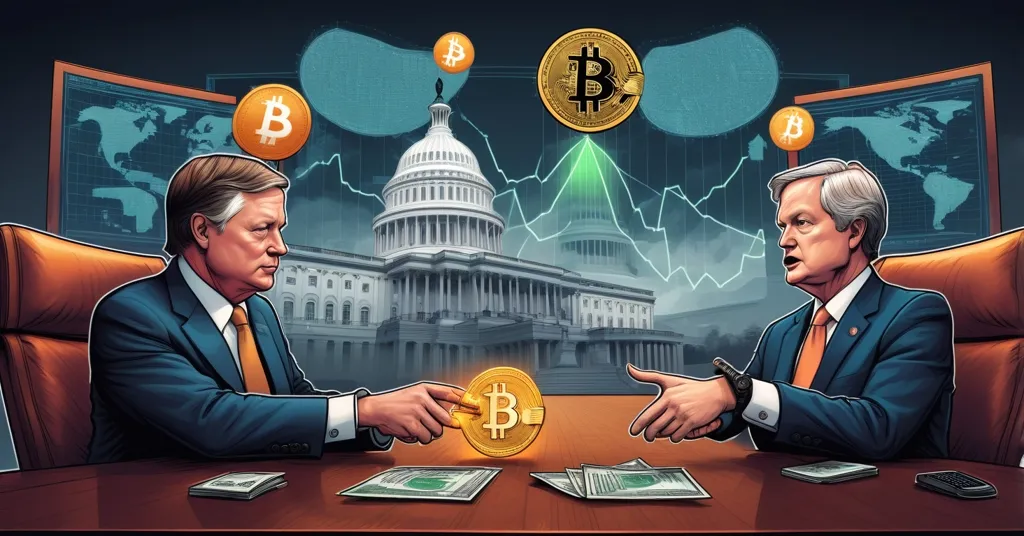
LTB Washington’s long-stalled crypto market structure bill is finally inching forward, but it’s doing so in classic D.C. fashion: with compromise, suspicion, and a side order of political mud wrestling. At the same time, Kraken is rolling out regulated leverage for U.S. retail traders, World Liberty Fi is reshaping WLFI token unlocks, and fresh geopolitical tension is once again reminding markets that Bitcoin still gets treated like a risk asset when the global wheel starts wobbling.
- Market structure bill: markup could begin next week
- Senate hurdle: ethics rules may decide the outcome
- Kraken: regulated spot leverage lands for U.S. retail
- WLFI: unlocks delayed to ease supply pressure
- Macro risk: oil shocks still hit Bitcoin and crypto hard
Crypto market structure bill moves toward markup
After years of hand-waving, half-baked proposals, and regulatory confusion, a U.S. congressional committee is expected to begin markup on a crypto market structure bill next week. Markup is the part of the legislative process where lawmakers debate the text line by line, make amendments, and decide whether the bill is fit to move forward. In plain English: this is where bills stop being talking points and start becoming real, or get shredded into legislative confetti.
A Washington, D.C. insider cited in the reporting expects bipartisan support in committee, which is at least a sign that the bill isn’t dead on arrival. That matters because the U.S. crypto industry has spent years operating under a mess of overlapping guidance, inconsistent enforcement, and the kind of uncertainty that drives serious builders crazy and scammers into a frenzy.
The broader idea behind a crypto market structure bill is simple enough: define how digital assets are classified, clarify which agencies oversee what, and establish rules for exchanges, brokers, custody, and trading behavior. That sounds boring only if you enjoy markets running on legal fog. Clearer rules could help major firms build in the U.S. instead of fleeing offshore, while also improving consumer protection and making counter-terrorist financing enforcement less of a bureaucratic joke.
But the Senate remains the real obstacle, and as usual, the issue is not just policy — it’s trust, power, and who gets to write the rules without looking like they’re writing them for themselves.
Ethics provisions could make or break the Senate path
Senator Kirsten Gillibrand said the bill may run into trouble in the Senate unless it includes stronger ethics provisions. She said those restrictions should apply to members of Congress, senior officials, the president, and the vice president. That’s not a throwaway demand. It’s a direct response to a very familiar Washington problem: lawmakers want to regulate a fast-growing sector while half the town is nervously checking whether someone’s cousin, donor, or political ally has a financial stake in the game.
Gillibrand framed the ethics language as a way of “preventing lawmakers and senior government officials from using inside access to extract private benefits from the crypto industry”. Hard to argue with the principle. The crypto industry already has enough trouble with scammers, vaporware, and fake “decentralization” theater. It doesn’t need public officials casually turning policy into a family business.
Several Democratic senators have raised concerns about President Trump and his family’s crypto ties, and those concerns are now tangled up in the legislative process. Whether those objections are pure ethics, political leverage, or a bit of both, they are clearly part of the negotiation now.
There’s also the old stablecoin headache. Stablecoin provisions previously helped stall the bill, and that remains a delicate point. Stablecoins are crypto assets designed to hold a steady value, usually by being backed by reserves such as cash or short-term Treasuries. They’re useful for payments and trading, but they sit right on the border between crypto, banking, and money transmission — which means every word in the bill can trigger a fight.
Gillibrand said passage could still be possible before the August recess. That’s Congress-speak for “maybe, if everybody behaves and the calendar doesn’t eat us alive.”
Kraken brings regulated leverage to U.S. retail
While lawmakers debate the rules, Kraken is already building products for the regulated future. According to The Block, the exchange has launched regulated “spot crypto leverage” trading for U.S. individual investors. The product lets users borrow against their crypto holdings and open positions with up to 10x leverage, using existing crypto holdings as collateral and doing so without selling their underlying assets.
That’s a real feature, not marketing fluff. For traders who know what they’re doing, leverage can be a way to use capital more efficiently. For everyone else, it’s a fast route to discovering that markets have no mercy and no sense of humor. Leverage can amplify gains, but it also magnifies losses with the enthusiasm of a wrecking ball.
The upside is that regulated leverage is better than forcing users into offshore platforms where risk controls are often a punchline. Kraken argues that compliant tools can pull activity away from unregulated venues and create a safer onshore alternative for U.S. traders. That part is fair. If users are going to trade with borrowed funds, it’s better that the rails come with actual oversight instead of the usual offshore casino vibes.
The move follows Payward’s acquisition of Bitnomial, which helped Kraken secure the licensing needed to offer the product. The exchange says this could become “a foundation to expand into regulated perpetual futures and options” in the U.S.
For readers new to the term, perpetual futures are derivative contracts that let traders speculate on price without an expiration date, while options give the right, but not the obligation, to buy or sell at a set price later. Both are powerful tools, and both can torch inexperienced traders quickly if used carelessly. In other words: useful, yes; harmless, absolutely not.
Kraken’s bigger picture is also worth watching. The company has broader ambitions, including an eventual public listing and expansion in the U.K. and Europe. That suggests it wants to be seen as a serious regulated financial platform, not just another exchange trying to out-meme its competitors while praying the market stays irrational.
WLFI token unlocks are being pushed out
Elsewhere in crypto land, World Liberty Fi passed a proposal to convert 62.23 billion WLFI tokens into a revised lock-up schedule. The goal is straightforward: reduce near-term supply pressure by keeping more tokens out of circulation for longer.
The approved structure keeps the affected supply off the market for at least two years. Under the plan, up to 45.2 billion WLFI held by the founding team, advisers, and partners will unlock over three years after that initial two-year lock-up. Around 17.0 billion WLFI allocated to early supporters will unlock over two years after the same initial delay. Another 4.5 billion tokens are set to be burned, meaning they will be permanently removed from circulation.
The vote lasted seven days and required a 1.0 billion WLFI quorum to pass.
That kind of restructuring can matter for price behavior, at least in the short term. If too many tokens flood the market too quickly, prices can get crushed. Delaying unlocks may reduce that pressure and calm investor nerves. But let’s not pretend supply choreography is the same thing as actual value creation. It isn’t. A token can have a polished unlock schedule and still be dead weight if demand doesn’t show up.
Token unlocks are one of the most misunderstood parts of crypto markets. They matter because they shape circulating supply, which is the amount of a token available to trade. If a lot of tokens are sitting in lock-up and then suddenly hit the market, the price can absorb a nasty shock. If unlocks are delayed or staged, the market gets more breathing room. That helps — but only up to a point.
Geopolitics keeps Bitcoin from acting like a pure safe haven
Just as markets were digesting the regulatory and token news, reports emerged of a missile attack on a vessel in the Strait of Hormuz, one of the most important oil shipping chokepoints in the world. That’s not small background noise. It’s the kind of headline that instantly makes oil traders, shipping desks, and risk managers sit up straight.
The Kobeissi Letter noted that roughly $920 million in crude oil short contracts appeared before an Axios report about a possible U.S.-Iran agreement. Oil prices reportedly fell by more than 12% by 7:00 a.m. ET, which would imply an estimated $125 million gain on that short position. That doesn’t prove anything on its own, but the timing is enough to raise eyebrows. When trade positioning lines up a little too neatly with headline risk, people notice.
Bloomberg also reported that U.S. petroleum product exports rose to 8.2 million barrels per day last week. The broader takeaway is that energy markets remain heavily linked to geopolitical tension, and crypto gets dragged into that volatility whether it likes it or not.
This is where the “Bitcoin as digital gold” narrative gets tested in the real world. In theory, BTC is the hard-money asset people run to when central banks misbehave and governments overreach. In practice, when conflict spikes and liquidity gets thin, traders often sell whatever is liquid enough to cover margin or reduce exposure. That’s why Bitcoin and Ethereum can still get hit by macro-driven swings even when the long-term thesis looks strong.
Large BTC exchange inflows add to the caution
Whale Alert also flagged several large BTC transfers to exchanges, including 1,469 BTC to Binance worth about $119.6 million, 1,051 BTC to Binance worth about $85.5 million, and 703 BTC to Coinbase worth about $57.5 million.
Big exchange inflows can suggest that holders are preparing to sell. But they can also reflect custody moves, collateral usage, or treasury reallocation. Exchange inflows do not necessarily equate to immediate selling. Still, when large amounts of BTC move onto exchanges during a macro shock, it’s a fair bet that some market participants are at least bracing for turbulence.
That’s the annoying truth crypto fans keep rediscovering: decentralization does not make markets immune to fear. It just gives people a better rail to panic on.
What all of this means for Bitcoin and crypto
The bigger picture is pretty clear. U.S. lawmakers are inching toward a more coherent crypto market structure bill, which is good news for long-term market legitimacy. Kraken is already building regulated products that could keep U.S. users away from sketchy offshore leverage platforms. WLFI is managing supply in a way that may soften short-term selling pressure. And yet, none of that changes the fact that Bitcoin, Ethereum, and the broader crypto market still react sharply when geopolitics and oil volatility light the fuse.
That tension is the story. Regulation is slowly getting more serious. Infrastructure is becoming more legitimate. But markets remain exposed to macro panic, political gamesmanship, and the perpetual human talent for doing stupid things with leverage.
Bitcoin may still be the cleanest monetary asset in the room. That doesn’t mean it’s floating above the mess. It trades inside the mess, alongside everything else, until the market decides otherwise.
Key questions and takeaways
What is the crypto market structure bill?
It’s proposed U.S. legislation meant to clarify how digital assets are regulated, which agencies oversee them, and how exchanges and trading platforms should operate.
Why does markup matter?
Markup is the committee stage where lawmakers review, debate, and amend bill language before a vote. If the bill survives markup, it has a better chance of advancing.
What is the biggest Senate obstacle?
Ethics language. Senator Kirsten Gillibrand wants rules that stop lawmakers and top officials from using crypto policy for private gain.
Why is Kraken’s leverage launch important?
It gives U.S. retail users a regulated way to trade with leverage instead of forcing them to rely on offshore platforms with weaker protections.
What does 10x leverage mean?
It means a trader can control a position worth up to 10 times their collateral. It can boost gains, but it can also wipe out positions fast.
Why do WLFI unlocks matter?
Token unlocks affect circulating supply. Delaying them can reduce sell pressure, but it does not guarantee demand or price support.
Why does the Strait of Hormuz matter to crypto?
It’s a major oil chokepoint. Disruptions there can move oil prices and trigger broader risk-off behavior, which often spills into crypto.
Do exchange inflows mean BTC is about to dump?
Not always. They can reflect selling intent, but they can also be custody transfers, collateral moves, or treasury management.
What does this mean for Bitcoin?
Bitcoin benefits when regulation gets clearer and market infrastructure improves, but it still trades like a macro-sensitive asset during panic. Clear rules help; they don’t erase volatility.