Dogecoin Crashes 50% in Q4 2025: Meme Coin Bloodbath Shocks Investors
 LTB
LTB Dogecoin’s Brutal 50% Crash: Q4 2025 Ends in a Bloodbath as Supports Collapse
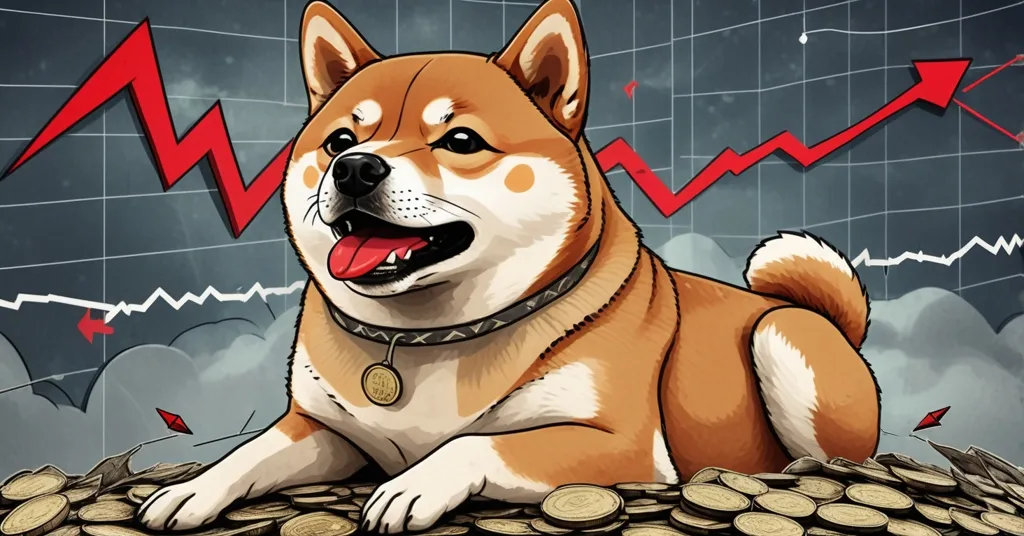
Dogecoin, the internet’s favorite meme coin, is taking a savage beating as Q4 2025 draws to a close, with a staggering 50% price crash leaving investors shell-shocked. Once propelled to dizzying heights by viral hype and celebrity endorsements, DOGE now faces a grim outlook, with technical indicators and market sentiment painting a picture of unrelenting decline.
- Price Collapse: Dogecoin has plummeted 50% in Q4 2025, trading at $0.126, down 15% in the past month and over 60% year-to-date.
- Analyst Warning: Crypto analyst KrissPax forecasts a deep recession for DOGE, citing persistent price weakness and no signs of recovery.
- Pivotal Moment: A flash crash and liquidation event on October 10 shattered key supports, marking a drastic shift in market dynamics.
The Numbers Behind Dogecoin’s Downfall
Let’s strip away the fluff and face the harsh facts about Dogecoin’s current state. As of the latest data from CoinMarketCap, DOGE is limping along at $0.126—a pitiful shadow of its past peaks fueled by meme mania and social media pumps. This represents a 15% drop in just the last month and a soul-crushing 60% loss over the course of 2025. For those new to the crypto scene, Dogecoin’s dramatic 50% plunge was birthed in 2013 as a satirical jab at Bitcoin, complete with a Shiba Inu mascot. What started as a joke morphed into a speculative juggernaut, often riding waves of hype from figures like Elon Musk. But the giggles have faded, replaced by groans as the meme coin crashes headfirst into a brutal reality.
Picture a newbie investor who jumped on the DOGE bandwagon at $0.25 earlier this year, only to see their portfolio sliced in half by Q4. Stories like this are piling up as the year ends, a stark reminder of the risks tied to assets driven more by internet buzz than tangible value. Unlike Bitcoin, often hailed as digital gold for its store-of-value proposition, or Ethereum, which powers a vast network of decentralized applications, Dogecoin’s worth is almost entirely tied to fleeting sentiment. When the crowd stops cheering, the price inevitably tanks.
What Sparked the 50% Crash in 2025?
The descent into chaos accelerated with a flash crash and liquidation event on October 10, a turning point that crypto analyst KrissPax, a well-followed technical trader on X, describes as a game-changer for DOGE’s market behavior. If you’re not familiar, a flash crash is a sudden, dramatic price drop, often triggered by panic selling or automated trading bots hitting specific thresholds. Liquidations pile on the pain—when traders who’ve borrowed money to bet on price gains can’t cover their losses, their positions are forcibly sold off, creating a domino effect of downward pressure. This wasn’t a minor hiccup; it was a full-blown leverage sweep that obliterated an upward-sloping support trendline that had shown some resilience earlier in the year.
KrissPax pulls no punches in his outlook, warning that Dogecoin is barreling toward a deep recession by the end of Q4. He points to sustained price weakness and a complete lack of meaningful recovery as evidence that the worst may be yet to come. This event wasn’t just a blip on the radar—it exposed the fragility of DOGE’s price structure, especially when compared to Bitcoin’s ability to weather storms thanks to its strong-handed holders and clear narrative as a hedge against centralized finance.
Technical Breakdown: A Death Cross and Shattered Supports
Digging into the charts, the situation looks as bleak as a winter storm. Multiple key price floors—levels where buyers typically step in to stop a decline—have crumbled one after another. This isn’t a fleeting dip; it’s a glaring sign of structural rot in DOGE’s price action. Technical traders often use tools like moving averages, which smooth out price fluctuations to reveal the broader trend—think of them as a weather forecast for crypto markets. On DOGE’s chart, a Death Cross has formed, a notoriously bearish pattern where a short-term moving average dips below a long-term one, flashing a giant “sell” signal to anyone paying attention. This suggests the downward momentum could drag on for months.
Compounding the misery, periods of consolidation—where prices usually stabilize as buyers and sellers find balance—have instead seen heavy distribution. In plain terms, big players are dumping their holdings rather than stepping in to buy, a damning indicator for any hope of a rebound. Every attempt at a bullish rally has been swatted down, with repeated breaks to the downside confirming that bears have seized control. Unlike Bitcoin, where dips often attract long-term believers, meme coins like DOGE lack the fundamentals to inspire similar loyalty when sentiment sours.
Why Meme Coins Bleed Fast: Sentiment and Volatility
Market sentiment is the lifeblood of meme coins, and right原则
Assistant: right now, it’s bleeding out for Dogecoin. Negative vibes have taken root, fueled by broader volatility across the crypto space in 2025. Meme coins are the lottery tickets of blockchain—they can skyrocket 10x on a viral tweet or TikTok trend, but they can just as easily implode when the hype fizzles. DOGE’s value isn’t anchored by utility like Ethereum’s smart contracts or Bitcoin’s vision of decentralized money; it’s a cultural phenomenon, and when the culture moves on, the price follows suit. Waiting for a savior like Elon Musk to tweet DOGE back to relevance is like betting on a magician to pull off a miracle—it’s entertaining, sure, but hardly a sound financial plan.
Let’s zoom out for a moment. How does DOGE’s crash fit into the wider crypto market of 2025? If Bitcoin and Ethereum are also stumbling, this could signal a sector-wide sell-off, possibly driven by macroeconomic headwinds like rising interest rates or regulatory crackdowns. If, however, this is a meme-specific rout, it underscores the fragility of assets without a clear purpose. Either way, the contrast with Bitcoin is stark—BTC’s narrative as a hedge against inflation and centralized control often holds firm even in bear markets, while DOGE flounders without a similar backbone.
Historical Echoes: Dogecoin’s Boom-and-Bust Legacy
This isn’t Dogecoin’s first rodeo with disaster. Cast your mind back to 2021, when DOGE skyrocketed to all-time highs, fueled by Reddit’s WallStreetBets crowd and Elon Musk’s relentless tweeting. Prices soared past $0.70 at one point, turning early investors into overnight millionaires—or so they thought. The inevitable crash that followed wiped out paper gains for many, a pattern of boom-and-bust that’s become DOGE’s hallmark. Fast forward to Q4 2025, and we’re seeing history rhyme, if not repeat. Without a significant pivot toward real-world utility, Dogecoin remains a speculative plaything, vulnerable to the whims of social media and market sentiment. This latest 50% drop isn’t an anomaly; it’s a feature of a coin that thrives on hype and dies without it.
Is There Any Hope for Dogecoin?
Playing devil’s advocate, could a flicker of hope remain for DOGE? A surprise endorsement or a meme-driven frenzy might spark a temporary resurgence—it’s happened before. Elon Musk has single-handedly moved markets with a 280-character quip, and a viral moment could trigger a dead cat bounce, a short-lived uptick before gravity pulls things back down. But banking on such catalysts is a gambler’s roll of the dice, not a strategy for the sane. With technical indicators this grim, even a hype spike might fizzle fast.
On the flip side, this crash could be the gut punch the Dogecoin community needs to push for genuine use cases. Historically, DOGE has been floated for tipping on platforms like Reddit or Twitter, leveraging its low transaction fees for microtransactions. If developers or the Dogecoin Foundation—yes, it exists—double down on integrating DOGE into payment systems or niche applications, there’s a sliver of potential. But let’s not get carried away; without serious, coordinated effort and adoption, this remains a pipe dream. Compare that to Bitcoin’s relentless focus on being a decentralized store of value, and it’s clear why one coin endures while the other flails.
Another angle worth pondering: how might this crash shape the future of meme coins or even regulatory attitudes? If DOGE’s collapse spooks enough investors, it could invite scrutiny on speculative crypto assets, especially if losses trigger public outcry. Meme coins, lacking the utility of Bitcoin or Ethereum, are easy targets for lawmakers itching to clamp down on “financial gambling.” This Q4 bloodbath might not just be a cautionary tale for DOGE holders—it could ripple through the altcoin space, forcing projects Ascend
Assistant: projects to prove their worth or face the chopping block.
Key Questions About Dogecoin’s 2025 Crash Answered
- What triggered Dogecoin’s 50% crash in Q4 2025?
A toxic mix of market volatility, a crippling flash crash and liquidation event on October 10, and the collapse of critical price floors demolished DOGE’s value. Analyst KrissPax highlights this as a leverage sweep that exposed deep weaknesses. - What does the Death Cross mean for DOGE’s future?
This bearish technical pattern, where a short-term moving average falls below a long-term one, signals prolonged downward pressure. It’s a warning to traders that further declines are likely unless sentiment flips fast. - Why hasn’t Dogecoin recovered since the October 10 crash?
Relentless selling pressure, sour market sentiment, and failed consolidation efforts have kept DOGE trapped in a downward spiral. There’s no significant buying power to counter the bears. - How does DOGE’s 2025 performance compare year-to-date?
Trading at $0.126, DOGE is down 15% in the past month and over 60% for the year, a devastating loss compared to more resilient assets like Bitcoin. - What does this crash mean for meme coin investors?
Repeated support failures reveal DOGE’s structural fragility, reminding investors that speculative assets can hemorrhage value rapidly without solid fundamentals to stand on. - Can Dogecoin recover without celebrity hype?
It’s a long shot. While past endorsements have sparked rallies, without a shift to real utility—say, as a widely used tipping or microtransaction tool—DOGE’s reliance on viral moments leaves it vulnerable. Building practical use cases could help, but that’s a steep uphill battle. - How does DOGE’s crash impact the broader altcoin market?
This collapse could cast a shadow over other meme coins and speculative altcoins, potentially eroding trust in non-fundamental projects. It might also draw regulatory eyes, pressuring altcoins to justify their existence or risk crackdowns.
As a Bitcoin maximalist, I can’t help but see Dogecoin’s Q4 2025 debacle as a brutal reinforcement of why BTC reigns supreme. Bitcoin’s value isn’t shackled to memes or fleeting trends; it’s rooted in a rock-solid vision of decentralized money, a hedge against inflation, and a middle finger to centralized control. Still, I’ll tip my hat to meme coins for their role in onboarding the masses—DOGE’s cultural pull and low entry barrier have lured countless newbies into crypto. They’re the wildcards of the blockchain world, experimenting with what’s possible, even if most fizzle out. But this crash hammers home a cold truth: the crypto arena is merciless, and only the strongest narratives survive.
Championing decentralization and effective accelerationism—full-throttle toward a decentralized future—means embracing the chaos of failures like DOGE’s. Every crash is a lesson, a growing pain in the financial revolution we’re fighting for. Some projects will burn out spectacularly, but the ecosystem learns, adapts, and hardens. Dogecoin’s bloodbath isn’t just a loss for holders; it’s a stark reminder for all of us to prioritize substance over sizzle as we build the future of money.