Dogecoin Founder Slams Vitalik Buterin’s Creator Tokens as Doomed Crypto Fad
 LTB
LTB Dogecoin Founder Tears Into Vitalik Buterin’s Creator Tokens: Doomed from the Start?
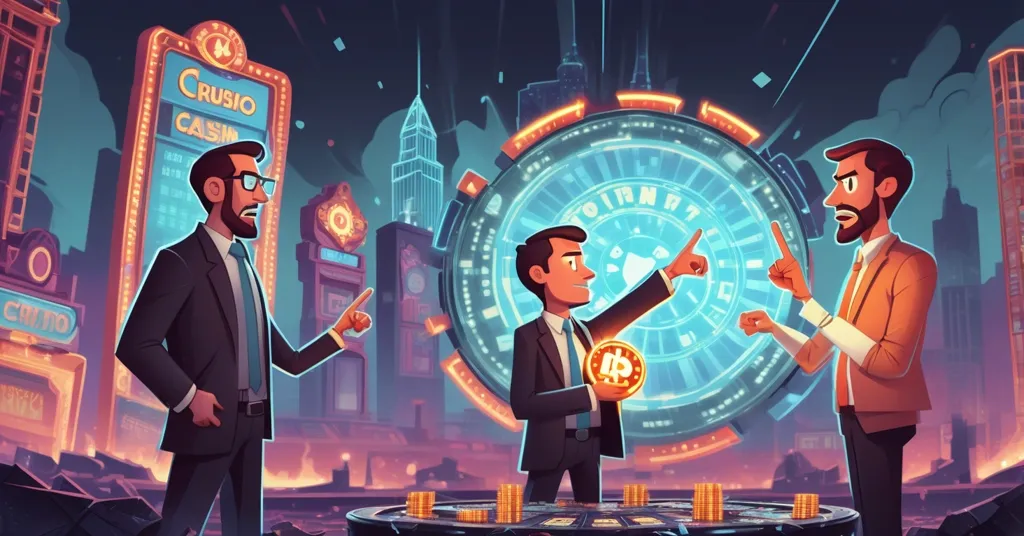
A heated showdown has ignited in the crypto world as Ethereum’s Vitalik Buterin unveils a visionary plan for creator tokens to uplift digital artists, only to be brutally shot down by Dogecoin co-founder Billy Markus, who brands the concept a hopeless mess destined for the trash heap. This clash lays bare the gaping rift between blockchain’s lofty promises and the gritty reality of speculative chaos.
- Buterin’s Big Idea: Creator tokens via “creator DAOs” using prediction markets and voting to champion quality over spam.
- Markus’ Harsh Take: Calls the tokens “lifeless,” doomed to be dumped like most crypto fads.
- Underlying Clash: Blockchain idealism battles the speculative “casino that often wrecks good intentions.
Buterin’s Vision: A Lifeline for Digital Artists
Vitalik Buterin, the brain behind Ethereum, recently shared a daring proposal on X for a new kind of token system designed to empower digital artists and content creators. The core concept revolves around creator tokens—digital assets on the blockchain that let fans buy a stake in an artist’s work, snag exclusive perks, or even earn a cut of royalties. These tokens would be governed by “creator DAOs,” short for Decentralized Autonomous Organizations. For the uninitiated, a DAO is a community-led group with no central boss, running on automated agreements called smart contracts—basically, self-executing code on a blockchain like Ethereum that enforces rules without middlemen.
The twist in Buterin’s plan is a blend of prediction markets and community voting to filter out noise and reward quality. Prediction markets are setups where people guess future outcomes—like whether a creator’s token will get the DAO’s green light—and earn rewards if they’re right. If a token gets approved, its value might jump, benefiting early backers. Meanwhile, community voting lets DAO members pick which creators or works deserve support, with a mechanism to “burn” some tokens—meaning they’re permanently removed from circulation to make the rest rarer and potentially more valuable. Buterin’s driving concern is the flood of low-quality content, especially AI-generated spam, drowning out genuine talent on today’s platforms. He’s taken direct aim at existing creator-focused crypto projects like BitClout and Zora, accusing them of favoring big-name influencers while leaving everyday artists in the dust. He points to Substack, a subscription platform for writers, as a better example of curation that actually lifts up diverse voices.
The Mechanics: How Would This Even Work?
Let’s break this down with a quick example. Picture a digital artist launching a token tied to a new NFT (Non-Fungible Token, a unique digital collectible) series. They submit it to a creator DAO, where members vote on whether it’s worth backing. At the same time, a prediction market runs in parallel—traders bet on whether the token will pass muster. If it’s a hit, early supporters cash in as the token’s value climbs. But if whales (big players with deep pockets) game the system or hype drowns out merit, the whole setup could implode into just another pump-and-dump scam. It’s a high-stakes gamble to fix a real problem, but the devil’s in the execution.
Buterin isn’t new to pushing blockchain beyond just money. He’s long argued for smarter, not just bigger, DAOs, a stance he reiterated back in early discussions around 2026. He’s also hinted at broader plans to reboot decentralized social networking by that same year, suggesting creator tokens are just one piece of a larger puzzle to reshape online communities. With Ethereum’s knack for running complex, automated systems, the tech is there to test wild ideas like this. But tech alone doesn’t guarantee success—not by a long shot.
Markus’ Brutal Takedown: A Speculative Dead End
Enter Billy Markus, aka Shibetoshi Nakamoto, the co-creator of Dogecoin—a cryptocurrency born as a joke in 2013 that somehow rode meme culture and wild speculation to become a market giant. Markus didn’t mince words when he reacted to Buterin’s proposal. He slammed creator tokens as “fundamentally flawed,” forecasting they’ll wind up as yet another forgotten relic in the sprawling crypto graveyard, dumped by speculators the second the hype fades. For a deeper look into his sharp criticism, check out Dogecoin founder’s take on Vitalik’s creator coin concept.
Creator tokens are “fundamentally flawed” and will “end up getting dumped and forgotten,” following the fate of most digital currencies.
His critique isn’t just a random jab—it’s a gut punch rooted in years of watching crypto’s underbelly. Markus argues that social projects in this space, no matter how well-intentioned, get hijacked by speculative gambling. The promise of supporting artists or building communities crumbles when token prices tank and bag-holders scramble for the exits. In his own biting words, the noble “cathedral” of blockchain innovation keeps getting razed by the sleazy “casino” of get-rich-quick schemes.
“The ‘cathedral’ of idealistic blockchain building is often destroyed by the ‘casino’ of speculative gambling.”
Markus’ cynicism carries weight, especially given Dogecoin’s own wild ride. What started as a parody morphed into a speculative darling, fueled less by tech and more by viral tweets and celebrity nods. He’s seen firsthand how even a lighthearted project can turn into a rollercoaster of irrational hype, leaving many burned. His fear? Creator tokens will follow the same script—less about art, more about who can flip them fastest.
Historical Baggage: Crypto’s Hype Graveyard
Let’s not pretend Markus is pulling this out of thin air. Crypto’s history is littered with cautionary tales. The 2017 ICO (Initial Coin Offering) craze saw thousands of projects promise the moon, only to vanish—studies later pegged over 80% of them as scams or failures by 2019. Then came the 2021 NFT boom, where digital art sold for millions until the bubble burst, leaving latecomers with worthless jpegs. Even Dogecoin, for all its staying power, has swung violently with market moods rather than any concrete utility. These aren’t anomalies; they’re the norm when speculation outpaces substance. Prediction markets in Buterin’s model? They risk becoming mini-casinos where insiders rig bets. Community voting? Often just a popularity contest or a front for profit-chasers. Markus isn’t wrong to smell a rat—or a whole nest of them.
Counterpoint: Could Creator Tokens Survive the Casino?
That said, writing off Buterin’s brainchild as “lifeless” might be too damn harsh. Blockchain does hold real disruptive potential for creative industries. Centralized giants like YouTube or Spotify rake in huge cuts—sometimes up to 50% of revenue—while dictating who gets exposure through opaque algorithms. A tokenized system, if done right, could flip that script, giving artists direct control and fans a genuine stake in their success. Imagine a hybrid: Substack-style subscriptions for steady income, paired with tokens for one-off perks or collectibles. If DAOs could enforce strict anti-speculation rules—like caps on trading volume early on—maybe the casino crowd could be kept at bay long enough to build real value.
But here’s the ugly truth: crypto’s greed culture is a beast. Fans buying tokens to “support art” are often outnumbered by degens (degenerate traders) chasing a 10x flip by next week. And there’s a darker side—artists could be pressured to over-tokenize, flooding the market with junk, while naive fans lose shirts on failed projects. Plus, regulators like the SEC might swoop in, eyeing these tokens as unregistered securities. It’s a minefield, and even Ethereum’s slick tech can’t defuse every bomb.
A Bitcoin Maximalist Lens: Keep It Simple, Stupid
As folks who lean toward Bitcoin maximalism, we can’t help but raise an eyebrow at these complex altcoin experiments. Bitcoin’s beauty is its brutal simplicity—scarce, decentralized money with no bells or whistles like smart contracts to muddy the waters. It dodges speculative gimmicks by focusing on being sound money, not a playground for every half-baked idea. That’s why Ethereum’s endless tinkering, while innovative, often feels like a double-edged sword. Creator tokens might fill a niche Bitcoin never will (nor should), but they also invite the kind of hype-driven disasters BTC largely sidesteps. Still, we’re not blind—altcoins like Ethereum drive the kind of boundary-pushing that keeps decentralization alive. We just hope these experiments don’t turn into another dumpster fire of broken dreams.
Real-World Lessons: Creator Tokens in the Wild
This isn’t uncharted territory. Beyond BitClout and Zora, other creator token platforms have tried to crack this code. Take Rally, a project letting creators launch “social tokens” for fan engagement—it saw early buzz but struggled with low liquidity and fading interest once speculation dried up. Then there’s Audius, a music streaming platform with tokenized rewards, which gained traction but faces criticism for uneven artist payouts. These cases echo Markus’ warning: without deep, sustained demand from actual fans—not speculators—these tokens risk becoming ghost ships. Yet they also hint at Buterin’s point: with better curation and anti-hype measures, there’s a sliver of hope. The jury’s still out, but the track record ain’t pretty.
Key Questions and Takeaways on Creator Tokens
- How Do Creator Tokens Work on Ethereum?
They’re digital assets artists issue via creator DAOs on Ethereum, letting fans own stakes or earn royalties, with prediction markets and voting to prioritize quality content over spam. - Why Does Billy Markus Think They’re Doomed?
He views them as fundamentally broken, destined to be dumped like most cryptocurrencies, since speculative gambling always trumps utility in social crypto projects. - What’s Wrong with Current Creator Platforms?
Buterin says platforms like BitClout and Zora cater to high-profile names, sidelining regular artists, unlike Substack’s focus on diverse, curated talent. - What Bigger Crypto Issues Does This Debate Expose?
It highlights the constant tug-of-war between blockchain’s potential to empower and the speculative “casino” culture that fuels boom-bust cycles and project failures. - Are There Broader Blockchain Plans Tied to This?
Yes, Buterin teased reviving decentralized social networking by 2026, signaling creator tokens are part of a larger push for blockchain in social and creative spaces.
This face-off between Buterin’s ambitious gamble and Markus’ battle-hardened doubt captures why crypto remains a maddening mix of brilliance and bullshit. One side wants to build a future where artists thrive without gatekeepers, using tools like Ethereum and DAOs to challenge the status quo. The other reminds us that most shiny new tokens end up as roadkill on the hype highway, crushed by greed. Both have a point, and as champions of decentralization, we’re rooting for disruption—just not the kind that leaves suckers holding empty bags. Will creator tokens spark a revolution for artists, or just light another speculative bonfire? Time, and the market’s ruthless verdict, will tell.