Drift Suffers $285M Solana DeFi Hack, Negotiates with North Korean Suspects
 LTB
LTB Drift Hit by $285 Million Solana DeFi Exploit, Seeks Hacker Talks Amid Crypto Turbulence
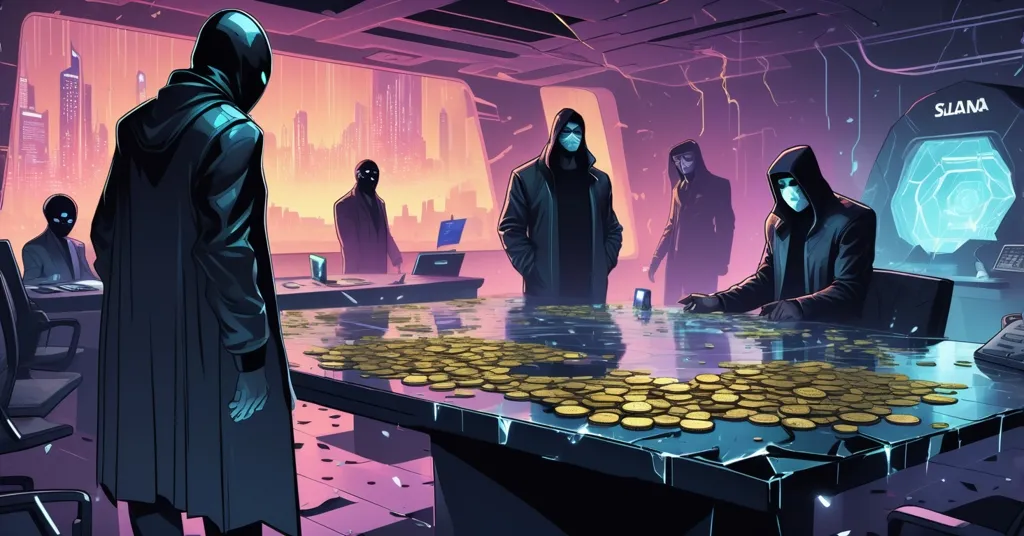
A jaw-dropping $285 million exploit has struck Drift, a decentralized exchange (DEX) on the Solana blockchain, with fingers pointing at North Korean state-sponsored hackers as the culprits. In a desperate bid to recover funds, Drift is reaching out to negotiate with the attackers, a move that lays bare the stark vulnerabilities and brutal pragmatism of decentralized finance (DeFi).
- Major Heist: Drift loses $285 million in a Solana-based exploit tied to North Korean hackers.
- Negotiation Play: The protocol is engaging with attackers to salvage funds, a growing but risky trend in DeFi.
- Market Fallout: 56.25 million DRIFT tokens ($2.44 million) hit exchanges like Bybit and Gate, stoking fears of price drops.
Drift Protocol Exploit: A $285 Million Disaster on Solana
The Drift exploit is a brutal wake-up call for the Solana ecosystem, often praised for lightning-fast transactions and dirt-cheap fees but repeatedly slammed for shaky security. For those new to this space, a DEX like Drift allows users to trade cryptocurrencies directly from their wallets using smart contracts—self-executing code on the blockchain that automates trades without a middleman. It’s a pure, decentralized setup, but when things go wrong, as they did with Drift, there’s no bank or regulator to swoop in and save the day. You’re on your own, like sailing a ship with no lifeboats.
Details on the attack vector are still emerging, but early reports suggest a sophisticated exploit of Drift’s smart contracts, potentially through a flaw in how they handle user funds or interact with external data sources (known as oracles in crypto lingo). This isn’t petty theft; losing $285 million dwarfs other Solana-based hacks like the $100 million Mango Markets exploit in 2022. Allegations of North Korean involvement, as reported by PANews, aren’t surprising—state-sponsored groups like Lazarus have long targeted crypto for quick, untraceable cash to fund illicit programs. For Drift users, many of whom may have lost life savings, the pain is personal. Beyond the financial hit, this breach shatters trust in a protocol meant to embody freedom from centralized control. For more on the specifics of this massive exploit, check out the detailed coverage of Drift’s $285 million loss and their outreach to hackers.
Drift’s response—negotiating with the hackers—is a gut-wrenching but pragmatic choice. Unlike traditional finance, where accounts can be frozen or authorities mobilized, DeFi operates in a borderless, pseudonymous realm where legal recourse is often a fantasy. By opening talks, Drift hopes to recover even a fraction of the stolen funds to maintain liquidity (the pool of assets available for trading) and reassure users. But let’s not sugarcoat it: this sets a dangerous precedent. Are we just rolling out the red carpet for more attacks by showing that crime pays? What if DeFi protocols collectively refused to negotiate—would hackers move on to easier targets, or would losses just keep piling up? It’s a damned-if-you-do, damned-if-you-don’t scenario, and Drift’s gamble is a stark reflection of how immature and exposed this space still is.
To make matters worse, wallets linked to Drift have offloaded 56.25 million DRIFT tokens, valued at about $2.44 million, onto centralized exchanges like Bybit and Gate. For newcomers, this signals potential “selling pressure”—when a flood of tokens hits the market, supply outstrips demand, often tanking the price. If DRIFT holders panic and dump their stash, it could spiral into a death knell for the token’s value, punishing even those untouched by the initial hack. The fallout from this Solana DeFi hack isn’t just a number on a screen; it’s a cascading mess that tests the resilience of Drift and its community.
Solana’s Security Woes: Speed Over Safety?
Zooming out, the Drift protocol exploit isn’t an isolated fluke—it’s a symptom of deeper issues with Solana itself. The blockchain, designed for high throughput with transactions processed in seconds for pennies, has often prioritized scalability over bulletproof security. Its architecture, while innovative, has faced criticism for centralization risks and a spotty track record, including multiple network outages over the past few years. High-profile hacks like the $325 million Wormhole bridge exploit in 2022 and the aforementioned Mango Markets debacle have fueled skepticism about Solana’s readiness to host complex DeFi protocols like Drift.
Smart contract vulnerabilities, the likely culprit behind Drift’s loss, are a known Achilles’ heel across DeFi, not just on Solana. These contracts are only as secure as the code behind them, and a single bug can open the door to millions in losses. Post-exploit, Solana’s developer community often rallies with upgrades and audits, but reactive fixes don’t inspire confidence. Could Drift’s disaster push for proactive measures like mandatory third-party audits or native insurance mechanisms within Solana’s ecosystem? If not, users might start gravitating toward blockchains like Ethereum, where slower speeds come with a more battle-tested security framework—or even Bitcoin, where simplicity sidesteps many of these DeFi-specific risks altogether. For now, Solana’s promise of a high-speed future remains clouded by the harsh reality of breaches like this one.
DeFi’s Trust Crisis Meets TradFi’s Crypto Pivot
While Drift’s fiasco exposes DeFi’s raw underbelly, traditional finance giants are sniffing opportunity in the crypto space, potentially offering safer harbors for wary investors. Charles Schwab, a brokerage titan with 37 million clients, is reportedly prepping a “Schwab Crypto” account to enable direct Bitcoin trading, according to Bitcoin journalist Pete Rizzo. This isn’t just a footnote—it’s a seismic shift. Bringing Bitcoin to a mainstream audience of retail and institutional investors could turbocharge adoption, funneling liquidity away from native crypto exchanges into TradFi’s polished platforms.
But before we cheer, let’s unpack the trade-off. Centralizing Bitcoin access through a brokerage behemoth clashes head-on with the decentralized, self-sovereign ethos that birthed BTC. Are we handing over the keys to our financial freedom for the sake of convenience and perceived safety? Schwab’s user base—likely older, less tech-savvy investors compared to Coinbase’s crowd—might also face steep fees or limited control over their holdings (think: no private keys, just IOUs). While this move validates Bitcoin’s staying power, it risks co-opting the very rebellion it represents. For users burned by DeFi hacks like Drift, Schwab’s entry might look like a lifeline, but it’s a lifeline with strings attached.
Regulatory Heat and Stablecoin Scrutiny
As security failures erode trust, regulators worldwide are tightening the screws. Japan’s Financial Services Agency (FSA) has unveiled a new three-tier cybersecurity framework for crypto exchanges, emphasizing investor asset protection and operational resilience. While details on the tiers are sparse, the intent is clear: force platforms to up their game or get out. This sounds like a win for users, but there’s a catch—compliance costs could skyrocket, especially for smaller exchanges. Well-funded players might absorb the hit, while startups and innovators get priced out, stifling the very experimentation that drives crypto forward. Is this the price of maturity, or a slow chokehold on decentralization?
Across the Pacific, stablecoin issuer Circle is under fire from on-chain investigator ZachXBT, who alleges that $420 million in USDC tied to illicit activity since 2022 hasn’t been frozen. For the uninitiated, USDC is a stablecoin pegged 1:1 to the U.S. dollar, used as a stable trading pair and transfer medium in crypto markets. Failing to block dirty money—whether due to technical limits or policy gaps—hands ammunition to regulators already itching to crack down on stablecoins as conduits for crime. Compare this to Tether (USDT), which faced hefty fines for lax oversight; Circle’s inaction risks similar heat. If stablecoin issuers can’t clean house, expect lawmakers to step in, potentially reshaping how these critical assets operate in DeFi and beyond.
Adoption Hopes: Bitcoin Faucets and Corporate Hoarding
Amid the gloom of hacks and regulatory clouds, glimmers of adoption keep the crypto flame alive. Jack Dorsey’s Block is planning a Bitcoin faucet, a nostalgic nod to the early 2010s when free BTC was handed out to lure new users, as reported by Bitcoin Magazine. The idea is simple: lower the entry barrier by gifting tiny amounts of Bitcoin, easing first-timers into the ecosystem. Historically, faucets had limited impact—many recipients cashed out immediately, and onboarding hurdles like wallet setup remain daunting. Without better user experience and education, this feels more like a marketing stunt than a game-changer. Still, it’s a reminder of Bitcoin’s grassroots roots, a counterpoint to DeFi’s high-stakes complexity.
On the corporate front, Michael Saylor, the outspoken Bitcoin advocate, has reportedly bought seven times more BTC than BlackRock this year, per Pete Rizzo. Saylor’s strategy—stacking Bitcoin as a corporate treasury asset via MicroStrategy—contrasts with BlackRock’s more cautious ETF exposure, signaling unshakable faith in BTC as a store of value. But let’s play devil’s advocate: is Saylor a visionary betting on hyperbitcoinization, or a hype man overextending on a volatile asset? If markets sour, his aggressive accumulation could look reckless. Yet, compared to DeFi’s implosions like Drift, Bitcoin’s simplicity and security make it a steadier bet for corporate adoption—a maximalist dream inching closer to reality.
Market Volatility and Macro Shadows
Crypto markets, ever-sensitive to broader winds, are showing mixed signals. Crypto-linked equities had a patchy U.S. trading session recently, with TRON (TRX) jumping 11.37% and Bitcoin miner Marathon Digital (MARA) climbing 8.33%. But the bigger picture ties to macro factors. Oxford Economics flags that U.S. employment data might overstate strength, predicting two Federal Reserve rate cuts. Historically, as seen post-2020 cuts, lower rates boost liquidity, often driving yield-seeking investors into risk assets like Bitcoin and altcoins. Crypto isn’t immune to traditional market downturns, though—when risk sentiment flips, speculative assets bleed fast. For every Drift-level catastrophe, macro tailwinds could offer a temporary lift, but betting on central bank moves is a shaky foundation for long-term faith in this space.
Looking Ahead: Can Crypto Build Resilience?
The Drift exploit isn’t just a $285 million gut punch—it’s a microcosm of trust being tested across crypto. From Solana’s security trade-offs to DeFi’s desperate negotiations, the industry faces a reckoning. Yet, moves by Charles Schwab, Block, and Saylor underscore an enduring belief in Bitcoin and decentralized tech’s transformative power. Could Drift’s disaster spark a wave of DeFi insurance products, stricter Solana audits, or user demand for battle-tested protocols? The path to resilience isn’t optional—it’s survival. Hackers aren’t slowing down, and neither can we. For now, one thing is crystal clear: in DeFi, you’re only as strong as your weakest line of code.
Key Takeaways and Questions for Crypto Enthusiasts
- What triggered the $285 million Drift exploit on Solana?
Likely a smart contract flaw exposed funds to a sophisticated attack, with North Korean hackers suspected, highlighting Solana’s speed-over-security focus. - Why is Drift negotiating with hackers, and is this a common DeFi tactic?
With no central safety net, Drift seeks to recover funds and preserve trust through talks—a growing, risky strategy that could encourage more attacks. - How does the Drift hack affect Solana and DRIFT token prices?
It damages Solana’s reputation for security, while 56.25 million DRIFT tokens ($2.44 million) dumped on exchanges like Bybit risk crashing prices through selling pressure. - Could Charles Schwab’s Bitcoin trading shift crypto adoption?
Offering Bitcoin to 37 million clients may mainstream access, but centralizing liquidity in TradFi hands challenges decentralization’s core principles. - What do Japan’s new cybersecurity rules mean for crypto exchanges?
A three-tier system targets user protection but hikes compliance costs, potentially sidelining smaller firms and curbing innovation. - Why hasn’t Circle frozen $420 million in suspect USDC transactions?
Per ZachXBT, inaction since 2022 raises compliance doubts, risking trust and inviting harsher stablecoin regulation. - Can Block’s Bitcoin faucet or Saylor’s buying drive real adoption?
Faucets ease onboarding but need better UX to stick; Saylor’s BTC hoard signals corporate confidence, though overexposure looms as a risk. - How do Federal Reserve rate cuts impact crypto volatility?
Cuts often lift risk assets like Bitcoin by boosting liquidity, but crypto’s market ties mean downturns hit just as hard.