ECB Warns: Stablecoins Could Cripple Eurozone Banks and Euro Dominance
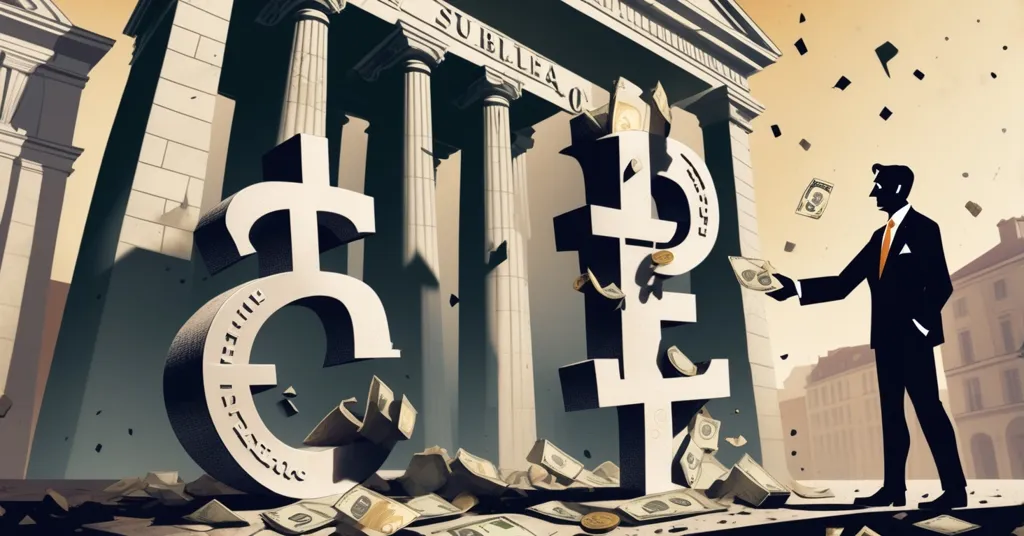
 LTB
LTB Stablecoins: A Silent Threat to Eurozone Banks, Warns ECB
Could stablecoins, the supposedly “safe” corner of the crypto world, be setting the stage for a financial upheaval in the Eurozone? The European Central Bank (ECB) certainly thinks so, dropping a bombshell in a recent working paper that pegged digital currencies might bleed bank deposits dry, disrupt monetary policy, and even challenge the euro’s dominance. As these tokens balloon past a $300 billion market cap, the stakes for traditional finance couldn’t be higher.
- Deposit Drain: Stablecoins risk pulling funds from bank deposits, choking the lending system.
- Policy Paralysis: ECB warns of weakened control over interest rates and economic steering.
- Dollar Dominance: US-pegged stablecoins could undermine the euro’s role in transactions.
- Regulatory Push: EU’s MiCA framework steps in to oversee, not outlaw, stablecoin growth.
What Are Stablecoins and Why Should You Care?
If you’re new to the crypto game, stablecoins might sound like a boring footnote compared to Bitcoin’s wild rides. But don’t be fooled—these digital tokens are designed to hold a steady value, often pegged to fiat currencies like the US dollar (think Tether’s USDT or Circle’s USDC) or sometimes backed by algorithms and collateral. Their appeal? They’re a bridge between the chaotic crypto markets and the real world, used for payments, savings, and as a backbone in decentralized finance (DeFi) platforms. With a market now valued at over $300 billion—more than double what it was three years ago, with projections hitting $2 trillion by 2028—they’re no longer a niche toy.
Yet, beneath the promise of stability lies a darker edge. Unlike Bitcoin, many stablecoins rely on centralized issuers holding reserves to back their value, raising questions about transparency—USDT has faced endless scrutiny over whether its reserves are legit. And history shows they’re not immune to collapse; just look at TerraUSD’s catastrophic implosion in 2022, wiping out billions. For the ECB, though, the worry isn’t just scams or depegging—it’s the systemic shock these tokens could unleash on traditional banking, as highlighted in a recent ECB report on stablecoin risks.
Banks Under Siege: The Deposit Drain
Picture a reservoir that keeps a city watered—now imagine someone siphoning off half of it. That’s the kind of nightmare the ECB envisions as stablecoins lure funds away from traditional bank deposits. In the Eurozone, where banks rely heavily on these deposits to fund loans—think mortgages for families or credit for small businesses—a mass exodus to digital tokens could starve the system. The result? Banks may have to scrounge for pricier funding alternatives, jacking up borrowing costs for everyone. It’s not just theory; if deposits shrink, credit tightens, and economies already scarred by past crises could grind slower.
Worse, the ECB flags that sudden shifts into or out of stablecoins—especially during market panic—could turn a manageable trickle into a devastating flood. Imagine a theater crowd bolting for the exits: orderly at first, but a stampede if fear sets in. This volatility in funding conditions could leave Eurozone banks reeling, amplifying financial instability at the worst possible moment. For an economy still haunted by the 2008 meltdown, this isn’t a risk to shrug off.
ECB’s Control Slipping Through Its Fingers
Beyond the lending crunch, the ECB is sweating over a more insidious threat: losing its grip on the economy. Central banks like the ECB steer growth and inflation through tools like interest rates, relying on banks to transmit those signals. Cut rates, and banks should lower loan costs, spurring spending and investment. But flood the system with stablecoins, and that chain snaps. If your money’s parked in USDC instead of a euro-denominated bank account, the ECB’s rate tweaks might as well be whispers in the wind.
Stablecoin adoption interferes with multiple monetary policy transmission channels that would potentially weaken the predictability of policy actions.
Translation: the ECB could pull its usual levers—lower rates to boost a sluggish economy or hike them to tame inflation—and find no one’s listening. This unpredictability isn’t just a bureaucratic headache; it could hobble the Eurozone’s ability to respond to crises, leaving policymakers guessing in the dark. For a region obsessed with stability, this erosion of control is a red alert.
The Geopolitical Power Play: Dollar Over Euro?
Now let’s talk geopolitics, because stablecoins aren’t just a domestic headache—they’re a currency sovereignty gut punch. The ECB is especially rattled by dollar-pegged tokens like USDT and USDC, which dominate the stablecoin market. If Eurozone residents start using these for everyday transactions over euros, it’s not just a snub to local banks—it’s a slow creep of US financial influence into the heart of Europe. The euro, already battling for global reserve status against the dollar, could lose ground in its own backyard.
This isn’t abstract paranoia. Stablecoins tied to the dollar offer a backdoor for American economic dominance, especially if they become the go-to for cross-border payments or savings in a region sensitive to currency cohesion. For the ECB, it’s a stark reminder of the stakes: lose control of your currency’s usage, and you risk losing economic independence. Add to that the irony—stablecoins, often hailed as tools of decentralization, might just reinforce the old-world power of the US dollar. How’s that for a plot twist?
MiCA: Regulation or Roadblock?
Enter the EU’s response: the Markets in Crypto-Assets (MiCA) framework, a set of rules rolled out to tame the crypto wild west, including stablecoins. MiCA isn’t about banning these tokens but reining them in—think reserve requirements for issuers, licensing mandates, and consumer protection clauses. It’s a stab at oversight, ensuring stablecoin providers can’t run amok while still allowing innovation to breathe. The ECB nods to this as a starting point, but the question looms: is it enough?
Critics—and count us among them—worry MiCA might lean too hard into protecting the old guard. Banks and central authorities get a safety net, but at what cost to the disruptive potential of crypto? There’s a fine line between smart regulation and strangling innovation with red tape, and the EU risks tipping into the latter. Stablecoin issuers face hoops to jump through, but will that stop adoption or just drive it underground? The jury’s still out.
The Flip Side: Stablecoins as Tools of Freedom
Let’s play devil’s advocate for a moment. The ECB paints stablecoins as a looming disaster, but aren’t they also a middle finger to a broken financial system? Traditional banking in the Eurozone isn’t exactly a bastion of trust—think bailouts, negative interest rates eating your savings, and endless fees. Stablecoins offer an escape hatch: a way to store value, make instant cross-border payments, and tap into DeFi without begging a bank for permission. For the underbanked or those in shaky economies, they’re not a risk—they’re a lifeline.
Yes, there are pitfalls. Not all stablecoins are created equal—some are outright scams waiting to implode, and centralized issuers can be as shady as the worst Wall Street suits. But let’s not throw the baby out with the bathwater. These tokens challenge the status quo, forcing central banks to adapt or die. Isn’t that the kind of acceleration we should cheer? In a world of creaky finance, stablecoins—flaws and all—might just be the jolt we need, even if they’re no Bitcoin in terms of pure decentralization.
Key Questions and Takeaways
- What risks do stablecoins pose to Eurozone banks?
They could drain funds from bank deposits, limiting money for loans and forcing banks to seek costlier funding, which raises borrowing rates and slows economic growth. - How do stablecoins disrupt ECB monetary policy?
By pulling money out of the banking system, they block the ECB’s interest rate changes from influencing the economy, making policy actions unpredictable and less effective. - Why are dollar-pegged stablecoins a unique threat?
Their adoption in the Eurozone could weaken the euro’s role in transactions, boosting US financial influence and challenging the region’s currency sovereignty. - What’s the EU doing about stablecoin risks?
Through the MiCA framework, the EU regulates stablecoin issuers with reserve rules and licensing, aiming for oversight without banning the tech. - Can stablecoins be a force for good in finance?
Absolutely—they offer alternatives to flawed banking systems, enable DeFi, and support financial inclusion, though scams and centralization risks remain real.