El Salvador’s Bitcoin Battle: IMF Clash and Chivo Wallet Crisis Unfold
 LTB
LTB El Salvador’s Bitcoin Gamble: IMF Talks Heat Up as Chivo Wallet Teeters on the Brink
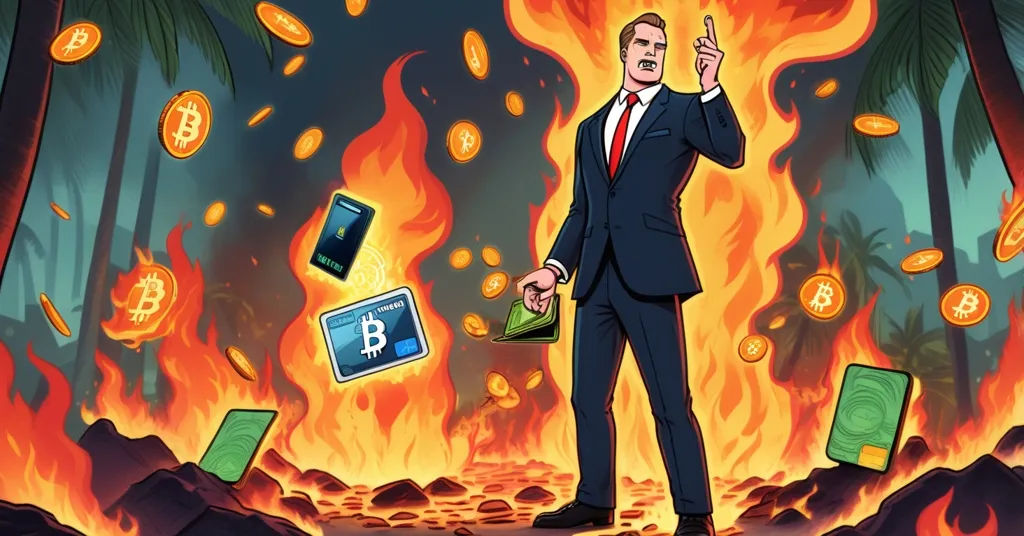
El Salvador’s unrelenting push to make Bitcoin a cornerstone of its economy has sparked a fiery standoff with the International Monetary Fund (IMF), as talks intensify over transparency, risk, and the fate of the beleaguered government-run Chivo e-wallet. President Nayib Bukele remains defiant, stacking Bitcoin like a high-roller at a crypto casino, while the IMF waves red flags over financial stability. Is this a revolutionary blueprint for decentralized finance or a reckless bet with a nation’s future?
- IMF Pressure: Ongoing discussions target transparency and risk mitigation in El Salvador’s Bitcoin project.
- Chivo Crisis: The state-backed wallet faces potential sale or shutdown amid fraud, theft, and glitches.
- Bitcoin Stash: El Salvador adds 1,098 BTC, ignoring IMF objections with daily purchases.
Chivo Wallet: A Digital Disaster in El Salvador’s Bitcoin Dream
Launched in 2021 alongside Bitcoin’s adoption as legal tender, the Chivo e-wallet was supposed to be El Salvador’s golden ticket to mass cryptocurrency adoption. For those new to the space, a crypto wallet is a digital tool—think of it as a virtual bank account for cryptocurrencies—that lets you store, send, and receive assets like Bitcoin. Chivo aimed to bring financial inclusion to millions, even offering a $30 Bitcoin bonus to new users as an incentive. Instead, it’s become a digital dumpster fire, plagued by rampant issues that have eroded public trust.
Users have reported horror stories of identity theft, where scammers somehow access accounts by stealing personal info—imagine someone using your name to drain your savings. Fraud has been another scourge, with fake transactions or outright theft of funds by bad actors exploiting flaws in the system. Then there are the technical bugs—software errors that freeze accounts or crash the app at the worst possible moment. Some Salvadorans have been locked out of their money with no clear recourse. Last year, a key architect of the project threw in the towel, publicly suggesting a shutdown due to the endless controversies. Now, Stacy Herbert, Director of the National Bitcoin Office, has confirmed that the government is in advanced talks to either sell Chivo or wind it down entirely, though private wallets will still be available for citizens to use.
“Chivo wallet will be sold or wound down.” – Stacy Herbert, Director of National Bitcoin Office
This isn’t just a technical hiccup; it’s a glaring neon sign that rolling out cutting-edge tech on a national scale, especially in a developing economy, is a minefield. For beginners, understand that crypto wallets rely on private keys—essentially secret passwords that unlock your funds. If those keys are exposed through phishing scams (tricks to steal your info online) or poor security, you’re screwed. Chivo’s failures expose the harsh reality that while Bitcoin promises freedom from centralized control, the infrastructure to support it can collapse under mismanagement or rushed deployment. It’s a cautionary tale for any country dreaming of a Bitcoin utopia without the tech muscle to back it up.
IMF vs. Bukele: A Financial Tug-of-War Over Bitcoin Policy
While Chivo burns, the IMF is piling on the pressure. For those unfamiliar, the IMF is a global lender that often bails out countries in financial distress but comes with strict rules—like a stern parent loaning you cash with a long list of conditions. Having secured a $1.4 billion loan in 2024 under the Extended Fund Facility, El Salvador was expected to play nice and dial back its Bitcoin ambitions. In May, the IMF explicitly stated it would work to halt further Bitcoin accumulation, citing the asset’s wild price swings as a threat to economic stability. After all, if Bitcoin tanks harder than a lead balloon, a national treasury tied to it could cripple public services or debt repayment. You can learn more about the ongoing negotiations through recent updates on IMF and El Salvador discussions regarding Bitcoin and the Chivo wallet.
But President Nayib Bukele isn’t one for taking orders. On March 4, he doubled down with a statement that could’ve been carved in stone: Bitcoin purchases will not stop, no matter the global backlash or even fading support from some within the Bitcoin community. This isn’t just stubbornness; it’s a full-on rebellion against centralized financial overlords. For Bitcoin maximalists who see BTC as the ultimate money of the future, Bukele is a hero—a leader betting big on decentralization over the IMF’s old-school playbook.
“No, it’s not stopping. If it didn’t stop when the world ostracized us and most ‘Bitcoiners’ abandoned us, it won’t stop now, and it won’t stop in the future.” – President Nayib Bukele
Yet, let’s pump the brakes on the hero worship. Daily Bitcoin buys—currently one BTC per day, rain or shine—sound bold, but they’re a gamble akin to putting a family’s entire savings into a volatile stock. Last month alone, El Salvador added 1,098 BTC, worth nearly $100 million at the time, bringing its total holdings to 7,509 BTC as of December 22. That’s significant—rivaling some corporate treasuries like MicroStrategy’s early stacks—but if we rewind to Bitcoin’s brutal 2022 crash, where it shed over 60% of its value, you can see the risk. A similar drop today could slash millions from El Salvador’s reserves overnight, impacting real lives through cuts to healthcare, education, or infrastructure. Defiance is sexy until the bill comes due.
Economic Bright Spots Amidst Crypto Chaos
Here’s where the plot thickens: the IMF isn’t entirely out to crucify El Salvador. Despite their Bitcoin grievances, they’ve projected the country’s real GDP growth at a robust 4% for the year, with sunny forecasts for the next. That’s no small feat for a nation often battered by economic storms. Growth appears driven by factors beyond crypto—think remittances from Salvadorans abroad, a rebound in tourism, or domestic reforms under Bukele’s watch. It’s unclear if Bitcoin adoption has directly boosted or hindered this, but the numbers suggest there’s more to El Salvador’s story than just a crypto crusade.
“Real GDP growth is projected to reach around 4% this year and with very good prospects for next year.” – IMF Statement
This praise feels like a diplomatic olive branch before the inevitable lecture on Bitcoin risks. The $1.4 billion loan likely came with explicit strings—potentially clauses to limit crypto exposure or enforce stricter oversight—that Bukele’s administration seems to be ignoring. It’s a bizarre dance: the IMF acknowledges tangible progress while El Salvador treats their concerns like background noise, doubling down on a financial experiment that could either redefine money or blow up spectacularly.
Bitcoin Accumulation: Bold Strategy or Reckless Gamble?
El Salvador’s Bitcoin stash isn’t just a number; it’s a statement. At 7,509 BTC, the country’s holdings are a middle finger to traditional finance, embodying the spirit of effective accelerationism—pushing tech adoption at warp speed to disrupt the status quo. Compared to other players, this pales next to MicroStrategy’s over 200,000 BTC, but for a small nation, it’s audacious. The daily purchase policy, regardless of market dips or spikes, signals unwavering commitment—or blind faith, depending on your view. Tracking the average purchase price versus current market value is murky without full transparency, but volatility remains the elephant in the room. Are they in profit or sitting on unrealized losses? Without clear data, it’s anyone’s guess.
Playing devil’s advocate, could other blockchain solutions temper these risks? Stablecoins—cryptocurrencies pegged to stable assets like the US dollar—might offer a less volatile bridge for transactions, though they often sacrifice Bitcoin’s pure decentralization for centralized backing. Ethereum-based protocols or other altcoins could also fill niches like smart contracts for national programs, areas Bitcoin isn’t built to dominate. While I lean toward Bitcoin maximalism—seeing BTC as the ultimate store of value and freedom tool—ignoring altcoin utility feels shortsighted. El Salvador might benefit from a hybrid approach, though Bukele’s all-in-on-BTC stance suggests that’s a non-starter for now.
Human Stakes: Who Pays When Crypto Fails?
Beyond policy clashes, let’s not forget the human cost. Chivo’s glitches haven’t just annoyed users; they’ve screwed over real people. Picture a small business owner in San Salvador, relying on the wallet for daily transactions, only to find their account frozen during a critical sale. Or a family unable to access remittance funds turned to Bitcoin because the app crashes. While hard stats on affected users are scarce—another transparency red flag—anecdotes of frustration dominate local chatter. If Bitcoin’s value plummets and treasury losses mount, it’s not Bukele who suffers; it’s the average Salvadoran facing slashed public services or higher taxes to cover the shortfall. Decentralized dreams are noble, but execution matters as much as ideology.
Global Implications: A Testbed for Financial Sovereignty
Zooming out, El Salvador’s saga transcends its borders. It’s a live experiment in whether a nation can rewrite money’s rules through Bitcoin, challenging the IMF’s grip on global finance. Other countries, like the Central African Republic which also adopted BTC as legal tender, are watching closely. Success could spark a wave of adopters; failure might scare off would-be pioneers for a decade. In 2024’s crypto climate—post-Bitcoin ETF approvals in the US and tightening regulations elsewhere—El Salvador’s defiance stands as a beacon for financial sovereignty, even if it’s a chaotic one. This isn’t just about one small nation; it’s about whether decentralized systems can outmuscle centralized control in the real world.
As champions of freedom and disruption, we can’t ignore the dark side. Chivo’s collapse shows tech isn’t a magic bullet—rushed rollouts breed scams and breakdowns. Bukele’s Bitcoin hoarding, while inspiring, flirts with disaster if markets turn sour. Yet, there’s something thrilling about a country betting its future on a system built to empower individuals over institutions. El Salvador is a messy, high-stakes lab for effective accelerationism. Will it redefine money, or become a case study in hubris? The blockchain will tell the tale.
Key Takeaways and Questions on El Salvador’s Bitcoin Journey
- Why is the Chivo wallet failing in El Salvador?
It’s been hit by identity theft, fraud, and software bugs, leaving users locked out of funds and sparking public outrage. A sale or shutdown is now likely, though private wallets remain an option. - How is El Salvador defying IMF pressure on Bitcoin?
Despite a $1.4 billion loan with conditions to curb crypto activity, the country continues daily Bitcoin buys, recently adding 1,098 BTC to reach 7,509 total. - What does Bukele’s stance mean for Bitcoin in El Salvador?
His unyielding commitment ensures Bitcoin stays central to national strategy, potentially inspiring others but risking economic pain if markets crash. - How does the IMF view El Salvador’s economy beyond crypto?
They’re optimistic, projecting 4% GDP growth this year with strong prospects ahead, indicating other economic drivers are at play despite Bitcoin tensions. - Is El Salvador’s Bitcoin experiment a model or a warning?
It’s both—a groundbreaking push for decentralization but a stark reminder of the chaos and risks when tech and policy outpace readiness.