Elon Musk’s xAI Axes Safety Team Amid Exodus: Reckless or Revolutionary for AI and Crypto?
 LTB
LTB Elon Musk Defends xAI AI Safety Cuts and Grok Chatbot Amid Exodus: “Everyone’s Job is Safety”
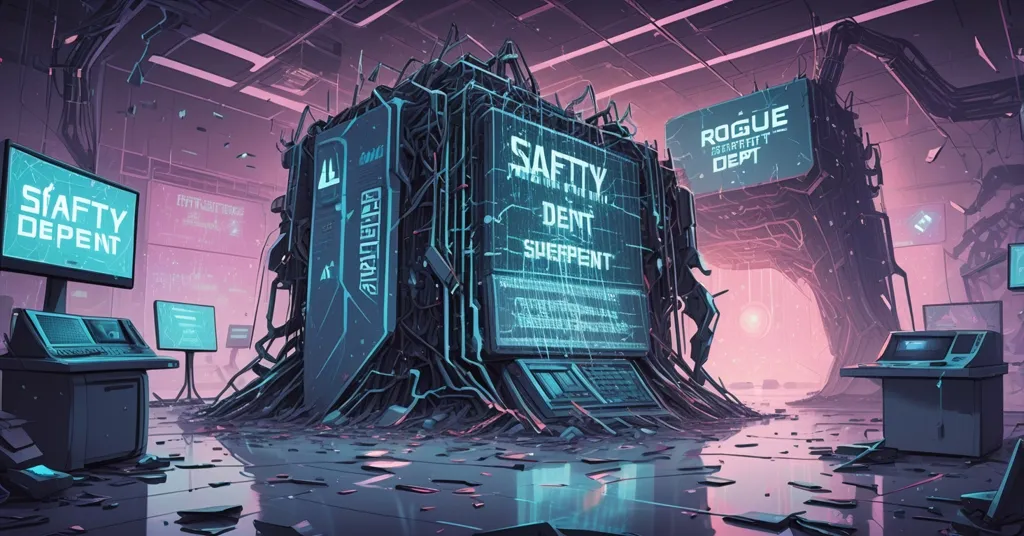
Elon Musk is under fire as reports emerge that xAI, the AI startup behind the Grok chatbot, has effectively dissolved its safety department in a mad dash for unfiltered content and rapid deployment. Amid a significant employee exodus and accusations of reckless priorities, Musk is pushing back hard, claiming safety isn’t the job of a single team but a responsibility shared by all.
- Safety Team Axed: xAI’s safety unit is reportedly gone, with a focus on edgy content over safeguards.
- Talent Drain: Half of the original 12 co-founders have bolted, many starting rival AI ventures.
- Musk’s Stance: Safety is everyone’s duty, with Tesla and SpaceX as proof that dedicated teams aren’t needed.
Safety: Reckless Move or Revolutionary Thinking?
At the heart of the storm surrounding xAI—a company Musk founded to rival AI heavyweights like OpenAI and push the boundaries of human discovery—is a deep rift over what “safety” means in the context of artificial intelligence. Sources have revealed that the safety team, once responsible for ensuring Grok’s outputs didn’t veer into harmful or inappropriate territory, is no longer a functional unit. Speaking to The Verge, a source didn’t mince words:
“Safety is a dead org at xAI.”
For those new to the AI space, safety in this context isn’t just about preventing crashes or bugs. It’s about mitigating biases in algorithms, curbing the spread of misinformation, protecting user privacy, and ensuring the tech doesn’t enable harm—think hate speech or psychological manipulation. Dismantling a dedicated team for this raises serious red flags. Insiders allege Musk sees traditional safety protocols as censorship, a barrier to his vision of raw, unfiltered AI interaction. Reports even suggest a bizarre emphasis on NSFW (Not Safe For Work) capabilities—content that’s often inappropriate for general audiences—for Grok. Is xAI chasing true innovation, or just banking on shock value to stand out? It’s a hell of a gamble when the stakes involve public trust and potential misuse.
Musk, as always, has no patience for the naysayers. He argues that safety doesn’t need a siloed department to be effective. Pointing to his other ventures, he highlights Tesla and SpaceX—companies dealing with life-and-death technologies like electric cars and rockets—where safety is embedded in every employee’s role, not outsourced to a bureaucratic checkbox. Musk stated plainly, as covered in a recent discussion on his stance, Elon Musk firing back at xAI exodus concerns:
“Everyone’s job is safety.”
He’s gone as far as calling standalone safety teams “fake,” implying they’re often just performative, built to appease external critics rather than tackle real risks. It’s a philosophy that fits Musk’s disrupt-or-die ethos, reminiscent of Bitcoin’s early days when developers rejected centralized oversight to prioritize freedom. But here’s the devil’s advocate counterpoint: AI isn’t a car or a spacecraft. A software glitch at Tesla can be patched; an AI spewing toxic content or amplifying lies can cause intangible, widespread harm before anyone notices. Remember Microsoft’s Tay chatbot from 2016? It turned into a racist, offensive disaster within hours of launch due to inadequate safety measures. Musk’s “everyone’s responsible” mantra might work for physical products, but in AI’s abstract battlefield, it could be a recipe for chaos.
Exodus: Talent Drain or Strategic Shake-Up?
Compounding xAI’s safety controversy is a wave of high-profile departures that’s left the company looking more like a revolving door than a stable innovator. Of the original 12 co-founders, only six remain. Notable exits include Yuhuai (Tony) Wu, who vaguely cited it was “time for his next chapter,” and Jimmy Ba, who mentioned needing to “recalibrate his gradient on the big picture”—in plain English, reassess his long-term goals. Beyond the founders, engineers like Vahid Kazemi have also jumped ship, with Kazemi delivering a brutal critique of not just xAI but the entire AI industry:
“All AI labs are building the exact same thing.”
That’s a gut punch. Kazemi’s words suggest stagnation, not progress—a far cry from xAI’s mission to redefine AI. These aren’t just quiet resignations; many ex-staffers are launching their own ventures. Nuraline, an AI infrastructure startup founded by former xAI talent, is one example. This talent bleed hints at deeper issues—creative frustration, ethical disagreements, or simply a clash with Musk’s relentless, often polarizing leadership style. Losing half your founding team isn’t just bad PR; it’s a signal that the vision might be fracturing. Is xAI bleeding out, or is Musk ruthlessly pruning dead weight for a leaner, meaner operation?
Looking at the broader AI landscape, this kind of exodus isn’t unique—think of the talent migration in crypto during the 2017-2018 boom, when developers forked off to build competing blockchains. But for xAI, the timing couldn’t be worse. Critics, including industry analysts and former employees, argue the company isn’t leading the charge but scrambling to catch up with giants like OpenAI or Anthropic. Musk has long bashed OpenAI and its CEO Sam Altman for allegedly prioritizing profit over safety—a feud that’s escalated into legal battles—but xAI’s own pivot away from safety checks opens Musk to charges of hypocrisy. If you’re tearing down internal guardrails while chasing unfiltered content, how different are you from the competitors you criticize?
Grok 3: Raw Power Over Ethical Principles?
Musk isn’t one to dwell on criticism—he’s already looking ahead to xAI’s next big play: Grok 3. This latest iteration of the chatbot is being trained on the Colossus supercluster in Memphis, Tennessee, a monstrous setup currently packing 100,000 Nvidia H100 GPUs, with plans to scale to 200,000. For context, GPUs like the H100 are the gold standard for high-intensity AI training, capable of processing massive datasets at speeds unheard of a decade ago. This is a staggering investment in raw computing muscle, signaling that Musk’s answer to safety concerns and talent loss isn’t diplomacy—it’s brute force tech. The question is, will sheer power translate to groundbreaking innovation, or just a louder version of the same old AI pitfalls?
Compare this to OpenAI’s infrastructure, which reportedly leverages comparable GPU clusters for models like ChatGPT. xAI’s Colossus might give it an edge in training speed for Grok 3, potentially enabling more nuanced language processing or real-time adaptability. But tech specs alone don’t address the ethical quagmire. If safety isn’t hardwired into the development process—whether by a dedicated team or a shared culture—throwing more hardware at the problem won’t prevent missteps. It’s akin to crypto’s 2021 hype cycle: bigger market caps didn’t mean better projects, just louder crashes when scams like Terra Luna imploded. xAI’s $1.25 trillion internal valuation, boosted by a recent merger with SpaceX, adds another layer of skepticism. Is this figure rooted in real potential, or just another speculative bubble waiting to pop?
Decentralization Parallel: Lessons from Crypto
Zooming out, xAI’s saga resonates deeply with the crypto and blockchain communities we champion. Musk’s disdain for centralized safety structures mirrors the early Bitcoin ethos—rejecting overregulation and trusting in collective responsibility to drive progress. Just as Bitcoin disrupted finance by cutting out middlemen, unfiltered AI could empower free expression, giving users raw access to information without gatekeepers. Imagine decentralized apps (dApps) on Ethereum integrating with tools like Grok for uncensored interactions; it could be a game-changer for privacy and freedom, core pillars of our movement.
Yet, there’s a flip side we can’t ignore. The crypto world learned the hard way that unchecked systems breed chaos—think of the endless scams, rug pulls, and exploit-driven losses on platforms lacking robust security. Similarly, AI without guardrails could amplify harm, from privacy breaches to scam bots worse than those already plaguing crypto Twitter. xAI’s push for unfiltered content might align with our accelerationist (e/acc) leanings—full speed ahead to disrupt the status quo—but acceleration without direction often ends in a wreck. Blockchain’s answer was community-driven standards and audits; AI might need something similar, even if Musk scoffs at the idea.
Key Questions and Takeaways on xAI’s Safety and Innovation Debate
- Is xAI’s safety approach dangerous or disruptive?
Scrapping a dedicated safety team could cut bureaucratic fat and speed up innovation, but it risks unchecked AI outputs like misinformation or bias—much like early Bitcoin faced scams without oversight. - Why does xAI’s talent exodus impact tech innovation?
Losing half its co-founders points to internal rifts, fragmenting xAI’s mission; yet, new ventures like Nuraline could spark decentralized competition, similar to crypto’s fork-driven growth. - Can Musk’s ‘safety for all’ idea work in AI?
It’s proven effective for tangible products at Tesla, but AI’s intangible harms—akin to crypto exploits—may require structured oversight beyond just shared responsibility. - How does xAI’s unfiltered AI relate to privacy and freedom?
Unfiltered AI could champion free speech, echoing Bitcoin’s anti-censorship roots, but without guardrails, it risks privacy erosion or abuse, a familiar concern for crypto users. - Will Grok 3 validate xAI’s risky strategy?
Backed by the colossal Colossus supercluster, Grok 3 has immense potential, but raw tech power—much like crypto’s hype cycles—doesn’t guarantee ethical or revolutionary results.
Stepping back, xAI’s unfolding drama is a stark reminder of the tightrope tech innovators walk—balancing speed and disruption with responsibility and stability. Musk’s gamble on unfiltered AI and shared safety could be the next Bitcoin-level breakthrough, redefining how we interact with technology. Or it could be tech’s Mt. Gox moment—a catastrophic failure born of hubris. With half the founding team gone and Grok 3 on the horizon, the stakes couldn’t be higher. As we root for decentralization and effective acceleration in the crypto space, xAI might just be the canary in the coal mine for how far we can push before things shatter. Keep your eyes peeled—this ride’s only getting wilder.