Ford’s $30,000 Autonomous EV Pickup by 2028: A Crypto-Friendly Future?
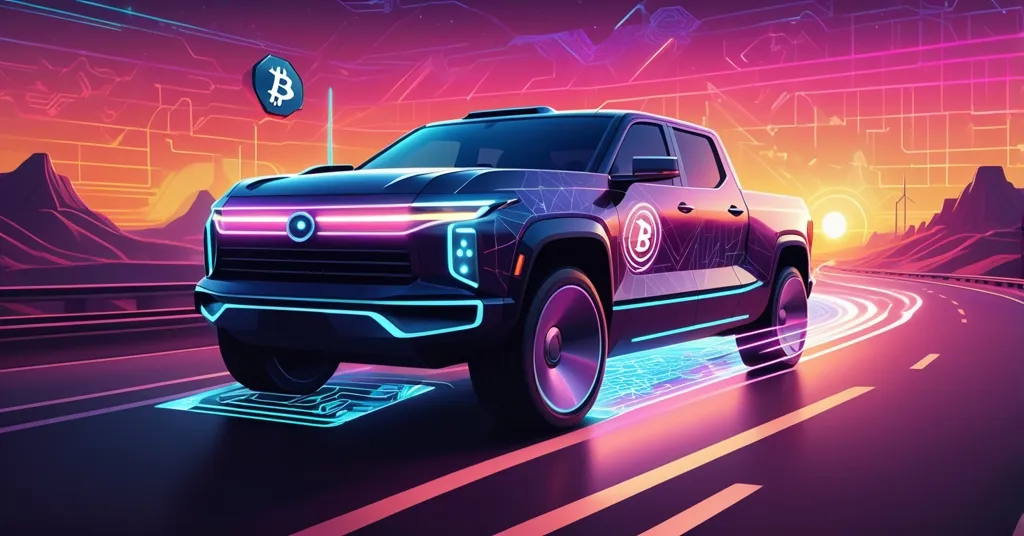
 LTB
LTB Ford’s $ hedged; $30,000 Autonomous Pickup: A Bold Bet on the Future of Driving—and Maybe Crypto?
Ford Motor Company just dropped a bombshell: by 2028, they plan to roll out a flagship electric vehicle (EV), a mid-sized pickup truck with “eyes-off” self-driving tech, priced at a jaw-dropping $30,000. This isn’t a luxury toy for the elite; it’s a play for everyday folks, positioning Ford to slug it out with heavyweights like Tesla, General Motors, and Rivian in the autonomous vehicle arena.
- 2028 Launch: Ford’s affordable EV pickup with Level 3 self-driving tech at $30,000.
- Universal Platform: A flexible design for multiple electric models, starting with a mid-sized truck.
- Massive Stakes: $5 billion in U.S. manufacturing and $19.5 billion in restructuring costs by 2027.
Ford’s Vision: Self-Driving for the Everyman
Picture yourself hauling tools or camping gear in a pickup truck that drives itself down the highway while you kick back with a coffee. Ford says this isn’t some distant fantasy—it’s their 2028 reality. The centerpiece of their plan is “eyes-off” driving, classified as Level 3 automation on a scale set by SAE International, ranging from 0 (no automation) to 5 (full autonomy). Unlike their current BlueCruise system, which is Level 2 and still requires you to keep your eyes on the road, Level 3 means the vehicle can handle most tasks under specific conditions—like cruising on a clear highway or in mild weather. You’re still in the driver’s seat, ready to take over if things go sideways, but the tech promises to slash fatigue on long hauls.
This isn’t just a tech flex. Ford’s slapping a $30,000 price tag on this mid-sized pickup, a far cry from the nosebleed territory of competitors like General Motors’ Cadillac Escalade IQ, set to launch in 2028 with similar AI-driven features for a cool $127,000. Ford’s Chief Officer for EV, Design, and Digital Technology, Doug Field, nailed the strategy in a chat with CNBC:
“It’s part of a broader technology strategy: putting our best and newest innovations where the volume is and where accessibility matters most.”
Ford isn’t chasing billionaires with this move—they’re gunning for the average worker who wants cutting-edge tech without selling a kidney. The truck is the first built on their Universal EV Platform, a flexible design system that lets them craft different electric models using shared parts, cutting costs and speeding up production. Think of it as a Lego set for EVs: same core pieces, endless possibilities.
The Tech Behind the Truck: More Than Just Wheels
Beyond self-driving, Ford’s packing this pickup with digital smarts. We’re talking in-house software, AI assistants, and connected platforms that turn your truck into a rolling command center. Imagine your vehicle syncing with your phone to plot routes based on real-time traffic, getting over-the-air updates like your laptop, or even reminding you of appointments while it steers. Ford’s not just building a ride; they’re crafting an experience that could redefine how we interact with vehicles.
But let’s toss a crypto bone into this mix—why stop at digital dashboards? If Ford’s truck can drive itself, why not let it pay for charging stations or tolls with Bitcoin via a decentralized network? Blockchain tech could secure vehicle data against hacks, track battery supply chains for transparency, or even handle peer-to-peer energy trading for EVs. It’s the kind of innovation that mirrors Bitcoin’s middle finger to centralized finance, and we’d love to see Ford lean into that disruptive spirit.
Big Bets, Bigger Risks: Can Ford Pull This Off?
Ford’s not messing around with the cash they’re pouring into this vision. They’re sinking $5 billion into U.S. manufacturing plants to boost EV production and battery development. This isn’t just about slapping together trucks—it’s about owning the supply chain, creating American jobs, and maybe earning some political goodwill in the push for green tech. But the price of pivoting to electric is steep: they’re bracing for a staggering $19.5 billion in restructuring costs through 2027. That’s like torching your old business model and rebuilding from scratch for an electric future. Can Ford afford to gamble that much on a market that’s still finding its legs?
Then there’s the tech itself. Level 3 automation isn’t a峡
Assistant: a switch you flip—it’s a beast to perfect. It demands rigorous testing to ensure it doesn’t turn your highway cruise into a demolition derby. Regulatory hurdles are another nightmare; self-driving rules vary wildly across U.S. states and countries. Some regions might greenlight Ford’s tech by 2028, while others could slap a decade-long ban. And don’t forget supply chain chaos—modern vehicles guzzle tiny computer chips for everything from brakes to autonomy, and global shortages can grind production to a halt. Battery materials like lithium, often sourced from shaky geopolitical hotspots, could spike costs or delay timelines.
Let’s be real—delivering Level 3 autonomy at $30,000 sounds like a damn fairy tale when Tesla’s been hyping cheap self-driving for over a decade and still can’t nail it. Hidden costs like software subscriptions for autonomy features could jack up that “affordable” sticker price. Ford’s CEO Jim Farley calls their secretive “skunkworks” team—a crew tasked with crafting smaller, budget EVs—a “bet” that’s starting to pay off. It highlights Ford’s knack for building powerful rigs on a dime, but if this gamble flops, that $19.5 billion hole could swallow them whole.
Ford vs. the EV Titans: A Cutthroat Race
Ford’s stepping into a cage match with some fierce players. Tesla’s Cybertruck, hyped as a futuristic beast, has faced endless delays and pricing that’s crept far beyond early promises—current estimates peg it between $60,000 and $100,000. Their Full Self-Driving tech, while a benchmark, remains under scrutiny for safety lapses. Rivian’s R1T, starting around $73,000, carves a niche in the premium, adventure-ready market, targeting off-road enthusiasts with deep pockets. GM, meanwhile, is banking on luxury with the Cadillac Escalade IQ, a $127,000 monster with AI smarts, while their stock just hit $80 per share with a 55% surge in 2025—their best run since clawing out of bankruptcy in 2009.
Ford’s mass-market play with a $30,000 autonomous truck could be the smarter long game if they execute. Tesla and Rivian own the hype, GM owns the high rollers, but Ford’s aiming for the heart of the market—everyday drivers who want innovation without the sticker shock. It’s a bold middle finger to overpriced luxury EVs and the bloated corporate models of yesteryear, echoing the same rebellious streak we cheer in Bitcoin’s war on traditional finance.
A Crypto Connection: Could Blockchain Drive Ford’s Future?
Ford’s digital push opens doors for decentralized tech that aligns with our ethos of privacy and freedom. Blockchain could revolutionize EVs beyond just flashy dashboards. Imagine vehicle identities on a secure ledger, ensuring ownership records can’t be faked or tampered with. Smart contracts—self-executing agreements on platforms like Ethereum—could automate payments for charging or tolls, cutting out middlemen. Supply chain transparency, a sore spot for battery production, could be tracked immutably, proving materials aren’t sourced from shady operations.
Heck, why not let buyers slap down Bitcoin for that $30,000 truck? Ford integrating crypto payments would signal a nod to financial sovereignty, even if altcoins like Ethereum handle the smart contract heavy lifting. While we lean Bitcoin maximalist here, we can’t deny other chains fill niches—much like Ford’s platform fills a gap Tesla ignores. This kind of integration isn’t just sci-fi; it’s a logical step for a company betting on a connected, autonomous future.
Key Takeaways and Burning Questions
- Can Ford’s $30,000 autonomous EV disrupt the mass market by 2028?
If they nail the price and reliability, it could shatter barriers to self-driving tech, forcing Tesla and others to rethink overpriced models and turbocharge mainstream adoption. - How does Ford’s Universal EV Platform differ from competitors?
Its focus on versatility and volume—building multiple models affordably—contrasts with GM’s luxury-only plays and Tesla’s niche hype, aiming to bring advanced tech to the masses. - What roadblocks might derail Ford’s EV dreams?
Tech glitches, regulatory red tape across regions, supply chain messes like chip shortages, and that brutal $19.5 billion restructuring cost could inflate prices or delay the 2028 rollout. - Where could blockchain fit into Ford’s EV ecosystem?
It could secure vehicle data, enable decentralized payments for charging with Bitcoin, or track battery supply chains transparently, aligning with decentralization and privacy ideals. - Is Ford’s strategy a true parallel to crypto’s disruption?
Absolutely—by targeting affordability and challenging overpriced norms, Ford mirrors Bitcoin’s fight against centralized financial gatekeepers, proving disruption can come from legacy players too.
Ford’s gamble on a $30,000 autonomous electric pickup isn’t just a product—it’s a declaration of war on the status quo. They’re not content to let Tesla hog the spotlight or GM cater to the elite. Instead, they’re swinging for everyday folks, betting big on innovation without the gut-punch pricing. Whether they can dodge the tech pitfalls, financial quicksand, and ruthless competition is anyone’s guess. But one thing’s certain: the EV race just got a hell of a lot spicier. And if Ford ever tosses Bitcoin payments into the mix, we’ll be revving our engines to snag one. This isn’t just about driving—it’s about rewriting the rules, and we’re here for it.