France Faces Alarming Rise in Violent Wrench Attacks on Crypto Holders
 LTB
LTB France Grapples with Surge in Violent Wrench Attacks on Crypto Holders
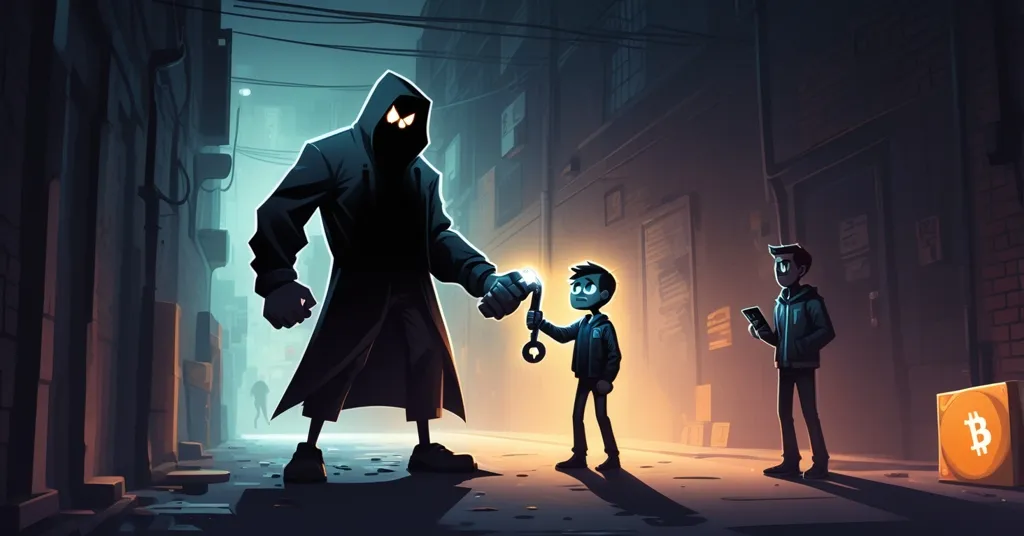
A disturbing trend is emerging in France, where cryptocurrency holders are increasingly targeted in violent “wrench attacks”—brutal crimes that use physical coercion to access digital wealth. A recent attempted home invasion targeting Binance France CEO David Prinçay has brought this dark underbelly of crypto ownership into sharp focus, highlighting the real-world dangers tied to decentralized assets.
- France reports 19 wrench attacks in 2025, the highest globally, amid a violent crypto crime wave.
- Binance France CEO David Prinçay targeted in a failed home invasion on February 12 in Val-de-Marne.
- CertiK estimates losses from such attacks at a staggering $40.9 million in 2025 alone.
The France Crime Wave: A Brutal Reality
On February 12, in the quiet suburb of Val-de-Marne, three masked men stormed a residence aiming to confront David Prinçay, CEO of Binance France. Unable to locate him, they instead stole two cell phones from another resident before moving to their next mark in Vaucresson, Hauts-de-Seine. There, they assaulted an individual with gun butts, only to flee after realizing they had the wrong address. French police, leveraging stolen phone tracking and CCTV footage, mounted a multi-department operation involving the elite Parisian BRB (Organized Crime Unit). Their efforts paid off with the suspects’ arrest at Lyon Perrache train station—a rare win in a growing epidemic of violence against crypto holders.
These so-called wrench attacks, a term rooted in the idea of using brute force to “crack” a victim’s defenses, have made France the global epicenter of cryptocurrency-related crime. With 19 reported incidents in 2025, the country leads the world in such attacks, while Europe accounts for over 40% of global cases. The financial toll is immense. Blockchain security firm CertiK pegs confirmed losses at $40.9 million this year, though the true figure is likely higher since many victims settle privately or avoid reporting, especially when ransoms aren’t visible on public blockchains. For more details on this alarming trend, check out the report on France’s rise in violent crypto-related wrench attacks.
The violence isn’t limited to botched home invasions. France has witnessed a series of horrific cases that expose the raw danger of holding significant crypto wealth. A 20-year-old Swiss man was abducted in Valence earlier this year, rescued only after a massive operation involving 150 military police. In another chilling case, Ledger co-founder David Baland was kidnapped in 2025, enduring the amputation of a finger and a harrowing hostage ordeal before being freed. Yet another incident saw attackers demand 5,000 euros and a Ledger hardware wallet as ransom—a stark reminder that physical devices can become literal keys to digital fortunes.
Crypto 101: What Makes Wallets So Vulnerable?
For those new to the space, let’s break down why crypto holders are such attractive targets. Cryptocurrency wallets, whether software apps or hardware devices like Ledger, store private keys—think of them as the sole key to a digital safe deposit box. These keys grant access to your assets on blockchains like Bitcoin or Ethereum. Unlike a bank account where a lost password can be reset, there’s no recovery option for a private key. Lose it, and your wealth is gone. Worse, if someone forces you to hand it over, they’ve got everything. No customer service line can save you. This makes physical coercion a brutally effective way to bypass even the strongest encryption, turning the human behind the wallet into the weakest link.
Why France? Unpacking the Hotspot
What makes France ground zero for these crypto security risks? Beyond its status as a financial and tech hub in Europe, drawing high-profile entrepreneurs and investors, there are deeper systemic factors at play. The country’s vibrant startup scene and public crypto events often make wealth more visible than holders intend. Add to that a regulatory environment that hasn’t fully caught up with the nuances of decentralized finance, and you’ve got a recipe for opportunistic crime. Some speculate that cultural attitudes toward wealth—less discreet compared to other regions—might also play a role. Then there’s the practical angle: France’s dense urban areas and extensive transport networks, like the one exploited by the Lyon Perrache suspects, make it easier for criminals to strike and vanish.
Compare this to other regions, and the disparity stands out. While the U.S. and Asia have seen isolated physical threats to crypto investors, none match France’s concentrated spike of 19 attacks in a single year. This isn’t just bad luck—it’s a signal of gaps in awareness, enforcement, or both. French authorities have yet to release comprehensive strategies targeting this crime wave, leaving many in the community to wonder if reactive arrests are enough.
Fighting Back: Tools to Thwart Wrench Attacks
While the stats and stories are grim, crypto holders aren’t helpless. CertiK and voices across the community have been hammering home a clear message: privacy is your first line of defense. Don’t flaunt your Bitcoin stash on social media, avoid linking your real-world identity to blockchain addresses, and keep your holdings under wraps. But there are technical safeguards too. Multi-signature wallets, which require multiple private keys to authorize a transaction, can make coerced transfers harder—think of it as needing two keys to open a vault. Decoy wallets with minimal funds can also throw off attackers, buying you time in a worst-case scenario. Physical security matters just as much: invest in robust home defenses and consider not storing hardware wallets in obvious places.
CertiK and other members of the cryptocurrency community advised crypto holders to “keep their holdings private to avoid flaunting their wealth online and to restrict information that connects their real identities to their blockchain addresses.”
Regulatory Fallout: Freedom vs. Safety
The rise of wrench attacks in France is sparking inevitable questions about regulation. Could this crime wave push French authorities or the EU to impose stricter Know Your Customer (KYC) rules or mandate traceability of crypto transactions? On one hand, such measures might deter criminals by making it harder to liquidate stolen assets anonymously. On the other, they clash directly with the ethos of decentralization—Bitcoin’s founding promise of financial sovereignty doesn’t jive with government oversight. As a community, we must ask: do we trade some anonymity for safety, or double down on education and personal responsibility? My take leans toward the latter. Top-down rules often overreach, while teaching holders to stay pseudonymous aligns with crypto’s core. Still, the counterargument lingers—when lives are at stake, can we afford to reject all intervention?
Beyond France: A Global Warning
France may lead in wrench attack numbers, but this isn’t a localized problem. Europe’s 40% share of global incidents signals a broader trend as crypto adoption surges worldwide. Isolated reports from the U.S. mention similar physical threats, often tied to social engineering scams that escalate to violence. In Asia, while less documented, anecdotal evidence from crypto forums suggests high-net-worth holders face comparable risks. CertiK’s $40.9 million loss figure for 2025 dwarfs many traditional bank robbery stats—FBI data pegs U.S. bank robbery losses at under $10 million annually in recent years. This comparison underscores a bitter irony: crypto’s untraceable allure, once a shield, now paints targets on backs. As adoption grows, so does the criminal underbelly looking to cash in.
Community Response: Strength in Numbers
Amid the violence, the crypto community is stepping up. Bitcoin forums and Ethereum dev groups are buzzing with safety guides, from op-sec (operational security) basics to advanced wallet setups. Some are even organizing charity drives for victims like David Baland, whose recovery—physical and financial—remains an uphill battle. It’s a reminder that decentralization isn’t just about tech; it’s about people banding together to protect the revolution we’ve built. For every wrench-wielding thug, there’s a coder or HODLer working to ensure this space remains a force for freedom, not fear.
The Bigger Picture: A Twisted Validation?
Let’s play devil’s advocate for a moment. Could these wrench attacks, horrific as they are, be a perverse sign of crypto’s success? Criminals don’t target worthless assets—they go where the value is. Bitcoin’s rise to digital gold, Ethereum’s smart contract dominance, and even niche altcoins filling gaps BTC can’t touch, all scream wealth to those willing to exploit it. In a twisted way, this violence validates the disruption we champion. But let’s not romanticize it. Flesh and blood trump code every time a gun is drawn. Bitcoin’s simplicity—no central failure point—aligns with personal responsibility, unlike some altcoin ecosystems where complexity can mask vulnerabilities. Yet even BTC whales aren’t immune. The real takeaway? Our trustless system ironically demands we trust no one in the physical world.
Key Questions and Takeaways
- What are wrench attacks, and why do they target crypto holders?
Wrench attacks are violent crimes using physical force to coerce access to cryptocurrency wallets. They target crypto holders because digital assets are often untraceable, and private keys can be extracted through coercion, bypassing encryption. - Why is France a hotspot for cryptocurrency crime?
France reported 19 wrench attacks in 2025, likely due to its role as a tech and financial hub, high visibility of crypto wealth, and systemic gaps in regulation or enforcement. - How much are wrench attacks costing the crypto community?
CertiK estimates losses at $40.9 million in 2025, though unreported cases and private settlements suggest the actual impact is far greater. - How can I protect my Bitcoin and crypto from physical threats?
Maintain privacy by not publicizing holdings, use multi-signature wallets, set up decoy accounts, avoid linking identities to blockchain addresses, and bolster physical security at home. - Do wrench attacks threaten cryptocurrency adoption?
They pose a serious challenge, exposing real-world risks, but with better education and security practices, the community can mitigate threats without derailing the decentralized future.
The road to a decentralized financial system is paved with innovation, but wrench attacks in France remind us of the pitfalls lurking in the shadows. Bitcoin and blockchain remain transformative, capable of upending corrupt systems and empowering individuals. Yet, as we push for effective acceleration of this tech, we can’t ignore the wolves at the door. Are we ready to guard our digital keys with the same ferocity we defend our ideals? Stay sharp, stay hidden, and let’s keep building a future worth fighting for—wrench or no wrench.