GameStop Faces $76M Bitcoin Loss with Coinbase Transfer: Desperate Move or Strategic Play?
 LTB
LTB GameStop’s Bitcoin Debacle: A $76M Loss Looms with Coinbase Transfer
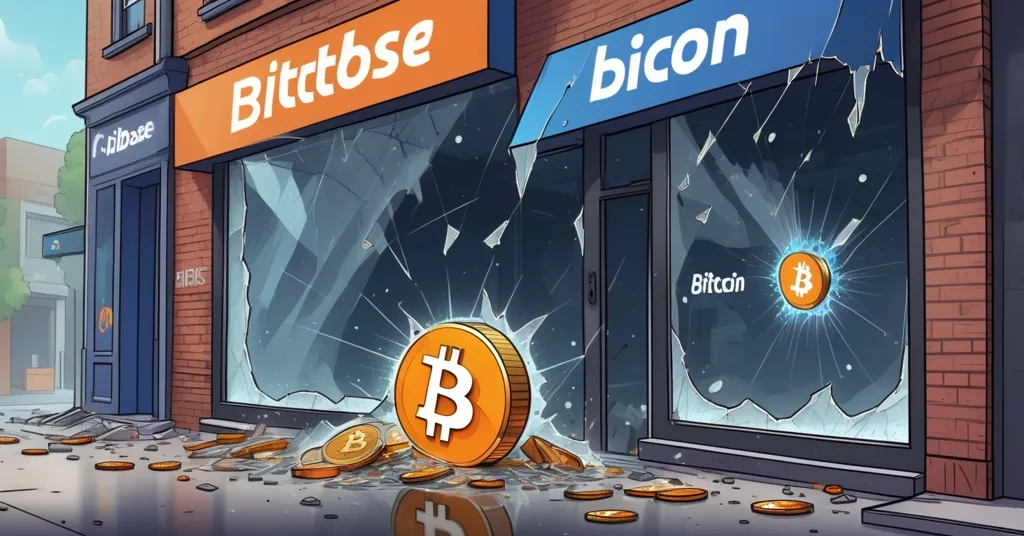
GameStop, the once-iconic video game retailer that captured the rebellious spirit of the 2021 meme stock madness, is back in the spotlight for all the wrong reasons. The company has shifted its entire stash of 4,710 Bitcoin (BTC), bought for a whopping $504 million, to Coinbase Prime—a move that screams potential sale and could lock in a brutal $76 million loss as Bitcoin’s price languishes. With store closures piling up and past tech flops haunting its balance sheet, is this another desperate misstep for a retailer on the ropes?
- Bitcoin Move: GameStop transferred 4,710 BTC to Coinbase Prime, hinting at a possible sale.
- Massive Loss: At Bitcoin’s current $89,100 price, a sale would mean a $76 million hit on their $504 million investment.
- Struggling Retailer: Facing 470 store closures by January 2026, GameStop’s financial woes deepen.
- Tech Missteps: A failed NFT marketplace adds to the narrative of poor strategic bets.
GameStop’s Bitcoin Bet: Vision or Folly?
Let’s rewind to May 2025, when GameStop decided to play in the big leagues of corporate Bitcoin adoption. Between May 14th and 23rd, the retailer scooped up 4,710 BTC at an average price of $107,900 per coin, totaling a half-billion-dollar investment. The move wasn’t random—it mirrored a growing trend among forward-thinking companies like MicroStrategy, which have embraced Bitcoin as a treasury asset to hedge against inflation and fiat devaluation. Bitcoin, with its decentralized architecture free from central bank interference, offers a tantalizing store of value for firms willing to brave its notorious volatility. For GameStop, a company battered by the shift to digital gaming and struggling to reinvent itself, stacking sats (slang for Satoshis, the smallest unit of Bitcoin, reflecting its divisibility down to eight decimal places) might have seemed like a visionary pivot—a way to signal relevance in a tech-driven future.
But here’s the rub: Bitcoin isn’t a magic bullet, especially for a retailer already bleeding cash. Fast forward to today, with BTC trading at $89,100 after a recent pullback—driven by a mix of macro headwinds like rising interest rates and crypto-specific jitters such as ETF outflows—and GameStop’s bold bet looks more like a gamble gone sour. That $504 million investment is now worth significantly less, and the timing couldn’t be worse for a company facing an existential crisis in its core business. The question looms: was this Bitcoin corporate adoption play a stroke of genius derailed by market swings, or just another ill-timed grasp at relevance? For more details on GameStop’s potential $76 million Bitcoin loss and Coinbase transfer, the numbers paint a grim picture.
Coinbase Prime Transfer: Selling at a Loss?
The plot thickens with GameStop’s recent transfer of its entire Bitcoin holdings to Coinbase Prime, the institutional arm of the major cryptocurrency exchange Coinbase, designed for big players to manage large trades with minimal market disruption. On-chain analytics firm CryptoQuant raised the red flag on this move, noting that such transfers often precede a sale. If GameStop is indeed liquidating, they’re poised to lock in a financial loss of $76 million by selling at a price far below what they paid—a gut punch for any corporation, let alone one already on shaky ground.
Why Coinbase Prime? For those new to the crypto game, platforms like this cater to institutions needing to move massive amounts of digital assets without tanking the market through sheer volume. It’s a discreet way to offload BTC, but it doesn’t hide the optics of defeat. The timing reeks of desperation—Bitcoin’s price has been stuck in a stagnant rut, showing little upward momentum after its recent dip. Selling now, rather than hodling (a term born from a typo of “hold,” embodying the crypto community’s stubborn resolve to weather market storms), suggests either a dire need for cash or a complete loss of faith in Bitcoin as a long-term asset. But let’s not jump the gun—could this transfer be a custodial rearrangement or a setup for a strategic play in a future bull run? While unlikely given the context, it’s worth considering that not every move to an exchange means a fire sale.
GameStop’s Bigger Picture: A Pattern of Flops
Zooming out, GameStop’s potential Bitcoin dump isn’t happening in a vacuum. The retailer, once the go-to spot for gamers worldwide, has been floundering in the digital age. With 470 stores either shuttered or set to close by January 2026, the company is grappling with a seismic shift to online gaming and digital downloads that’s rendered physical retail obsolete for many. This isn’t just a rough quarter—it’s a death spiral for a business model that’s failed to adapt.
And Bitcoin isn’t their first tech misadventure. Remember their NFT marketplace launch in 2022? Touted as a bold leap into Web3 and digital collectibles, it crashed harder than a noob’s first altcoin trade, shutting down by early 2024 with barely a whimper of user adoption. This pattern of swinging for the fences with emerging tech—be it NFTs or crypto treasury assets—and striking out raises serious questions about GameStop’s strategic chops. Are they chasing trends without the vision to execute, or just unlucky with timing? Either way, liquidating Bitcoin at a loss feels like the latest chapter in a book of bad bets, a far cry from the defiant underdog spirit of the 2021 meme stock frenzy when Reddit’s WallStreetBets drove a 1,500% stock surge in a historic short squeeze against hedge funds.
Ripple Effects: Bitcoin as a Corporate Treasury Under Scrutiny
GameStop’s potential $76 million loss doesn’t just sting for them—it casts a shadow over the broader narrative of Bitcoin as a viable corporate reserve. When firms like MicroStrategy started stacking Bitcoin, doubling down even through bear markets, it was hailed as a revolutionary middle finger to traditional finance. MicroStrategy’s unwavering commitment contrasts sharply with Tesla’s earlier retreat, selling off most of its BTC holdings during a downturn. GameStop, it seems, might be following Tesla’s paper-handed path (a crypto term for panic-selling during dips), reinforcing the perception of Bitcoin price volatility as a dealbreaker for risk-averse corporations.
Could external pressures be at play? Regulatory uncertainty in the U.S., with looming tax rules or crackdowns on crypto holdings, might be nudging GameStop to cut losses before the landscape gets murkier. Or perhaps it’s pure financial survival—store closures and revenue drops could force asset sales, even at a steep discount. Whatever the reason, this debacle might make other companies think twice about diving into crypto treasury assets. If a retailer with a speculative streak like GameStop can’t stomach the swings, who can? Yet, on the flip side, this could weed out the weak hands, leaving Bitcoin’s corporate adoption to true believers who see beyond short-term turbulence to its long-term promise of disrupting centralized systems.
Lessons from a Missed Opportunity
Let’s be blunt: GameStop’s handling of this Bitcoin investment looks like a masterclass in what not to do. Selling at a loss—if that’s indeed the plan—feels like capitulation when patience might have paid off. Strategies like dollar-cost averaging out of their position, selling small chunks over time to mitigate losses, or simply hodling through the dip as a statement of belief in decentralization could have softened the blow. Bitcoin isn’t a get-rich-quick scheme for struggling retailers; it’s a financial revolution demanding grit and long-term vision.
That said, let’s not lose sight of the bigger picture. Bitcoin’s volatility tests the resolve of corporate newcomers like GameStop, but its core value—freedom from fiat manipulation and a path to decentralized finance—remains unshaken. If anything, GameStop’s possible retreat highlights the urgency of effective accelerationism (e/acc) in pushing disruptive tech forward, even when early adopters stumble. And while Bitcoin dominates the treasury conversation, it’s worth noting that other blockchains like Ethereum or stablecoins might tempt firms seeking less wild price swings, though often at the cost of true decentralization. GameStop’s misstep doesn’t doom corporate crypto adoption; it just underscores the need for conviction over convenience.
Key Questions and Takeaways
- Why did GameStop transfer its Bitcoin to Coinbase Prime?
Most likely to sell and raise cash amid financial struggles like store closures, though it could also be a custodial or strategic move without immediate liquidation. - Is this a sign of corporate retreat from Bitcoin treasuries?
For GameStop, possibly, given their history of tech flops, but firms like MicroStrategy show that commitment to Bitcoin as a reserve persists despite volatility. - How does a $76 million loss affect Bitcoin’s image as a corporate asset?
It fuels the narrative of Bitcoin as a high-risk bet, potentially deterring cautious companies, though it may also separate true believers from short-term speculators. - What do GameStop’s store closures signal for its future?
Closing 470 stores points to severe financial distress and failure to pivot to digital trends, putting long-term survival in serious doubt. - Does GameStop’s meme stock history shape reactions to this news?
Absolutely—its speculative past could split opinions, with some seeing another failure and others eyeing a contrarian play in either the stock or Bitcoin. - What lessons can companies learn from GameStop’s Bitcoin misstep?
Corporate crypto adoption demands patience, risk tolerance, and clear strategy—Bitcoin isn’t a quick fix for deeper business woes, but a long-term bet on financial disruption.
GameStop’s fall from meme stock darling to potential Bitcoin loser is a stark reminder that the crypto space spares no one—not even companies with a knack for defying the odds. Caught between retail irrelevance and the ruthless volatility of digital assets, their latest move might be a costly fumble in a game they’re already losing. Yet, for Bitcoin itself, this is just a blip. The road to decentralized finance is paved with casualties, but the destination—a world unshackled from traditional financial gatekeepers—remains worth the fight. GameStop may be folding, but the revolution rolls on. Are you in for the long haul, or out with a lighter wallet?